
Furnace Thermostat Guide: Wiring, Not Working Fixes, Replacement, Smart Compatibility, and Optimization
November 23, 2026
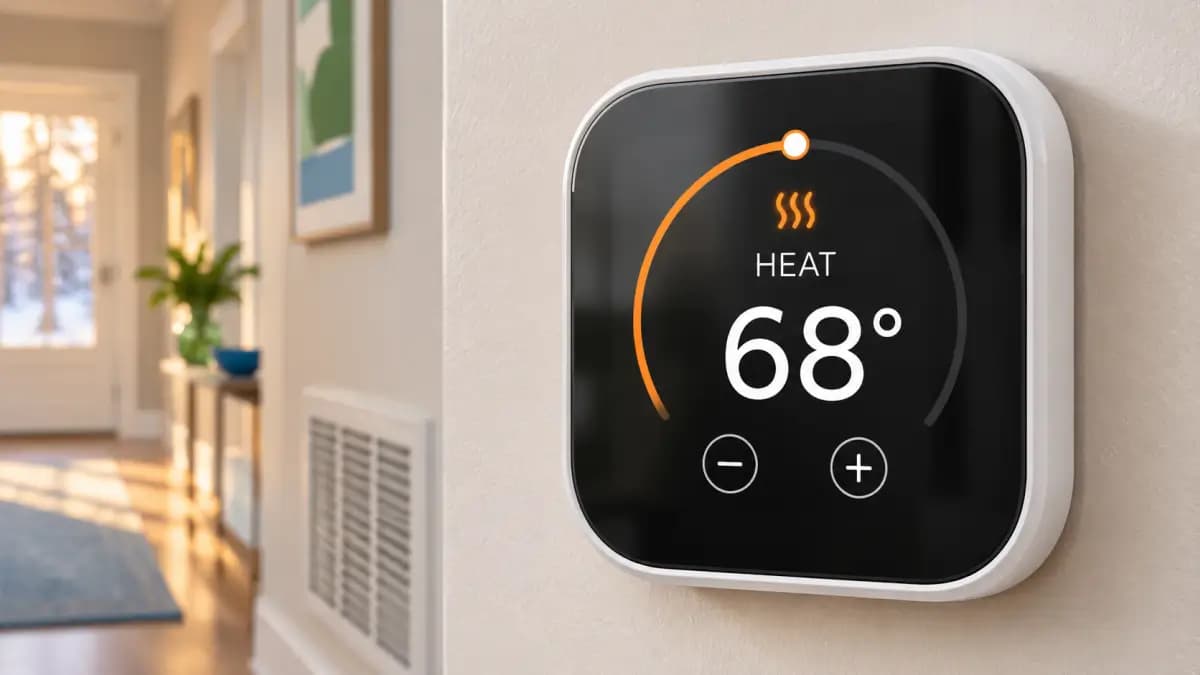
One quick test tells you whether your thermostat or your furnace needs the fix. Set the thermostat to Heat, raise it 5 degrees above room temperature, and listen at the furnace. If the inducer fan starts within a minute or two, your thermostat is doing its job.
That points to the furnace side, and a clogged filter is the first thing to rule out. The quick quiz below matches your furnace with the right Filterbuy filter.
The Thermostat Or Furnace Test
Two steps, then read the result.
Set Heat 5 Degrees Higher
Heat mode on, fan on Auto, and the setpoint 5 degrees above room temperature.
Listen At The Furnace
Give it a minute or two. You're listening for the inducer fan, the small fan that starts first.
Then Read The Result
Inducer Fan Starts
Your thermostat works. Check the furnace filter first, then the furnace itself.
Screen On, Nothing Starts
Check Heat mode, then the R and W wires at the thermostat.
Screen Is Blank
Replace the batteries, then check the breaker, service switch, and blower door.
Find The Right Filter For Your Furnace
Answer a few quick questions and we'll match your furnace with the right filter.
A furnace thermostat is the low-voltage wall control that tells a furnace when to start and stop heating. Most run on 24 volts and call for heat through the R and W wires, while many older wall and floor furnaces use a self-powered millivolt circuit. The voltage, the wire count, and the number of heating stages decide which replacement fits and whether a smart model will work.
TL;DR
When a furnace thermostat seems dead, first find out which side failed. A blank screen points to lost power, while a working screen with no furnace response points to wiring or the furnace. Before buying a replacement or smart thermostat, confirm the furnace's voltage, number of heat stages, and whether it uses a brand-specific communicating control.
Key Takeaways
A furnace thermostat starts heat by connecting the R (power) wire to the W (heat) wire.
Millivolt wall and floor furnaces need a thermostat rated for 750 millivolts.
On a replacement, a missed jumper between the Rh and Rc terminals can leave the heat with no power.
Two-stage furnaces need W2 or a board-timed second stage, and communicating furnaces work best with the brand control.
If the inducer fan starts after a call for heat, the thermostat works and the problem is in the furnace.
Why a Filter Maker Wrote This Furnace Thermostat Guide
Filterbuy makes air filters, not thermostats, and that shapes our approach. The thermostat starts the furnace, and the filter decides how well air moves once it runs. A clogged filter can overheat the furnace and shut off the burners while the thermostat keeps calling, which looks like a dead thermostat. So this guide checks power and airflow before recommending new hardware.
What Does a Furnace Thermostat Do?
A furnace thermostat is a temperature-sensing switch. Below the setpoint, it closes a low-voltage circuit between R and W. The furnace control board then runs its start-up sequence: the inducer fan clears exhaust, then ignition, burners, and finally the blower once the heat exchanger warms.
A gas furnace often needs a minute or two before warm air reaches the vents, so a short pause is normal. Filterbuy's how a furnace works explainer shows the full sequence.
Furnace Thermostat Wiring: Which Setup Do You Have?
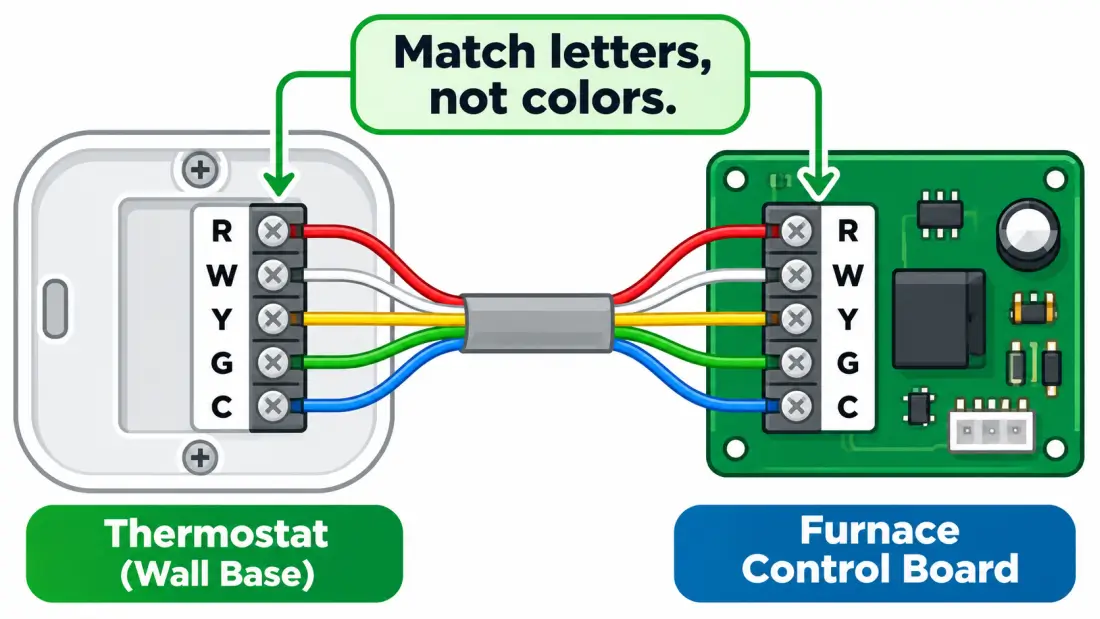
Furnace thermostat wiring depends on the heating setup. A heat-only furnace uses two wires (R and W). A furnace with central air uses four or five (R, W, Y, G, and often C, the common wire for steady power), and a two-stage furnace adds W2 for second-stage heat. Read the terminal letter, not the wire color.
Before touching wires, switch off power and photograph the connections. As a filter maker, Filterbuy watches the G terminal most closely. It runs the blower without heat, keeping air moving through your filter between heating cycles. Our thermostat wiring colors guide explains each letter in detail.
Furnace Thermostat Not Working? Find Out Which Side Failed
When a furnace thermostat is not working, the fastest diagnosis is deciding which side failed. Filterbuy built the checks below around one question: did the furnace answer the thermostat?
Set the mode to Heat, the fan to Auto, and the setpoint 5 degrees above room temperature.
If the screen is blank, replace the batteries, then check the breaker and the furnace service switch. Our blank thermostat screen guide goes deeper.
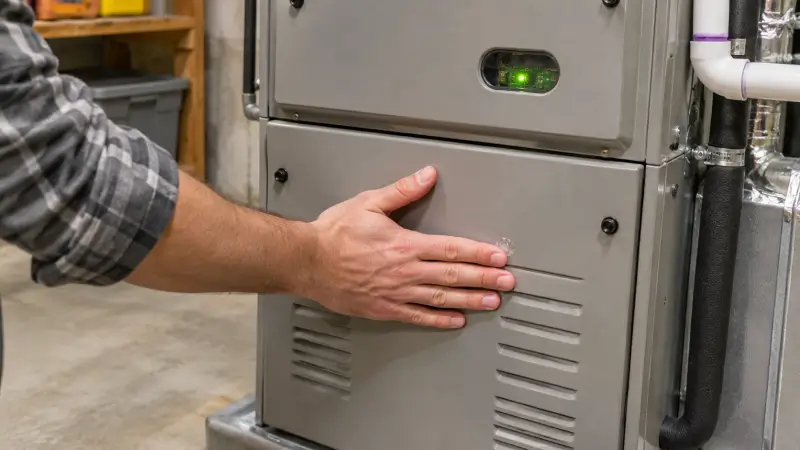
Press the blower access panel firmly into place. A loose panel trips a door switch that cuts power to the furnace and thermostat.
Check the board status light. No light with power on can mean a blown board fuse from a shorted thermostat wire.
Listen after the call for heat. If the inducer fan starts, the thermostat did its job and the problem sits in the furnace.
For a furnace that clicks but won't light, see furnace clicking but not turning on. For cool vents, use the furnace blowing cold air checklist. Call a licensed HVAC technician if you smell gas, see scorch marks on the control board, or a replacement fuse blows again.
Two Settings That Cause False Alarms After a New Install
First, set the heating type to gas or fossil fuel. Set to electric heat, the thermostat starts the blower immediately and pushes cold air. Second, a wrong cycle rate, the setting for how often the furnace may start, causes short cycles, so use the manual's value for a gas furnace. If problems continue, our thermostat reset and troubleshooting guide covers resets.
Furnace Thermostat Replacement: How to Pick a Compatible Model
A compatible furnace thermostat replacement matches the furnace's control voltage, heat stages, and power source. Filterbuy's rule: match the thermostat to the furnace you have.
Voltage: A transformer in the furnace means 24 volts. A pilot-powered gas valve with no transformer means millivolt. Line-voltage thermostats are for electric baseboard heat and won't run a furnace.
Stages: Check the furnace label or manual for two-stage or modulating.
Power: Wi-Fi models usually need a C wire. Battery models don't.
Jumpers: Note any metal jumper between Rh and Rc, the heating and cooling power terminals, on the old base. A missed jumper can leave heat with no power.
Older thermostats with a glass bulb contain mercury and belong at a recycling drop-off. Our step-by-step thermostat replacement guide covers installation, and our thermostat replacement cost breakdown compares DIY and pro pricing.
Smart Furnace Thermostat Compatibility
Most gas furnaces work with a smart furnace thermostat once it has steady power. Two-wire heat-only setups, two-stage furnaces, and communicating systems need extra checks, and millivolt furnaces generally aren't compatible.
Smart thermostats that borrow power through a two-wire heat circuit can make some furnaces click or short cycle. A C wire, an adapter kit at the furnace, or a battery-powered smart model solves this. Our guide to what a C wire does compares those options.
A smart thermostat with W1 and W2 controls both stages of a two-stage furnace. Many two-stage furnaces can also time stage two from a single-stage thermostat, so check the manual first.
Communicating systems exchange data with a brand wall control. ENERGY STAR notes that owners of the highest efficiency equipment may want a controller from the same company. Filterbuy rates a runtime-based filter reminder as the most useful smart feature. Some models offer one that counts blower run hours.
How to Optimize a Furnace Thermostat for Winter
An optimized furnace thermostat holds a steady setpoint while you're home and sets back several degrees overnight or while the house is empty. A smart schedule automates it. Our season-by-season thermostat settings suggest starting points.
Use a 7 to 10 degree setback. Shutting the heat off completely can risk frozen pipes.
Keep the blower on Auto in most homes. A smart circulate or fan-minimum setting runs the fan a few minutes each hour, moving air through your filter without running nonstop. Our furnace fan On or Auto comparison covers the trade-offs.
Keep the thermostat on an interior wall away from vents, sunlight, and exterior doors.
Match the filter reminder to your filter, and reset the filter reminder after each swap.
Check the furnace filter monthly in winter. Filterbuy MERV 8 air filters are the standard choice for most homes, MERV 11 suits allergies, asthma, pets, and pollen, and MERV 13 is the pick for smoke. Check your HVAC manual for compatibility, just like you'd confirm your filter size.
Supporting Statistics
47% of U.S. homes heat with natural gas.
Gas was the main heating fuel in 47% of homes in 2024.
These checks apply to nearly half of homes.
Source: Electricity Use Is Becoming More Common for Residential Heating
Smart thermostats cut gas heating use by about 13%.
Cadmus evaluated utility pilots with about 1,400 customers.
Smart thermostat users: 12.5% to 13.4% less heating gas.
Programmable thermostat users: 5.0% to 7.8% less.
Savings start with correct wiring and power.
Source: Smart Thermostats and the Triple Bottom Line: People, Planet, and Profits
Half of surveyed homes left thermostats on hold.
Berkeley Lab researchers found half had thermostats on long-term hold.
20% had the wrong clock time.
Either one stops a setback from running.
Frequently Asked Questions
How Do I Know If My Furnace Thermostat Is Bad?
A furnace thermostat is likely bad when the screen, settings, and wires check out but the furnace only runs when a technician jumps R to W at the control board.
Can I Replace a Gas Furnace Thermostat Myself?
Most homeowners can replace a 24-volt gas furnace thermostat with the power off and the wiring photographed. Call a licensed HVAC technician for communicating systems, damaged wires, or a new C wire.
What Should I Tell an HVAC Technician About a Thermostat Problem?
Share three details: what the thermostat screen shows, whether the inducer fan starts after a call for heat, and the blink code on the furnace status light. Those answers point to which side failed and can shorten the visit.
Why Does My Thermostat Say Heat On But the Furnace Isn't Heating?
If heat doesn't arrive after a few minutes, suspect the high-limit switch (the furnace's overheat cutoff), ignition, or gas supply. Our guide to why heat won't reach the set temperature covers slow heating.
Can a Dirty Furnace Filter Make the Thermostat Look Broken?
Yes. A clogged filter can overheat the furnace until the high-limit switch shuts the burners off while the thermostat keeps calling. Filterbuy recommends checking the filter first. Our guide to a thermostat that clicks with no heat covers the next checks.
Help Your Furnace Answer the Call for Heat
A thermostat can only call for heat, and the furnace needs clean airflow to deliver it. Filterbuy filters are cut, pleated, and framed to order in our own US plants. They come in MERV 8, MERV 11, and MERV 13 across hundreds of sizes, with fast and free 2-day delivery to most US states. Find your furnace filter size and set up auto-delivery so a fresh filter arrives before the next cold snap.
Glossary
R Wire: The thermostat wire that carries 24-volt power from the furnace transformer.
W Wire (W1): The thermostat wire that calls for first-stage heat from a furnace.
C Wire: The common wire that gives a thermostat continuous 24-volt power.
Millivolt System: A control circuit powered by a pilot flame generator, common on wall and floor furnaces.
Inducer Fan: The small fan that starts first on a gas furnace call for heat and vents combustion gases.
Control Board: The furnace circuit board that turns thermostat signals into ignition and blower operation.
Blower Door Switch: A safety switch that cuts furnace power when the blower panel is open or loose.
High-Limit Switch: A safety switch that shuts off the burners when the furnace overheats.
Dual Fuel System: A heat pump paired with a gas furnace, switching between them by outdoor temperature.