
Thermostat Clicks but Nothing Happens? How to Trace the Problem
November 20, 2026
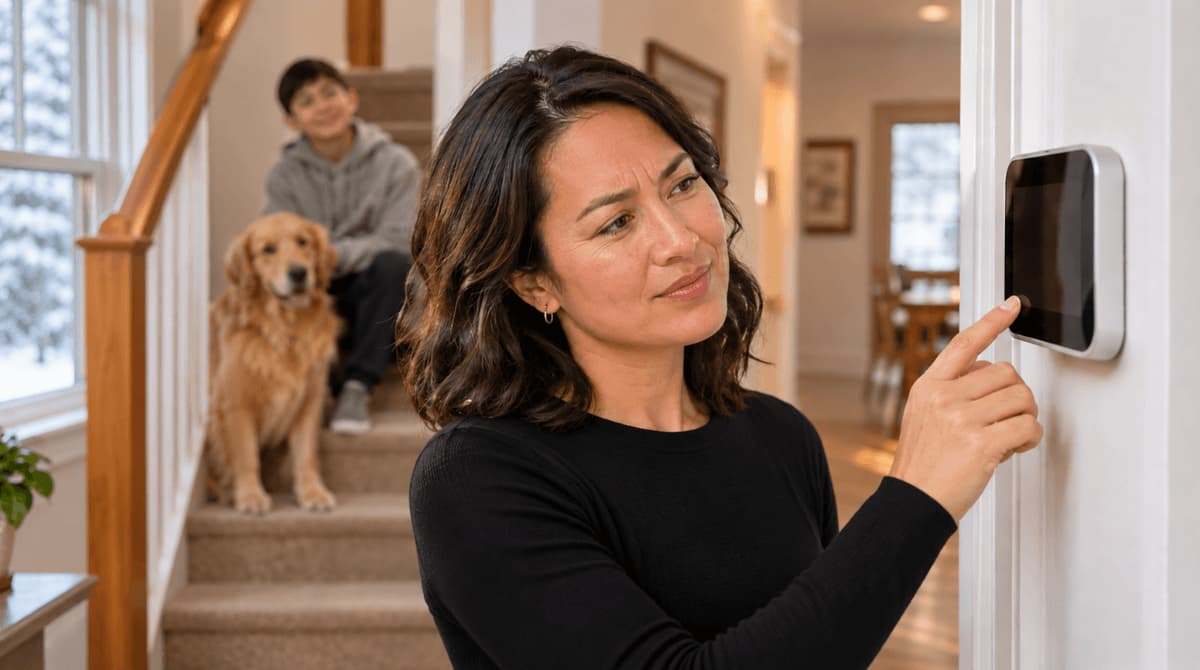
A click means your thermostat did its job: it sent a 24-volt call for heat or cooling. If nothing starts after the click, the problem is usually at the furnace, air handler, or outdoor unit, not the thermostat.
Check the simple things first: the breaker, the furnace switch, the blower door, the condensate drain, and the air filter. A clogged filter can overheat a furnace or freeze an AC coil, and either one shuts the system down.
Not sure which filter fits your system? Take the quick filter match quiz below, or shop air filters at Filterbuy.
Trace the signal
Where did the signal stop after the click?
The click proves the call left the thermostat. Listen and look at what happens next.
1 · THERMOSTAT ✓
Clicks: the relay sent the call
2 · FURNACE OR AIR HANDLER →
Should start within about a minute
3 · OUTDOOR UNIT (AC) →
May wait up to 5 minutes to start
NO POWER · DIY CHECK
Nothing happens, status light is off
LIKELY CAUSE
The furnace isn't getting power
FIRST CHECK
Furnace switch, breaker, and blower door switch
OVERHEATING · CHECK THE FILTER
Burners light, then shut off within minutes
LIKELY CAUSE
The high-limit switch shut off the burners
FIRST CHECK
The air filter and any closed vents
COOLING STALL · DIY CHECK
Indoor fan runs, outdoor unit is silent
LIKELY CAUSE
Float switch, compressor delay, or outdoor power
FIRST CHECK
Drain pan, wait 5 minutes, outdoor disconnect
THERMOSTAT POWER · DIY CHECK
Clicks over and over, or the screen reboots
LIKELY CAUSE
Thermostat power or wiring
FIRST CHECK
Batteries, C-wire, and loose terminals
IGNITION · CALL A PRO
Inducer runs, burners don't light
LIKELY CAUSE
Pressure switch, igniter, or flame sensor
FIRST CHECK
Look for blocked vent pipes, then call a pro
ELECTRICAL PART · CALL A PRO
Outdoor unit hums, fan doesn't spin
LIKELY CAUSE
A failed capacitor or contactor
FIRST CHECK
Don't touch it. Capacitors hold a dangerous charge
Safety first: If you smell gas or a CO alarm sounds, leave the home and call the gas utility or 911 from outside. Turn off power before opening a panel, and never tape, jump, or bypass a safety switch.
Rule out the filter before you call for service
Answer a few quick questions and we'll match you to the right filter for your home.
Already know your size?
TL;DR
When a thermostat clicks but the heat or AC never starts, the thermostat has usually done its job. That click is a relay sending a low-voltage call to the furnace or air handler, so the problem is downstream: a tripped breaker, a furnace switch turned off, an open blower door switch, a tripped safety switch or a clogged condensate drain. Work through those, along with the air filter, before you replace the thermostat.
Key Takeaways
The click is a relay sending a 24-volt call, so a silent system points to the HVAC equipment.
A loose furnace panel opens the blower door switch and cuts the control circuit.
The support team at Filterbuy, a U.S. air filter manufacturer, sees a clogged air filter as the most common preventable cause of winter furnace shutdowns.
Give the AC five minutes after a restart; a built-in compressor delay may be holding it off.
Leave the house and call your gas utility from outside if you smell gas or hear a CO alarm.
What Does It Mean When the Thermostat Clicks but Nothing Happens?
A thermostat click with no heat or air means the thermostat sent its signal, but the furnace, air handler or outdoor unit didn't act on it. Inside most thermostats, a small relay connects the red (R) wire to the white (W) wire for heat, yellow (Y) for cooling or green (G) for the fan.
At Filterbuy, we think of the click as a doorbell. If the bell rings and nobody answers, the problem is inside the house, not the button. Carrier, the HVAC manufacturer, makes the same point: the signal arrives, but the furnace doesn't respond.
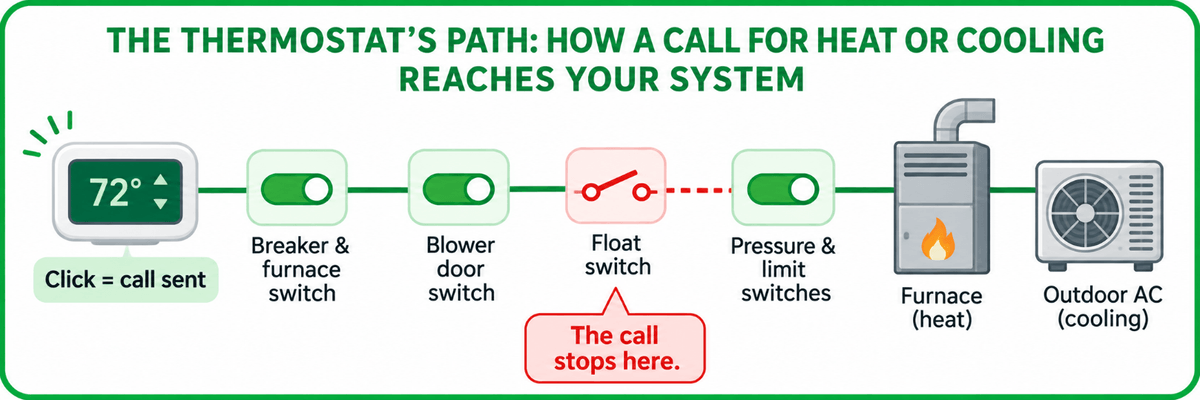
Along the way, that 24-volt call passes through a chain of safety switches, and one open switch is enough to stop it.
Safety First: When to Stop and Call for Help
Don't troubleshoot at all if you smell gas (like rotten eggs) or a carbon monoxide (CO) alarm goes off. Instead, leave the house and call your gas utility or 911 from outside, then read Filterbuy's guide on what to do if your furnace smells like gas. For every other check:
Turn off power at the furnace switch or breaker before removing a panel.
Never tape down, jump or bypass a safety switch. Each one exists to stop a hazard such as fire or carbon monoxide.
Leave gas valves, burners, wiring repairs and refrigerant work to a licensed technician.
Start Here: What Changed Right Before It Went Quiet?
The fastest clue is often whatever changed just before the system stopped responding.
Where Did the Signal Stop? Listen and Look After the Click
If nothing obvious changed, let the equipment tell you where the call stopped. Call for heat or cooling and compare what happens with this table.
How to Trace the Problem, Step by Step
Work from the quickest checks toward the ones that take more effort.
Confirm the settings. Set the mode to Heat or Cool and the fan to Auto, then move the setpoint 3 to 5 degrees past room temperature, as Carrier recommends. Replace the batteries if it uses them.
Give cooling five minutes. A built-in compressor delay may be holding the AC off.
Check the furnace switch and breaker. The service switch looks like a light switch near the unit. A breaker resting in the middle position has tripped, so push it fully off, then on. If it trips again, stop there: a furnace that keeps tripping the breaker needs a technician.
Reseat the furnace door. Press the blower panel in until it closes the door switch.
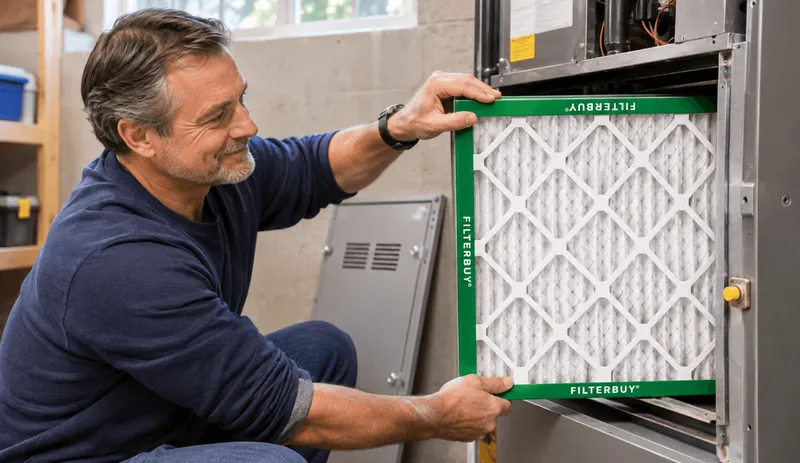
Check the air filter. A dust-packed or backward filter chokes airflow, which can overheat a furnace or freeze an AC coil. The arrow on the frame should point toward the furnace.
Check the condensate drain. Standing water in the drain pan or condensate pump usually means the float switch has cut the call.
Read the status light. Most modern furnaces blink a fault code through a small window in the door, and the chart inside the panel decodes it.
Check the outdoor disconnect. For cooling, make sure the disconnect box beside the outdoor unit is on.
What Filterbuy Sees From the Filter Side of the Furnace
Filterbuy has made air filters in the U.S. since 2013, and every winter the same three filter problems turn up behind silent furnaces.
A clogged filter starves the furnace of air. Our support team sees this as the most common preventable cause of winter furnace shutdowns.
A filter upgrade outruns the system. Moving to a higher MERV rating than an older furnace was built for can trip the high-limit switch, a pattern we've seen thousands of times.
The fit is wrong. Our manufacturing team sees the wrong depth as the most common ordering mistake. As Filterbuy's Michelle Wan puts it, "A rating describes the media, not the gap around it."
When a furnace quits right after a filter change, Filterbuy's guide to why a furnace stops heating after a filter change puts it plainly: "The filter change didn't create the problem. It exposed it."
Thermostat Clicking but No Heat: Furnace Causes
If the furnace stays silent after the click, a safety control is usually holding the burners off.
Pressure switch: Confirms the inducer is venting exhaust safely.
High-limit switch: Shuts the burners off when the furnace overheats.
Ignitor or flame sensor: A cracked ignitor won't light the burners, while a dirty flame sensor lets them light and then shuts them down seconds later.
For other heating problems, see Filterbuy's full furnace troubleshooting guide.
Thermostat Clicks but AC Doesn't Turn On: Cooling Causes
When the AC is the one that won't start, check the condensate drain, the outdoor power and the compressor delay first.
Float switch: A clogged drain line fills the pan and trips the switch. The U.S. Department of Energy recommends running a stiff wire through the drain channels now and then.
Contactor or capacitor: A unit that hums without its fan spinning likely needs one replaced, which is a technician job because capacitors hold a dangerous charge.
Frozen evaporator coil: A clogged filter can ice up the coil. As the ice melts, the extra water can overwhelm the drain and trip the float switch.
Could the Thermostat Itself Be the Problem?
The thermostat is the likely culprit only when the click is erratic, the screen dims or reboots, or the relay clicks without calling for anything. A relay that clicks over and over usually means the thermostat is losing power, from weak batteries, a missing common (C) wire on a smart thermostat or a loose terminal.
When to Call a Licensed HVAC Technician
Call a licensed HVAC technician if the basic checks don't bring back heat or cooling, or if the same switch or breaker trips again after a reset. Also call for:
A fault code pointing to the pressure switch, limit switch, ignition or gas valve
Burning smells, scorching or water around the furnace
What to Tell the Technician
What you saw and heard after the click (match a row in the table above)
The status-light blink code
Your filter size, MERV rating and last change date
What changed first, such as a new filter or thermostat
“On winter service calls, the row I see most is the furnace that lights and then shuts off within minutes. That usually traces back to the filter slot,” says David Clark, Licensed HVAC Technician at Filterbuy HVAC Solutions.
How to Keep It From Happening Again
A clogged filter or blocked drain is behind many silent-system calls, and both are easy to prevent.
Change your air filter on schedule. The Department of Energy says replacing a dirty, clogged filter can lower an air conditioner's energy use by 5% to 15%.
Flush the condensate drain at the start of cooling season.
Book an annual tune-up before heating season, as the EPA recommends for furnaces, so a technician can test the safety switches.
Filterbuy makes air filters in more than 600 sizes at its plants in Alabama, Florida, Pennsylvania and Utah, so finding the right fit is easy. Find your filter size, then set up Filterbuy auto-delivery so a clean filter shows up on time.
Nearly half of a home's energy goes to heating and cooling, according to ENERGY STAR, which advises checking your filter monthly and changing it at least every three months.
Supporting Statistics: Why These Checks Matter
These national figures show why a careful, safety-first trace matters.
Frequently Asked Questions
Why Does My Thermostat Click but the Furnace Doesn't Turn On?
Something at the furnace stopped the call, usually a tripped breaker, a loose blower door, a tripped safety switch or a failed ignitor.
Why Does My Thermostat Click but No Air Comes Out?
If no air moves, check the breaker, furnace switch and blower door. If the fan runs but the air isn't cold, look for a tripped float switch or a silent outdoor unit.
Is a Clicking Thermostat Relay Normal?
Yes. One click when a cycle starts and another when it ends is normal. Rapid clicking usually means the thermostat is short on power.
Can a Dirty Air Filter Stop My Furnace From Turning On?
Yes. A clogged filter can overheat the furnace until the high-limit switch shuts off the burners.
How Long Should I Wait After the Thermostat Clicks?
Give a furnace about a minute to run its startup sequence, and give an AC up to five minutes for the compressor delay.
Glossary
Thermostat relay: Clicks as the thermostat sends a call.
24-volt control circuit: Low-voltage wiring that carries the thermostat's call.
C-wire (common wire): Gives a smart thermostat continuous power.
Blower door switch: Cuts power when the furnace access panel is loose.
Pressure switch: Confirms exhaust is venting before ignition.
High-limit switch: Turns off the burners when the furnace overheats.
MERV rating: A 1–16 scale for how well a filter captures particles.
Flame sensor: Confirms the burners are lit.
Condensate float switch: Shuts the system off when the drain backs up.
Compressor delay: Holds the compressor off for a few minutes after a shutdown.
Contactor: Starts the outdoor compressor and fan.
Capacitor: Helps outdoor motors start and stores a dangerous charge.
Sources
Heat & Cool Efficiently, ENERGY STAR
Protect Your Family and Yourself from Carbon Monoxide Poisoning, U.S. Environmental Protection Agency
Nearly 90% of U.S. households used air conditioning in 2020, U.S. Energy Information Administration
Heating Fires in Residential Buildings (2017–2019), U.S. Fire Administration
Carbon Monoxide (CO) Poisoning Basics, Centers for Disease Control and Prevention
Air Conditioner Maintenance, U.S. Department of Energy