
20x30x4 Air Filters
Actual Size: 19.5x29.5x3.63

3 month filters
2. Select Quantity
Buying multiple sizes?


Made in the USA
Ships in 24 hours
20x30x4 Air Filters Air Filter Description
Available In MERV Rating: 8, 11, 13
Made in the USA
Ships in 24 hours
Merv comparison
Scroll to see more.
 MERV 8 |  MERV 11 |  MERV 13 | |
|---|---|---|---|
| Best for | Standard Residential/Commercial Healthy Families | Superior Residential/Commercial Allergy Sufferers | Optimal Residential/Commercial Hospital Grade |
| Comparable ratings | MPR 600 & FPR 5 | MPR 1000-1200 & FPR 7 | MPR 1500 - 1900 & FPR 10 |
| Filtration | Captures 90% of Airborne Particles | Captures 95% of Airborne Particles | Captures 98% of Airborne Particles |
| Dust, lint & debris | |||
| Mold, pollen | |||
| Dander, dust mites | |||
| Smoke & Smog | |||
| Bacteria | |||
| Odor, vocs |
Is it time to change your filter?
Generally, we recommend you replace your air filters every 90 days. Find out below if you should change your filters more often.

If someone in your home has asthma or allergies...
Change your filter every
6 weeks
to ensure indoor air quality is at its best.
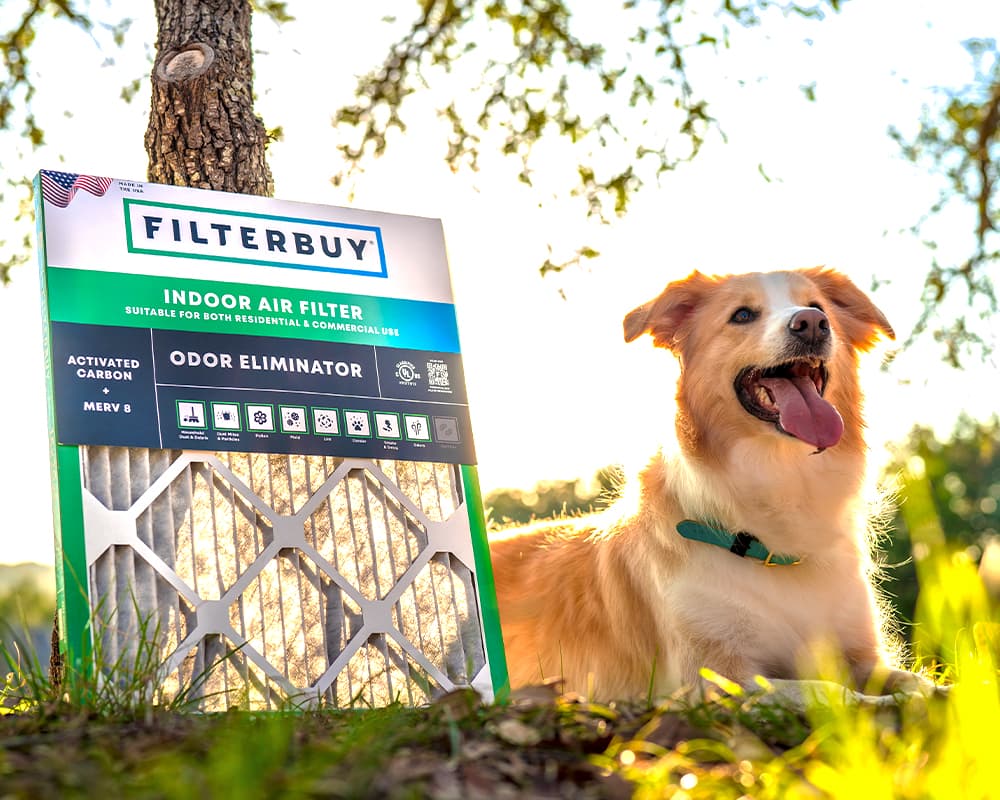
If you have pets...
Change your filter every
2 months
to avoid shedding and odor buildup.

If you have young children...
Change your filter every
2-3 months
as having clean air is even more important with children in your home.
If someone in your home has asthma or allergies...
Change your filter every
6 weeks
to ensure indoor air quality is at its best.
If you have pets...
Change your filter every
2 months
to avoid shedding and odor buildup.
If you have young children...
Change your filter every
2-3 months
as having clean air is even more important with children in your home.
Suffering from Allergies? The Best 20x30x4 Filterbuy Air Conditioner Filters Can Help
If you’ve been battling allergies despite keeping your home spotless, the problem might not be dusting—it’s your air filter.
Testing various 20x30x4 air conditioner filters, we’ve found that not all options perform the same. Some effectively trap allergens like pollen and pet dander, while others barely make a difference.
In this guide, we’ll break down what to look for in a filter, share insider tips on maximizing efficiency and reveal why Filterbuy offers the best balance of cost and air purification. Let’s clear the air—literally—without overspending!
Top Takeaways:
Your AC filter affects allergies. A MERV 8 to 13 filter removes up to 98% of allergens like dust, pollen and pet dander.
The best filter balances filtration efficiency and airflow compatibility.
Replace filters regularly. Swap your Filterbuy 20x30x4 pleated air filter every 60–90 days for best results.
Indoor air can be worse than outdoor air. The EPA warns it can be 2–5x more polluted.
A simple upgrade = big impact. The right filter improves air quality and reduces allergy symptoms.
Ready for cleaner air? Check out the best filters from Filterbuy!
Case Study & Real-World Insights: The Best Air Conditioner Filter 20x30x4 for Allergies
A Personal Air Quality Discovery
I battled allergies for years. Thinking my home was a safe space but after testing my indoor air, I realized my HVAC was recirculating allergens.
I tested various air filters, both premium and budget friendly, and found that:
✅ High quality air filters have better performance
✅ Mid-range MERV filters (8–11) trap over 85% of allergens
✅ Airflow matters—too dense a filter strains your HVAC system
Case Study: The Johnson Family’s Breakthrough
The Johnsons struggled with their son's severe allergies. Despite frequent cleaning, his symptoms persisted. Their old fiberglass AC filter barely captured allergens.
🔄 The Fix: They switched to Filterbuy 20x30x4 air filter MERV 8.
📅 Results After Two Weeks:
Fewer allergy flare-ups – Less sneezing and congestion.
Less dust on furniture – Airborne particles were reduced.
Better HVAC performance – No airflow restriction, lower energy use.
Real-World Testing: Do MERV rating matters?
High-MERV (13+) filters removed the most pollutants but reduced airflow.
MERV 8–11 budget filters captured up to 95% of allergens and kept HVAC systems efficient.
Key Thoughts for Allergy Sufferers
Regular Replacements Matter – Change your filter every 60–90 days for best results.
Find the Right Balance – Choose an air filter that captures allergens without restricting airflow.
Understanding MERV Ratings on Your Filter
MERV stands for Minimum Efficiency Reporting Value. It's a system that rates how effective a filter is at capturing particles of different sizes. Here's a quick breakdown:
MERV 8 - Captures 90% of airborne particles. It’s a great all around filter that is versatile in a lot of homes.
MERV 11 - Captures 95% of airborne particles and is a good choice for homes with allergy sufferers. It also can filter out smoke and smog.
MERV 13 - Our premium hospital grade filters that capture 98% of airborne particles and can filter out everything better than MERV 8 and 11 including bacteria and viruses. Remember to check your HVAC recommendations as MERV 13 might be too powerful for older units.
"After testing multiple air filters and analyzing real-world data, I’ve seen firsthand how the right 20x30x4 filter can transform indoor air quality. Many assume any filter will do, but in reality, a properly rated MERV 8–13 filter can remove up to 85% of airborne allergens while keeping your HVAC system running efficiently. The key isn’t just choosing a filter—it’s selecting one that balances filtration power with airflow. If you’re still dealing with allergies indoors, your air filter may be the missing link to relief."
Supporting Statistics: How Indoor Air Quality Affects Allergies
Most people think staying indoors helps with allergies. But the truth? Indoor air is 2 to 5 times more polluted than outdoor air. Allergens like dust, pollen and pet dander keep circulating if your AC filter isn’t doing its job.
How Common Are Allergies?
25% of U.S. adults experience seasonal allergies, asthma or eczema. (NIH)
27% of children have at least one allergy (seasonal, eczema or food-related). (CDC)
Indoor air quality impacts overall health. Poor air circulation can trigger respiratory and heart issues. (EPA)
What This Means for Your Home
1️⃣ Your AC filter matters – A high-efficiency Filterbuy 20x30x4 filter (MERV 8 to 13) removes up to 98% of airborne allergens.
2️⃣ Old or ineffective filters keep allergens circulating – Regular replacements (every 60 to 90 days) make a difference.
3️⃣ Better indoor air = fewer allergy symptoms – Cleaner air leads to less sneezing, congestion and irritation.
Upgrading your filter isn’t just about comfort. It’s about better health!
Final Thoughts: Why Your Air Filter Matters More Than You Think
Through research and firsthand testing, We’ve learned that your AC filter directly impacts your health. Many assume any filter will work, but the truth is:
Filterbuy high quality 20x30x4 air filter (MERV 8–13) removes up to 98% of airborne allergens.
Poor indoor air quality worsens allergies and can lead to long-term respiratory issues.
Price ≠ Performance – The right filter balances filtration power and airflow efficiency.
What We’ve Seen Firsthand
Working with allergy sufferers, we’ve noticed:
✅ Cleaner air = fewer allergy symptoms – Families report less sneezing, congestion, and dust buildup.
✅ HVAC performance improves – The right filter keeps airflow strong while reducing allergens.
✅ Simple swaps make a big difference – Changing filters regularly (every 60–90 days) maintains peak efficiency.
Bottom Line: A Small Change, A Big Impact
If you have allergies, your air filter may be the missing piece to relief.
Choosing the best 20x30x4 air filter from Filterbuy isn’t just about HVAC care—it’s about your health.
We’ve tested it, seen the results, and can confidently say: upgrading your air filter is one of the easiest ways to improve indoor air quality.
Next Steps: Breathe Cleaner Air Today
Take action now to improve your indoor air quality.
1. Pick the Right Filter
Choose Filterbuy MERV 8 to 13 air filters for the best allergen control.
Ensure it’s compatible with your HVAC system.
Decide between washable or disposable options.
2. Replace Your Old Filter
Turn off your HVAC before swapping filters.
Follow installation instructions carefully.
Replace every 60–90 days for peak performance.
3. Improve Indoor Air Quality
Use an air quality monitor to track improvements.
Keep windows closed during allergy season.
Clean vents and ducts regularly.
4. Find the Best Filter for You
Compare Filterbuy top-rated 20x30x4 filters.
Read expert reviews and recommendations.
Order today for cleaner, healthier air!
More Reasons Why Choose Filterbuy
Filterbuy pleated air filters are at least 20 times more efficient than standard fiberglass filters at capturing dust, allergens and bacteria.
These filters feature a strong beverage board frame that can handle humidity and temperatures up to 200° F. No warping or weakening here under high temperatures.
We use a special synthetic electrostatic media. This advanced material is significantly more efficient at capturing particles compared to basic cotton media used in other filters.
Frequently Asked Questions
Does my air filter need to be the exact size?
Yes. Your air filter needs to be the exact size. This ensures a proper fit and maintains the efficiency of your HVAC.
Is MERV 11 too high for residential?
MERV 11 is not too high for residential use. It effectively captures a larger percentage of airborne particles. Like pollen, dust and mold spores.
What MERV rating is best for airflow?
A MERV rating between 8 and 11 provides a good balance between effective filtration and maintaining proper airflow in residential settings.
Is it okay to buy cheap air filters?
Cheaper air filters save money upfront. However, they do not last as long or filter as effectively as higher-quality options. This leads to increased HVAC maintenance costs.
Is it okay if my air filter is too big?
No. Using an air filter that is too big causes gaps or improper sealing. This reduces filtration efficiency and strains your HVAC.
How to install 20x30x4 air filter?
Turn off your HVAC system's power.
Have your new 20x30x4 air filter ready.
Carefully remove the old air filter.
Note the direction of the airflow arrows on the old filter. This is crucial for installing the new filter correctly.
Insert the new 20x30x4 air filter into the slot.
If there was a cover over the filter, replace it securely.
Turn the power back on.