
24x24x1 Air Filters
Actual Size: 23.38x23.38x0.75

3 month filters
2. Select Quantity
Buying multiple sizes?


Made in the USA
Ships in 24 hours
24x24x1 Air Filters Air Filter Description
Available In MERV Rating: 8, 13, 11, Odor Eliminator
Made in the USA
Ships in 24 hours
Merv comparison
Scroll to see more.
 MERV 8 |  MERV 11 |  MERV 13 |  Odor Eliminator | |
|---|---|---|---|---|
| Best for | Standard Residential/Commercial Healthy Families | Superior Residential/Commercial Allergy Sufferers | Optimal Residential/Commercial Hospital Grade | ODOR ELIMINATOR Residential/Commercial Household Odors |
| Comparable ratings | MPR 600 & FPR 5 | MPR 1000-1200 & FPR 7 | MPR 1500 - 1900 & FPR 10 | MPR 1000-1200 & FPR 7 |
| Filtration | Captures 90% of Airborne Particles | Captures 95% of Airborne Particles | Captures 98% of Airborne Particles | Captures 95% of Airborne Particles |
| Dust, lint & debris | ||||
| Mold, pollen | ||||
| Dander, dust mites | ||||
| Smoke & Smog | ||||
| Bacteria | ||||
| Odor, vocs |
Is it time to change your filter?
Generally, we recommend you replace your air filters every 90 days. Find out below if you should change your filters more often.

If someone in your home has asthma or allergies...
Change your filter every
6 weeks
to ensure indoor air quality is at its best.
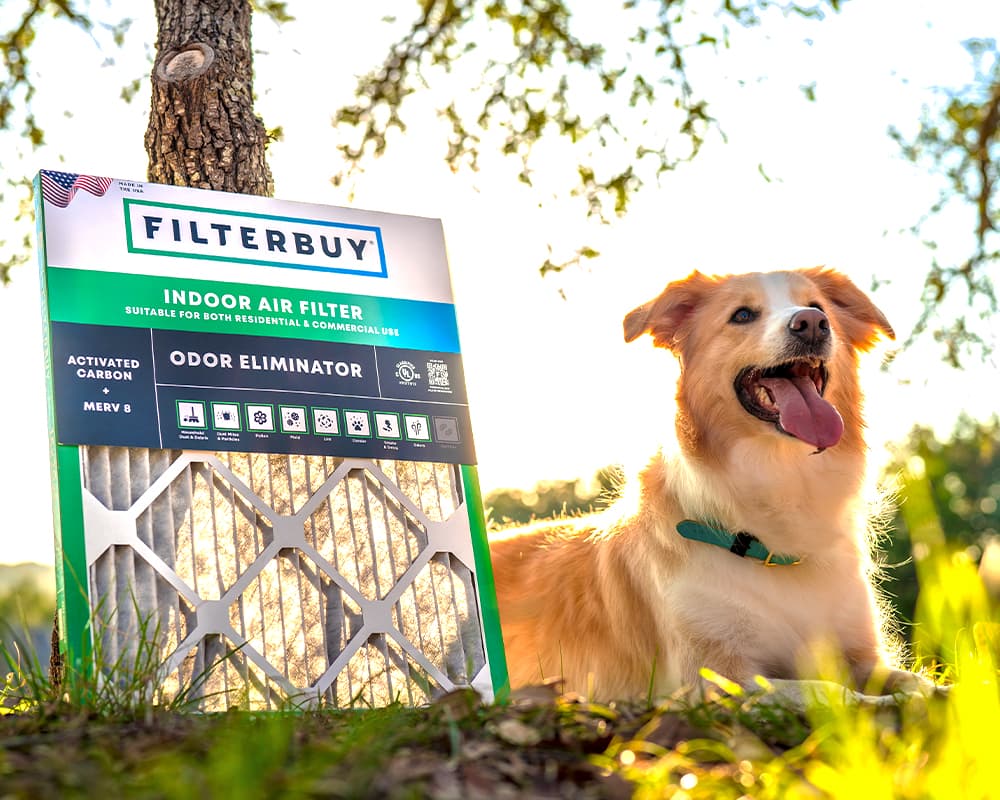
If you have pets...
Change your filter every
2 months
to avoid shedding and odor buildup.

If you have young children...
Change your filter every
2-3 months
as having clean air is even more important with children in your home.
If someone in your home has asthma or allergies...
Change your filter every
6 weeks
to ensure indoor air quality is at its best.
If you have pets...
Change your filter every
2 months
to avoid shedding and odor buildup.
If you have young children...
Change your filter every
2-3 months
as having clean air is even more important with children in your home.
Transform Your Home's Air Quality With Long-Lasting 24x24x1 Air Filters
When the air smells bad, what will you do?
Try searching on Google. Even the most widely used browser will tell you one thing. Air Filters.
Indoor air quality is linked to your health. Take a closer look at your home. You might find hidden mold growth and dust in hard-to-reach places. These contribute to poor air quality and health problems.
HVAC experts recommend using high-quality air filters. This helps keep your home clean and free from harmful air pollutants.
Key Takeaways
Select 24x24x1 air filters featuring high MERV ratings for better airborne particle capture and improved air quality.
High-quality, durable furnace air filters 24x24x1 serve as a valuable investment for healthier, cleaner indoor air.
Opt for synthetic variants, as they trap smaller particles and last longer than other types.
Regularly inspect and promptly replace filters to maximize effectiveness, along with keeping your living space clean.
Understanding 24x24x1 Air Filters
The 24x24x1 air filter is the most bought. But it's important to consider the different types of filters available. To find the best fit for your home.
Numerous options exist on the market.
Pleated Filters: They gained popularity due to their excellent ability to capture small particles.
Fiberglass Filters: They often cost less but mightn't trap as many pollutants.
Washable Filters: They save you money over time. But don't perform as well regarding airflow efficiency.
So if you want to boost your indoor air quality going for a high-efficiency filter is the way to go!
Benefits of Long-Lasting Air Filters
A long-lasting air filter improves your indoor air quality. By trapping harmful pollutants and allergens. This leads to a healthier living environment. And improved overall well-being.
Longevity: Long-lasting air filters provide many advantages. It benefits both finances and overall health.
Energy Efficiency: Using fewer replacements saves money and energy. Such filters need less energy to function. This also helps in reducing carbon footprints, aiding environmental protection.
Allergy Relief: Durable filters help reduce allergens. This improves indoor air quality. It also creates a healthier and more comfortable living space.

Selecting Durable and Long-Lasting Filters
High-quality filter materials are important for long-lasting performance. And regular filter changes are crucial for maintaining good indoor air quality.
Understanding how filter materials relate to lifespan is essential. Filters crafted from denser materials, such as pleated or fiberglass options, typically last longer and provide superior filtration. But denser filters may need more energy to work.
Contrarily, Filters made from less dense materials may have shorter lifespans but allow for better airflow.
Choosing the Right Air Filters
Examine Filter Materials: Different filters have different benefits. Some options consist of pleated paper or cloth, while others utilize fiberglass or synthetic substances. Synthetic filters often last longer and capture smaller particles better.
Evaluate Filter Efficiency: The rating depends on the Minimum Efficiency Reporting Value. Higher MERV ratings mean better performance in trapping tiny particles.
However, overly high MERV filters restrict HVAC system airflow. Which makes them unsuitable for every situation.
Maintenance Tips for Air Filters
Air filter lifespan greatly affects indoor air quality. A dirty, clogged filter fails to clean effectively, resulting in poor air quality. Regular maintenance of air filters is essential.
Here are tips to extend filter lifespan and ensure optimal performance:
Check Filters Frequently: Inspect filters at least once monthly. When visibly dirty or clogged, replacement is necessary.
Understand Replacement Frequency: Depending on home air quality, filters require more frequent changes. Replacing every 60-90 days works as a general guideline.
Invest in Quality: Higher quality filters are more durable and perform better. Spending a bit more on a good filter pays off.
Install Correctly: A misaligned filter won't function efficiently. Ensure it's securely placed and the airflow direction is accurate.
Maintain Cleanliness at Home: A cleaner space reduces the workload on the filter.
Frequently Asked Questions
How often to change 20x25x1 air filter?
Change your air filter every 1-3 months, or more often if needed. If you have pets, allergies, or live in a dusty area, you might want to change it more frequently. Regularly check your filter and keep it clean for optimal air quality and HVAC efficiency.
Is it OK to buy cheap air filters?
Cheap air filters are okay to use. But they don’t provide the best protection. The efficiency of an air filter is often reflected in its price. Cheap filters may not trap smaller particles effectively. Reducing the air quality in your home.
What is the best MERV for AC filters?
The best ranges from 8 to 12. Depending on the specific needs of your house. And the capabilities of your system. MERV 8 filters are good for basic filtration. While MERV 11 or 12 filters provide improved air quality. By capturing smaller particles. It is crucial to ensure that the chosen MERV rating is compatible with your AC unit. To avoid airflow issues. Consulting your HVAC technician helps determine the most suitable filter for your system.
Are expensive home air filters worth it?
Buying more expensive air filters can be worth it. If you need a higher MERV rating to filter out particles. A moderately-priced filter with a MERV rating between 8 and 13 will do great for most homes
Do pleated air filters restrict airflow?
Pleated filters restrict airflow if they have a high MERV rating. Because the tighter weave makes it harder for air to pass through. Lower MERV filters don't have this problem.
What happens if you don't change air filter?
If not, you risk reduced airflow. Which leads to HVAC issues and higher energy bills. A dirty filter causes your system to overheat. Resulting in costly repairs and a decreased lifespan of your equipment. Poor air quality can affect your health. Because allergens and pollutants accumulate in your home. Regular filter changes improve air quality and prevent HVAC problems.
Is MERV 11 too restrictive?
No. A MERV 11 filter is not too restrictive. It provides a higher level of filtration. Compared to lower MERV-rated filters. Which is excellent for removing more particles from the air. But it may cause an increased load on your HVAC system. If it's not designed to handle such filters.
Should I use MERV 8 or 11?
Depends on your needs. Use MERV 8 filter to filter common allergens. Like dust and pollen. Use MERV 11 filter to filter out smaller particles. Like mold spores and car fumes.
Do higher MERV filters restrict airflow?
Yes, higher MERV filters can restrict airflow. The filter's weave becomes tighter as the MERV rating increases. It’s harder for air to pass through. This causes your HVAC system to work harder.
What is one disadvantage of the highest MERV rated filters?
One disadvantage of the highest MERV-rated filters is they restrict airflow in your system. This makes the system work harder. Potentially increasing your energy costs. And reducing the system's lifespan.
What is the most common MERV filter?
The most commonly used filter in an HVAC system is a MERV 8 filter. They provide a good balance between cost and filtration and also, a good balance with airflow restriction.