
Why Your Heat Won't Reach the Temperature on Your Thermostat
November 20, 2026
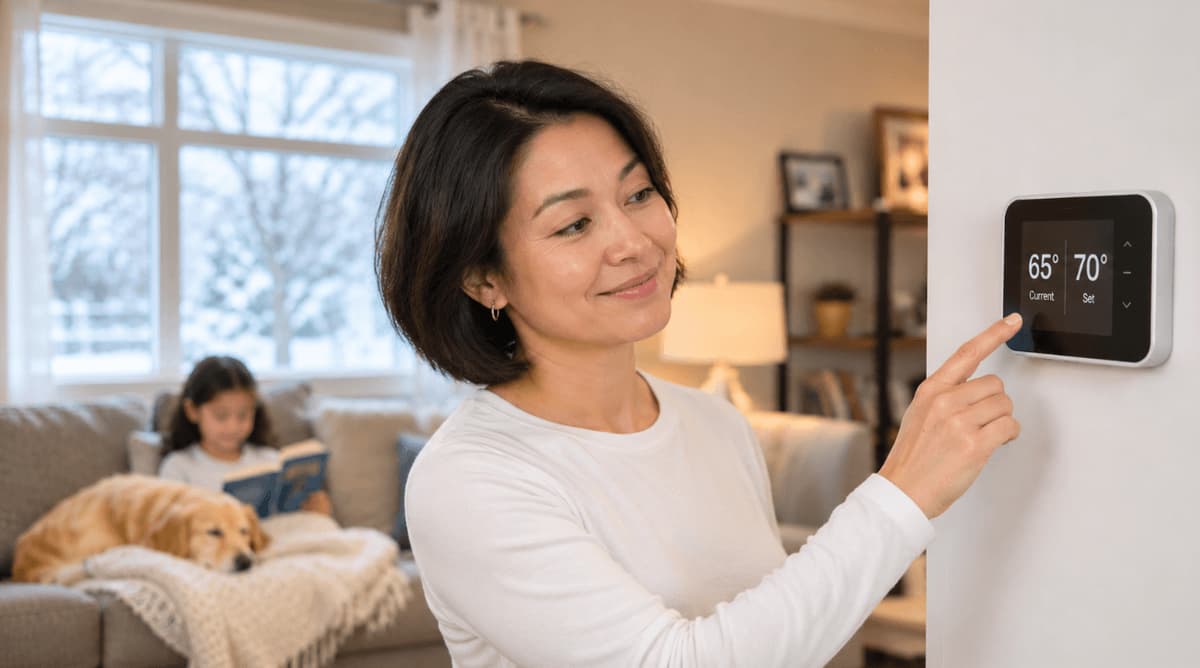
When your heat won't reach the set temperature, the cause is usually restricted airflow, a system at its limit in deep cold, or a thermostat setting. A furnace that runs nonstop and falls a few degrees short on the coldest nights may be working as designed.
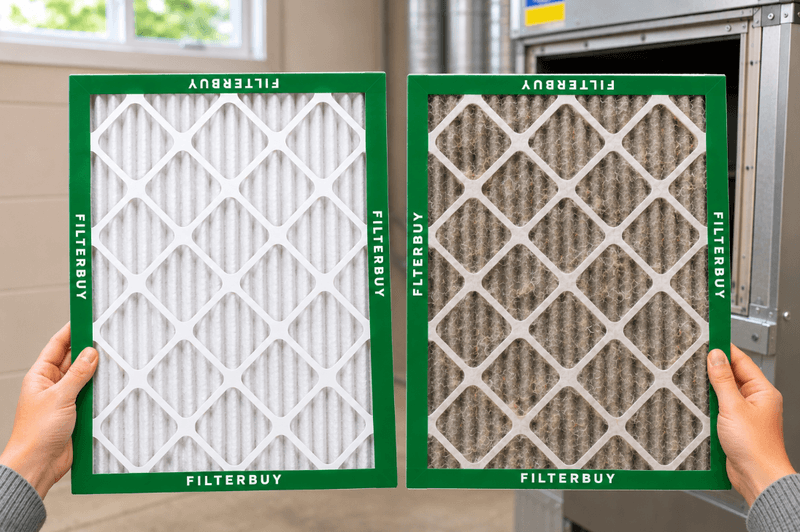
Start with the air filter. A clogged filter can make a gas furnace overheat and shut off before the house warms up. ENERGY STAR recommends checking it once a month and replacing it when it's dirty.
Not sure which filter fits your system? Take the quick filter match quiz below, or shop air filters at Filterbuy.
Read the pattern
What kind of heating shortfall do you have?
How your system behaves points to the cause, and to the first thing to try.
1 · SHORT CYCLING · CHECK FIRST
Burners run a few minutes, then stop
The blower keeps going after the flame shuts off.
LIKELY CAUSE
Restricted airflow trips the high-limit switch
FIRST STEP
Replace the filter and open all vents
2 · CAPACITY LIMIT
Runs nonstop, gap grows on colder nights
Often normal during an extreme cold snap.
LIKELY CAUSE
Weather below the design temperature or heat pump balance point
FIRST STEP
Compare outdoor and design temperatures
3 · FIXED CEILING
Stops at the same number, like 65°F
Happens in mild and cold weather alike.
LIKELY CAUSE
A thermostat limit, schedule, eco mode, or lockout
FIRST STEP
Review your thermostat settings
4 · SUDDEN FAULT
Starts in mild weather, air is cold or weak
Something in the system has stopped working.
LIKELY CAUSE
Ignition, flame sensor, vent, refrigerant, or blower
FIRST STEP
Basic checks, then call a technician
Safe checks you can do in about 15 minutes
1. Thermostat
Heat mode, fan on Auto, setpoint 3°F above room temp
2. Air filter · Start here
Same size, airflow arrow toward the furnace
3. Vents and returns
Open every supply vent, clear return grilles
4. Vent pipes
Clear snow and ice by hand from plastic pipes
5. Outdoor unit
Heat pump? Keep about 2 feet clear around it
Safety first: Turn the system off at the thermostat before touching the filter. If you smell gas or a CO alarm sounds, leave the home and call the gas utility or 911 from outside.
Give your furnace the airflow it needs to keep up
Answer a few quick questions and we'll match you to the right filter for your home.
Already know your size?
TL;DR
Heat not reaching the set temperature on your thermostat usually comes down to restricted airflow, a system at its limit in deep cold, or a thermostat setting. A clogged filter can make a gas furnace overheat and shut off early, while heat pumps lose capacity in the cold. Start with the filter and thermostat, then call a licensed technician if needed.
Key Takeaways
A clogged filter can overheat a furnace and trip its high-limit switch, causing short cycling.
A properly sized furnace keeps up down to your area's 99% design temperature; below that, a small shortfall can be normal.
A heat pump's output drops in the cold, and below the home's balance point, auxiliary heat has to fill the gap.
A house that stalls at the same number, such as 65°F, in any weather usually has a settings problem.
A two-reading thermometer check helps separate airflow problems from capacity limits and faults.
Filterbuy has made air filters in the U.S. since 2013 and shipped them to millions of homes. Every winter, the question we hear most is: "The heat is on, so why is the house still cold?"
What Kind of Heating Shortfall Do You Have?
Most heating shortfalls fit one of four patterns: short cycling, a capacity limit, a fixed ceiling, or a sudden fault. Matching yours to a pattern points to the right first fix.
These four patterns match my winter service calls, and the one I see most from November through January is short cycling / a capacity limit / a fixed ceiling / a sudden fault.”
– David Clark, Licensed HVAC Technician
Is It Just a Cold Snap?
A furnace that runs nonstop and falls a few degrees short in extreme cold may be working as designed. Contractors size furnaces for the local 99% heating design temperature, a point your area drops below only about 88 hours a year, according to building-science firm Energy Vanguard.
On those nights, even a correctly sized furnace falls behind, and leaky ducts widen the gap. The EPA's ENERGY STAR estimates that a typical house loses 20 to 30 percent of the air moving through its ducts to leaks, holes and poor connections. See Filterbuy's guides to a furnace not keeping up in extreme cold and a furnace running constantly.
Why a Clogged Filter Can Stop a Furnace Before the House Warms
A clogged air filter is one of the simplest fixes when a furnace runs but won't reach the thermostat temperature. According to the U.S. Department of Energy, a dirty or clogged filter can dramatically reduce airflow and increase furnace run time. The furnace then heats up faster than the blower can carry the heat away.
That's when the high-limit switch steps in. Bryant, a Carrier-owned furnace manufacturer, explains that airflow restrictions such as a dirty filter or blocked vent can raise the furnace temperature until the limit switch opens the burner circuit. The burners shut off while the blower keeps running, and the cycle repeats every few minutes. Our guide to furnace overheating and filter issues covers the warning signs.
Winter makes this more likely, since your system runs the most in heating season, which is why Filterbuy treats a winter filter change as a safety step first. ENERGY STAR recommends checking your furnace or heat pump filter once a month, and you should know the warning signs of a clogged furnace filter.
Upgraded your filter recently? Filterbuy often hears from homeowners whose furnace began short cycling after an upgrade. The EPA advises choosing a rating the system fan and filter slot can accommodate, and a Department of Energy research profile notes that higher-MERV filters add airflow resistance, especially in undersized slots. See our guide to high-efficiency filters in winter.
Why a Heat Pump Won't Reach the Set Temperature in Deep Cold
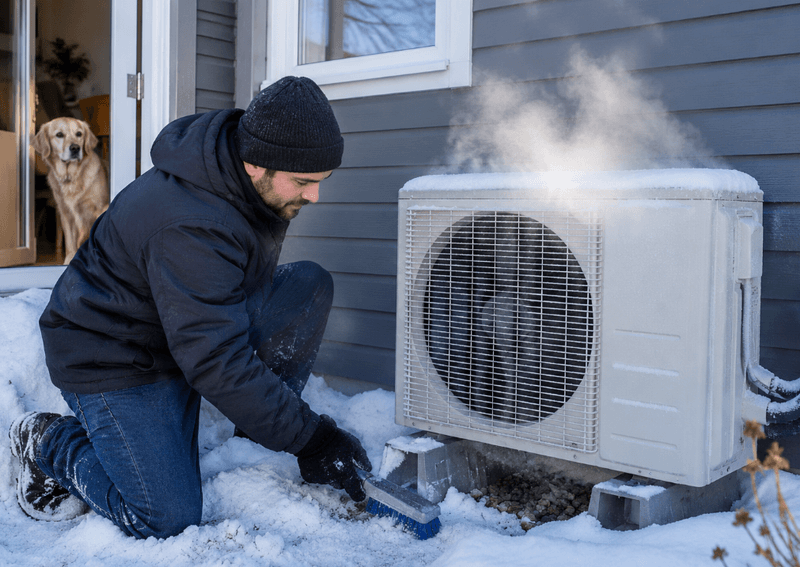
A heat pump moves heat from the outdoor air into your home, so its output drops as the temperature falls. Below the balance point, where that output just matches the home's heat loss, auxiliary heat or a backup furnace has to help.
Three normal behaviors are easy to mistake for a problem:
Lukewarm air. Heat pump supply air typically runs around 90–100°F, which HVAC manufacturer Carrier calls normal. Because that's close to skin temperature (Filterbuy calls this the skin-temperature line), it can feel cool while still warming the room, as our guide to heat pump air temperature explains.
Defrost cycles. The outdoor unit periodically melts ice off its coil, briefly sending cooler air indoors.
Slow recovery after a setback. The U.S. Department of Energy advises against setbacks that trigger backup heat, which usually costs more to run.
Air that stays at room temperature outside a defrost cycle, or an outdoor coil that stays iced over, calls for service. A dirty filter cuts heat pump output too, and our heat pump winter prep checklist covers the basics.
Why the House Won't Heat Past 65 (or Another Fixed Number)
If your house stops at the same temperature on mild days and cold ones, the problem is usually a setting rather than the equipment. Check these:
Thermostat setpoint limits or locks. Many smart thermostats can cap the heating range.
Schedules, holds and eco modes. These can quietly override your setpoint.
Utility demand-response programs. Enrolled thermostats may adjust temperatures during peak events.
Heat pump lockout settings. An auxiliary-heat lockout set too low can leave the heat pump working alone below its balance point.
Thermostat location. A thermostat near a sunny window, lamp or supply register reads warm and stops early.
Safe Checks You Can Do in 15 Minutes
Turn the system off at the thermostat before touching the filter.
Set the thermostat correctly. Choose Heat mode, set the fan to Auto, and raise the setpoint 3°F above the room temperature.
Replace the air filter. If little light passes through the old one, swap in the same size, airflow arrow toward the furnace.
Open every supply vent and clear the return grilles. Closed vents raise duct pressure and add to overheating, as our page on common winter airflow problems explains.
Check the outdoor vent pipes. Clear snow and ice by hand from a high-efficiency furnace's plastic vent pipes.
Check the outdoor heat pump unit. Keep about two feet of space around it clear of snow and ice.
Write down the numbers. At bedtime and dawn, note the outdoor, setpoint and indoor temperatures for your technician.
Need a replacement? Find your size in Filterbuy's air filter sizes chart, and every filter is made to order in the USA.
The Two-Reading Thermometer Check
A digital probe thermometer shows whether your system is actually making heat. The supply-air reading minus the return-air reading, called the temperature rise, helps separate an airflow problem from a capacity limit or a fault.
Let the system run until the supply reading stops climbing, outside a defrost cycle.
Hold the probe an inch inside the large return grille and note the reading.
Do the same at the supply register closest to the furnace or air handler, then subtract.
Every gas furnace lists its acceptable rise on its rating plate, often as a range such as 50–80°F, and HVAC School explains that a rise above that range means too little air is moving. For a heat pump, compare the supply reading with the 90–100°F range Carrier calls normal. Skip infrared thermometers, which read the grille, not the air.
When to Call a Technician
Call a licensed HVAC technician if a new filter and the right settings don't solve it, or if:
The furnace still short cycles with a clean filter and open vents.
The furnace locks out and needs repeated resets.
Air from the vents stays cold or room-temperature in Heat mode.
The heat pump's outdoor coil stays iced over, or auxiliary heat runs constantly in mild weather.
Safety first: If you smell gas or a carbon monoxide alarm goes off, leave the home and call your gas utility or 911 from outside. Don't look for the source. The CPSC carbon monoxide fact sheet explains what to do next.
"On a no-heat call in January, the first thing I pull is the air filter, because a clogged filter can shut a furnace down."
– David Clark, Licensed HVAC Technician
Supporting Statistics
42% of home energy goes to heating. Space heating used 42% of residential energy in 2020, according to the U.S. Energy Information Administration.
10%–25% more energy for a neglected heat pump. The U.S. Department of Energy reports a 10%–25% energy gap between a well-maintained heat pump and a severely neglected one.
More than 100,000 emergency visits a year. Non-fire carbon monoxide poisoning sends more than 100,000 Americans to the emergency department each year, according to the Centers for Disease Control and Prevention.
Frequently Asked Questions
Why is my furnace running but not reaching the set temperature?
Start with the filter: a clogged one can trip the high-limit switch. Leaky ducts or weather below the design temperature can also leave it short.
Is it normal for a furnace to run nonstop in extreme cold?
Often, yes. Furnaces are sized for the local 99% design temperature, so on colder nights a working furnace may run constantly and fall slightly short.
Why won't my heat pump reach the set temperature when it's very cold?
Its output drops as it gets colder. Below the home's balance point, auxiliary heat or a backup furnace has to make up the difference.
Why won't my house heat past 65 degrees?
If it stops at the same number in any weather, check thermostat limits, schedules, eco modes, utility programs and lockout settings.
How often should I check my furnace filter in winter?
ENERGY STAR recommends checking it once a month and replacing it when dirty.
Glossary
Auxiliary heat (aux heat): Backup heat, usually electric strips, that kicks in when a heat pump falls short.
Balance point: The outdoor temperature at which a heat pump's heating output equals the home's heat loss.
Design temperature (99%): The outdoor temperature an area stays above 99% of the year, used to size heating equipment.
MERV: Minimum Efficiency Reporting Value, an ASHRAE rating of how well a filter captures 0.3–10 micron particles.
High-limit switch: A furnace safety switch that shuts off the burners when the heat exchanger overheats.
Short cycling: A heating system turning on and off in brief bursts without completing a full cycle.
Temperature rise: Supply-air temperature minus return-air temperature.
Sources
Bryant. Furnace limit switch.
Centers for Disease Control and Prevention. Carbon monoxide (CO) poisoning basics.
Energy Vanguard. We are the 99%: design temperatures and oversized HVAC systems.
EPA. What is a MERV rating?.
ENERGY STAR. Duct sealing.
ENERGY STAR. HVAC maintenance checklist.
HVAC School. Furnace air temperature rise.
U.S. Consumer Product Safety Commission. Carbon monoxide fact sheet.
U.S. Department of Energy, Building Science Education. HVAC proper installation of filters.
U.S. Department of Energy, Building America. California energy standards recognize the importance of filter selection.
U.S. Energy Information Administration. Space heating consumed the most energy of any end use in homes.
U.S. Department of Energy. Operating and maintaining your heat pump.