
14x20x1 Air Filters
Actual Size: 13.5x19.5x0.75

3 month filters
2. Select Quantity
Buying multiple sizes?


Made in the USA
Ships in 24 hours
14x20x1 Air Filters Air Filter Description
Available In MERV Rating: 8, 11, 13, Odor Eliminator
Made in the USA
Ships in 24 hours
Merv comparison
Scroll to see more.
 MERV 8 |  MERV 11 |  MERV 13 |  Odor Eliminator | |
|---|---|---|---|---|
| Best for | Standard Residential/Commercial Healthy Families | Superior Residential/Commercial Allergy Sufferers | Optimal Residential/Commercial Hospital Grade | ODOR ELIMINATOR Residential/Commercial Household Odors |
| Comparable ratings | MPR 600 & FPR 5 | MPR 1000-1200 & FPR 7 | MPR 1500 - 1900 & FPR 10 | MPR 1000-1200 & FPR 7 |
| Filtration | Captures 90% of Airborne Particles | Captures 95% of Airborne Particles | Captures 98% of Airborne Particles | Captures 95% of Airborne Particles |
| Dust, lint & debris | ||||
| Mold, pollen | ||||
| Dander, dust mites | ||||
| Smoke & Smog | ||||
| Bacteria | ||||
| Odor, vocs |
Is it time to change your filter?
Generally, we recommend you replace your air filters every 90 days. Find out below if you should change your filters more often.

If someone in your home has asthma or allergies...
Change your filter every
6 weeks
to ensure indoor air quality is at its best.
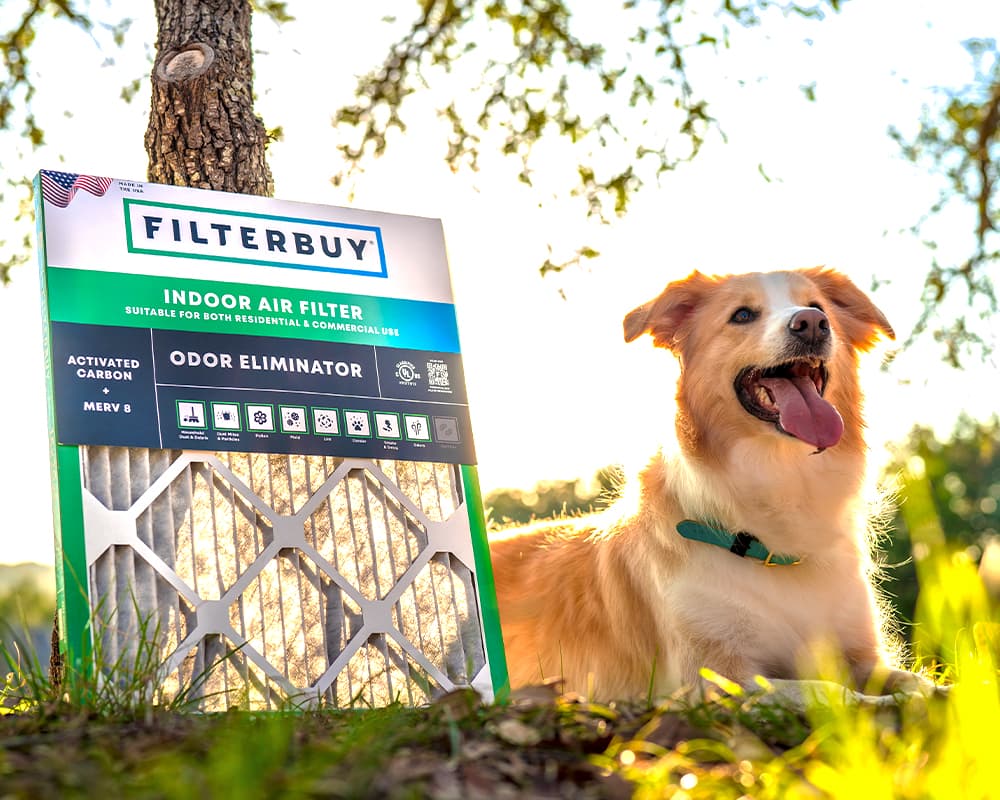
If you have pets...
Change your filter every
2 months
to avoid shedding and odor buildup.

If you have young children...
Change your filter every
2-3 months
as having clean air is even more important with children in your home.
If someone in your home has asthma or allergies...
Change your filter every
6 weeks
to ensure indoor air quality is at its best.
If you have pets...
Change your filter every
2 months
to avoid shedding and odor buildup.
If you have young children...
Change your filter every
2-3 months
as having clean air is even more important with children in your home.
14x20x1 Air Filters for Healthier Indoor Spaces
Your air quality can affect your health. 14x20x1 air filters help improve your air quality. These filters have high MERV ratings. Which means they are good at capturing particles in the air. Do these filters make a big difference? What factors should you consider before switching to a new filter? Let’s find out more about how to breathe easier in your home.
Key Takeaways
Improving indoor spaces becomes achievable with furnace 14x20x1 air filters which effectively trap dust, pollen, and airborne particles.
Air quality significantly improves when microscopic particles often missed are captured by high-efficiency air filters.
Healthier living environments are a result of regular maintenance and replacement of these filters.
Superior filtration is offered by filters with high MERV ratings, positively impacting indoor air quality.
Ensuring optimal performance leads to healthier indoor spaces, achieved by using the correct 14x20x1 air filter size with proper installation.
Understanding Air Filter Specifications
The Filterbuy AFB14x20x1M8 air filter is a good option for improving your air quality. It’s made in the USA and comes in different MERV ratings. It’s a high-quality filter that can help capture particles in the air. Orders are shipped quickly, so you can start enjoying cleaner air right away. It’s important to know about these details. So you can choose the right filter for your needs.
How These Air Filters Work
Learning the air conditioner 14x20x1 filters' function in your HVAC system is crucial. Simply, these filters clean circulating air. Designed to trap airborne particles. They help maintain indoor air quality. Dust and all other airborne particles – all get captured.
When operating, HVAC systems pull air through filters. This enables the filter to remove unwanted airborne particles, resulting in cleaner, healthier circulating air.
However, filter efficiency matters. Filters vary in efficiency. Higher efficiency ratings mean smaller particles can be trapped. High-efficiency filters can even seize microscopic particles missed by other filters.

Key Benefits of 14x20x1 Filters
By using the best 14x20x1 air filters enjoy cleaner air. Reduce allergy symptoms and save money on energy costs.
Allergen reduction: Reduces sneezing and itching. Or any other allergy symptoms.
Dust control: Captures dust particles. Reducing the need for frequent cleaning.
Energy efficiency: Improves HVAC system performance. And lowers energy bills.
Durability: Requires less frequent filter replacements.
Improved air quality: Eliminates harmful pollutants. And microorganisms for healthier breathing.
Breathing becomes a more pleasant experience. Knowing the indoor air is safer and cleaner. So why not switch to air conditioner 14x20x1 filters today for enhanced comfort and health benefits in your indoor environment?
Installation Tips for Optimal Use
Exploring the 14x20x1 air filter's merits, practical installation advice is now on the agenda for optimal performance.
Confirm the size: Ensure the filter fits snugly to prevent unfiltered air from passing through.
Pay attention to arrows: Align the arrows on the filter with the airflow direction.
Frequent maintenance: Clean and replace filters regularly. Depending on air quality. And factors like allergies or pets.
Follow these tips! You ensure your 14x20x1 air filter is installed correctly. And functions optimally. For a healthier indoor environment.
Guidelines for Filter Replacement
Change your air filter regularly. How often it happens depends on the quality of the filter and the air pollution in your area. Whether you have pets and how many people live in your home. Most people change the air filter every 90 days. You might need to change it more often if you have pets or allergies. Like every 60 days or even 6 weeks. If you have young children you should change it every 2-3 months. Changing your filter regularly will help your air conditioner work better and use less energy. Notice an improvement in the air quality in your home.
Frequently Asked Questions:
Is MERV 14 too high for home?
MERV 14 is not too high for a home. It filters smaller particles like bacteria and tobacco smoke. This is useful if someone in your home has a weakened immune system or if someone smokes.
Are more expensive air filters really better?
Buying more expensive air filters can be worth it if you need a higher MERV rating to filter out particles. A moderately-priced filter with a MERV rating between 8 and 13 will do great for most homes
What MERV rating is good for air filters?
The best MERV rating for an air filter depends on your needs. A MERV rating between 8 and 11 is good for homes. It removes common particles and allergens without significantly restricting airflow.
Is a MERV 11 filter too restrictive?
A MERV 11 filter is not too restrictive for most residential HVAC systems. They effectively filter out small particles without reducing airflow or make your HVAC system work overly hard.
Will MERV 13 hurt my HVAC?
A MERV 13 filter won't hurt your HVAC system but it puts additional strain on it due to the denser filtration material. Be sure to check your HVAC system's filter specifications before choosing a higher-rated filter.
How often should MERV 14 filters be changed?
The frequency of changing a MERV 14 filter depends on your environment. If you have pets or smokers in your home you may need to change the filter more possibly every 2-3 months. Otherwise every 6-12 months could be sufficient.
Is it OK to use cheap air filters?
Cheap air filters are okay to use but they don’t provide the best protection. The efficiency of an air filter is often reflected in its price. Cheap filters may not trap smaller particles effectively reducing the air quality in your home.
Which type of air filter will last the longest?
The type of air filter that lasts the longest is a washable or reusable filter. While they last longer they often don't filter particles as well as disposable high-efficiency filters.
Is MERV 4 good enough?
MERV 4 may be good enough. If you're only concerned with filtering out large particles like dust and lint. A higher MERV rating is better if you're looking to improve air quality or if you have allergies.
What is one disadvantage of the highest MERV rated filters?
The highest MERV-rated filters can cause your HVAC system to work harder because they restrict airflow. This could potentially shorten the life of your system, and in some cases, the extra strain could cause the system to break down.
What MERV rating stops dust?
One disadvantage of the highest MERV-rated filters is that they restrict airflow in your system. This makes the system work harder. You are potentially increasing your energy costs and reducing the system's lifespan.
Does MERV 8 restrict airflow?
A MERV 8 filter does not restrict airflow but if your system is older or not designed to handle higher MERV ratings you may notice a slight decrease in airflow. Always check your system's manufacturer recommendations before upgrading to a higher MERV filter.