
Furnace Running Constantly? Why It Can't Keep Up In Extreme Cold
October 6, 2026
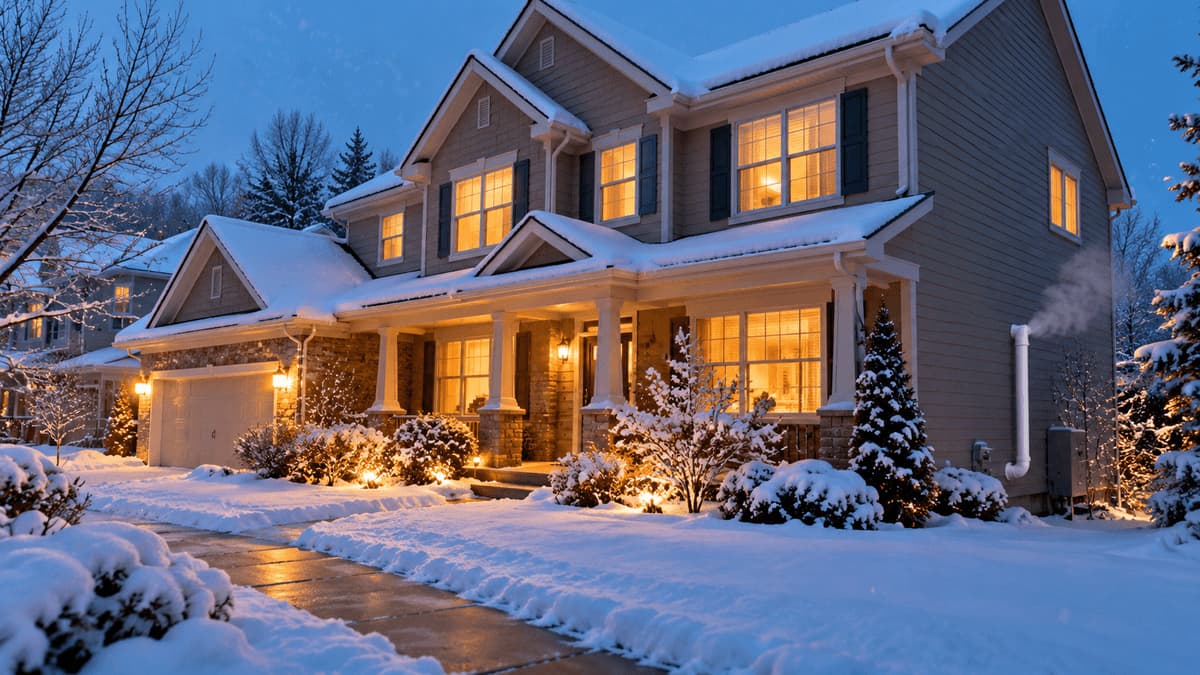
A furnace running constantly during a deep freeze is usually doing its job. Furnaces are sized to hold your thermostat setting down to a local outdoor design temperature, and when it gets colder than that, your home loses heat about as fast as the furnace can replace it. Nonstop running is a concern only in mild weather or when it comes with warning signs.
In a deep freeze, a furnace running constantly is usually normal. Furnaces are sized to keep up down to your area’s design temperature, so on colder days they run nonstop to replace lost heat.
If it runs nonstop in mild weather, check your air filter first. A clogged filter restricts airflow, so every cycle runs longer.
Answer 3 quick questions and we’ll match you to your perfect filter.
Hundreds of standard and custom sizes, with free 2-day delivery to most US states.
TL;DR
Nonstop running below your area's design temperature is normal. In milder weather, check the filter first, then the thermostat fan setting, vents, and ducts. A carbon monoxide alarm, gas smell, burning odor, or snow-blocked vent pipe needs immediate action.
Key Takeaways
Furnaces sized with Manual J are matched to a local design temperature, so nonstop running on colder days is expected.
Per the National Weather Service, wind chill can't drop your house below the actual air temperature, though wind does speed heat loss through gaps.
A clogged air filter is the quickest cause to rule out, so check it monthly through winter.
Nonstop running in mild weather, cool air at the vents, or a burning smell points to a real problem.
Is It Normal For A Furnace To Run Constantly In Extreme Cold?
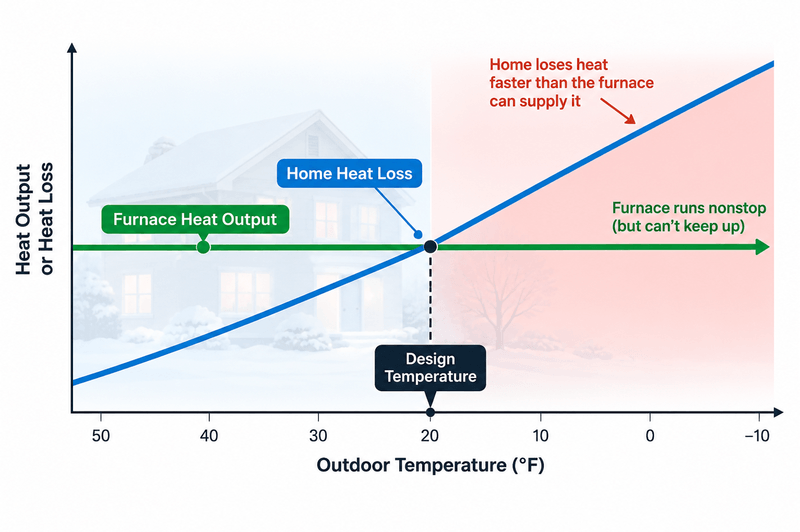
Often, yes. A furnace is sized for a design temperature, not for record lows, so on colder days it can't get ahead of heat loss and runs continuously.
Contractors size furnaces with Manual J, the residential load calculation standard from the Air Conditioning Contractors of America (ACCA), which national building codes and most local jurisdictions require. The calculation adds up how quickly your walls, windows, ducts, and air leaks shed heat at the design temperature, then picks a furnace to match.
What A Design Temperature Means
A heating design temperature is the outdoor temperature your area stays above for about 99 percent of the hours in a typical year, leaving only about 88 colder hours. Sizing for a record low would leave the furnace oversized most of the winter, and oversized furnaces short-cycle, as Filterbuy's guide on why a furnace short-cycles in winter explains.
The Design-Day Test
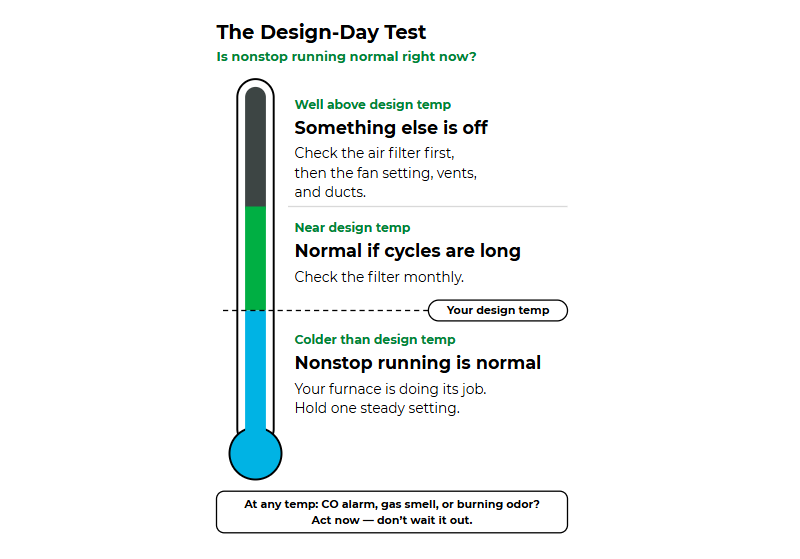
The Design-Day Test compares today's outdoor temperature with your furnace's design temperature to show whether nonstop running is normal. Filterbuy built it because that comparison is the step most homeowners skip. Your design temperature is on your installer's Manual J report, and a local HVAC contractor or ENERGY STAR's county-by-county tables can also supply it.
Normal Cold-Weather Runtime Or A Problem?
Nonstop running is usually normal when the house holds temperature and the vents blow warm air. If either one fails, or the weather is mild, something else is wrong.
What Else Makes A Furnace Run Nonstop?
In mild weather, a furnace that won't shut off usually has a clogged filter, a fan set to On, a deep thermostat setback, blocked or leaky ducts, or an undersized furnace. Check them in this order.
1. A Clogged Air Filter
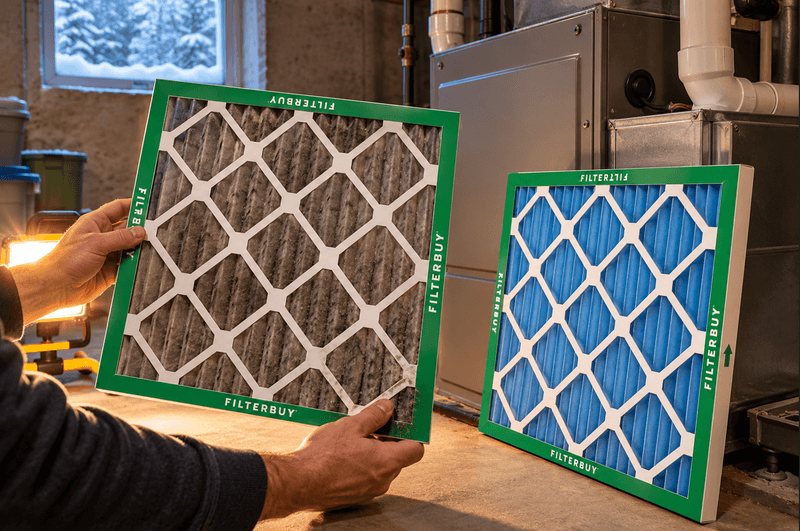
A clogged filter restricts the airflow that carries heat into your rooms, so each cycle runs longer. As an air filter manufacturer, Filterbuy considers it the easiest cause to overlook. In worse cases, the heat exchanger overheats and trips the high-limit switch, a pattern covered in Filterbuy's guide to furnace overheating and filter problems.
ENERGY STAR recommends checking your filter every month during heavy-use seasons like winter, changing it whenever it looks dirty, and replacing it at least every three months.
2. The Thermostat Fan Set To On
A thermostat fan set to On keeps the blower running even when the burner is off. Switch it to Auto. If the blower then goes quiet between heating cycles, the fan setting was the cause.
3. Deep Setbacks During A Cold Snap
A deep overnight setback during a hard freeze can keep a furnace running for hours as it tries to catch up. Setbacks save energy in ordinary weather, but during extreme cold, hold one steady setting until the cold passes.
4. Closed Vents, Blocked Returns, And Leaky Ducts
Closed registers and blocked return grilles cut airflow, and leaky ducts lose heat, so the furnace runs longer to compensate. Move furniture and holiday decorations off grilles, and have ducts in attics and crawl spaces checked for leaks.
5. An Undersized Or Aging Furnace
If the furnace still runs nonstop well above design temperature, it may be undersized or losing capacity with age. A licensed contractor can confirm with a fresh Manual J calculation.
Start With The Filter: A 5-Minute Winter Check
A filter check takes about five minutes and is the first fix to try when a furnace runs nonstop in mild weather. Filterbuy designs its filters for about 90 days of typical use, but runtime fills a filter faster than the calendar suggests, so a cold snap can load it well ahead of schedule.
Set the thermostat to Off and switch off the furnace service switch.
Hold the filter up to a bright light. If light barely passes through, replace it.
Note the size printed on the frame, such as 16x25x1.
Install the new filter with the airflow arrow pointing toward the furnace blower.
Restore power, write the date on the frame, and recheck after every hard freeze.
Choose the right MERV rating rather than the highest one. Pleated MERV 8 suits most homes, while MERV 11 or MERV 13 can be a step up for pets or heavier dust. Check your HVAC manual first, because higher-efficiency filters add airflow resistance. For timing by household, see how often to replace a furnace filter.
Winter Tips To Help A Furnace Keep Up
You can help a furnace keep up by slowing heat loss and keeping its vents clear.
Close curtains at night and open sunny-side blinds in the afternoon.
After every storm, clear snow and ice from the furnace's outdoor intake and exhaust pipes.
Use space heaters carefully. The National Fire Protection Association (NFPA) reports that heating fires peak from December through February and advises a 3-foot clear zone.
When A Furnace That Runs Constantly Is A Safety Issue
Nonstop running is a safety issue only when it comes with one of these signs.
If a carbon monoxide alarm sounds, get everyone outside and call 911.
If you smell gas, leave the house and call your gas utility from outside.
If you notice a lingering burning smell, soot, or flames outside the burner area, turn the furnace off and call a technician.
If a high-efficiency furnace keeps shutting down after a snowstorm, clear its outdoor vent pipes and call a technician if it continues.
The U.S. Consumer Product Safety Commission (CPSC) urges a yearly professional inspection of fuel-burning home heating systems, including furnaces, flues, and vents. Book it in the fall, and keep working carbon monoxide alarms near every sleeping area.
“When a homeowner calls because the furnace won't shut off during a cold snap, my first question is how cold it is outside, and my second is when the filter was last changed. If it's colder than the home's design temperature, nonstop running is the furnace doing its job. If it isn't, I start at the filter slot.”
David Clark, Licensed HVAC Technician
Supporting Statistics
1. 52% of household energy goes to heating and cooling.
The U.S. Energy Information Administration reports that space heating and air conditioning made up 52 percent of a typical home's annual energy use in 2020.
Why it matters: a cold snap pushes your biggest energy load to its peak, when airflow matters most.
Source: U.S. Energy Information Administration, Use of Energy in Homes
2. Up to 20% of heating and cooling costs can be saved by sealing and insulating.
A HUD consumer guide cites an EPA estimate that insulating and air sealing a home can save up to 20 percent of heating and cooling costs.
Why it matters: sealing leaks shrinks the heat loss your furnace must match on a design day.
Source: U.S. Department of Housing and Urban Development, Insulation and Air Sealing Guide
3. More than 400 Americans die each year from unintentional carbon monoxide poisoning.
CDC also counts more than 100,000 emergency visits and 14,000 hospitalizations a year.
Why it matters: the weeks your furnace runs longest are the worst time to discover a venting problem.
Source: Centers for Disease Control and Prevention, Carbon Monoxide Poisoning Basics
Frequently Asked Questions
Should My Furnace Run All The Time When It Is Below Zero?
It can, if below zero is colder than your area's design temperature. Where the design temperature is already below zero, expect long cycles instead.
Is It Bad For A Furnace To Run Nonstop?
No. Steady running is generally easier on a furnace than rapid cycling, because every start adds wear to the igniter and controls.
Can A Dirty Filter Make A Furnace Run Constantly?
Yes. A clogged furnace filter reduces the airflow that carries heat into your rooms, so the furnace runs longer. It can also make the furnace overheat and shut off early.
Should I Turn My Furnace Off To Give It A Rest?
No. Shutting it off in extreme cold lets the house cool quickly, can put water pipes at risk of freezing, and leaves the furnace hours of catch-up when it restarts.
What To Note Before You Call A Technician
Before calling a technician, note five details that show whether the furnace is carrying a design-day load or has a real fault.
Outdoor temperature and wind when nonstop running started.
How long each run lasts, or whether the burner never shuts off.
Indoor temperature compared with your thermostat setting.
Whether the vents blow warm or cool air.
The filter's install date, the fan setting, and any blinking error code.
Get Ahead Of The Next Cold Snap
The easiest way to keep a hardworking furnace from turning into a failing one is a clean filter before the next freeze. Filterbuy makes pleated MERV 8 air filters in hundreds of standard and custom sizes, with fast and free 2-day delivery to most US states, so check your filter today and order a replacement if light no longer passes through it.
Glossary
Design Temperature
The outdoor temperature an area stays above about 99 percent of the year.
Manual J
The ACCA standard for calculating a home's heating and cooling needs.
Heat Loss
The rate at which a home loses heat to the outdoors.
Setback
Temporarily lowering the thermostat, such as overnight.
High-Limit Switch
A safety control that shuts off the burner when the furnace overheats.
Short Cycling
A furnace turning on and off in rapid bursts.
Modulating Furnace
A furnace that adjusts its output in small steps and often runs long, low-fire cycles.
MERV
Minimum Efficiency Reporting Value, a 1-to-16 filter efficiency scale.