
Furnace Clicking but Not Turning On? What Each Click Pattern Means
October 20, 2026
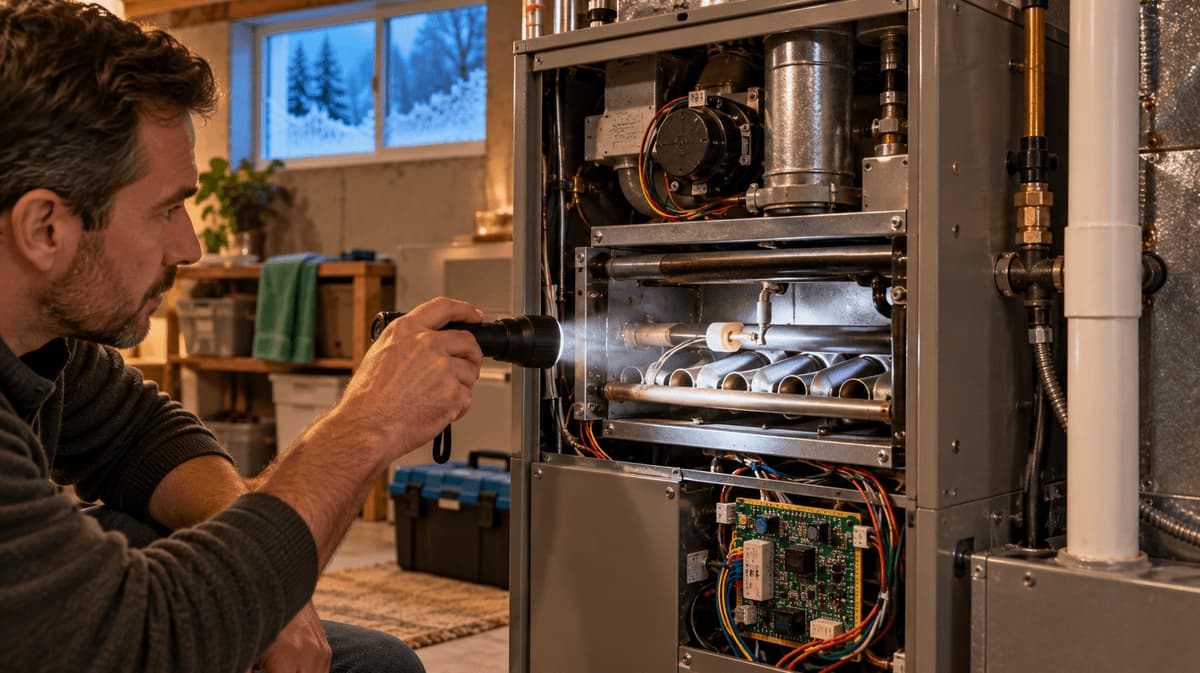
When a furnace clicks but never lights, the click pattern tells you where its startup sequence stopped and which part to check. At Filterbuy, we manufacture the pleated filters that sit in front of your furnace blower, so we start with airflow and then work through ignition and safety switches, including winter causes most guides skip.
A furnace that clicks but won’t turn on has stopped partway through startup, and the click pattern tells you which part to check. If it clicks on and off every few minutes, a clogged air filter is a frequent cause, and that’s a fix you can make yourself.
Leave gas and wiring to a licensed HVAC technician. Take the quick quiz below to match your furnace to the right filter.
Find your filter match
Answer 3 quick questions and we’ll match you to the right filter for your system.
TL;DR
A furnace that clicks but will not turn on has stopped partway through startup. Rapid clicking with no flame usually means a spark igniter is firing without gas, while a single click and silence points to power or a safety switch. Burners that light and quit within seconds usually mean a dirty flame sensor. Replace a dirty filter first, and leave gas and wiring to a licensed HVAC technician.
Key Takeaways
The step where the clicking stops in the startup sequence identifies the part that failed.
A furnace clicking on and off every few minutes is usually short cycling, and a clogged air filter is a frequent cause.
In winter, snow-covered vent pipes and frozen condensate lines can stop a high-efficiency furnace after the first few clicks.
If you smell gas or a carbon monoxide alarm sounds, leave the home and call for help from outside.
How a Normal Furnace Startup Sounds
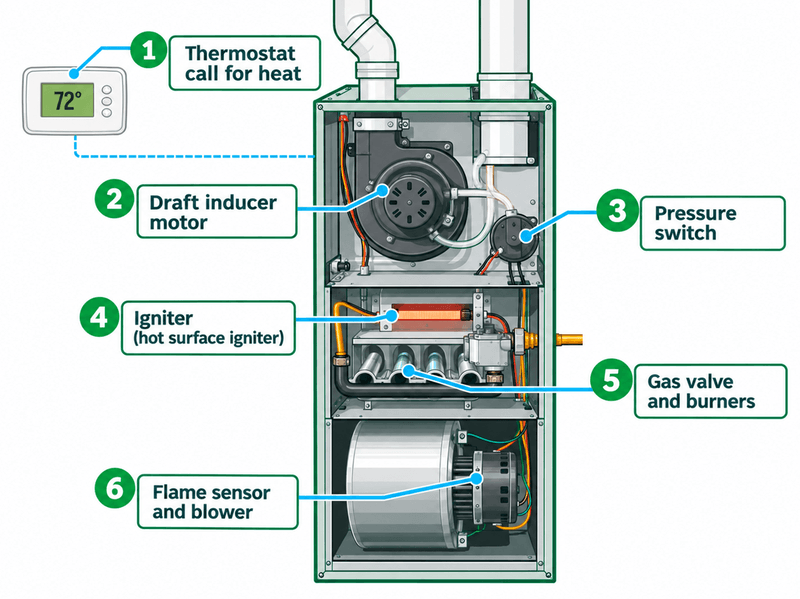
A normal gas furnace startup moves through six steps in a fixed order, and each step makes its own sound. On most models, warm air arrives one to two minutes after the thermostat clicks.
Table 1: Normal Furnace Startup Sequence
| Startup Step | What You Hear |
|---|---|
| 1. Thermostat calls for heat | A control board relay clicks. |
| 2. Draft inducer motor starts | A low hum as it clears exhaust. |
| 3. Pressure switch closes | A soft click once a safe draft is proven. |
| 4. Igniter turns on | Silence (hot surface igniter) or rapid ticking (spark igniter). |
| 5. Gas valve opens | A relay click, then a soft whoosh as the burners light. |
| 6. Flame sensor proves the flame | The blower starts after a short delay. |
If any step fails, the control board closes the gas valve and retries, often three times, before locking out.
Furnace Clicking Patterns and What Each One Means
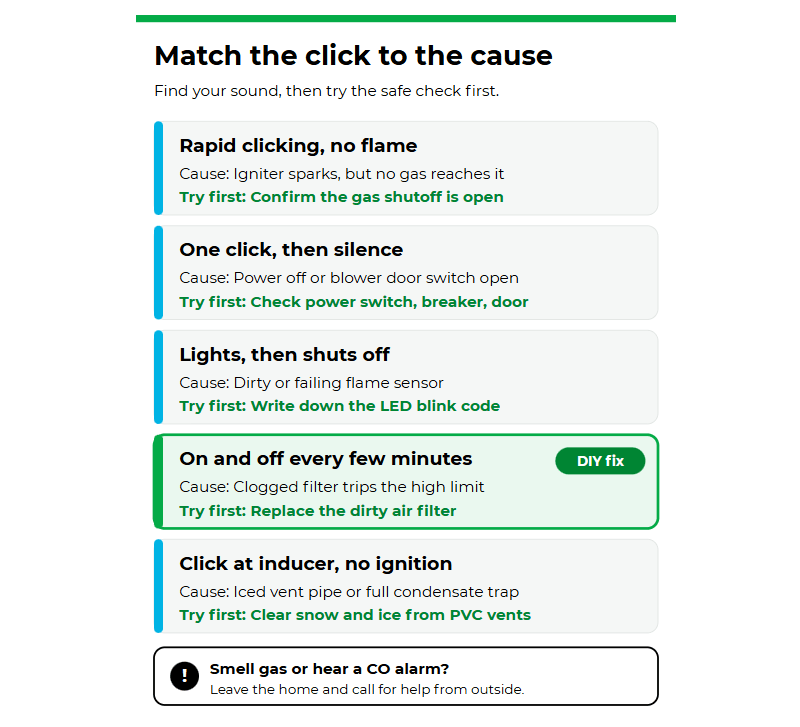
Each click pattern points to a specific part. Find your sound below and try the safe check before calling a pro.
Table 2: Furnace Clicking Patterns
Rapid Clicking With No Flame
Rapid clicking with no flame usually means the spark igniter works but gas is not lighting. Furnaces with a glowing hot surface igniter cannot tick. On those models, rapid clicking usually comes from a chattering control board relay caused by low voltage or a loose thermostat wire.
A Single Click, Then Nothing
A single click followed by silence means the furnace got the call for heat but never started its inducer motor. Beyond the checks in the table, high-efficiency furnaces can stop here when a condensate overflow float trips because drain water has backed up.
Clicks, Lights, Then Shuts Off
Burners that light and then shut off within seconds usually have a dirty flame sensor. This metal rod proves a flame is present, and oxidation weakens its signal until the control board shuts off the gas and locks out. Cleaning it is routine technician service.
Clicking On and Off Every Few Minutes
A furnace clicking on and off every few minutes is short cycling, and restricted airflow is a frequent cause. A clogged filter traps heat until the high limit switch shuts the burners off, and the cycle restarts as the furnace cools. Filterbuy's guides to furnace overheating from filter issues and why HVAC systems short cycle in cold weather cover other causes, including winter airflow problems.
The Filterbuy Listen-First Check Before Calling a Pro
The Filterbuy Listen-First Check is a five-minute routine that captures what your furnace is doing before a reset erases the evidence.
Record it. Raise the thermostat, then record the startup on your phone and count the ignition attempts.
Read the code. Write down the control board's LED blink pattern before cutting power, since a reset clears the flashing code on many boards.
Check the outside causes. Inspect the air filter and outdoor vent pipes, the two problems you can fix without opening the burner cabinet.
Note the details. Jot down the click pattern, ignition attempts, LED code, last filter change, and any recent snow for the technician.
Why Furnace Clicking Problems Spike in Winter
Furnace clicking problems rise in winter because furnaces run longer and outdoor vent pipes face snow and freezing temperatures. Heating safety matters most in these months, and the National Fire Protection Association (NFPA) reports that the peak months for home heating fires are December, January, and February.
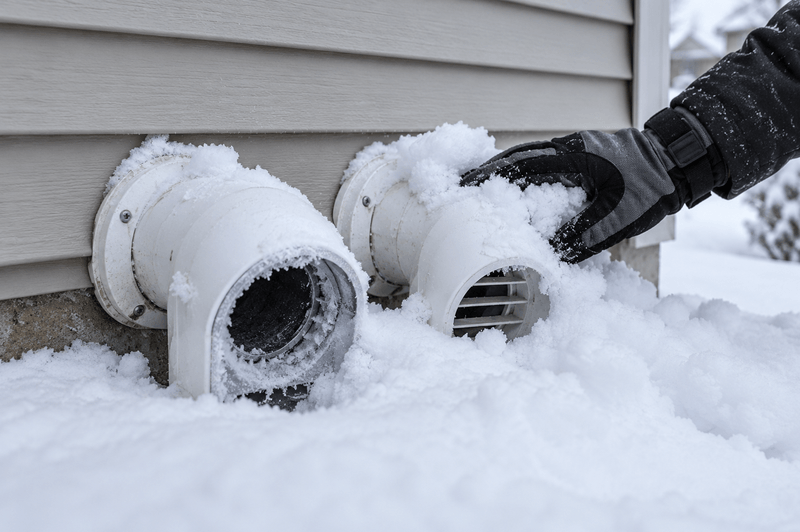
Snow and Ice Over Vent Pipes
Snow or ice over the PVC vent pipes of a high-efficiency condensing furnace keeps the pressure switch from proving a safe draft, so the burners never light. After a storm, clear any vent openings you can reach safely from the ground.
Frozen Condensate Lines
A frozen condensate drain line can also shut down a high-efficiency furnace. When the line freezes in a cold crawlspace or garage, backed-up water trips a float or pressure switch. Thawing and insulating the exposed section often solves it, and the same backup can leave you with a wet furnace filter in winter.
Check the Air Filter First
The air filter is the one furnace part every homeowner can check and replace safely. If you can barely see light through it, replace it. ENERGY STAR, the EPA and DOE efficiency program, recommends that homeowners inspect, clean, or change air filters once a month, and Filterbuy's walkthrough on how to change your furnace filter covers each step.
Fit matters as much as rating, which is why Filterbuy builds filters in 1-, 2-, 4-, and 5-inch depths plus custom sizes. A MERV 8 pleated filter handles everyday dust in most homes. MERV 11 and MERV 13 filters capture finer particles, so confirm with your HVAC manual or a technician that your system can use them, as the EPA guide to MERV ratings advises.
Watch for these signs of a clogged furnace filter and keep a winter furnace filter schedule. If heat drops right after a swap, see what to do when a furnace stops heating after a filter change. Filterbuy makes all three ratings with fast and free 2-day delivery to most US states, so you can shop air filters by size.
When to Call a Licensed HVAC Technician
Get help right away in any of these situations.
Gas smell. Natural gas is often described as smelling like rotten eggs. Follow these steps for when you smell natural gas: leave right away and call your gas utility or 911 from outside without touching light switches.
Carbon monoxide alarm. Get everyone outside and call 911. The U.S. Consumer Product Safety Commission (CPSC) recommends carbon monoxide alarms on every level of the home and outside sleeping areas.
Repeat lockouts or damage. A furnace that locks out again after a reset, or shows scorch marks or melted wiring, needs a technician.
If Your Heat Is Out in Freezing Weather
Until a technician arrives, keep people warm and pipes from freezing.
Close doors to unused rooms to hold heat.
Open sink cabinets on exterior walls and let faucets drip.
Use only electric space heaters with tip-over shutoff, kept 3 feet from anything that can burn.
Never heat the home with a gas oven or run a generator indoors, per American Red Cross winter storm safety guidance.
"On winter no-heat calls, I check the outdoor vent pipes and the air filter before opening the cabinet, because either can stop a furnace with nothing broken. Clicking usually means a safety control is working, so find what it is protecting against instead of forcing a restart."
David Clark, Licensed HVAC Technician
Supporting Statistics
1. 47% of U.S. homes used natural gas as their main heating fuel in 2024.
Gas furnaces follow the ignition sequence this guide walks through.
Source: U.S. Energy Information Administration, Today in Energy (2025)
2. U.S. residential buildings averaged 34,200 heating fires and 165 deaths a year from 2017 to 2019, peaking in January.
Never bypass a safety switch to force heat.
Source: U.S. Fire Administration, Heating Fires in Residential Buildings
3. More than 400 Americans die each year from unintentional carbon monoxide poisoning not linked to fires.
CDC lists gas furnaces as a CO source and urges yearly service by a qualified technician.
Source: CDC, Carbon Monoxide Poisoning Basics
Frequently Asked Questions
Is It Normal for a Furnace to Click?
Yes, some furnace clicking noise is normal. A relay click when heat starts and stops is expected, and so is light duct ticking as metal warms. Clicking signals a problem only when heat never arrives, or the furnace keeps restarting.
Can a Thermostat Cause a Furnace to Click but Not Turn On?
Yes. Make sure the thermostat is set to Heat and above room temperature, and replace its batteries if the display is dim or blank. A loose thermostat wire can also make the control board relay chatter without starting the furnace.
Will a New Air Filter Fix a Furnace That Clicks but Won't Light?
Only when overheating is the cause, such as clicking on and off every few minutes. A new filter will not fix an ignition fault or a blocked vent pipe.
How Do I Reset a Furnace That Keeps Clicking?
Turn off the thermostat and the furnace power for about 30 seconds, then switch both back on. A reset clears a lockout but not its cause, so note the LED code first.
Turn the Click Into Your Next Step
Start with the fix we know best and swap a dirty filter for a Filterbuy filter in your exact size before the next cold snap. If the clicking continues, call a licensed HVAC technician and share your recording and notes.
Glossary
Control board: The furnace circuit board that runs the startup sequence and flashes fault codes.
Draft inducer motor: A small fan that clears exhaust before ignition.
Flame sensor: A metal rod that confirms the burners are lit.
Gas valve relay: The control board switch that opens the gas valve.
High limit switch: A safety switch that shuts off the burners when the furnace overheats.
Igniter (ignitor): The part that lights the gas, either silent (hot surface) or ticking (spark).
MERV: Minimum Efficiency Reporting Value, a 1–16 rating of how well a filter captures particles.
Pressure switch: A safety switch that closes only when the vent is drawing properly.
Short cycling: A furnace turning on and off in short bursts instead of full heating cycles.