
Flu Season HVAC Checklist for a Healthier Home
November 9, 2026
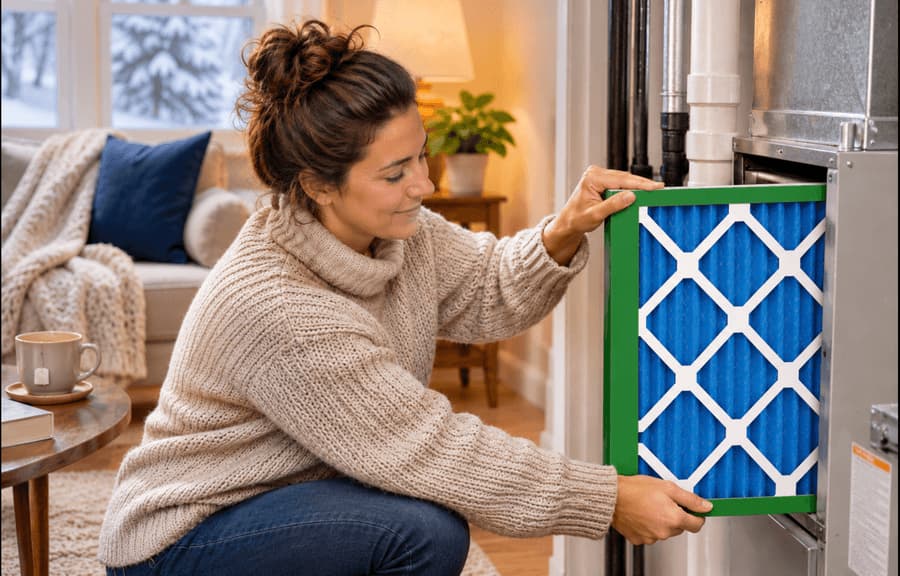
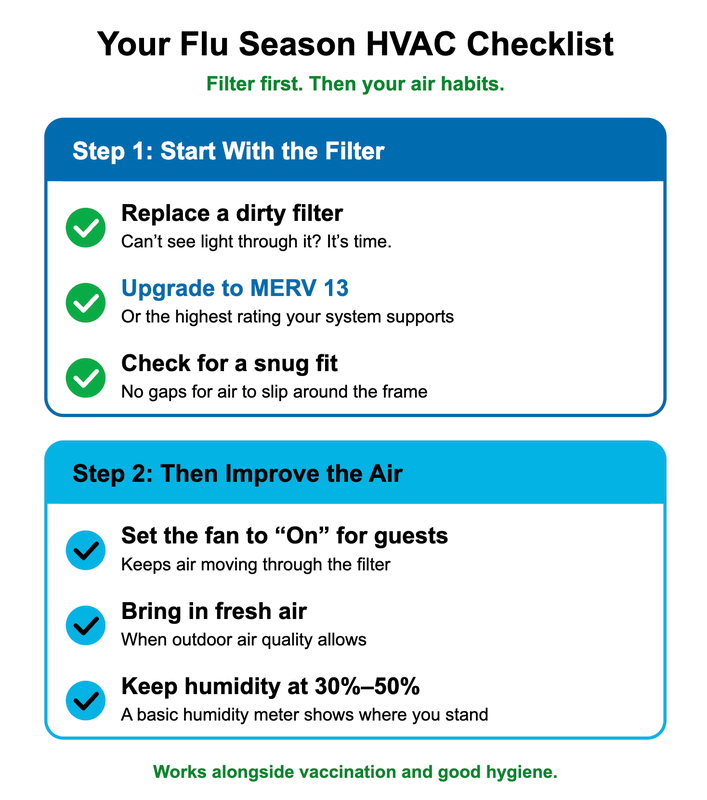
Start with the filter: replace it if it’s dirty, upgrade to MERV 13 or the highest rating your system supports, and make sure it fits without gaps. Then set your fan to “on” when guests visit, bring in fresh air when conditions allow, and keep indoor humidity between 30% and 50%.
These steps help your system capture more airborne particles. They work alongside vaccination and good hygiene, not in place of them.
More than 600 sizes. Not sure your system can run MERV 13? An HVAC technician can confirm.
Have a Ductless Mini Split? Find Your Filter Match
Answer a few quick questions and we’ll match you to the right filter for your mini split.
Prepare your HVAC system for flu season by replacing your furnace filter, upgrading to MERV 13 or the highest rating your system supports, checking filter fit, setting the fan to "on" when visitors are over, bringing in fresh air when conditions allow, and keeping indoor humidity between 30% and 50%. These steps do not stop flu infection on their own, but they help reduce airborne particles alongside vaccination and good hygiene.
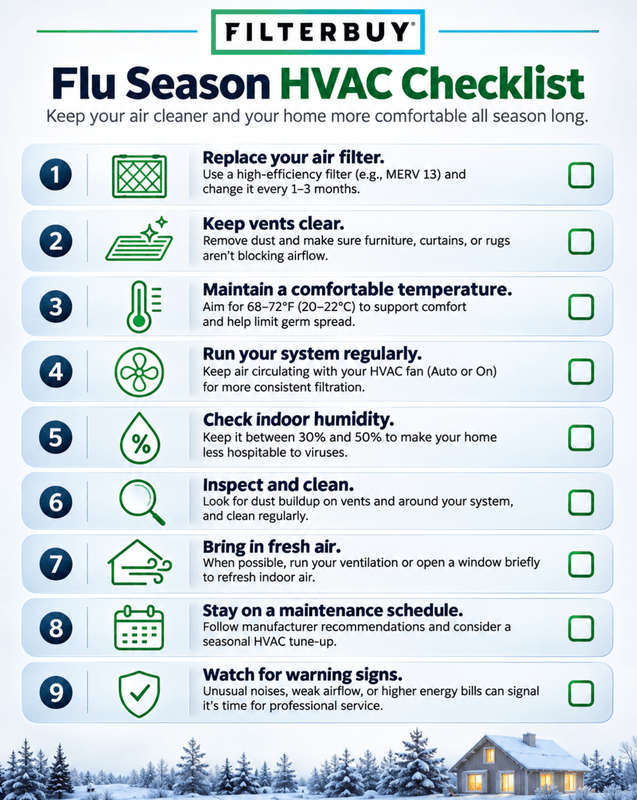
Your 9-Step Flu Season HVAC Checklist
1. Check Your Furnace Filter and Replace It if Needed
Pull your filter and hold it up to the light. If you cannot see through it, it is overdue. A clogged filter does not just restrict airflow, it stops doing its job of capturing particles altogether. During flu season, when your HVAC fan may run more frequently, check your filter at least once a month rather than waiting for a quarterly reminder.
2. Choose the Right MERV Rating for Your HVAC System
Not all filters capture the same particle sizes. The Minimum Efficiency Reporting Value (MERV) scale measures how effectively a filter traps particles, with higher numbers indicating finer filtration (provided your HVAC system can handle the added airflow resistance).
It is recommended to select a filter rated at least MERV 13, or as high a rating as your system's fan and filter slot can accommodate. Similar guidance suggests upgrading to MERV 13 when your system is compatible. Choose MERV 13 if your HVAC system can maintain airflow without strain, or choose MERV 11 if a professional has not confirmed that your system can handle the added resistance of MERV 13. Not every home can safely run a MERV 13 filter, so consult an HVAC technician if you are unsure.
3. Make Sure the Air Filter Fits Without Gaps
A high-MERV filter will not help much if air bypasses its edges instead of passing through it. Official filtration guidance specifically calls for checking filter fit to minimize air bypassing the filter media. Inspect the filter housing and rack, ensuring the filter sits snugly without bending or leaving gaps along the frame.
4. Adjust Your HVAC Fan Settings During Higher-Risk Periods
On regular days, the "auto" setting works well. However, when you host visitors or when a household member has been exposed to the flu, setting your HVAC fan to "on" instead of "auto" is recommended. Running the fan continuously moves air through the filter more consistently, rather than only when heating or cooling is actively running.
5. Bring in Fresh Air When Outdoor Conditions Allow
Ventilation and filtration work together seamlessly. Opening windows and doors, running exhaust fans, or operating a window air conditioner with the vent control open all help dilute indoor air with fresh outdoor air. This reduces the concentration of airborne particles circulating indoors. Avoid ventilating with outdoor air during high pollution days or extreme weather, and check local air quality before opening up the house.
6. Keep Supply and Return Air Vents Clear
Furniture, curtains, and boxes stacked in front of vents restrict airflow and can throw off your system's ability to circulate and filter air evenly. Walk through your home and clear a few feet of space around every supply and return vent.
7. Measure Indoor Humidity and Avoid Excess Moisture
It is recommended to keep indoor humidity ideally between 30% and 50%, and below 60% at all times. A basic humidity meter from a hardware store can show where your home stands. Excess moisture invites mold growth, whereas very dry winter air can cause discomfort; aim for a balanced middle range rather than extreme conditions.
8. Use a Portable HEPA Air Cleaner in Priority Rooms
Central HVAC filtration cleans air only while the system is running. A portable HEPA air cleaner adds continuous filtration in the rooms where your family spends the most time, such as a living room or a bedroom where someone is recovering. When shopping, use the tobacco smoke Clean Air Delivery Rate (CADR) rating (rather than the dust or pollen rating) to match the unit to your room size, since smoke CADR reflects performance against the smallest particles.
9. Schedule Maintenance and Check Heating-System Safety
Beyond filters, an annual HVAC inspection confirms your ductwork, blower, and heat exchanger are functioning properly. A technician can also tell you definitively whether your system can accommodate a MERV 13 filter without straining the fan motor.
What Should You Do if Someone in Your Home Already Has the Flu?
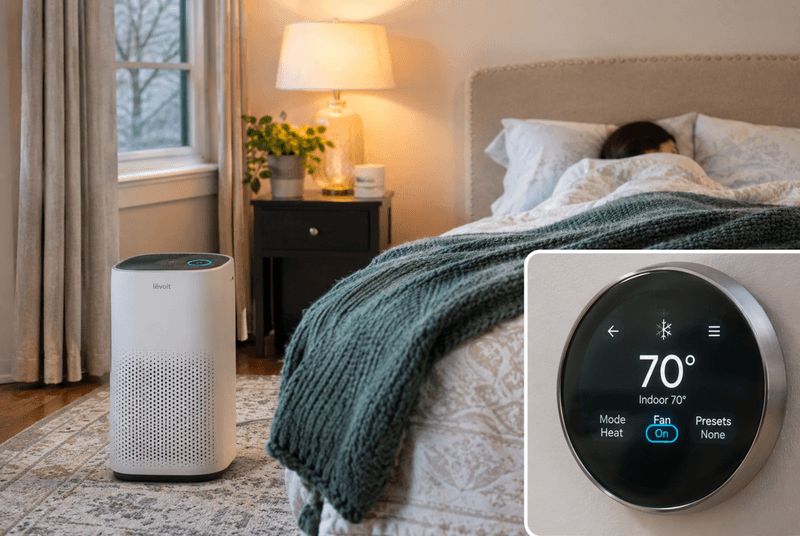
If someone in your household is sick, a few adjustments can help reduce the accumulation of airborne virus-carrying particles in shared spaces. Set your HVAC fan to "on" rather than "auto" so air continually moves and passes through the filter. If you use a portable HEPA air cleaner, place it in the room where the sick person spends most of their time, as positioning the unit near the particle source is more effective than placing it in a general living space.
Combine these HVAC adjustments with broader sick-day guidance: limit contact with others, cover coughs and sneezes, and maintain standard hygiene practices. HVAC changes support these precautions, but they do not replace them.
Which HVAC Filter Is Best for Flu Season?
There is no single "best" filter for every household; the right choice depends on what your HVAC system can handle. If your system is compatible, a MERV 13 pleated filter provides high filtration efficiency. If you have not confirmed compatibility, start with MERV 11 and have a technician assess whether a MERV 13 upgrade is suitable for your equipment. Filterbuy offers pleated MERV 8, 11, and 13 filters sized to match most residential systems, making it easier to upgrade without guessing at fit.
Common Flu-Season HVAC Mistakes to Avoid
Start With the Filter, Then Improve the Air Around You
Creating a healthier home during flu season is not about finding a single perfect product. It relies on the combination of a properly fitted filter, an appropriate MERV rating, sensible ventilation habits, and routine maintenance working together. None of these steps replace a flu vaccine or staying home when you are sick, but they do provide your household with an added layer of protection during the months when everyone spends more time indoors.
If your furnace filter is overdue or you're ready to upgrade to MERV 13, Filterbuy offers pleated filters in more than 600 sizes, so you can find the exact fit your system needs without the guesswork. For more guidance on seasonal HVAC care, check out Filterbuy's resources on winter furnace filter replacement timing and how HVAC filters affect winter indoor air quality.
Frequently Asked Questions
Can HVAC Filters Remove Flu Virus Particles From Indoor Air?
HVAC filters can capture airborne particles that pass through them, including particles in the size range associated with respiratory droplets, but filtration alone does not prevent influenza infection. Filtration works on particles moving through the filter media, serving as one layer within a broader prevention strategy that includes vaccination, hygiene, and ventilation.
What MERV Rating Is Best During Flu Season?
It is generally recommended to use a MERV 13 filter or the highest rating your HVAC system can accommodate. However, not every system can run a MERV 13 filter safely. Check with an HVAC technician if you are unsure, and consider using MERV 11 as a reliable alternative in the meantime.
Should I Run My HVAC Fan Continuously When Someone Is Sick?
It is recommended to set the fan to "on" instead of "auto" when hosting visitors, or when a household member is sick or recovering. This keeps air moving through the filter more consistently than the on-demand cycling of "auto" mode.
How Often Should I Change My Furnace Filter During Flu Season?
Replacement frequency depends on filter thickness and household conditions. A reasonable approach is to check your filter monthly during flu season and replace it when it looks visibly dirty or matted, rather than waiting for a fixed calendar date. For more detail, see this guide on when to change your furnace filter in winter.
Does Increasing Indoor Humidity Help Prevent the Flu?
Not in a guaranteed way. While some research suggests respiratory viruses survive less effectively in higher-humidity environments, evidence regarding real-world transmission varies, and humidity control should not be relied upon as a primary flu-prevention tactic. Maintaining indoor humidity between 30% and 50% remains beneficial for comfort and preventing mold growth.