
When Does Winter Weather Usually Start? A Region-by-Region Guide
November 9, 2026
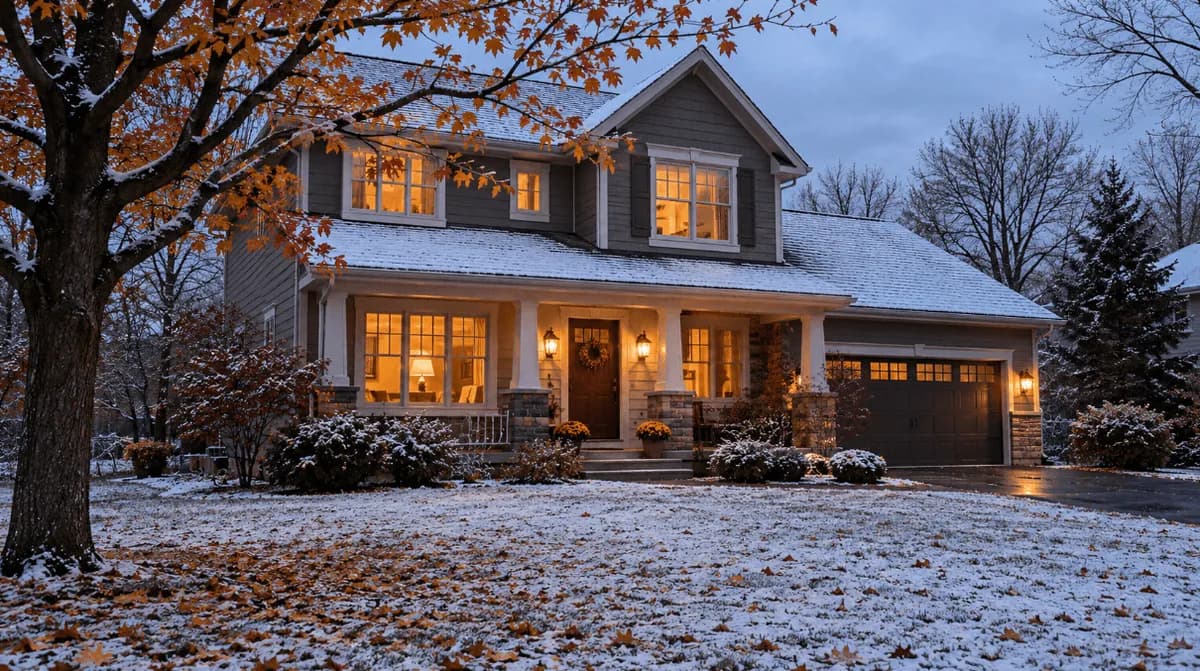
Your furnace runs its longest cycles in the first cold weeks of the season, and all of that air moves through a single filter. Find your region below, check the green swap target, and have a fresh filter in place before the first freeze reaches your area.
600+ Sizes
Standard and custom sizes built to fit nearly any system.
Fast, Free Delivery
Fast and free 2-day delivery to most US states.
Factory-Direct Pricing
No middlemen and no markups between our factory and your door.
Auto-Delivery
Your next filter arrives on the schedule you choose.
Get Ahead of Your First Freeze
Know your filter size? Order now and have it on hand before the heat runs around the clock.
Not Sure Which Filter Fits Your Furnace?
Answer a few quick questions about your home and heating system, and we will point you to the right size and filter for the season ahead.
TL;DR:
Across most of the United States, winter weather shows up in October or November, weeks before the calendar says winter begins on December 21. The northern Plains and high Rockies can see their first freeze by late September. The Midwest and interior Northeast usually follow in mid-to-late October, and the South and the coasts hold out until November or December. At Filterbuy, we count your area’s first-freeze date, not the solstice, as the start of filter season.
Key Takeaways
Meteorological winter runs from December 1 through February 28 (February 29 in leap years).
Astronomical winter begins at the winter solstice: December 21, 2026, at 3:50 p.m. EST.
In NOAA’s 1991–2020 climate normals, median first-freeze dates range from September 26 in Fargo, North Dakota, to January 3 in Phoenix.
Since 1980, first freezes have arrived about three days later on average, according to the EPA.
Filterbuy’s first-freeze rule: put in a fresh air filter about two weeks before your area’s median first freeze.
If you’re waiting for December 21 to think about winter, your furnace is probably ahead of you. At Filterbuy, we see the season from both sides of the furnace. We cut filters to order in our own U.S. plants, and our licensed team at Filterbuy HVAC Solutions services heating and cooling systems in Florida. Both jobs point to the same conclusion: winter starts in your home the first night your area freezes.
When Does Winter Officially Start?
Winter has two official start dates in the Northern Hemisphere, and neither one tells you when the cold will reach your town. Meteorological winter begins on December 1 and runs through the end of February. Astronomical winter begins at the winter solstice, which this year falls on December 21, 2026, at 3:50 p.m. EST.
| Definition | Starts | Ends | Based on |
|---|---|---|---|
| Meteorological winter | December 1 | February 28 (29 in leap years) | The three coldest months; used for climate records |
| Astronomical winter | Winter solstice: December 21, 2026, 3:50 p.m. EST | Spring equinox, around March 20 | The tilt of the Earth relative to the sun |
| Winter weather | First fall freeze (32°F or lower) | Last spring freeze | Local temperatures; varies by region |
Sources: NOAA; timeanddate.com; National Weather Service freeze definition.
Homeowners need a third definition, one tied to the weather itself. Winter weather arrives with the first nights at or below 32°F, when the furnace starts running every day. The National Weather Service issues freeze warnings when lows of 32°F or colder are expected, and a hard freeze generally means 28°F or lower.
“Your furnace doesn’t follow the calendar. The first night your area drops to 32°F is the night your filter starts working overtime, so that’s the date I tell homeowners to plan around.”
Michelle Wan, Brand Manager and Air Quality Writer, Filterbuy
When Does Winter Weather Usually Start in the US? Dates by Region
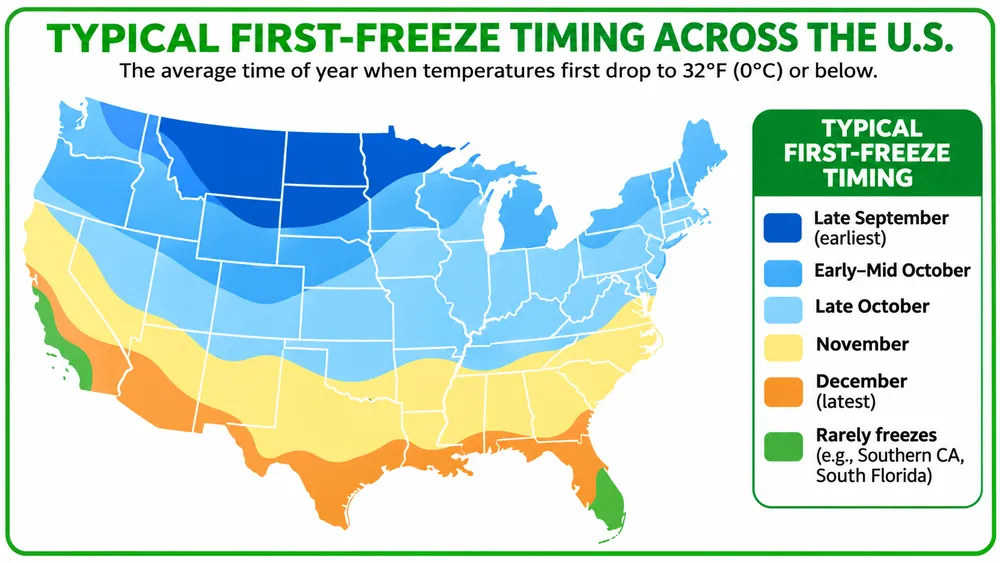
The first fall freeze, meaning the first night at 32°F or colder, reaches the northern Plains and high Rockies first, then works its way through the Midwest and Northeast during October. Southern and Pacific coastal areas usually hold out until November or December, and coastal Southern California and South Florida rarely freeze.
| Region | Typical first freeze | Example cities (median first 32°F night) | Filterbuy filter-swap target |
|---|---|---|---|
| Northern Plains and northern Rockies | Late September to early October | Fargo, ND: Sept 26 · Billings, MT: Oct 1 · Cheyenne, WY: Oct 1 | Mid-September |
| Upper Midwest and northern New England | Early to mid-October | Manchester, NH: Oct 2 · Des Moines, IA: Oct 11 · Minneapolis, MN: Oct 13 | Late September |
| Lower Midwest and Great Lakes | Mid- to late October | Indianapolis, IN: Oct 20 · Detroit, MI: Oct 21 · Chicago, IL: Oct 24 | Early October |
| Mid-Atlantic and coastal Northeast | Late October to mid-November | Baltimore, MD: Oct 29 · Boston, MA: Nov 7 · New York City: Nov 17 | Mid- to late October |
| South and southern Plains | November | Nashville, TN: Nov 1 · Oklahoma City, OK: Nov 4 · Atlanta, GA: Nov 14 | Late October |
| Pacific Northwest (west of the Cascades) | Mid- to late November | Portland, OR: Nov 14 · Seattle, WA: Nov 23 | Late October to early November |
| Gulf Coast and Desert Southwest | Late November to early January | Houston, TX: Dec 7 · New Orleans, LA: Dec 15 · Phoenix, AZ: Jan 3 | Late November to mid-December |
| Coastal Southern California and South Florida | Rarely freezes | Los Angeles, CA · Miami, FL | When you first run the heat |
Source: NOAA 1991–2020 U.S. Climate Normals (50% probability dates), as compiled by Omni Calculator. A median date means the first freeze comes earlier in half of all years and later in the other half. Filter-swap targets apply Filterbuy's rule of putting in a fresh filter about two weeks before the median first freeze.
Why Cities at the Same Latitude Freeze Weeks Apart
Latitude only tells part of the story. NOAA notes that elevation, terrain, and nearness to large bodies of water all shift the first-freeze date. At about the same latitude, Boston’s median first freeze (November 7) comes more than two weeks after Detroit’s (October 21) because the Atlantic keeps Boston warmer.
How to Find Your Own First-Freeze and Filter-Swap Date
Your own street can freeze days earlier or later than the regional average. Filterbuy’s three-step method narrows it down:
1. Find your local median. Start with NOAA’s first fall freeze maps or the frost/freeze page from your local National Weather Service (NWS) office, and note the median first 32°F date for the station closest to you.
2. Choose a planning date. If someone at home is sensitive to cold, or you live higher or farther inland than that station, plan around NOAA’s “earliest 10%” date instead. The first freeze comes before it only one year in ten.
3. Count back two weeks. That gives you your filter-swap date. Put it on your calendar, or time your filter auto-delivery to arrive just before it.
Texas, California, Florida, and Colorado
Texas: The Panhandle freezes weeks before the coast. Dallas typically sees its first freeze in November, and Houston’s median first-freeze date is December 7.
California: Los Angeles and San Francisco rarely freeze, but the Sierra Nevada freezes far earlier.
Florida: North Florida sees the occasional winter freeze, while South Florida rarely does.
Colorado: Denver’s median first freeze is October 7, and higher mountain towns usually freeze sooner.
Canada
Winter weather starts earlier in most of Canada. Calgary, Regina, and Saskatoon average their first frost in mid-September. Toronto and Montreal typically see theirs in early October, and Vancouver usually holds off until early November.
When Does Winter Weather Usually Start and End?
Winter weather lasts from your first fall freeze to your last spring freeze, so its length depends on location. On paper, meteorological winter ends with February, and astronomical winter ends at the spring equinox around March 20. In practice, northern states can see freezing nights into April, while much of the South has its last freeze by early spring.
The season itself is shifting, too. According to the EPA, the first fall freeze has arrived about three days later than the 1895–2023 average since 1980. Because the dates keep moving, Filterbuy plans around current local first-freeze dates.
Signs Winter Weather Is on Its Way
Your local National Weather Service office starts issuing frost advisories or freeze watches and warnings.
Your home won’t hold about 64°F without the heat on.
The windows stay shut, and indoor air begins to feel stale or dry.
How to Get Your Home Ready Before Winter Weather Starts
Get your home ready on your filter-swap date, about two weeks before your area’s typical first freeze.
1. Book a heating tune-up in the fall. The ENERGY STAR maintenance checklist recommends checking heating systems in the fall, before contractors get busy.
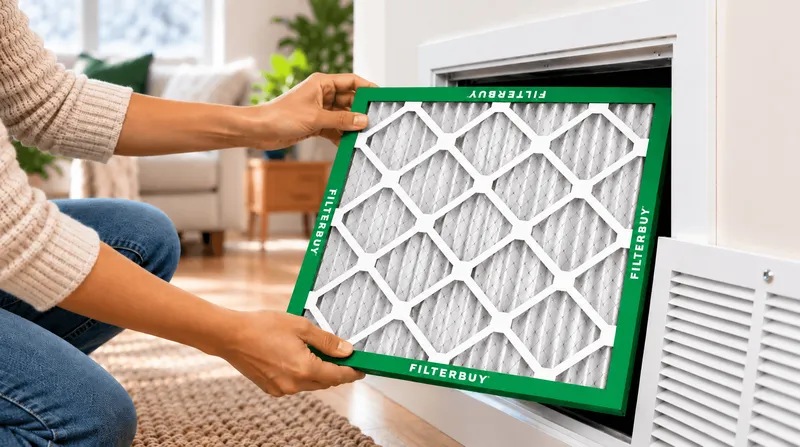
2. Put in a fresh air filter. ENERGY STAR recommends checking your filter every month during heavy-use seasons like winter and changing it whenever it looks dirty, or at least every three months. Before you order, check the size printed on your current filter’s frame; about 70% of the filters Filterbuy sells fall outside the 10 most common sizes, so a guess from a store shelf often won’t fit. See how often to change your furnace filter in winter.
3. Test your carbon monoxide detectors. The CDC recommends battery-operated or battery-backup CO detectors near every sleeping area, along with annual service for fuel-burning heating systems. Filterbuy makes air filters, so we’ll be plain: no air filter removes carbon monoxide.
4. Seal drafts. Weatherstripping doors and windows keeps warm air inside so the system cycles less.
David Clark, who reviewed this guide, sees the same service calls after every first cold snap. Some come from furnaces short-cycling on clogged filters, others from heat pump owners who mistake normal defrost steam for a breakdown. Swapping the filter first heads off most of them.
Supporting Statistics
42% of U.S. home energy goes to space heating, averaging $519 per household in 2020, from $981 in New Hampshire to $244 in Louisiana. Source: U.S. Energy Information Administration
Americans spend about 90% of their time indoors, where some pollutants are often 2 to 5 times higher than outdoors. Source: U.S. EPA
More than 400 Americans die each year from unintentional carbon monoxide poisoning not linked to fires, and more than 100,000 visit an emergency department. Source: CDC
Frequently Asked Questions
What month does winter weather usually start?
In most of the U.S., winter weather begins in October or November.
When does winter weather usually start in the Midwest, Northeast, and South?
The Midwest and interior Northeast usually see their first freeze in October, with medians of October 24 in Chicago and October 11 in Hartford. Coastal Northeast cities follow in November, including Boston on November 7. Most of the South freezes in November, such as Atlanta on November 14.
When should I turn on the heat?
Filterbuy’s rule of thumb is to turn on the heat once your home stays below about 64°F, usually when nights dip into the 40s. See time to turn on the heat for a first-startup checklist.
Should I change my furnace filter before the first freeze?
Yes. Filterbuy recommends putting in a fresh filter about two weeks before your area’s median first freeze, so your system starts winter with full airflow.
How often should I change my air filter in winter?
Filterbuy recommends checking it once a month and replacing it when it looks dirty, or at least every three months, which matches ENERGY STAR guidance. See how often to change your air filter.
Glossary
Meteorological winter: December, January, and February, grouped by the annual temperature cycle and used for climate records.
Hard freeze: Generally 28°F or lower; definitions vary by NWS office.
Median first-freeze date: The date by which a location has a 50% chance of its first fall freeze, per NOAA’s 30-year normals.
Earliest 10% freeze date: The date before which a location’s first fall freeze arrives in only one year out of ten.
Filter-swap target: Filterbuy’s recommended date to put in a fresh air filter, about two weeks before an area’s median first freeze.
NOAA: The National Oceanic and Atmospheric Administration, parent agency of the National Weather Service.
Filterbuy: A family-owned U.S. manufacturer of pleated HVAC air filters, cut to order in 600+ sizes plus custom.