
When to Turn On the Heat: Temperature Rules and a First-Startup Checklist
October 7, 2026
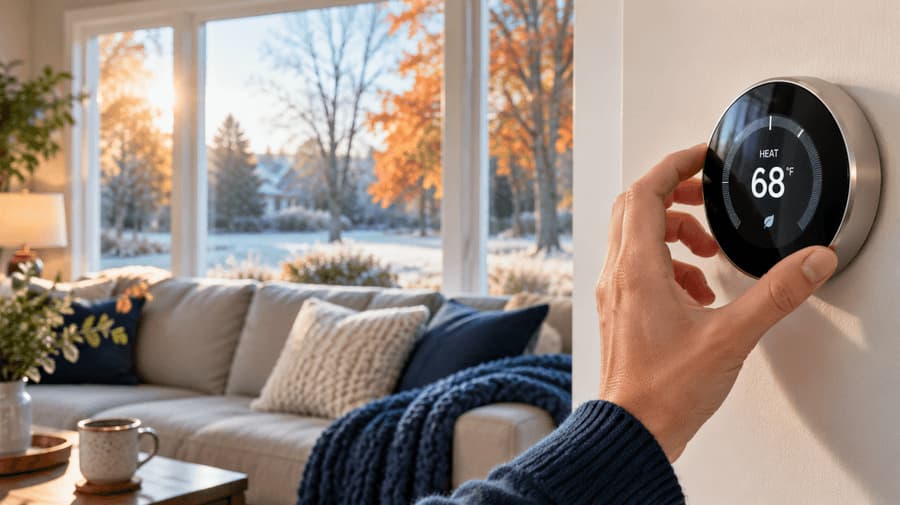
Turn on the heat once your home stays below about 64°F. For most homes, that's when nights dip into the 40s. If you live with a baby, an older adult, or anyone with heart or lung problems, start sooner, at about 68°F.
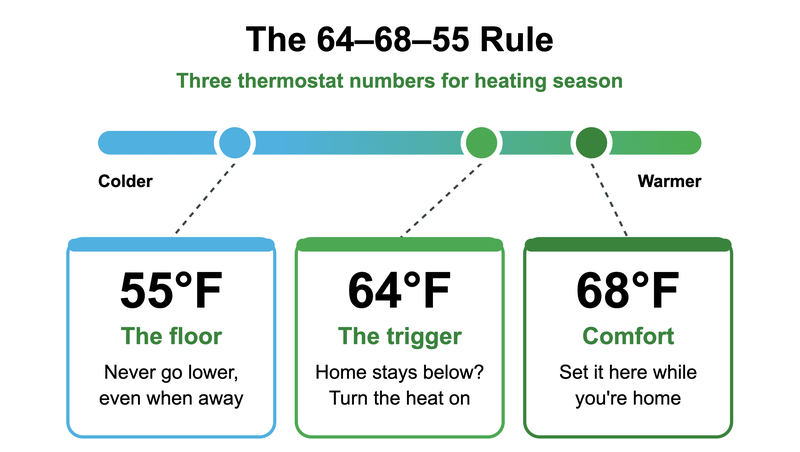
Filterbuy's 64–68–55 rule makes it easy to remember:
64°F: below this, turn the heat on.
68°F: the comfort setting while you're home.
55°F: the floor, even when you're away, so pipes don't freeze.
Before the first run, slide in a fresh air filter. Not sure which one fits? Take the quick match quiz below.
Answer a few quick questions and we'll match you to the right filter for your system.
Already know your filter size? Shop air filters at Filterbuy
TL;DR
Filterbuy's rule of thumb: turn on the heat once your indoor temperature stays below about 64°F (18°C), usually once nights dip into the 40s. If you live with a baby, an older adult, or anyone with heart or lung problems, start sooner, at about 68°F. Before that first startup, take 10 minutes to put in a fresh furnace filter, open the vents, clear space around the furnace, test your carbon monoxide (CO) alarms, and switch the thermostat to heat.
Key Takeaways
Filterbuy's 64–68–55 rule: turn the heat on below 64°F, aim for about 68°F when you're home, and never let the house fall below 55°F.
The World Health Organization (WHO) treats 18°C (64.4°F) as a safe indoor minimum and notes that vulnerable people may need a warmer home. (WHO)
The Centers for Disease Control and Prevention (CDC) recommends checking CO alarm batteries every six months and having fuel-burning heating systems serviced every year. (CDC)
When Should You Turn On the Heat?
Turn on the heat when your home can no longer hold the mid-60s by itself. For most houses, that happens once nights dip into the 40s, and a drafty house will get there sooner than a well-sealed one. Your thermostat is a better guide than the calendar: if it reads below 64°F when you wake up, it's time. The same trigger applies whether you call it turning on the heat or turning on the furnace.
Why We Approach This Differently
At Filterbuy, we see the heating season from both sides of the furnace. We make air filters at our own plants in Alabama, Florida, Pennsylvania, and Utah, and our licensed HVAC team, Filterbuy HVAC Solutions, services the systems those filters protect. That's why this guide pairs the temperature question with a startup checklist, since the first cold night is when skipped summer maintenance shows up.
Because we cut filters to order, we know that about 70% of the filters Filterbuy sells fall outside the 10 most common air filter sizes. Before you order, check the size printed on the filter you have now instead of guessing from a store shelf.
What Temperature Should You Turn On the Heat?
For most homes, the answer is 64°F indoors. The World Health Organization's Housing and Health Guidelines name 18°C (64.4°F) as a safe indoor minimum, and they note that older people, children, and people with chronic illness may need more warmth than that.
Filterbuy's 64–68–55 rule turns that guidance into three numbers that are easy to remember:
64°F is the trigger. Once your home stays below 64°F, it's time to turn on the heat.
68°F is the comfort setting. The U.S. Department of Energy (DOE) recommends 68°F while you're home and awake, and it estimates savings of up to 10% a year if you set the thermostat back 7–10°F for eight hours a day.
55°F is the floor. Even in an empty house, keep the heat at 55°F or higher so pipes don't freeze and burst. (Citizens Utility Board)
What a setback is worth: According to the U.S. Energy Information Administration, the average household spent $519 on space heating in 2020. At the DOE's estimate of up to 10% savings, a daily setback could save a typical home roughly $50 a year. Homes heating with fuel oil averaged $1,164, so their savings could be closer to $115. (EIA; our estimate)
When to Turn On the Heat by Household
These thresholds are Filterbuy's recommendations, built on WHO's 18°C minimum and the DOE's 68°F comfort setting.
Turning On Your Furnace for the First Time: A 10-Minute Startup Checklist
The whole checklist takes about 10 minutes. At Filterbuy, we always start with the filter. In a ducted system, the air your furnace heats is pulled through it, so a clogged filter makes the furnace work harder from the very first cycle.
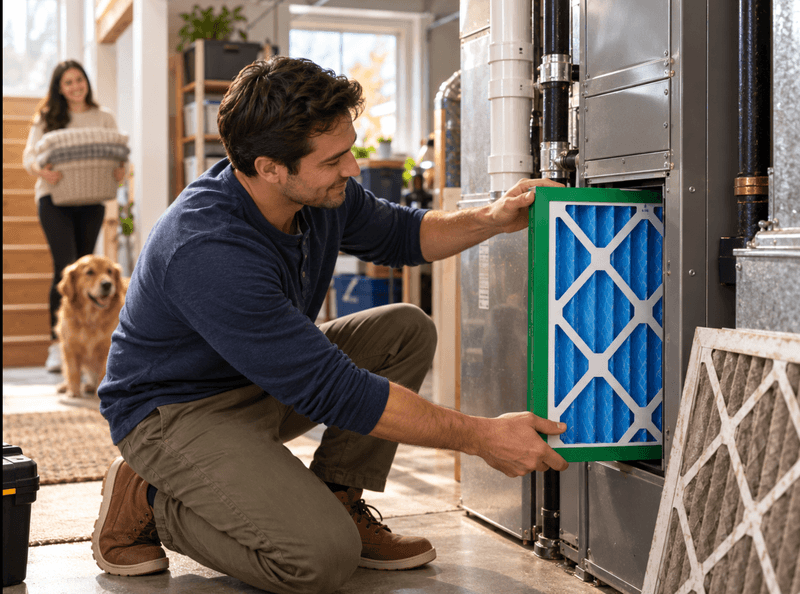
Replace the furnace filter (3 minutes). Turn the system off and check the size printed on the old filter's frame (Filterbuy's air filter size chart explains how to read it). Slide in the new filter with its airflow arrow pointing toward the furnace. A pleated MERV 8–13 filter, the range Filterbuy manufactures, works well in most homes. The U.S. Environmental Protection Agency (EPA) notes that most furnaces can use a MERV 13 filter without equipment problems as long as it's replaced often, so the only check is fit, just like the size. If you can't remember your last change, replace it now; it probably ran all summer with your AC. Filterbuy recommends checking it every 30 days through winter.
Open and clear vents and returns (2 minutes). Move rugs, furniture, and curtains away from vents and return grilles. A blocked return starves the furnace of air.
Clear the furnace area (1 minute). The National Fire Protection Association (NFPA) advises keeping anything that can burn at least three feet away from the furnace. (NFPA heating safety)
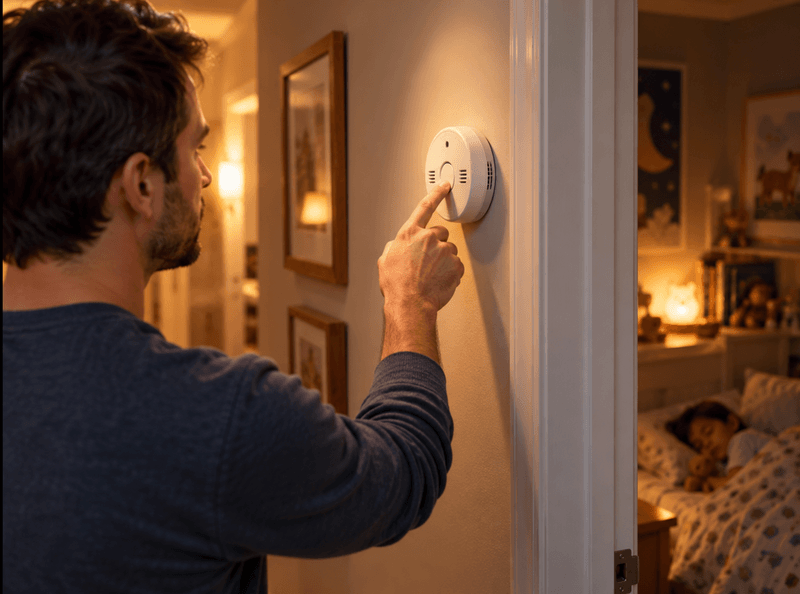
Test CO and smoke alarms (2 minutes). Press the test button on each alarm and replace any weak batteries. The U.S. Consumer Product Safety Commission (CPSC) recommends placing CO alarms outside each sleeping area.
Switch the thermostat to heat (2 minutes). Change the mode from "cool" to "heat" and set the temperature 3–5°F above the current room temperature. You should feel warm air at the vents within a few minutes.
We print the arrow on every filter we make, and it is still one of the questions our team hears most. The arrow was never the confusing part. Knowing which way the air moves is.
Michelle Wan, Brand Manager and Air Quality Writer, Filterbuy
What's Normal When You Turn On the Furnace for the First Time?
A faint burning smell during the first 15 to 30 minutes is normal. It's summer dust on the heat exchanger burning off. A smell that lingers for hours is a different story, and any hint of gas means you should leave the house and call for help.
Turning On the Heat for the First Time with a Heat Pump, Boiler, or Electric Heat
Most startup guides assume a gas furnace, but heat pumps, boilers, and electric heat each start up differently.
Every home with a fuel-burning appliance or attached garage needs working CO alarms, whatever its heating system.
When Should You Call an HVAC Technician Before Heating Season?
Schedule a professional inspection every fall, ideally in September or October. The CDC recommends annual service by a qualified technician to help prevent carbon monoxide poisoning, because a technician can check parts you can't see, like the heat exchanger and venting. If anything from the warning table shows up, call sooner.
In Florida, Filterbuy's licensed team, Filterbuy HVAC Solutions, handles HVAC inspections. Everywhere else, book a licensed local technician.
Supporting Statistics: The Numbers Behind the Checklist
The checklist's priorities come straight from federal data:
Full source links appear directly below this table.
Sources for these statistics:
Frequently Asked Questions
What Month Should You Turn On the Heat?
There isn't one. Homes in northern states often need heat by late September, while much of the South can wait until November.
Should I Turn My Furnace On or Leave It On "Auto"?
Set the mode to "heat" and the fan to "auto," so the blower runs only while the furnace heats. Your filter only cleans air while the blower runs, so "on" filters more air but uses more electricity and loads the filter faster.
Why Does My Furnace Smell Like It's Burning the First Time I Turn It On?
That smell is summer dust burning off the heat exchanger, and it should fade within an hour. If it lingers or smells like gas or hot plastic, turn the system off and call a professional.
How Long Should a Furnace Run After Turning It On for the First Time?
Let it finish at least one full heating cycle, usually 10 to 15 minutes, and check that warm air reaches every room. Very short cycles can signal a clogged filter.
Glossary
Auxiliary (AUX) heat: Backup electric heat in a heat pump that turns on when the heat pump alone cannot keep up.
Carbon monoxide (CO): A colorless, odorless gas produced when fuel doesn't burn completely. It can poison people in an enclosed space.
Filterbuy: A U.S. air filter manufacturer with plants in Alabama, Florida, Pennsylvania, and Utah. It also operates Filterbuy HVAC Solutions, a licensed HVAC contractor.
Emergency (EM) heat: A heat pump setting that runs only the backup heat, for when the heat pump fails.
Heat exchanger: The part of a furnace that heats the air while keeping combustion gases separate from it.
Heat pump: An electric system that moves heat from the outdoor air into your home in winter.
MERV rating: Minimum Efficiency Reporting Value, a 1–16 scale that rates how well a filter captures particles. Learn how MERV ratings work.
Thermostat setback: Lowering the thermostat for a set period, such as overnight, to save energy.
Keep Your Home Ready All Winter
Follow the 64–68–55 rule, run this checklist before the first cold night each year, and keep a fresh filter in place. Filterbuy makes more than 600 filter sizes in the U.S., and auto-delivery sends your next filter before you need it.
More from Filterbuy: winter furnace filter guide · Furnace Filters & Winter hub
About the Author and Reviewer
Michelle Wan is Filterbuy's Brand Manager and Air Quality Writer (B.A., University of California, Santa Cruz). She works directly with Filterbuy's U.S. manufacturing teams in Alabama, Florida, Pennsylvania, and Utah.
David Clark is a Licensed HVAC Technician and President of Filterbuy HVAC Solutions, Filterbuy's licensed HVAC contracting division. He reviews Filterbuy's technical content for accuracy.
Sources
Centers for Disease Control and Prevention: Carbon Monoxide (CO) Poisoning Prevention
U.S. Consumer Product Safety Commission and CDC: Winter Home Heating Hazards release
National Fire Protection Association: Safety with heating equipment
U.S. Environmental Protection Agency: Guide to Air Cleaners in the Home
U.S. Department of Energy thermostat guidance, as summarized by the Citizens Utility Board: How low should you set your thermostat?
U.S. Energy Information Administration: 2020 RECS space heating release
U.S. Consumer Product Safety Commission: 2023 carbon monoxide fatalities report release