
How Often Should You Change Your HVAC, Furnace, or AC Filter?
July 18, 2025
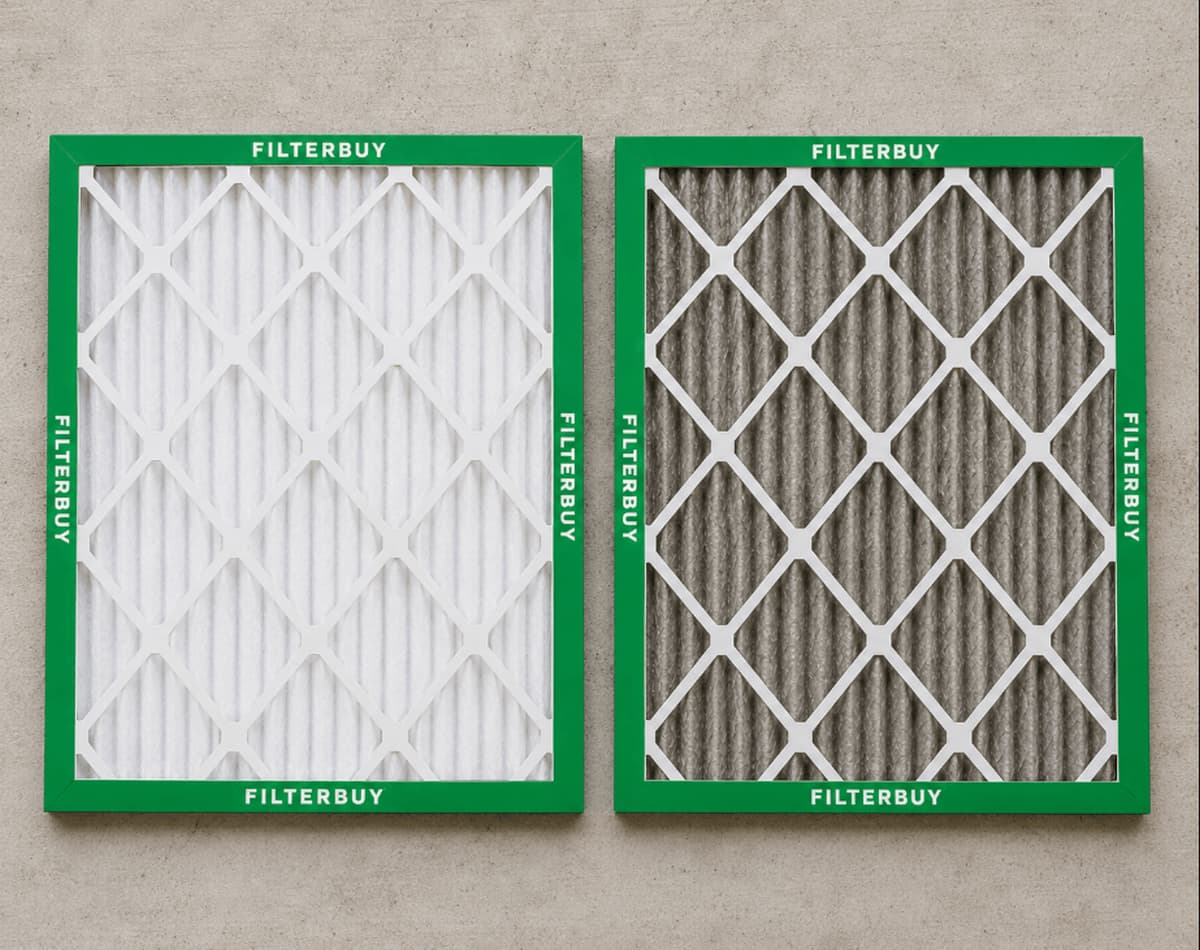
Most homes should change a 1- or 2-inch pleated air filter every 90 days, and check it once a month. Pets, heavy system use, and filter thickness can move that up or down. Here's how to find the right schedule for your home.
Quick answer: how often should you change your air filter?
| Filter thickness | Change it every |
|---|---|
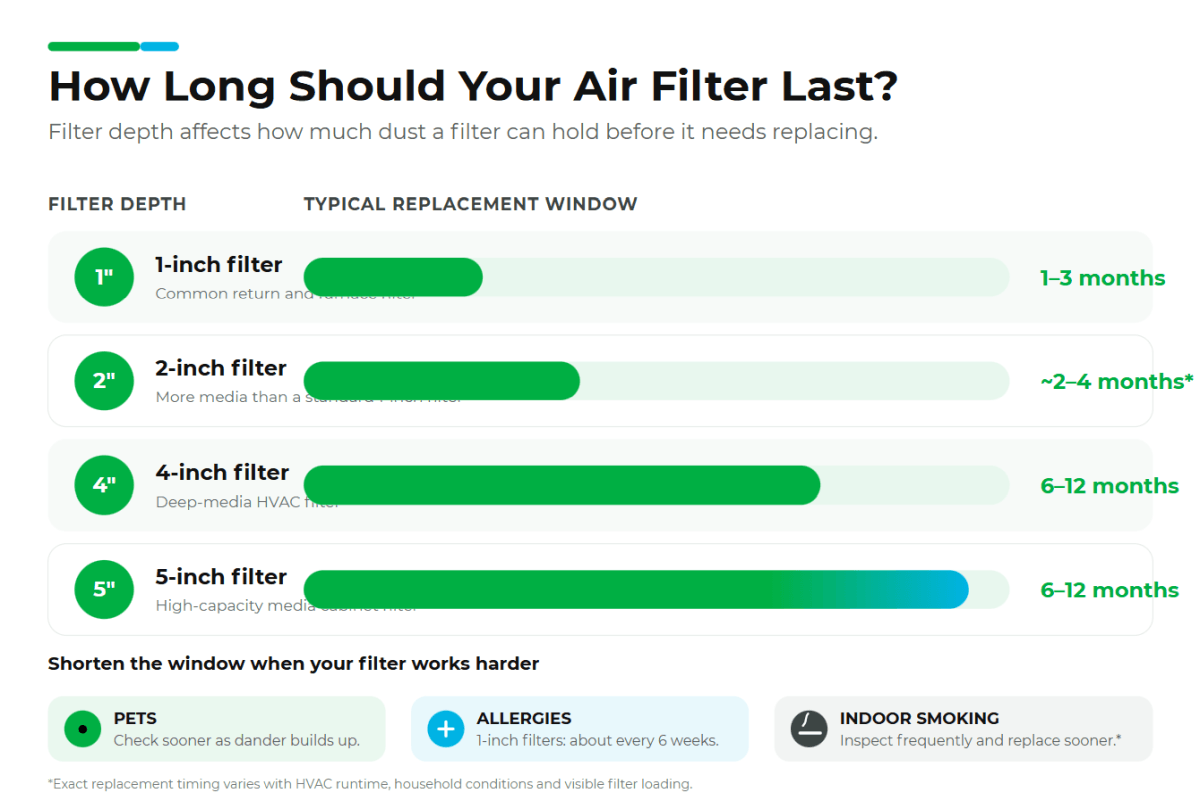
| 1-inch | 1–3 months (90 days is the standard) |
| 2-inch | 1–3 months |
| 4-inch | 6–9 months |
| 5-inch | 9–12 months |
Whatever the thickness, check it monthly. If it looks gray or clogged, change it early.
Set up filter reminders with Auto DeliveryHow often to change your air filter in your house
Start at 90 days for a 1-inch pleated filter, then adjust for your home:
| Your home | 1-inch filter schedule |
|---|---|
| Typical home, no pets | Every 90 days |
| One or more pets | Every 60 days |
| Several pets, smokers, or a dusty home | Every 30–45 days |
| Nearby construction, wildfire smoke, or renovation | Check weekly, replace when dirty |
| Vacation home or light system use | Up to 6 months, checked each season |
How often to change your furnace filter
Change a 1- or 2-inch furnace filter every 90 days, and a 4- or 5-inch furnace filter every 6 to 12 months. In most homes with central air, the furnace filter is the same filter your AC uses. It sits in the furnace cabinet, the air handler, or behind a return grille.
- Winter: a filter can often last the full 90 days, unless your furnace runs most of the day.
- Heavy heating season: check it monthly. More run time pulls more dust through the filter.
- Start of the heating season: put in a fresh filter before your first cold snap.
Need a step-by-step? See how to change your furnace filter.
How often to change your AC filter
Change a 1-inch AC filter every 90 days, and more often in summer. When your air conditioner runs most of the day, it pulls more air, and more dust, through the filter.
- Summer: check monthly and replace when dirty. In hot climates, that can mean every 30 to 60 days.
- Central air: your AC and furnace usually share one filter, so one schedule covers both.
- Window units and mini splits: these use their own built-in filters. Follow the manufacturer's cleaning schedule.
Does filter thickness or MERV rating change the schedule?
Thickness matters most. Thicker filters have more pleated media to hold dust, so a 4-inch filter like a 20x25x4 lasts much longer than a 1-inch filter.
MERV rating matters less, but it counts. A MERV 11 or MERV 13 filter captures smaller particles than MERV 8, so it can fill up sooner in a dusty or pet-heavy home. Start at the same schedule and let your monthly check tell you if you need to change it early.
Not sure which MERV to use? See which air filter is best for your home.
Signs you need to change your air filter
Pull the filter out and hold it up to a light. If you can still see the filter material under a thin layer of dust, it's fine. If a gray or brown coating covers most of it, replace it. Other signs:
- More dust on vents, furniture, and fan blades
- Weaker airflow from your vents
- Your system runs longer to reach the set temperature
- A musty smell when the system kicks on
- A filter reminder on your thermostat
What happens if you don't change your air filter?
A clogged filter restricts airflow. Your system works harder to move air, captures less dust, and can heat or cool unevenly. With an air conditioner, restricted airflow can also let the evaporator coil get too cold and ice over. If your AC is freezing up, check the filter first, then call an HVAC technician if it keeps happening.
How often to change the air filter in an apartment
The same schedule applies: every 90 days for a 1-inch filter, and more often with pets. Some landlords handle filter changes; others leave it to tenants, so check your lease. Your filter is usually behind a large return grille on a wall or ceiling, often in a hallway, or in the closet with the air handler.
Frequently asked questions
How long do air filters last?
A 1- or 2-inch pleated filter lasts 1 to 3 months. A 4-inch filter lasts 6 to 9 months, and a 5-inch filter lasts 9 to 12 months.
Do I need to change my air filter every month?
Not usually. Check it monthly, but most homes only need to change a 1-inch filter every 60 to 90 days. Monthly changes make sense with several pets, smokers, or heavy dust.
Should I change my filter if it doesn't look dirty?
Yes, once it reaches the end of its schedule. Fine particles can build up without being easy to see.
Why does my filter get dirty so fast?
Common causes are pets, indoor smoking, nearby construction, heavy system use, or leaky return ducts pulling in dust from attics or crawl spaces. If a new filter turns black within a week, have an HVAC technician check your system.
Can I run my AC or furnace without a filter?
No. Without a filter, dust builds up on the blower and coil. If you're out of filters, order a replacement and put it in as soon as it arrives.
How many air filters are in a house?
Many homes have one, but homes with multiple HVAC systems or several return grilles can have two or more. Check every return grille and the furnace cabinet.
Never guess when to change it again
Auto Delivery ships your exact size on the schedule you pick, so a fresh filter shows up when it's time.
Set up Auto DeliveryNeed a new size? Shop all sizes or take the filter quiz.
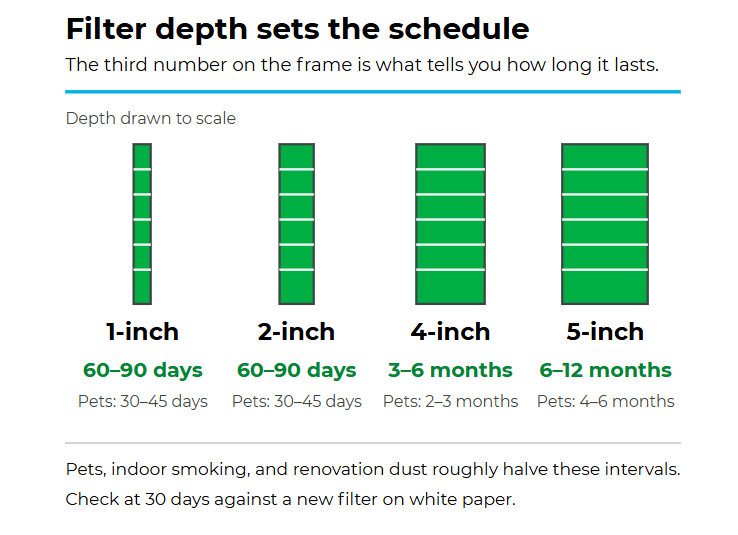
Most homes need a new 1-inch or 2-inch pleated filter every 60 to 90 days. Depth is what moves that number: a 4-inch runs 3 to 6 months and a 5-inch 6 to 12. Pets, indoor smoking, and renovation dust roughly halve every one of those intervals. Furnace filter, AC filter, HVAC filter — in a central system they are all the same part on the same schedule.
1-inch or 2-inch — 60 to 90 days, or 30 to 45 with pets
4-inch — 3 to 6 months, or 2 to 3 with pets
5-inch — 6 to 12 months, or 4 to 6 with pets
Flat fiberglass panel — about 30 days, whatever the size
Not sure which depth and rating your system takes? Take the quick match below, or shop air filters at Filterbuy if you already know your size.
Answer a few quick questions and we will match you to the right filter for your system.
Author: Michelle Wan, Brand Manager and Air Quality Writer, Filterbuy
Technically reviewed by: David Clark, Licensed HVAC Technician, Filterbuy HVAC Solutions
Published: July 18, 2025 · Updated: August 18, 2026
TL;DR
Replace a 1-inch or 2-inch pleated air filter every 60 to 90 days, a 4-inch every 3 to 6 months, and a 5-inch every 6 to 12. Pets, allergies, indoor smoking, and heavy use will routinely halve those intervals. And whatever you call it, your furnace filter and your air conditioner filter are the same filter, so the schedule doesn’t change with the season.
Key Takeaways
A 1-inch pleated filter lasts 60 to 90 days in a standard home, or 30 to 45 with pets.
Furnace filter, AC filter, and HVAC filter all name the same component in a central system.
The U.S. Department of Energy estimates a clean filter cuts an air conditioner’s energy use by 5 to 15 percent.
Depth predicts filter life, not pleat count: a Filterbuy 1-inch carries 14 pleats per foot, the 4-inch just 8.
Two calibration cycles beat any chart: date the frame, check at 30 days, set your own interval.
How Often Should You Change Your HVAC Filter?
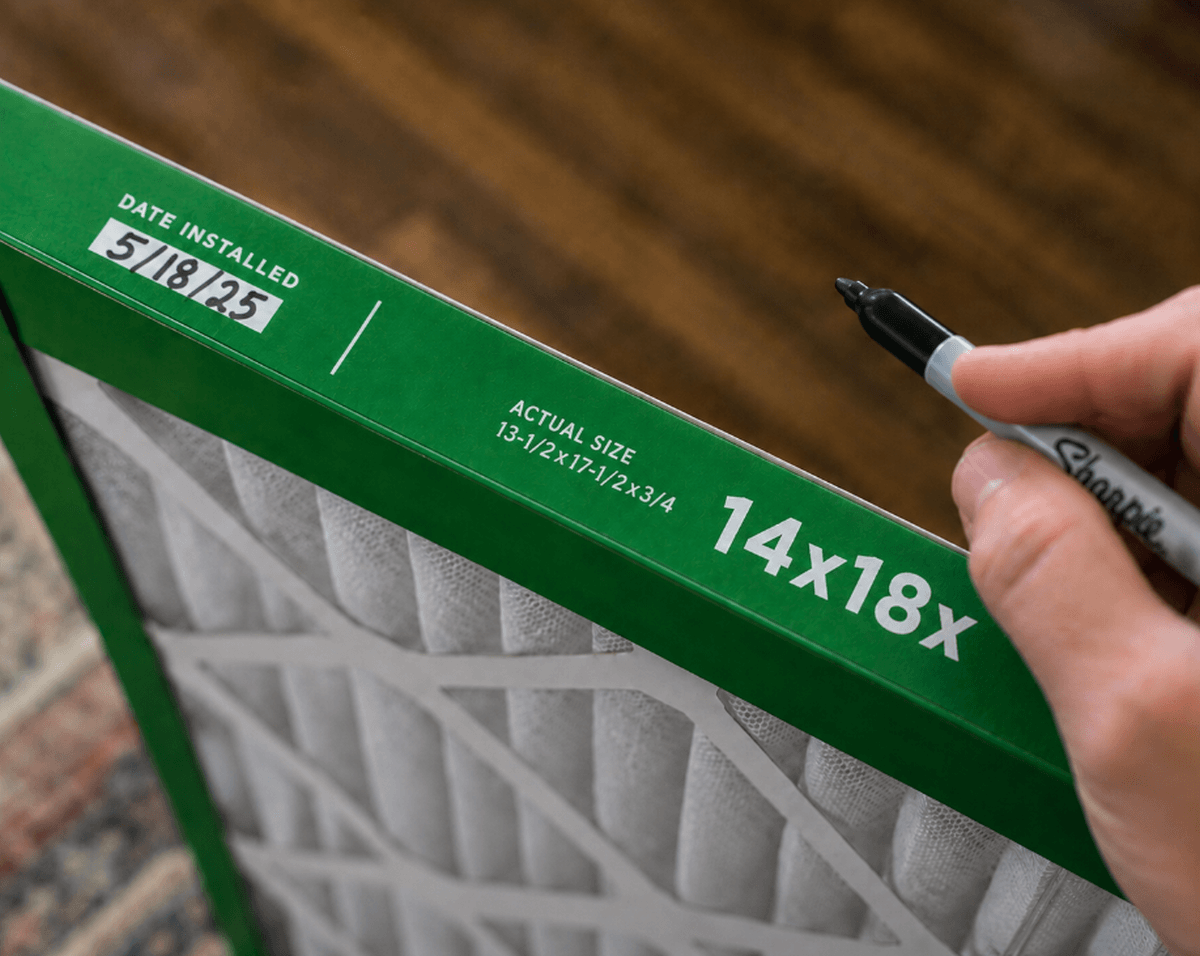
Depth sets the baseline, and depth just means the third number on the frame. In a typical home a 1-inch or 2-inch pleated filter lasts 60 to 90 days, a 4-inch runs 3 to 6 months, and a 5-inch can stretch most of a year. The EPA puts the manufacturer norm at 60 to 90 days, and adds the part that matters most: if it looks heavily soiled when you pull it, shorten the interval.
Intervals are starting points. ENERGY STAR recommends inspecting the filter monthly and replacing it whenever it looks dirty.
That familiar "every three months" rule comes from ENERGY STAR, and it was written for the 1-inch filter most homes run. Deeper filters go longer, which is why the table separates them.
Filterbuy manufactures every depth we sell, and the pleat count surprises people. A Filterbuy 1-inch carries 14 pleats per foot. The 4-inch carries only 8, because each pleat is far deeper. So depth is what tells you how long a filter will last, and a box advertising "more pleats" tells you very little.
Is a Furnace Filter the Same as An AC Filter?
Yes. In a home with central heating and air, one filter serves both. Your furnace and air conditioner share the same fan and the same return vent, so every bit of circulating air goes through one filter before it reaches either.
The naming just follows the season. In January that air is on its way to being heated, so people call it a furnace filter; in July the same part is an AC filter. It’s one slot and one schedule either way.
Three setups behave differently. A ductless mini-split uses a washable screen in each indoor head, so you rinse it instead. A multi-zone home has one filter per air handler, so walk every return grille before assuming you’ve found them all. And whole-house media cabinets use their own depths, so read the label on the cabinet or order a custom size.
What Shortens Your Air Filter’s Life?
Six conditions change the frequency, and pets are the strongest. A single cat or dog roughly halves a filter’s life, while two pets, indoor smoking, or renovation dust pushes most houses onto a 30-day cycle. The more of these you tick off, the further you sit from the label interval.
Effects stack. A home with two pets in a humid climate should assume a 30-day cycle whatever the depth.
Pet shedding is seasonal too, since dogs and cats blow their coats in late spring and early fall, so add a check at both transitions. Allergies cut both ways: a higher-rated filter captures more pollen and dander, which is what you want, but capturing more also means it loads faster. Check it more often in your worst season and stay on the tier you chose.
Wildfire smoke can load a filter in days, so check your air quality and adjust when AQI is high.
Fiberglass or Pleated: Does Filter Type Change the Schedule?
Construction matters as much as depth. A flat fiberglass panel lasts about 30 days, while a pleated filter of the same size runs 60 to 90, because the folds pack far more media into the frame. Fiberglass was only ever meant to keep debris off your equipment, so switching to pleated improves what you breathe and stretches the interval at once.
How Can You Tell when An Air Filter Needs Changing?
Hold it against a white sheet of paper. If the media looks gray and matted next to the paper, replace it. The American Lung Association recommends that exact comparison. After that, watch for longer run times in steady weather, rooms at the end of the run struggling to keep up, and dust coming back fast after you clean.
Use paper, not a lamp. Holding a filter up to a light is the most-repeated tip on the internet, and it’s a blunt instrument. A new pleated filter already blocks plenty of light, and a loaded one still passes light between the pleats. Against paper you see the colour change straight away.
“I don’t want anyone to feel like they need an HVAC license just to pick the right filter. My job is to give you the straight answer, explain why it matters, and let you get back to your day.”
Michelle Wan, Brand Manager and Air Quality Writer, Filterbuy
How Do You Find Your Home’s Real Interval?
Two filter changes will tell you what your house really needs, more than any chart can, Filterbuy’s included. Checking every 30 days forever is advice almost nobody follows, so do it properly twice and then you’re done guessing.
Write the install date on the cardboard frame in marker.
At 30 days, pull it and compare against a new one on white paper.
Still clean? Put it back and check at 60. Visibly loaded? You’re on a 30-day cycle.
Repeat once to confirm, then set a recurring reminder.
Start over whenever something changes: a new pet, a renovation, a move, a smoke season. And if you can’t remember your last change, it’s already overdue, so swap it today and start the count there. If remembering is the hard part, auto-delivery handles the step people actually miss, which is having a spare in the closet when the day arrives.
What Happens if You Don’t Change Your Air Filter?
Nothing breaks the day a filter gets dirty, which is exactly why it’s easy to ignore. Costs creep up quietly first, and damage follows. The Department of Energy estimates that replacing a dirty, clogged filter with a clean one lowers an air conditioner’s energy consumption by 5 to 15 percent. Read that as a sound government estimate for the cooling side of your system, and don’t expect it to show up as 15% off your whole bill.
The mechanical damage costs more:
The fan works harder. Your system was built to move a set volume of air, and a loaded filter makes that harder. The wear adds up.
A frozen coil in summer. Warm air moving over the cooling coil is what keeps its surface above freezing. Choke that flow and condensation turns to ice. Run the fan on its own until it melts, then fit a clean filter.
A furnace that keeps shutting off in winter. The same restriction trips the furnace’s safety switch, so it cuts out and restarts over and over.
Dustier rooms. A loaded filter stops catching what it used to, and the EPA reports indoor pollutants often run two to five times higher than outdoors.
Does a Higher MERV Rating Mean Changing the Filter More Often?
A little. MERV, short for Minimum Efficiency Reporting Value, is the industry scale for how much a filter captures. A MERV 13 captures 98% of airborne particles where a MERV 8 captures 90%. It collects more in the same house, so you’ll often land at the shorter end of the range for your depth.
Check your HVAC manual for filter compatibility, the same way you would confirm a size.
The difference is smaller than people expect, because a deeper filter holds more of what it catches. Pick the tier by what you want captured, then let depth set the schedule.
Fit matters as much as the rating. A filter that doesn’t seal lets air slip around the edges, and air that goes around the media isn’t filtered at all. Filterbuy cuts each filter slightly under its nominal size so it seats properly in the slot. Check your HVAC manual for filter compatibility, the same way you’d confirm a size, and if your slot takes one, a 4-inch filter gives you more media and a longer run between changes.
Supporting Statistics
1. Two-thirds of U.S. households cool their homes with one central system.
88% of U.S. homes use air conditioning, and two-thirds run central AC or a heat pump.
Why it matters: one blower, one return, one filter, so both names describe the same part.
Source: U.S. EIA, 2020 Residential Energy Consumption Survey (18,496 households).
2. More than 90% of U.S. homes hold three or more detectable allergens.
73% have at least one allergen at elevated levels, with pets among the strongest drivers.
Why it matters: that is the load your filter works against.
Source: NIH, largest U.S. indoor allergen study (7,000 homes).
3. 152.3 million Americans live where the air earns a failing grade.
That is 44% of the population, with wildfire smoke reaching further inland a named driver.
Why it matters: outdoor particles become indoor particles once your system runs.
Source: American Lung Association, State of the Air 2026 (27th edition).
Frequently Asked Questions
How Often Should You Change Your HVAC Air Filter?
Every 60 to 90 days if it’s a 1-inch or 2-inch pleated filter. Thicker ones go longer: 4-inch every 3 to 6 months, 5-inch every 6 to 12. Check it monthly and swap it when it looks dirty.
Is a Furnace Filter the Same as An AC Filter?
In a home with central heating and air, yes. Both share one blower and one return, so a single filter serves both. The name changes with the season; the schedule doesn’t.
How Often Should You Change Your Air Filter with Pets?
About twice as often as a home without them: 30 to 45 days for a 1-inch with one pet, monthly with two or more. They shed hardest in spring and fall, so check then.
What Happens if You Don’t Change Your HVAC Filter?
Airflow drops, so your system runs longer to hit the same temperature and burns more energy doing it. If it gets bad enough, the cooling coil can freeze or the furnace shuts itself off.
Can You Clean and Reuse an Air Filter?
Only if it’s labeled washable. Standard pleated and fiberglass filters are single-use, because washing breaks down the media and traps moisture in it.
Find the Filter that Fits Your Home
Answer three questions about your system, your household, and your air, and we will point you to the right size and MERV rating. If you already know your size, set up auto-delivery and stop thinking about it.
Take the filter quiz · Shop by size · Set up auto-delivery
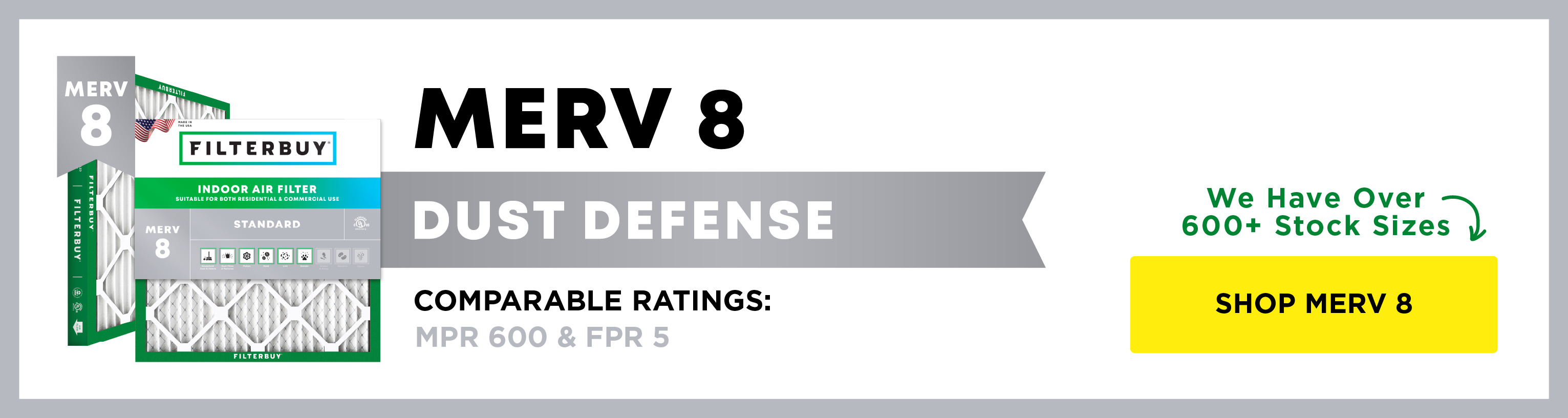
MERV 8 filters are ideal for most households. They capture dust, pollen, and mold while allowing good airflow through your system.
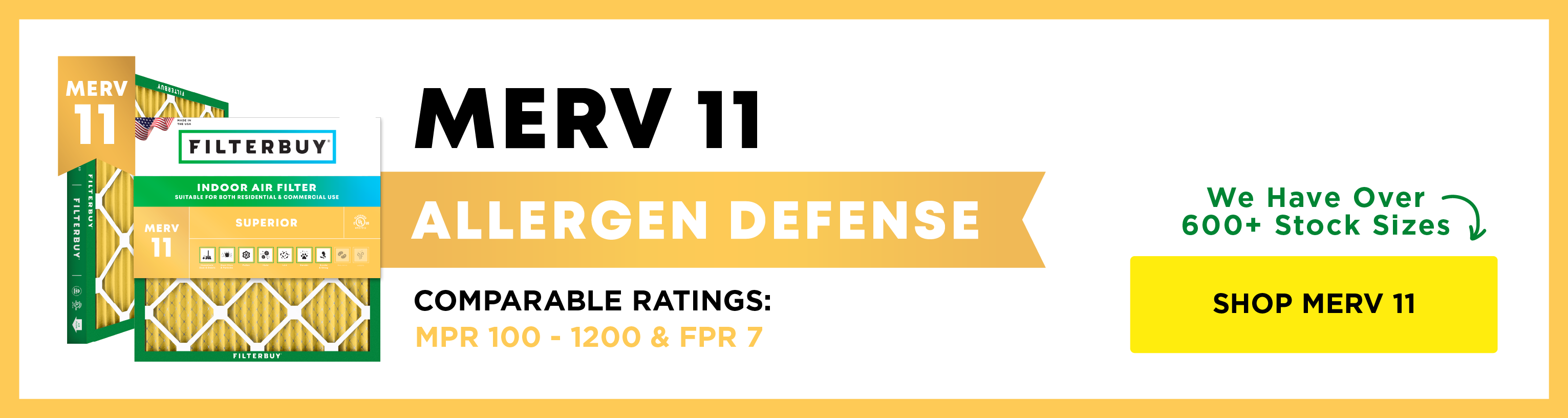
MERV 11 filters step up the protection and are great for homes with pets or residents who suffer from allergies. They catch smaller particles while still maintaining decent airflow.
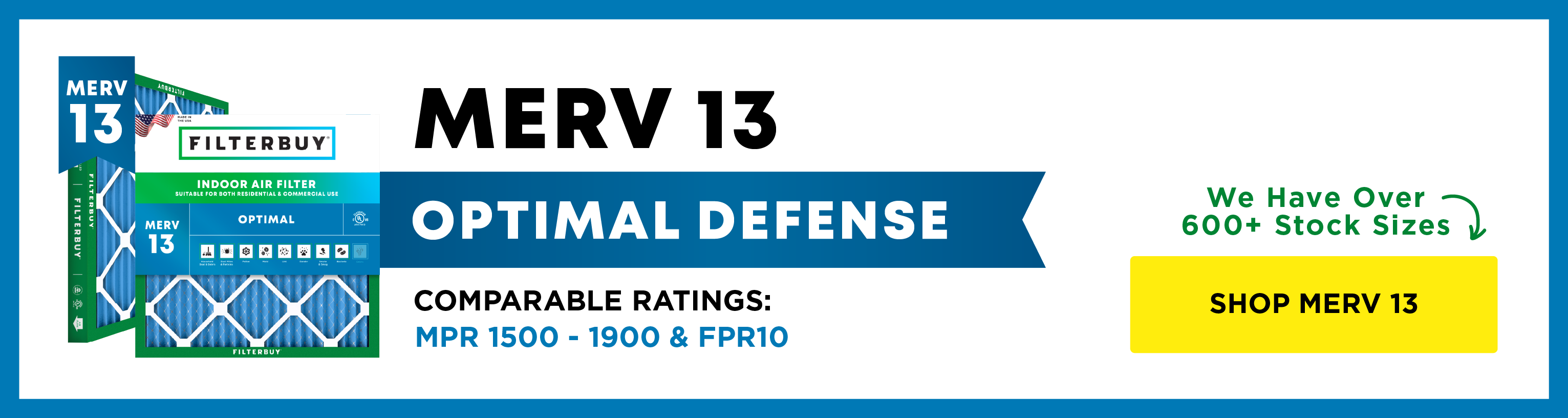
MERV 13 filters, which we sell at Filterbuy, provide top-tier filtration, capturing bacteria, smoke, and fine particles. These are recommended for health-conscious households or areas with poor outdoor air quality, but make sure your system can handle the increased resistance.
About The Author
Michelle Wan is Brand Manager and Air Quality Writer at Filterbuy, where she works directly with the US manufacturing team. She earned her B.A. from the University of California, Santa Cruz, and writes from how filters are built and used in real homes. She also fronts much of Filterbuy’s educational video content.
Technically reviewed by David Clark, a Licensed HVAC Technician with Filterbuy HVAC Solutions, who reviews Filterbuy’s maintenance and system-compatibility guidance for accuracy.
Filterbuy is a family-owned American manufacturer, not a reseller. Every filter is cut, pleated, and framed to order in our own US plants, in 600+ sizes plus custom, and shipped factory-direct.
Glossary
MERV. Minimum Efficiency Reporting Value, the industry scale for how much a filter captures. Higher numbers capture more.
Nominal size. The rounded size printed on the frame and the one you order. The filter is cut slightly smaller so it seats in the slot.
Pleated filter. A filter whose media is folded into an accordion, which packs more material into the same frame than a flat panel.
Return. The vent or duct that pulls household air back into your system. It is where the filter usually sits.

Sources
U.S. Department of Energy, Energy Saver 101: Home Cooling. Filter replacement and AC energy consumption.
ENERGY STAR, Heat & Cool Efficiently. Monthly inspection guidance.
ENERGY STAR, Maintenance Checklist. Airflow and system efficiency.
U.S. EPA, Guide to Air Cleaners in the Home. Replacement intervals, MERV selection, filter fit.
U.S. EPA, Report on the Environment: Indoor Air Quality. Indoor versus outdoor pollutant levels.
American Lung Association, Air Cleaning. How to judge whether a filter is dirty.
ANSI/ASHRAE Standard 52.2 defines MERV and its particle-size groups.
Related reading
Air filter sizes: standard AC, HVAC and furnace sizes and how to measure your air filter
How often to change your air filter when AQI is high, or check the live USA AQI map