
Furnace Tune Up Guide: Cost, Checklist, Annual Service Benefits, and What to Expect from a Pro Tune-Up
November 22, 2026
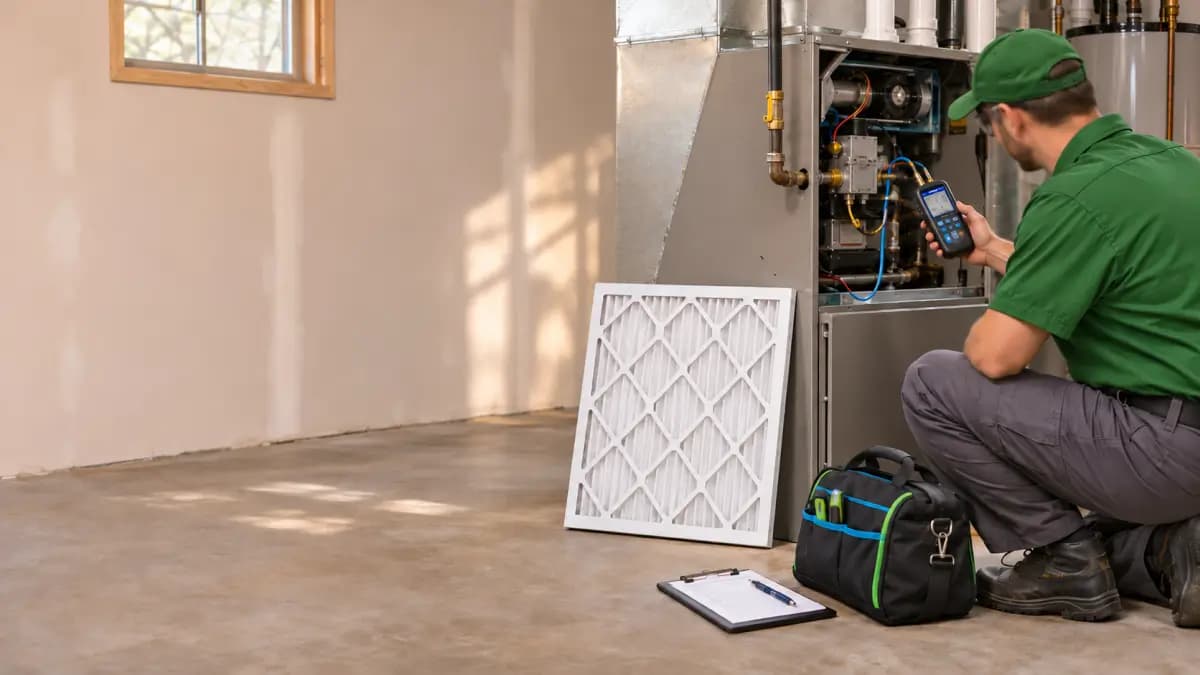
A furnace tune up is a three-part job, and you own two of the parts. You set up the visit, the technician tests and cleans, and you keep the results working all winter.
The easiest win happens before anyone arrives. A fresh filter in the right size lets the technician read your airflow under normal conditions, and it's the one tune-up item you control every week.
Find The Right Furnace Filter Before Your Tune Up
Answer a few quick questions and we'll match you to the right filter for your furnace.
Getting the whole house ready for cold weather? Our winter guides cover furnaces, filters, and storm prep.
Explore Furnace Filter And Winter GuidesA furnace tune up is a once-a-year professional service visit in which a licensed HVAC technician inspects, cleans, and tests a furnace before heavy winter use. Most furnace tune ups cost $100 to $200, and gas furnace visits commonly run $80 to $170. Expect one to two hours on site, a safety check, a test heating cycle, and written findings.
TL;DR
Book your furnace tune up in early fall, before home heating fires peak from December through February. Change your filter first and get the readings in writing.
Key Takeaways
A furnace tune up is an annual safety inspection and cleaning by a licensed HVAC technician, not a repair visit.
You can check one tune-up result yourself: the temperature rise against your furnace's rating plate.
A gas furnace tune up should include venting, gas pressure, burner, heat exchanger, and combustion checks.
Fall is the best time for an annual furnace tune up, because there's still time to finish repairs before winter.
Filterbuy recommends checking your air filter monthly during heating season, since it's the one tune-up item you control all winter.
What Is a Furnace Tune Up?
A furnace tune up is preventive maintenance for a forced-air heating system, also called furnace service or a furnace inspection. The technician checks and cleans the parts that burn fuel and move air, then confirms the furnace heats and shuts off safely.
A repair fixes a known failure. A tune-up catches small problems first, such as a dirty flame sensor, a common reason for a furnace blowing cold air. At Filterbuy, we make the furnace part homeowners replace most often, so we look at a tune-up from the filter slot outward. See how a gas furnace works for the basics.
How Much Does a Furnace Tune Up Cost?
A furnace tune up costs $100 to $200 in most U.S. markets, according to the Bob Vila furnace tune-up cost guide. Gas and oil furnaces cost more to service than electric models, because the technician also tests combustion and fuel lines.
Table 1: Furnace Tune Up Cost By Furnace Type
Source: Bob Vila furnace tune-up cost guide. Prices exclude repairs and replacement parts.
Prices climb in peak season and for older equipment. Parts replaced on the spot cost extra.
The Gas Furnace Tune Up Checklist: What a Pro Should Check
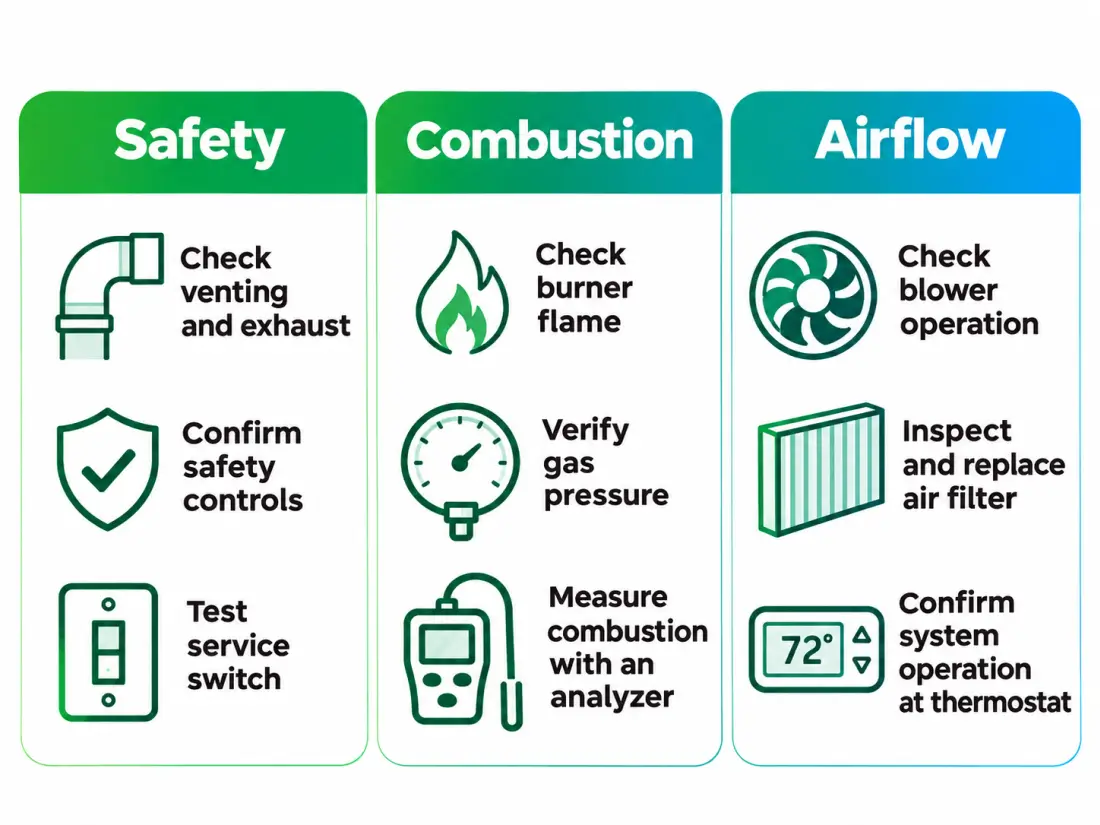
A complete gas furnace tune up covers safety, combustion, and airflow. The EPA's ENERGY STAR maintenance checklist lists gas pressure, burner combustion, and the heat exchanger as core heating checks. The ACCA 4 QM maintenance standard from the Air Conditioning Contractors of America sets minimum residential HVAC maintenance tasks.
Venting and flue: checks for blockage and loose or leaking pipe.
Heat exchanger (the metal chamber that warms your air): inspects for cracks, rust, and soot.
Gas pressure: measures pressure and tests fittings for leaks.
Burners and flame sensor (a rod that confirms the burner is lit): cleans both so the burners don't shut off early.
Combustion test: reads exhaust gases with an analyzer to confirm the furnace burns safely.
Blower and capacitor (the part that starts the blower motor): cleans the fan wheel and tests the motor.
Safety controls: tests the limit and rollout switches, which shut the burners off if the furnace overheats.
Condensate drain: clears the water line on high-efficiency models.
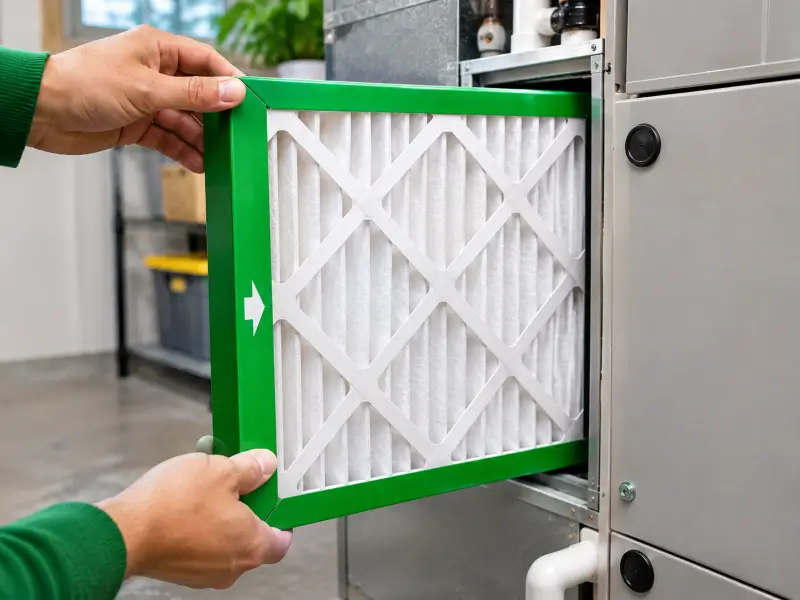
Filter fit (our addition): as a filter manufacturer, Filterbuy adds one check: the new filter should match the size printed on your old one. Its frame is cut slightly smaller than the nominal size on the label by design, so it slides in snugly. The wrong size leaves gaps that air slips around.
Oil tune ups add fuel line service, and electric tune ups skip combustion testing. For homeowner tasks before the visit, use Filterbuy's pre-winter furnace checklist.
What to Expect During a Furnace Tune Up Appointment
A furnace tune up usually takes one to two hours. The technician inspects and cleans the cabinet, runs a test heating cycle with instruments attached, and walks you through the findings before leaving.
Before the Technician Arrives
Clear space around the furnace so the technician can work.
Note the model and serial number and find the warranty paperwork.
List symptoms, such as odd noises, cold rooms, or dust at the vents when the heat comes on.
Install a fresh filter.
During the Visit
Walkthrough. The technician asks about symptoms and past service.
Inspect and clean. With power and gas off, the burners, blower, heat exchanger, and venting get a close look.
Measure. The technician records gas pressure, temperature rise (how much the furnace warms the air), and combustion readings.
Test cycle. The technician watches ignition, flame, blower start, and shutdown through a full call for heat.
Report. You get the findings and readings in writing, along with priced repair recommendations.
Check one number yourself. Your furnace's rating plate, the label inside the cabinet, lists an acceptable temperature rise range. Ask to see the measured rise next to it. A reading outside that range points to an airflow or gas input problem, and a clogged filter is the first thing to rule out.
The Filterbuy annual furnace maintenance guide includes a tune-up report card listing the six results worth getting in writing.
Is an Annual Furnace Tune Up Worth It?
An annual furnace tune up is worth it for most homes with a fuel-burning furnace. It's the one yearly visit where a technician tests venting and combustion with instruments. The U.S. Consumer Product Safety Commission (CPSC) recommends a yearly professional inspection of fuel-burning heating systems.
Safety. Pair the visit with working carbon monoxide alarms and check their batteries each spring and fall, as the CDC carbon monoxide guidance advises.
Warranty records. Manufacturer warranties can require maintenance that follows the owner's manual and can exclude damage from improper servicing, so keep your tune-up invoices. Records also help you plan around how long a gas furnace lasts.
How to Read a Furnace Tune Up Quote and Spot Upsells
A good furnace tune up quote lists the tasks included and how repairs are priced. Filterbuy built this decoder to turn common contractor lines into questions you can ask on the spot.
Table 2: Furnace Tune Up Quote Decoder
How to Find a Furnace Tune Up Near Me
The best furnace tune up near you comes from a licensed, insured HVAC contractor who puts the task list and readings in writing. Ask whether the company follows the ACCA 4 QM standard and whether the price covers combustion testing.
Confirm the HVAC and gas licenses your state requires, plus liability insurance.
Look for NATE-certified technicians, who have passed North American Technician Excellence exams.
Check your furnace manufacturer's website for an authorized dealer locator.
What Homeowners Handle Between Furnace Tune Ups
Between annual furnace tune ups, check the filter monthly and keep vents open. Hold the filter up to a light. If light doesn't pass through the pleats, replace it.
Filterbuy cuts, pleats, and frames filters to order in its own US plants, so here's our bias up front: the filter is the tune-up item that matters most after the technician leaves. MERV is the 1–16 scale for how well a filter captures airborne particles.
A MERV 8 air filter is the standard choice for most homes.
A MERV 11 air filter is the usual pick for homes with allergies, asthma, pets, or pollen.
A MERV 13 air filter is the pick for homes dealing with smoke.
Whichever tier you choose, check your furnace manual for compatibility, the same way you'd confirm your size. Our guide to choosing the right MERV rating walks through each tier.
Pro Tip: Buy filters in pairs so a spare is ready on tune-up day. Our guides on how to change a furnace filter and safe furnace cleaning between visits cover the DIY side. If your size isn't listed, custom air filters are cut to the eighth of an inch, and an air filter subscription ships the next one on schedule.
How We Built This Guide
Michelle Wan, Filterbuy's Brand Manager, wrote this guide. David Clark, a Licensed HVAC Technician, reviewed the technical steps. We checked the statistics against their sources on November 11, 2026.
Expert Insight from Our Reviewer and Author
"A tune-up is only as good as the readings behind it. If your technician can't show you the gas pressure, the temperature rise, and the combustion numbers, you paid for a cleaning, not a tune-up."
David Clark, Licensed HVAC Technician
"A tune-up resets your furnace once a year. The filter you pick decides how well it breathes for the rest of the winter."
Michelle Wan, Brand Manager & Copywriter, Filterbuy
Supporting Statistics
1. Carbon monoxide kills more than 200 people in the U.S. each year.
CPSC data names heating equipment among the top contributors to these non-fire deaths.
Why it matters: Venting and combustion checks need a pro.
Source: Home Heating Equipment
2. U.S. homes average 38,881 heating equipment fires a year.
National Fire Protection Association (NFPA) data shows 432 deaths and $1.1 billion in damage each year (2019–2023).
They peak from December through February.
Why it matters: A September or October tune-up finishes before the peak.
3. Natural gas heats 47% of U.S. homes.
The U.S. Energy Information Administration ranks it the most common main heating fuel in 2024.
Why it matters: The gas furnace checklist on this page fits nearly half of American homes.
Source: Electricity Use Is Becoming More Common for Residential Heating
Frequently Asked Questions
How Long Does a Furnace Tune Up Take?
One to two hours, or up to three with repairs.
When Is the Best Time to Schedule a Furnace Tune Up?
Early fall. ENERGY STAR recommends checking heating systems in the fall.
Can I Tune Up My Furnace Myself?
Homeowners can change the filter and clear vents. The gas and combustion checks need a licensed technician with calibrated tools.
Does a Furnace Tune Up Cover My Air Conditioner Too?
Partly. In a split system (an indoor furnace paired with an outdoor AC unit), the furnace blower and filter also move air for the AC, so the fall airflow work carries into summer. The outdoor unit and refrigerant still need a spring AC tune-up.
Should I Change My Furnace Filter Before or After a Tune Up?
Change it before. A fresh filter gives accurate airflow readings, and technicians may not carry your size or MERV rating. If they install a basic 1-inch filter, ask them to put yours back.
Get Your Furnace Ready for Tune-Up Day
Filterbuy manufactures pleated air filters in hundreds of standard sizes plus custom sizes, with fast and free 2-day delivery to most US states. Shop furnace filters by size today. Browse our furnace filter and winter guides for more.
Glossary
Furnace tune up: An annual professional service visit that keeps a furnace running safely before winter.
ACCA 4 QM: An ANSI-recognized standard setting minimum residential HVAC maintenance tasks.
Carbon monoxide (CO): A colorless, odorless gas produced when fuel burns incompletely.
Temperature rise: How much warmer the furnace makes the air passing through it.
MERV: Minimum Efficiency Reporting Value, a 1–16 scale rating how well an air filter captures particles.