
Gas Furnace Lifespan: How Long It Lasts, Warning Signs & Tips
March 19, 2026
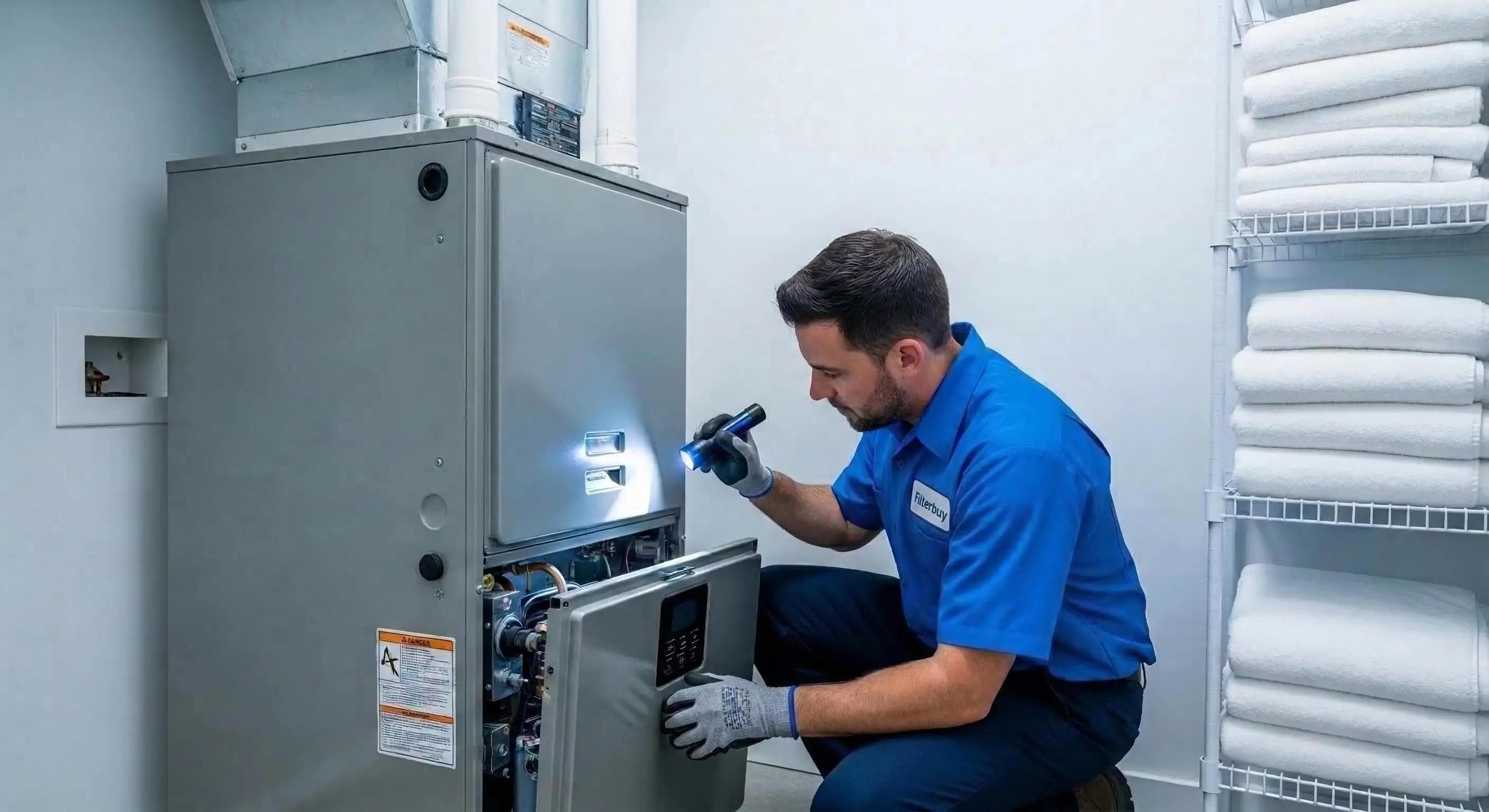
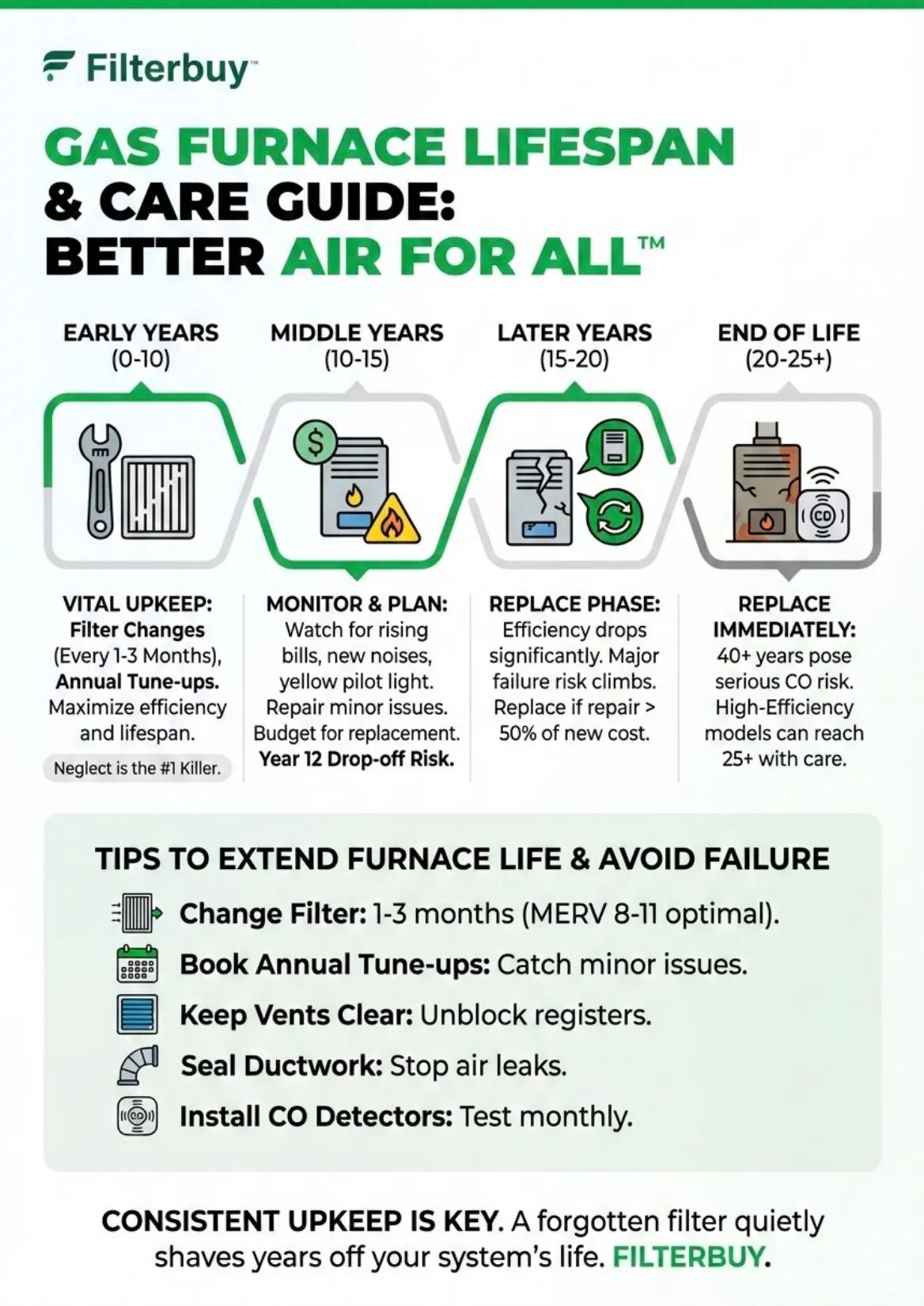
A gas furnace typically lasts about 15 to 20 years with regular maintenance. Your actual lifespan depends on installation quality, how often the furnace runs, airflow, and how well the system is maintained.
Key takeaways
Many gas furnaces last 15 to 20 years with regular maintenance.
ENERGY STAR says it may be time to consider replacement if your furnace is more than 15 years old.
Check your HVAC filter monthly and change it at least every 3 months.
Frequent repairs, rising bills, uneven heating, or unusual noise are common replacement signals.
Average gas furnace lifespan
Most gas furnaces last about 15 to 20 years, and performance often declines as the system gets older. Some systems run longer, but it is more common to see higher repair needs and performance problems as the furnace ages.
ENERGY STAR lists "your furnace or boiler is more than 15 years old" as a sign it may be time to consider replacing heating equipment.
What affects how long a gas furnace lasts?
Installation and sizing
A furnace that is sized incorrectly or installed poorly can wear faster. Short cycling (frequent on/off operation) increases stress on parts.
Runtime and climate
The more your furnace runs each year, the more wear it has. Colder climates usually mean more runtime.
Airflow and filter condition
Restricted airflow makes HVAC systems work harder. A dirty filter slows airflow, makes the system work harder, wastes energy, and can contribute to expensive maintenance or early system failure.
Signs your gas furnace may need replacement
These signs do not always mean "replace immediately," but they are strong reasons to have an HVAC professional evaluate the system.
1. The furnace is over 15 years old
If your furnace is more than 15 years old, consider replacing it.
2. Repairs are frequent or costly
Repeat problems and extensive or costly repairs as "time to replace" factors (especially when the system is older).
3. Energy bills are rising and comfort is worse
Frequent repairs and increasing bills are signs your equipment may have become less efficient.
4. Uneven heating, excessive dust, or unusual noise
Rooms that are too hot or too cold, excessive dust, and noisy equipment are signs to call a professional to evaluate the system.
Repair vs replace: a simple way to think about it
A professional inspection is the best way to decide, but these questions help:
How old is the furnace?
Is this a one-time repair, or have you needed multiple repairs recently?
Is it a major repair (such as the heat exchanger, blower motor, or control board), or a smaller fix?
Have your heating bills gone up, or is the home less comfortable than before?
Proper installation matters. Better work with a professional contractor for replacement work.
Tips to extend the life of your gas furnace
1. Change your HVAC filter on schedule
This is one of the simplest maintenance steps you can control.
ENERGY STAR recommends:
Check your filter every month, especially during heavy-use months
Change it if it looks dirty after a month
At a minimum, change it every 3 months
A consistent filter schedule helps protect airflow and reduces system strain.
If you are looking for top-quality replacement filters, check Filterbuy. Filterbuy offers replacement HVAC filters in many sizes and promotes Auto Delivery so you can stay on schedule.
2. Get yearly HVAC maintenance
A yearly HVAC tune-up to improve efficiency and comfort.
3. Keep vents and returns clear
Do not block supply vents or return grilles with furniture or rugs. Better airflow helps the system run as designed.
4. Fix small issues early
Noise, frequent cycling, or uneven heating can point to issues that are less expensive when handled early. Excessive cycling and comfort problems are possible signals of an inefficient system.
Filter selection: keep it simple and avoid airflow problems
Filter selection affects both air quality and airflow. Filterbuy notes that for most homes, a rating between MERV 8 and MERV 13 can provide "a good balance between efficiency and airflow."
Filterbuy also sells filters in MERV 8, MERV 11, and MERV 13, plus an odor eliminator option in some sizes.
If you are not sure what your HVAC system can handle, check the equipment manual or ask your HVAC technician. This is the safest approach.
FAQs
How long does a gas furnace usually last?
Most gas furnaces last about 15 to 20 years with regular maintenance.
Can a gas furnace last longer than 20 years?
Yes. Some units run longer, but repairs and efficiency problems are more common as a furnace ages.
When should I start thinking about replacement?
Start planning when your furnace is around 15 years old, or sooner if you have frequent repairs or comfort issues.
What are common signs a furnace may need replacement?
Frequent breakdowns, rising heating bills, uneven heating, new or loud noise, and weaker performance over time.
Does changing the air filter help a furnace last longer?
Yes. A clean filter supports airflow and helps reduce strain on the system.
How often should I change my furnace filter?
Check monthly during heavy-use months. Replace when it looks dirty. As a baseline, replace at least every 3 months.
What MERV rating should I use: 8, 11, or 13?
MERV 8: standard filtration for many homes
MERV 11: stronger filtration for homes with pets or allergy concerns
MERV 13: highest of the three for finer particles, including smoke
Can a higher MERV filter reduce airflow?
It can, depending on the HVAC system and filter thickness. If you are unsure, check the equipment manual or ask a technician.
How do I find the right furnace filter size?
Use the size printed on your current filter and confirm it matches your system's slot. If the fit is loose or unclear, check the manual or ask a technician.
What is Auto Delivery and why use it?
Auto Delivery sends filters on your schedule, which helps you replace them on time without forgetting.
Is yearly HVAC maintenance worth it?
Yes. A yearly inspection can identify issues early and help the system run more reliably.
What should I do if my carbon monoxide alarm goes off?
Leave the home immediately and follow the alarm instructions and local emergency guidance before re-entering.