
How to Prevent Frozen Pipes in Your Home
October 25, 2026
Your furnace is your pipes’ first line of defense, and a clean filter helps keep it running. When a filter clogs, airflow drops and the furnace can overheat. A safety switch then shuts off the heat, and pipes in exterior walls are the first to cool.
Check your filter every 30 days in winter and again before a hard freeze. Not sure which one fits your furnace? Take the quick match quiz below.
Your furnace filter protects your pipes
What happens to your heat on a freezing night
running
shuts off the heat
55°F or warmer
above freezing
freeze
In winter, check your filter every 30 days.
Answer a few quick questions and we’ll match you to the right furnace filter for your home.
TL;DR
To prevent frozen pipes, keep your home at 55°F or warmer, even while you're away. On the coldest nights, drip faucets on exterior walls and open the cabinets under your sinks, and insulate exposed pipes before winter. Pipes usually freeze once it drops below 20°F outside. If one freezes, open the faucet and thaw it with gentle electric heat, never an open flame.
Key Takeaways
Household pipes usually freeze when outdoor temperatures fall below about 20°F.
Outdoor hose bibs and sprinkler or pool lines freeze first, followed by pipes in unheated spaces and exterior walls.
Filterbuy, a U.S. air filter manufacturer, treats frozen pipes as a heating problem first, because a clogged furnace filter can trip the high-limit switch and shut off the heat.
To thaw a frozen pipe, keep the faucet open and use gentle electric heat, never an open flame.
Why Do Pipes Freeze and Burst?
Water freezes at 32°F and expands as it turns to ice. Once ice plugs a pipe, pressure builds in the water trapped between the blockage and a closed faucet, and that pressure, not the ice itself, usually splits the pipe. Many bursts go unnoticed until the ice thaws.
According to Consumer Reports, household pipes usually freeze when it falls below 20°F outside, and pipes in uninsulated spaces can freeze at warmer temperatures. The stakes are high. Insurance Institute for Business & Home Safety (IBHS) figures cited by Kentucky Farm Bureau show that a crack just 1/8 inch wide can release up to 250 gallons of water a day.
Which Pipes Are Most at Risk of Freezing?
Pipes freeze first where cold air reaches them and insulation doesn't. The American Red Cross puts outdoor hose bibs and pool and sprinkler supply lines at the top of the list, then pipes in unheated basements, crawl spaces, attics and garages, and pipes inside exterior walls.
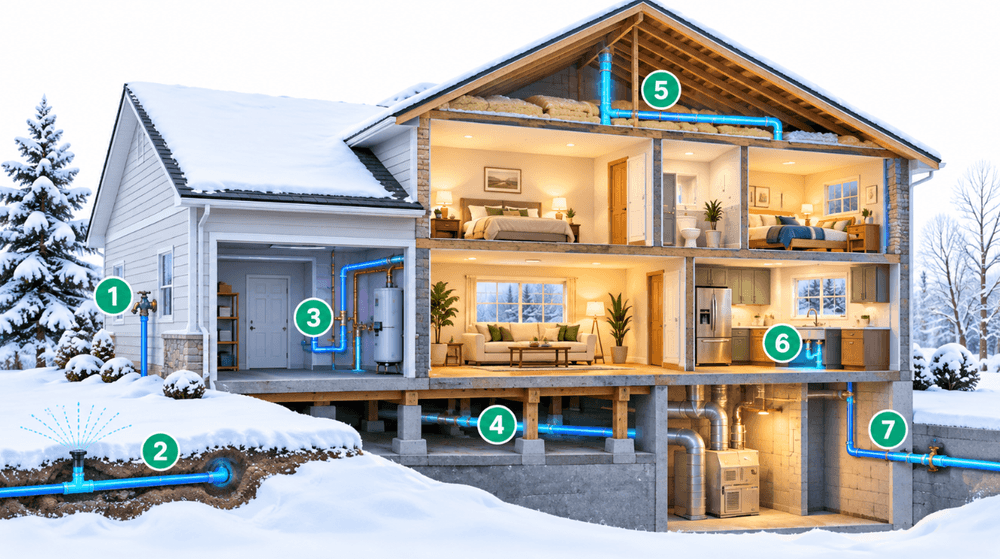
Source: American Red Cross frozen pipe guidance. Numbers 1–7 in the diagram above follow the row order of this table.
How to Prevent Frozen Pipes: 9 Steps
Frozen-pipe prevention starts before the first freeze, with a few quick moves when a hard freeze is forecast or you leave home.
Before Winter Arrives
Start with a fresh furnace filter. The correct size keeps heat running when pipes need it most.
Disconnect garden hoses and drain outdoor spigots. A hose left attached traps water that can freeze back into the pipe.
Insulate exposed pipes. Wrap both hot and cold lines in garages, attics, crawl spaces and basements with foam sleeves. In especially cold spots, add UL-listed heat cable with a built-in thermostat.
Seal drafts near your pipes. Caulk or foam any gaps where pipes and wires pass through exterior walls and foundations.
Find your main water shutoff valve. Make sure it turns and everyone knows where it is.
When a Hard Freeze Is Forecast
Hold the thermostat steady day and night. The Red Cross advises skipping your usual nighttime setback during a cold snap.
Let faucets drip. A slow drip of cold water from faucets on exposed pipes keeps water moving and relieves pressure if ice forms.
Open kitchen and bathroom cabinet doors. This lets warm room air reach the pipes under the sink. Move cleaners out of reach of kids and pets first.
When You're Away From Home
Leave the heat at 55°F or higher. The Red Cross says never to go lower while traveling. A neighbor who checks in, or a smart leak sensor, can catch trouble early.
Why Your Furnace Is Your Best Pipe Protection
In Filterbuy's view, many frozen pipes start with a furnace that quit. Every furnace has a high-limit switch that shuts off the burner if the system overheats, and a clogged air filter is one of the most common reasons it trips.
When a dirty filter chokes airflow, heat builds up until the switch cuts the burner. The furnace restarts and overheats in a loop called short cycling, and some furnaces lock out completely after repeated trips, leaving pipes in exterior walls to cool first.
"The systems that quit on the coldest night of the year are rarely the oldest ones. In our experience, they're the ones that went into winter with a dirty filter." — Filterbuy Team
The IBHS Winter Ready guide makes the same connection, warning that a broken heating system can leave a home cold enough for pipes to freeze, and recommends a yearly tune-up that includes a filter change.
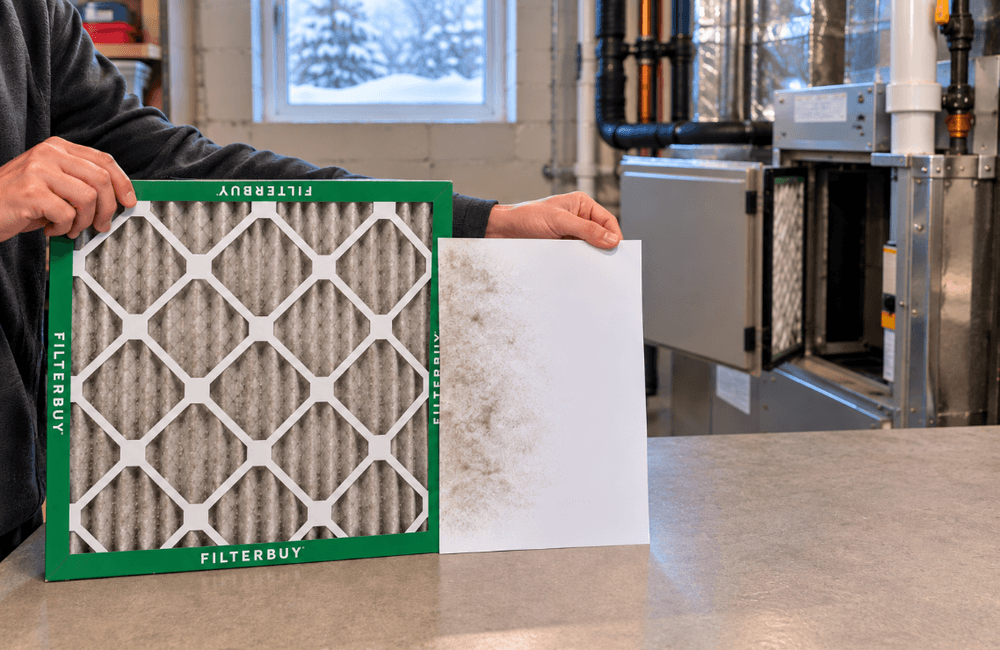
Pro Tip from the Filterbuy team: Before each forecasted cold snap, try the Filterbuy white-paper test. Hold your filter against white paper, and if it looks gray by comparison, replace it. In winter, Filterbuy recommends checking your filter every 30 days. See how often to change your furnace filter in winter.
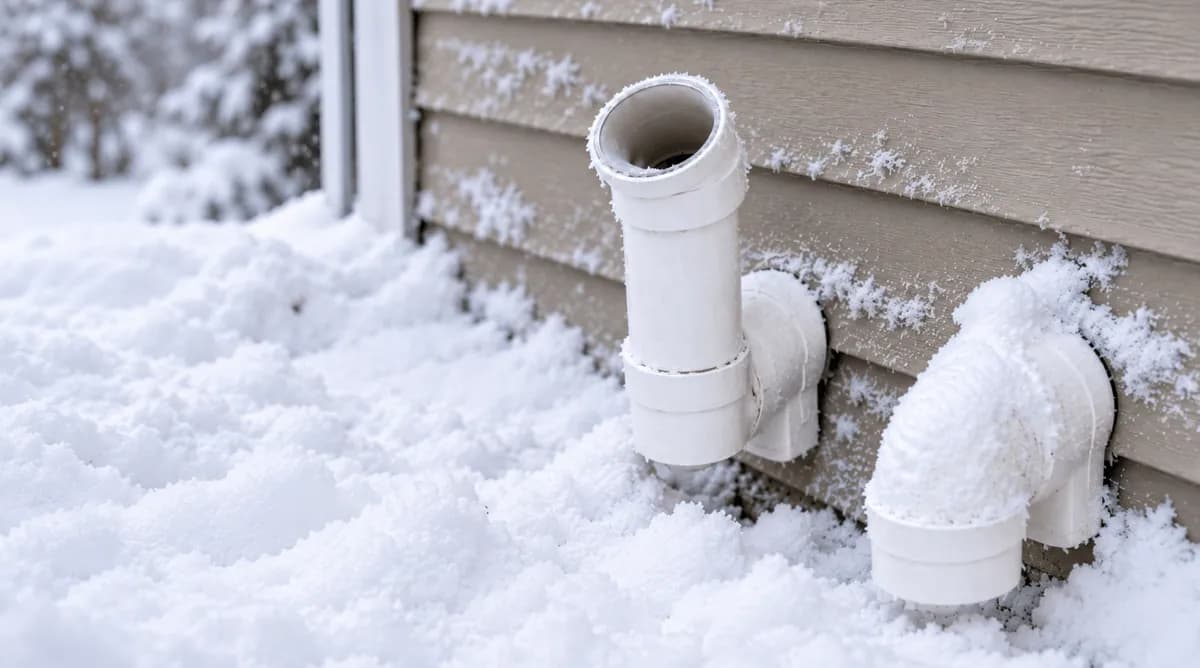
High-efficiency furnaces have one more weak spot: plastic vent pipes that snow can bury or ice can block.
"After a heavy snow, most no-heat calls I see on high-efficiency furnaces trace back to a drift or an ice cap over the exhaust pipe. Clearing it by hand at the wall usually gets the heat back on." David Clark, Licensed HVAC Technician, Filterbuy HVAC Solutions
Filterbuy makes every filter to order in the USA in 600+ sizes, and auto-delivery can send a fresh one before you need it. One tip from our manufacturing team: depth is the measurement customers get wrong most often, so measure all three. Find your filter size.
What to Do If Your Heat Goes Out on a Freezing Night
A furnace that quits during a hard freeze puts every pipe at risk at once. Frozen-pipe guides often skip this situation, yet it's behind many of the cold-snap orders Filterbuy sees.
Check the furnace first. Walk through Filterbuy's no-heat checklist: make sure the thermostat is set to heat, replace a dirty filter, clear snow away from the outdoor furnace vent pipes, and check the furnace switch and breaker. Don't keep pressing reset.
Keep water moving. While you wait for heat, drip the faucets on exterior walls and leave the sink cabinets open.
Add heat safely. An electric space heater works if you keep it 3 feet from anything that can burn. Never use an oven or grill for heat, and never run a generator indoors.
Shut off the main if you have to leave. Close the main water valve on your way out.
Treat alarms as emergencies. If a carbon monoxide alarm sounds or you smell gas, get everyone outside and call 911.
How Do You Know If a Pipe Is Frozen?
If only a trickle comes out of a faucet during freezing weather, or nothing at all, suspect a frozen pipe. Frost or a bulge on an exposed pipe is another sign, as is a toilet that won't refill.
How to Thaw a Frozen Pipe Safely
Most frozen pipes can be thawed at home with the faucet open and gentle electric heat.
Open the faucet. Turn on both handles so running water can melt the ice and relieve pressure.
Find the frozen section. Check exterior walls and sink cabinets first, then the spot where the main line enters your home.
Apply gentle heat. A hair dryer or electric heating pad works well, and so do towels soaked in hot water or a space heater kept 3 feet from anything flammable. Start near the faucet and work back toward the ice.
Keep the heat on until pressure returns.
Check every other faucet. If one pipe froze, others may have too.
Never thaw a pipe with a blowtorch, a kerosene or propane heater, a charcoal stove or any other open flame, and keep electric tools away from standing water. If you can't reach the frozen section or it won't thaw, call a licensed plumber.
What to Do If a Frozen Pipe Bursts
If a pipe bursts, shut off the water at the main valve right away and call a licensed plumber. Cut power to wet areas only if you can reach the breaker without standing in water. Then drain the lines through your faucets and photograph the damage for your insurer. Start drying fast; the EPA notes that mold usually won't grow if wet materials dry within 24 to 48 hours.
Even a pipe that thawed without bursting can be weakened, so check exposed pipes for slow leaks after a hard freeze.
Filterbuy is a family-owned American manufacturer of HVAC air filters, and we've shipped them to homes in all 50 states since 2013. Every winter, urgent filter orders spike during cold snaps, often from homeowners whose furnace has already quit. That's why this guide looks at frozen pipes as a heating problem first and a plumbing problem second.
Supporting Statistics
11.4 million U.S. homes were uncomfortably cold for at least 24 hours, nearly 1 in 11 occupied homes. Source: 2021 American Housing Survey, U.S. Census Bureau and HUD
About 1 in 60 insured homes files a water damage or freezing claim each year, averaging $15,400 per claim from 2019 to 2023. Source: Insurance Information Institute (Triple-I)
According to the National Fire Protection Association (NFPA), space heaters and heating stoves accounted for 46% of home heating fires and 76% of related deaths in the United States from 2018 to 2022. These statistics were also highlighted in a January 2025 fire safety report published by the City of Muscatine Fire Department, emphasizing the importance of safe heating practices during colder months.
Frequently Asked Questions
Should I Drip Hot or Cold Water to Prevent Frozen Pipes?
Drip cold water from faucets served by exposed pipes, as the Red Cross recommends. If the faucet has a single handle, set the lever in the middle so both lines flow.
Should I Turn Off My Water When I Leave for the Winter?
For a long absence, yes. Shut off the main and drain the lines, but keep the heat at 55°F or higher. If your home has a boiler or fire sprinklers, check with a licensed plumber first.
Can a Dirty Furnace Filter Cause Frozen Pipes?
Indirectly, yes. A clogged filter can trip the furnace's high-limit switch and cut the heat that keeps pipes above freezing, so check it with the Filterbuy white-paper test.
How Do I Keep Outdoor Faucets From Freezing?
Disconnect the hose and close the indoor shutoff valve, then open the outdoor tap to drain it and leave it open. Add a foam faucet cover. IBHS notes that most homes built before 2010 don't have frost-proof outdoor faucets.
Does Homeowners Insurance Cover Frozen Pipes?
Often it does, for sudden damage from a burst pipe. The National Association of Insurance Commissioners (NAIC) notes, though, that a claim may be denied if the home wasn't kept heated or if a vacant home's water wasn't shut off.
Glossary
Hose bib: An outdoor faucet or spigot connected to a home's water supply.
Heat cable (heat tape): An electric cable run along a pipe to keep it above freezing.
High-limit switch: A furnace safety device that shuts off the burner when the furnace overheats.
Short cycling: A furnace that repeatedly overheats and shuts off before the home warms up.
IBHS: The Insurance Institute for Business & Home Safety, a nonprofit property-safety research group.
About the Author
Michelle Wan is Filterbuy's Brand Manager and Air Quality Writer and works with Filterbuy's manufacturing teams. Reviewed by David Clark, Licensed HVAC Technician, Filterbuy HVAC Solutions.