
Frozen Furnace Vent Pipe Or Condensate Line? How To Clear It Safely
October 6, 2026
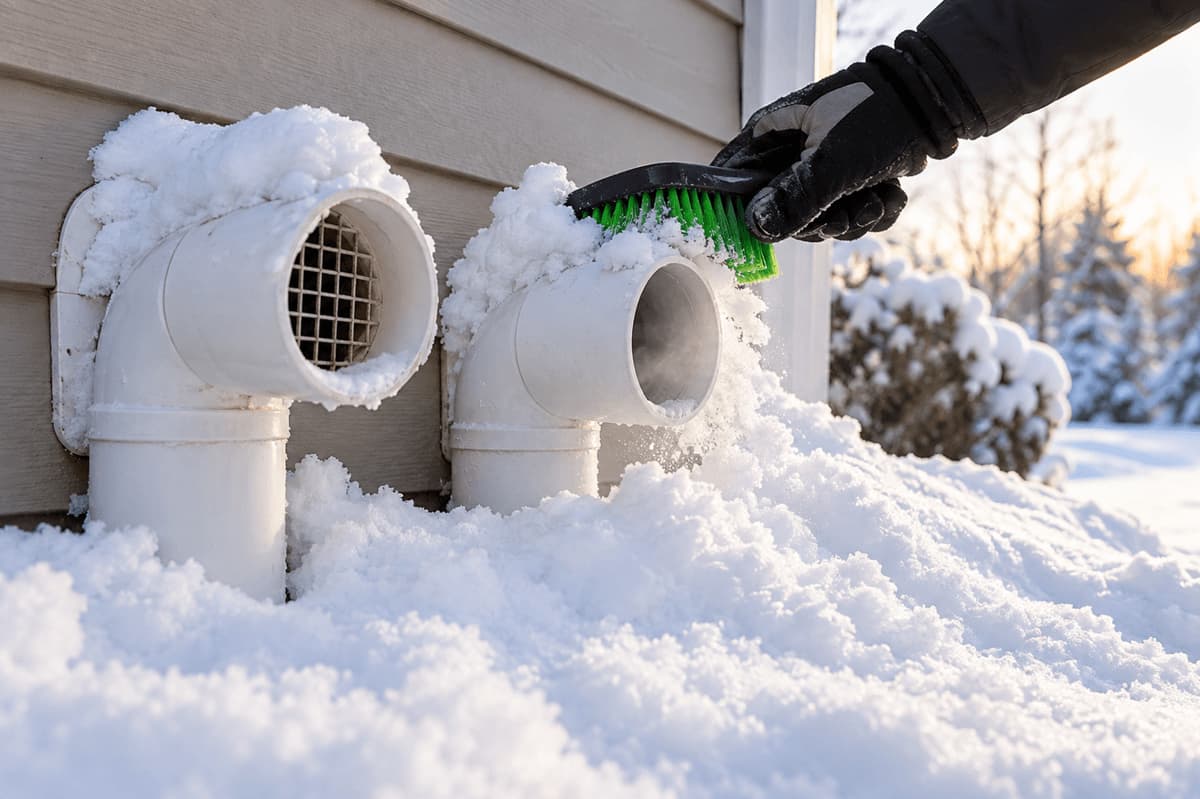
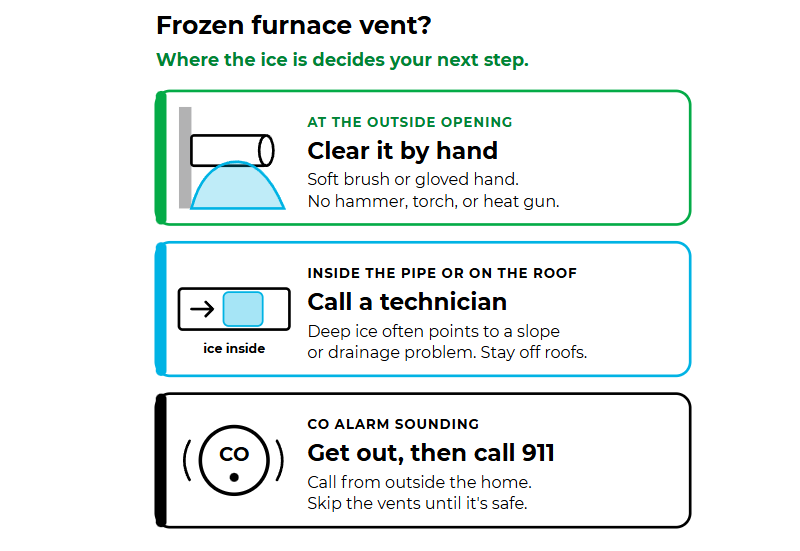
A frozen furnace vent pipe or condensate line shuts down a high-efficiency furnace because its safety controls stop the burners when exhaust or drain water cannot leave. Snow and ice at the outside opening can usually be cleared by hand. Ice inside the pipe or a roof vent needs a licensed HVAC technician, and a carbon monoxide alarm means call 911.
Clear snow and ice from the outside vent opening by hand, then restart your furnace. Thaw a frozen condensate line with towels soaked in warm tap water, never boiling water or a flame.
Ice inside the pipe or on a roof vent needs a licensed HVAC technician, and a carbon monoxide alarm means get everyone outside and call 911.
Once the heat is back on, take the quick quiz below to find the right filter for the coldest weeks ahead.
Answer a few quick questions and we'll match you to the right filter before the next storm.
Already know your filter size?
Fast and free 2-day delivery to most US states.
TL;DR
High-efficiency furnaces vent cool, wet exhaust through plastic pipes and drain water through a condensate line, and either one can freeze or get buried in winter. Clear snow and outside ice by hand, never with a hammer or flame, then restart the furnace. Thaw a frozen condensate line with warm towels, not boiling water. If a carbon monoxide alarm sounds, get everyone outside and call 911 first.
Key Takeaways
A snow-covered or iced-over vent pipe keeps a high-efficiency furnace's burners off until the exhaust clears.
The exhaust pipe ices over from its own condensate, while the intake pipe is usually buried by drifting snow.
A frozen condensate line backs water into the furnace and triggers the same safety shutdown.
Clearing furnace vents during and after every snowstorm keeps carbon monoxide from building up indoors.
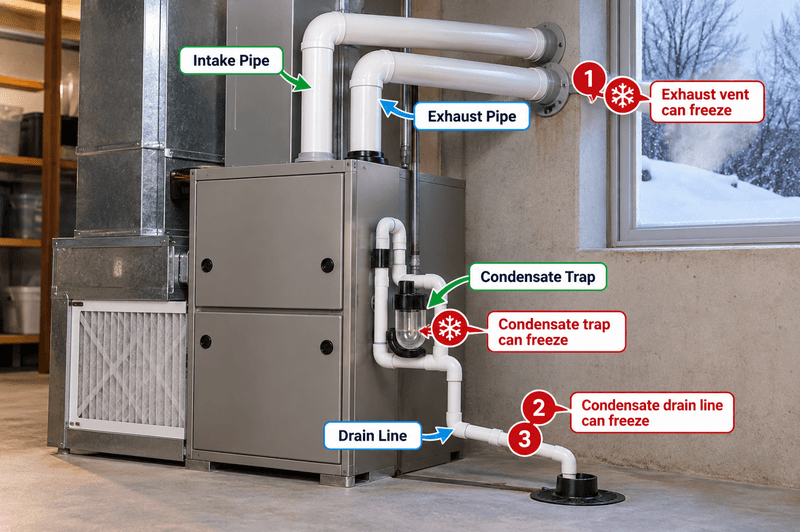
Vent Pipe, Condensate Line, Or Filter? A Quick Triage Table
A blocked vent pipe, a frozen condensate line, and a clogged air filter cause most sudden winter shutdowns on a high-efficiency furnace, and each leaves different clues. Filterbuy, a manufacturer of pleated air filters, built this table because the three look alike from indoors.
Why High-Efficiency Furnaces Freeze Up In Winter
High-efficiency furnaces freeze because they pull so much heat from their exhaust that water vapor condenses inside the furnace and vent pipe, and that water can turn to ice in freezing weather. The U.S. Department of Energy's Building America Solution Center guide to combustion furnaces explains that these condensing, or Category IV, furnaces reach efficiencies above 90% AFUE. Their exhaust leaves below 140°F, cool enough for PVC venting, and their condensate is highly acidic, with a pH of 3 or lower.
For cold climates, that DOE guide calls for insulation or heat tape on outdoor condensate lines, an exhaust pipe that slopes slightly back toward the furnace, and vent openings above the expected snow line.
Warning Signs Of A Frozen Furnace Vent Pipe
The clearest warning sign of a frozen furnace vent pipe is a furnace that quits during a snowstorm or right after a hard freeze. Outside, each pipe freezes in its own way.
The exhaust pipe is the one that puffs vapor while the furnace runs. Its own condensate drips and refreezes, forming an ice ring at the tip or a mound below that can grow up to the opening.
The intake pipe draws air in quietly. Drifting snow buries it, and frost on its opening can mean exhaust vapor is blowing back into it.
Inside, the fan may start while the burners never light, or water may pool around the furnace.
How To Clear A Frozen Furnace Vent Pipe Safely
You can clear a frozen furnace vent pipe yourself when the snow or ice sits at the outside opening, and you can reach it from the ground. Work slowly, because cold PVC cracks easily.
Check your carbon monoxide alarm first. If it is sounding, leave the house, call 911 from outside, and stop here.
Turn the thermostat off so the furnace stops trying to restart.
Clear snow from both pipes by hand or with a soft brush, around the intake and the exhaust.
Remove ice gently with a gloved hand. Never strike the pipe or use a torch or heat gun.
Look inside the opening. Ice deeper in the pipe usually points to a slope or drainage problem best left to a technician.
Restore heat and confirm the burners light.
If your vents exit through the roof, stay off the icy shingles and call a technician.
How To Thaw A Frozen Furnace Condensate Line
To thaw a frozen furnace condensate line, warm the frozen section slowly and clear ice from the outlet so water can drain. The line usually freezes where it runs through unheated space or exits an outside wall.
Trace the line from the furnace until you find the frozen section.
Warm it with towels soaked in warm tap water, swapping them as they cool. Boiling water can crack plastic fittings.
Clear the outlet by breaking away ice so water can escape.
Check the condensate pump if your furnace has one, since a frozen or full pump also stops the system.
Restart the furnace once water flows freely.
A backed-up drain line can also leave you with a wet or freezing furnace filter.
When To Stop And Call An HVAC Technician
Call a licensed HVAC technician when the blockage is out of reach or keeps coming back, and immediately at any sign of carbon monoxide.
Ice sits inside the vent pipe, or the pipe is cracked or disconnected.
The furnace locks out again within a day of clearing the vents.
You smell exhaust indoors or see soot near the vent openings.
People in the home feel sick indoors and better once they step outside.
The Centers for Disease Control and Prevention (CDC) overview of carbon monoxide poisoning lists headache, dizziness, weakness, upset stomach, vomiting, chest pain, and confusion as the most common symptoms, which are easy to mistake for the flu. The CDC reports that more than 400 Americans die each year from unintentional carbon monoxide poisoning not linked to fires.
Winter Prevention Checklist For Snowstorms And Cold Snaps
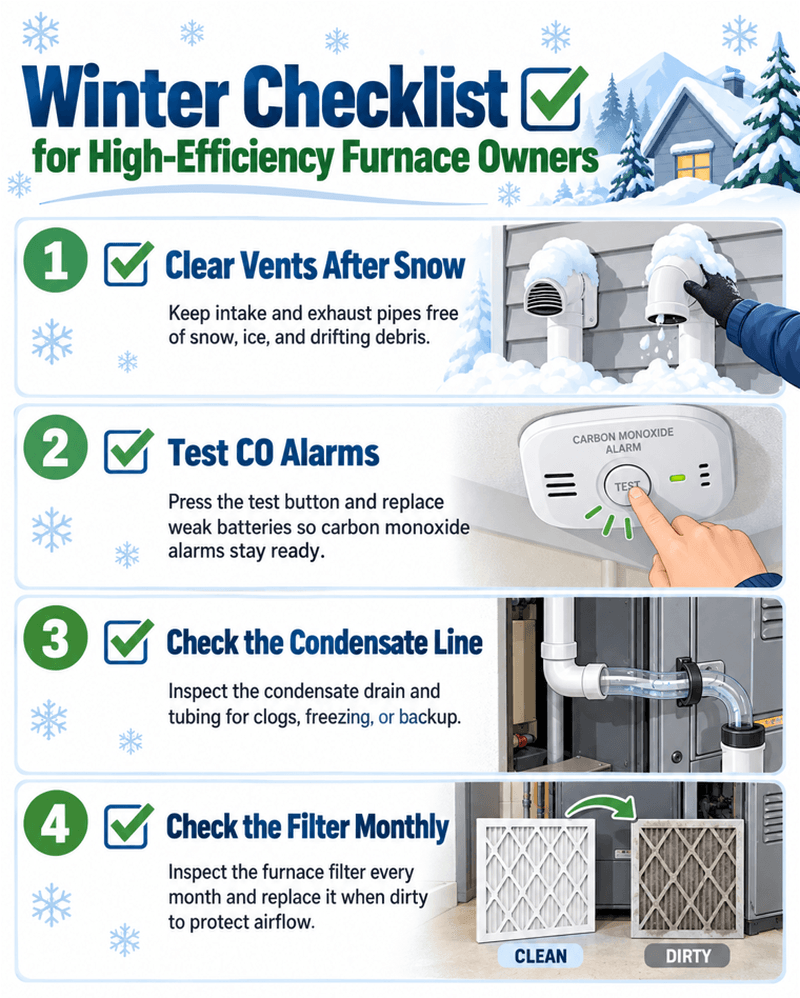
Most furnace vent freeze-ups can be prevented by checking the vents after every storm and preparing before winter starts. At Filterbuy, we treat a vent check like a filter change: a small habit on a schedule. Our cold snap furnace checklist covers the rest of the house.
Check the vents after every snowfall. The National Fire Protection Association (NFPA) carbon monoxide guidance says to keep furnace, dryer, stove, and fireplace vents clear during and after a snowstorm.
Mark the pipes before winter with a tall stake so you can find them after a big storm.
Aim snowblowers away from the vent wall.
Rent or live in a condo? Ask who clears the vent wall before the first storm.
Test carbon monoxide alarms monthly. The winter storm safety tips from the U.S. Consumer Product Safety Commission call for CO alarms on every level and outside sleeping areas.
Plan for holiday travel by asking a neighbor to check your vents after storms.
Book a fall tune-up. The ENERGY STAR maintenance checklist recommends a heating check-up every fall, a good time to have vent slope and height confirmed.
Where Your Furnace Filter Fits Into Winter Shutdowns
A clogged furnace filter can also shut the heat off in winter, because low airflow makes the furnace overheat and trip its limit switch. We make furnace filters at Filterbuy, and we still tell homeowners to check the vents and drain line first, since a new filter will not clear a buried vent.
To check the filter, hold it up to a light and replace it if light barely passes through. Weak airflow and uneven heat are other signs your furnace filter is clogged, and our guide to why furnaces short cycle in cold weather covers the remaining causes.
Check your owner's manual for the MERV rating your furnace calls for, and see the U.S. Environmental Protection Agency guide to MERV ratings on asking a technician what your system can handle. If the size print has worn off the frame, measure your air filter first. At Filterbuy, you can shop air filters by exact size with fast and free 2-day delivery to most US states, and filter auto-delivery sends replacements on your schedule.
Supporting Statistics
Three sourced numbers show why winter vent checks matter.
1. In 2024, 47% of U.S. homes are heated mainly with natural gas.
Our take: if two white plastic pipes exit your wall, this guide is for you.
2. 19 of 246 deaths (7.7%) tied to the February 2021 Texas winter storm were carbon monoxide poisonings.
The state health department lists ice obstructing vents on gas heating equipment among the causes.
Our take: a hard freeze matters even where snow is rare.
Source: Texas Department of State Health Services, February 2021 Winter Storm-Related Deaths Report
3. Nearly 18,000 carbon monoxide incidents were reported by Massachusetts fire departments in 2020.
92% happened in homes, and the state fire marshal names heating equipment as the main indoor CO source.
Our take: a cleared vent and a tested alarm are two of the cheapest protections you have.
"After a heavy snow, most no-heat calls I see on high-efficiency furnaces trace back to a drift or an ice cap over the exhaust pipe. Clearing it by hand at the wall usually gets the heat back on."
David Clark, Licensed HVAC Technician
Frequently Asked Questions
Can A Frozen Furnace Vent Pipe Cause Carbon Monoxide Problems?
Yes. A blocked furnace vent can let carbon monoxide build up indoors, and the furnace's safety controls are no substitute for a working CO alarm. Water heater and dryer vents can vanish under the same drift.
Is It Safe To Pour Hot Water On A Frozen Furnace Vent?
No. Water poured into the vent can run back toward the furnace or refreeze at the opening. Remove vent ice by hand, and leave any ice inside the pipe to a technician.
Why Does My Furnace Vent Pipe Keep Freezing?
A furnace vent pipe that keeps freezing usually has an installation issue, most often poor pipe slope or an opening too close to the snow line. A technician can correct both.
Should I Cover My Furnace Vent Pipe In Winter?
No. Furnace vent pipes need open air, so never cover or box in the openings. The U.S. Fire Administration's carbon monoxide prevention guidance also advises keeping furnace vents clear of snow and debris, and any vent change should be done by a technician.
Clear The Vent, Then Stay Ahead Of The Next Storm
A frozen vent pipe or condensate line is usually a quick, safe fix once you know which part to check. After the next snowfall, clear your vents and test your CO alarm, then keep a fresh Filterbuy filter on hand for the coldest weeks.
Glossary
AFUE
Annual Fuel Utilization Efficiency, a furnace's seasonal fuel efficiency rating.
Carbon Monoxide (CO)
A colorless, odorless gas produced when fuel burns.
Condensing Furnace
A high-efficiency Category IV gas furnace that condenses water from its exhaust.
Condensate Line
The tube that drains acidic water from a condensing furnace.
MERV
Minimum Efficiency Reporting Value, a 1 to 16 rating of how well a filter captures airborne particles.
PVC
Rigid plastic pipe used to vent condensing furnaces.