
Furnace Not Working? Top Causes, Troubleshooting Steps, DIY Fixes, and When to Call a Pro
October 30, 2026
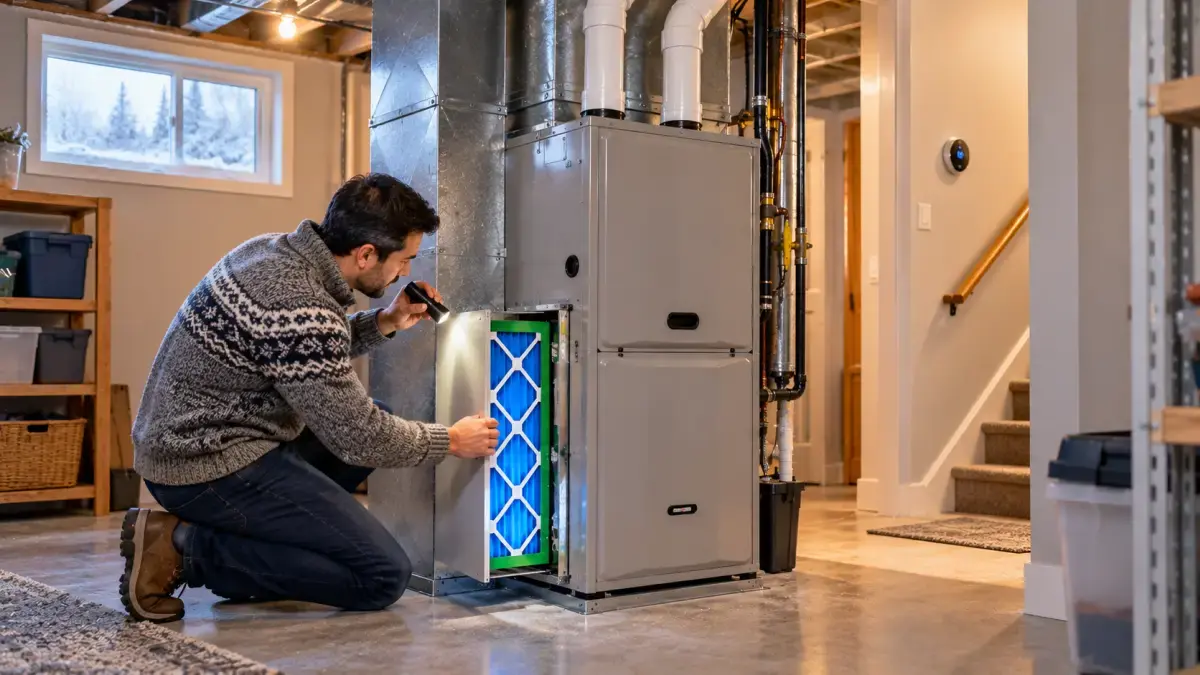
No heat on a cold night feels urgent, and that's when a guess can cost you a service call you didn't need. The quick check below keeps your hands away from gas parts and tells you whether you're facing an easy fix or a job for a technician.
Filterbuy's Listen, Look, Then Touch Check
Smell gas or hear a CO alarm? Skip the checks, get outside, and call 911 or your gas utility.
Rule Out The Filter First
A clogged filter is one of the few furnace problems you can fix yourself today. Answer a few quick questions to find the size and MERV rating for your home, then confirm the fit with your HVAC system manual.
Keep Your Heat Running All Winter
Frozen pipes, power outages, filter timing, and fan settings each have their own Filterbuy guide. The Furnace Filters & Winter hub puts every one of them in one place.
A furnace not working usually comes down to something you can check quickly. Start with the thermostat, the breaker or furnace switch, the air filter, the gas valve, and the blower door panel. Ignition and safety-switch faults come next and usually need a licensed HVAC technician. Filterbuy makes air filters, so we'll be straight with you: a new filter fixes airflow problems, not ignition or gas faults.
TL;DR
If your furnace isn't working, check the thermostat, power, air filter, gas valve, and blower door panel first. Then read the blinking status light on the control board. Call a licensed HVAC technician if you smell gas, hear a carbon monoxide alarm, or see the furnace lock out again after one reset.
Key Takeaways
Many cases of a furnace not functioning trace back to thermostat settings, power, gas supply, or airflow.
A clogged air filter can make a furnace overheat and trip its high limit switch, the safety switch that shuts the burners off when the furnace runs too hot.
The blinking control board light is a diagnostic code, explained on a chart inside the furnace door.
A gas smell or a carbon monoxide alarm means stop troubleshooting and get help now.
Why Is My Furnace Not Working? Start With The Symptom
Filterbuy built the triage map below around one idea: what your furnace does before it quits tells you more than any single part. A furnace that does nothing points to power or the thermostat. One that tries to start and quits usually has an ignition or venting fault. One that runs but heats poorly points to airflow, usually the filter.
First, give the furnace a full minute. A modern gas furnace runs its inducer motor, a small fan that clears exhaust, and a pressure switch confirms the vent is open. Then an ignitor lights the gas, a flame sensor confirms the flame, and the blower starts after a short delay. A quiet first minute is often normal.
Table 1: Filterbuy Furnace Symptom Triage Map
For single symptoms, see what each furnace click pattern means and house furnace blowing cold air.
Stop Here First: Furnace Problems That Aren't A DIY Job
If you smell gas or a rotten egg odor, leave without flipping switches and call your gas utility or 911 from outside. If a carbon monoxide alarm sounds, get everyone into fresh air and call 911.
Call a licensed HVAC technician if you see scorch marks near the burners, soot on the vent pipe, a black furnace filter, or a burning electrical smell that lingers. The U.S. CPSC recommends a CO alarm on every floor and near bedrooms.
How To Troubleshoot A Furnace That Won't Work: Seven Safe Checks
Filterbuy's seven checks follow one rule: listen, look, then touch. Listen for clicks or a hum, look at the status light, filter, and vents, and touch only the thermostat, switches, filter, and door panel. Turn the furnace switch off before opening any panel beyond the filter slot.
Check the thermostat. Set it to Heat, set the temperature 5 degrees above the room, and set the fan to Auto, as the Filterbuy furnace fan On or Auto guide recommends for most homes. Replace weak batteries.
Check the power. The furnace switch looks like a light switch near the unit. Reset a tripped breaker once. If it trips again, read about a furnace tripping the breaker. If the street is dark, check our winter storm power outage maps.
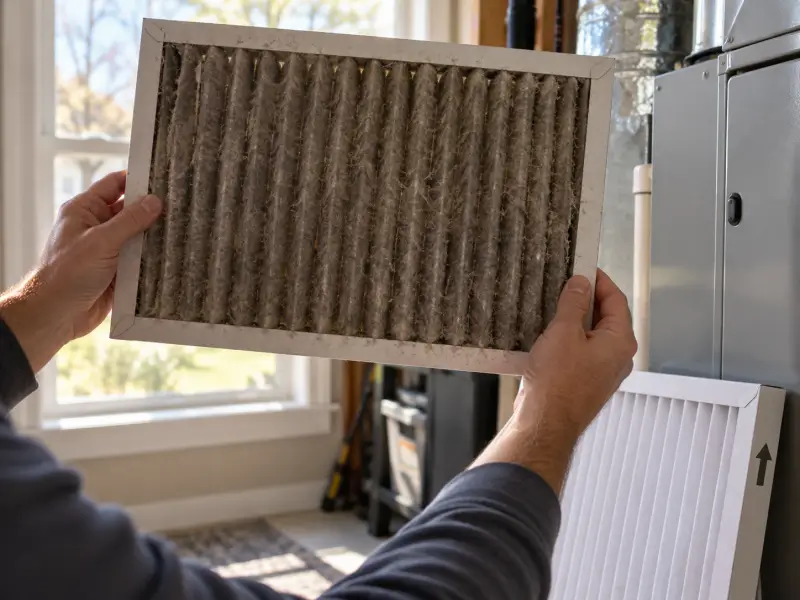
Check the air filter. Find your HVAC air filter location and hold the filter up to a light. If light barely passes through, replace it. See the other signs of a clogged furnace filter, and check which way a furnace filter goes before installing the new one. Write the install date on its frame.
Check the gas supply. The shutoff handle on the gas line beside the furnace should run parallel to the pipe. Confirm other gas appliances work, or check the tank level if you use propane.
Seat the blower door panel. A safety switch behind the lower panel cuts power when the door is loose. Press the panel firmly until it latches.
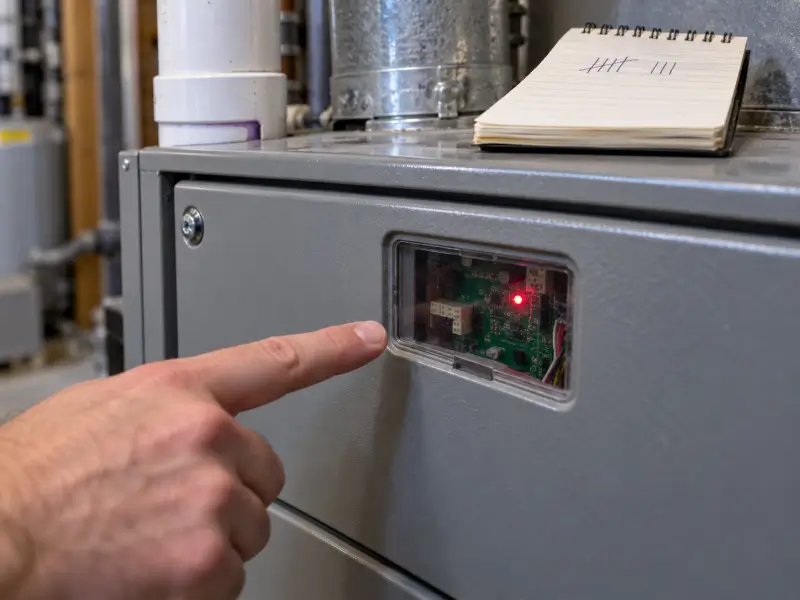
Read the status light. Many furnaces show the control board LED through a small window. Count the flashes, match them to the chart inside the door, and write the code down. A phone video makes counting easy. Our guide to furnace control board and limit switch failure signs covers the parts behind common codes.
Check returns and outdoor vent pipes. Clear return grilles. A high-efficiency furnace vents through two plastic pipes outside, and snow or ice can block them. Check the condensate line, the drain tube for water a high-efficiency furnace makes, for standing water.
David Clark is the licensed HVAC technician who reviewed this Filterbuy guide. On winter no-heat calls, he checks the outdoor vent pipes and the air filter before he opens the cabinet, because either one can stop a furnace that has nothing broken. He reads a clicking, quitting furnace as a safety control doing its job.
That's why Filterbuy uses a one-reset rule. Reset the furnace once, as the FAQ below explains. A second lockout means a real fault, and repeated resets can clear the code a technician needs.
Gas Furnace Not Working? Ignition, Flame, And Venting Causes
A gas furnace that won't stay lit has usually failed one of the startup checks above. Table 2 shows which part each symptom points to and who should fix it. See how a gas furnace lights and heats for more.
Table 2: Gas Furnace Parts, Failure Signs, And Who Fixes Them
Turn off power and gas before cleaning a flame sensor.
The Filterbuy furnace ignitor replacement guide covers symptoms and costs. The furnace flame sensor cleaning and replacement guide shows how to clean a dirty sensor, one of the few gas-side fixes a homeowner can make.
Electric furnace? Skip the gas checks. Many electric furnaces run on their own double-pole breaker, a two-handle breaker, and a breaker that trips again usually points to a heating element or wiring fault for a technician.
When To Call A Licensed HVAC Technician
Call a licensed HVAC technician when the seven checks don't restore heat, when the status light names a component fault, or when any safety stop sign appears.
Note these details before you call:
Model and serial number (a phone photo of the rating plate works)
The blink code
What you saw and heard before it quit
When you last changed the air filter
If repair quotes keep climbing on an older unit, review the signs it is time to replace a furnace.
How To Keep Your Furnace Working All Winter
The ENERGY STAR heating and cooling maintenance checklist recommends inspecting your air filter monthly and booking a pre-season contractor check-up of gas connections, burner combustion, and the furnace heat exchanger.
Filterbuy filters are cut, pleated, and framed to order in our own US plants. MERV 8 is the standard choice for most homes. MERV 11 suits homes with allergy sufferers, pets, or pollen. MERV 13 is the pick for smoke. Check your HVAC system manual to confirm the MERV rating and size it's built for.
The EPA explains what a MERV rating measures, and our MERV 8 vs MERV 11 comparison goes deeper. Shop Filterbuy air filters by size, learn how often to change your HVAC filter, or set up air filter auto-delivery with fast and free 2-day delivery to most US states.
"Most systems I test are not struggling because the filter is too efficient. They are struggling because it has been in there since spring."
David Clark, Licensed HVAC Technician
Supporting Statistics
400+ Americans die each year from accidental CO poisoning unrelated to fires.
100,000+ more visit an emergency department.
Why it matters: gas and CO stop signs come first on this page.
About 34,200 residential heating fires happen each year (2017–2019).
January alone accounts for 20%.
Why it matters: scorch marks or soot near a furnace mean call a technician.
47% of U.S. households heat mainly with natural gas (2024).
Why it matters: the gas-side checks in Table 2 apply to a large share of homes.
Source: Electricity Use Is Becoming More Common for Residential Heating
Frequently Asked Questions
Why Has My Furnace Stopped Working When The Thermostat Is On?
A furnace that stopped working while the thermostat is on usually has a setting problem, such as Cool mode, a temperature set below the room, or weak batteries. Lost power and a safety lockout come next. Check those, then read the status light.
Can A Dirty Air Filter Stop A Furnace From Working?
Yes. A dirty filter restricts airflow until the high limit switch shuts the burners off, causing short cycling or a full shutdown. A new filter often restores normal heating.
Where Is The Reset Button On A Furnace?
Many gas furnaces have no reset button. Turn the furnace switch off for 30 seconds to reset the control board. A tripped rollout switch, a safety switch near the burners, signals a flame or venting problem that a technician should inspect.
What Should I Do If My Furnace Stops Working In Freezing Weather?
Run the seven checks, then call a technician if heat doesn't return. While you wait, open sink cabinets and let faucets drip. Never use a gas oven for heat or run a grill or generator indoors, since each can produce deadly carbon monoxide. Our guides on how to prevent frozen pipes and how to prepare your home for extreme cold cover the rest.
Find Your Filter Match
A fresh filter rules out the easiest fix in minutes. Take the Filterbuy filter quiz, measure your air filter size, or order a custom air filter, cut to the eighth of an inch, if your size isn't listed.
Glossary
Carbon Monoxide (CO): A colorless, odorless gas produced by incomplete combustion.
Control Board: The furnace circuit board that runs the heating sequence and flashes diagnostic codes.
Flame Sensor: A metal rod that confirms the burner flame so the gas valve stays open.
High Limit Switch: A safety switch that shuts off the burners when the furnace overheats.
Hot Surface Ignitor: A ceramic element that glows hot enough to light the gas burners.
MERV: Minimum Efficiency Reporting Value, a 1 to 16 rating of how well an air filter captures airborne particles.
Pressure Switch: A safety switch that confirms exhaust is venting before ignition.
Short Cycling: A furnace turning on and off without completing a full heating cycle.