
How to Prepare Your Home for Extreme Cold
October 23, 2026
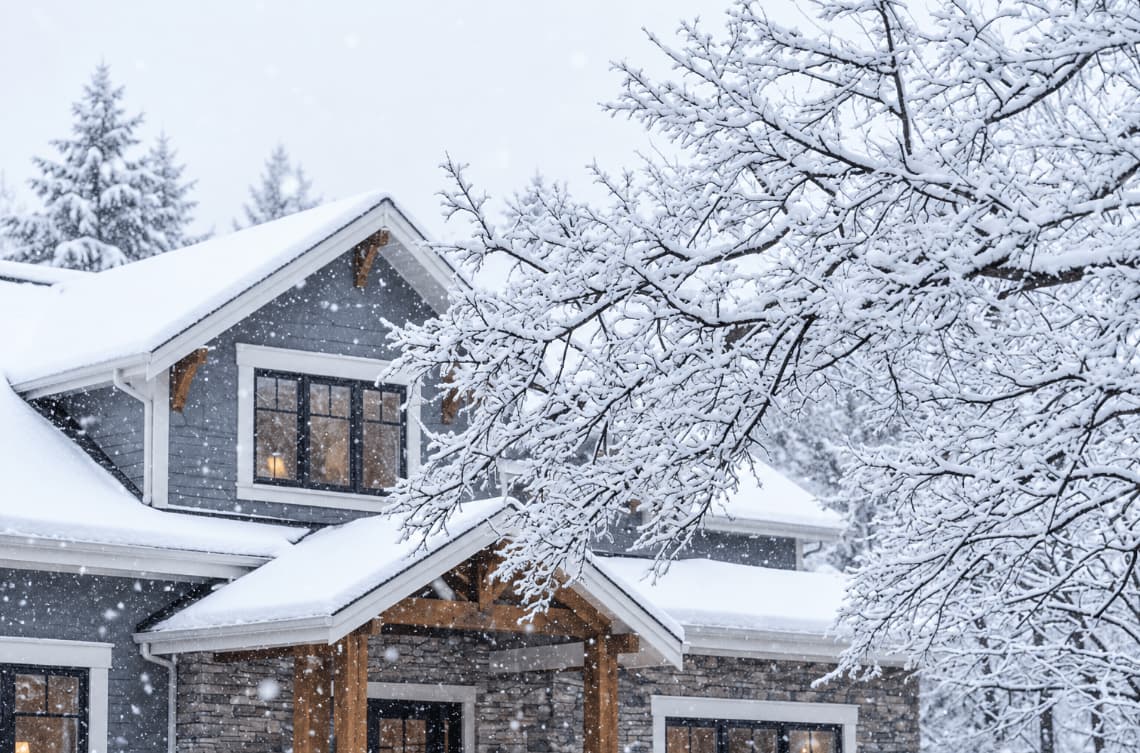
In extreme cold, protect your pipes and your furnace first. Insulate exposed pipes, put in a fresh furnace filter, and never let your home drop below 55°F.
Your furnace will run almost nonstop, and made-to-order filters take about 2 days to arrive, so order your replacement filter now. Use the quick quiz below to find the right filter for your furnace.
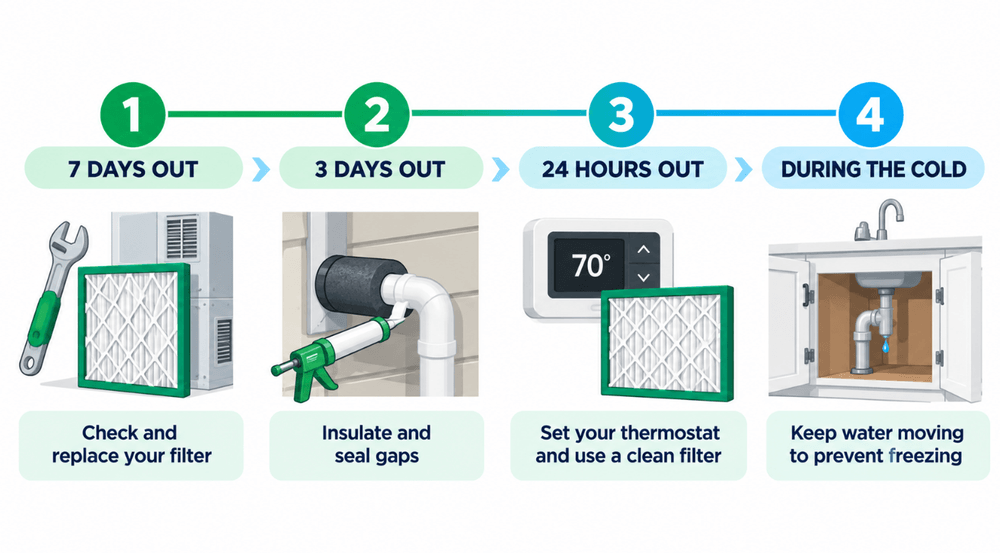
Your Cold-Snap Countdown
Start a week out. Finish before the freeze.
-
1
7 days out
Book a furnace check if it’s overdue.
Order a replacement filter.
-
2
3 days out
Insulate pipes. Drain outdoor faucets.
Seal drafts. Test CO and smoke alarms.
-
3
24 hours out
Filter dayPut in a fresh furnace filter.
Set the thermostat. Clear outdoor vents.
-
4
During the cold
Drip faucets on exterior walls.
Keep heat steady, never below 55°F.
Countdown timing is Filterbuy guidance. 55°F minimum per the American Red Cross.
Find Your Winter Filter Match
Answer a few quick questions, and we’ll match you to the right filter for your furnace this winter.
TL;DR
Start preparing your home three to seven days before extreme cold arrives, the window Filterbuy recommends. Use that time to insulate exposed pipes, drain outdoor faucets, put in a fresh furnace filter, seal drafts, and set up safe backup heat with working carbon monoxide (CO) alarms. Once the cold hits, hold the thermostat steady and let faucets on exterior walls drip, then check that snow hasn't covered your furnace vents.
Key Takeaways
Protect pipes before any alert. Filterbuy treats any forecast low near 20°F or below as a pipe-protection night, so open the sink cabinets on exterior walls and let those faucets drip.
Never let the house drop below 55°F. That's the floor the American Red Cross sets, even when you're traveling.
Put a fresh furnace filter on your prep list. Your furnace will run almost nonstop during a cold snap, and a clogged filter chokes its airflow.
Make sure backup heat is safe heat. Run generators outdoors only, more than 20 feet from doors and windows (CDC), and keep space heaters 3 feet from anything that can burn (CPSC).
No air filter removes carbon monoxide. Only a working CO alarm near every sleeping area can warn you.
How Do You Prepare Your Home for Extreme Cold?
Preparing for extreme cold comes down to four jobs: protecting your pipes, readying your heating system, holding heat in, and planning safe backup heat. Filterbuy's Cold-Snap Countdown spreads them over the week leading up to a freeze. Start when deep cold appears in the extended forecast, and treat an extreme cold watch as your cue to finish the list.
Countdown timing is Filterbuy guidance.
Step 1: Protect Your Pipes Before Temperatures Drop
According to the American Red Cross, pipes freeze most often where cold air can reach them. That includes outdoor hose bibs and supply lines in unheated basements, crawl spaces, attics, and garages or along poorly insulated exterior walls. Because water expands as it freezes, a frozen pipe can split and flood a room.
Disconnect and drain garden hoses, then shut off and drain the lines that feed your outdoor faucets.
Insulate exposed pipes, both hot and cold, with foam pipe sleeves or UL-listed heat tape or heat cable.
Find your main water shut-off valve and make sure it still turns.
Step 2: Get Your Heating System Ready
During a cold snap, your furnace or heat pump may run for days with few breaks.
"The systems that quit on the coldest night of the year are rarely the oldest ones. In our experience, they're the ones that went into winter with a dirty filter," says the Filterbuy Team.
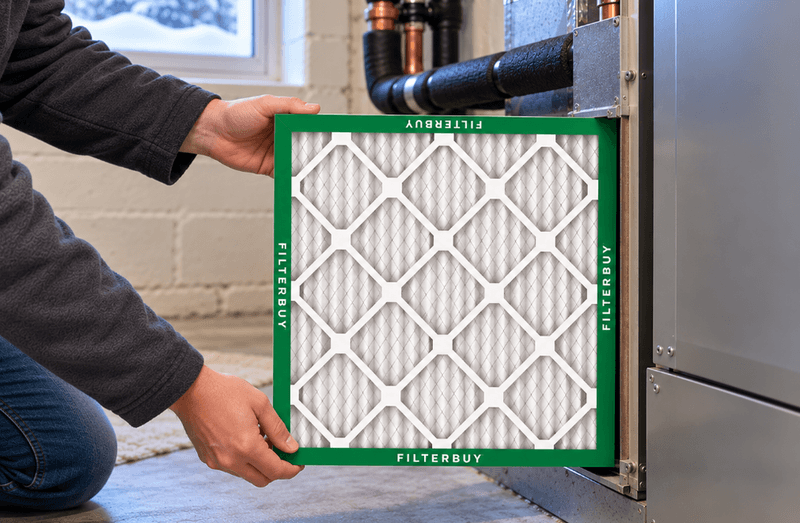
Put in a fresh air filter. A clogged filter restricts airflow, which can make the furnace overheat and shut itself off. Filterbuy's support team hears the same story every January: a furnace that keeps shutting off is usually choking on an old filter rather than broken. We've even pulled February filters that turned black after 30 days of heavy run time. Try Filterbuy's white-paper test: hold the filter against a white sheet of paper, and if the media looks gray by comparison, replace it. See how often to change your air filter.
Keep a spare filter on hand. Filterbuy cuts every filter to order and ships it within 24 hours, but no carrier can reach an iced-over street. Double-check the depth, the dimension we see ordered wrong most often.
Schedule an annual inspection. The CDC advises having a qualified technician check your heating system and other fuel-burning appliances every year.
Locate your outdoor intake and exhaust vents. High-efficiency furnaces often vent through a side wall, where snow and ice can block them. Filterbuy's guide shows how to clear a frozen furnace vent pipe.
"Most no-heat calls during a winter storm trace back to two things a homeowner can check in five minutes: a snow-blocked vent pipe and a clogged filter. Clear the vents and swap the filter before the snow starts," says David Clark, Licensed HVAC Technician, Filterbuy HVAC Solutions.
A Filterbuy MERV 8 air filter handles everyday dust in most homes, and a MERV 11 air filter is the better fit with pets or allergies. See which MERV rating you should use, or work through our winter HVAC prep checklist.
Step 3: Seal Drafts and Hold Heat In
Every air leak you seal keeps more warm air inside when outdoor temperatures plunge, which is why FEMA's Ready.gov recommends insulation, caulking, and weather stripping.
Weather-strip doors and windows, and add door sweeps.
Caulk the gaps where pipes and wires enter the house.
Close doors to rooms you aren't using, as Ready.gov suggests, and open the curtains on sunny windows during the day.
Step 4: Plan Safe Backup Heat for a Power Outage
Extreme cold and power outages often arrive together, and unsafe backup heat turns them deadly. CO is invisible and odorless, and the CDC reports that non-fire CO poisoning kills hundreds of Americans each year.
Never heat your home with an oven, gas stove, or grill, FEMA warns.
Run portable generators outdoors only, more than 20 feet from your home, doors, and windows, as the CDC advises. Never use a garage, even with the door open.
Give space heaters 3 feet of clearance from bedding, curtains, and furniture, as the U.S. Consumer Product Safety Commission (CPSC) recommends.
Install battery-operated or battery-backup CO alarms near every sleeping area, and test them now.
As a filter maker, we'll be clear about our limits. "Carbon monoxide is a gas, so filtration is the wrong tool entirely," says Filterbuy founder and CEO David Heacock. Read our guides to heating your home during a winter power outage and winter CO and smoke safety. If you can't keep your home warm, find your nearest warming center before the cold arrives.
Step 5: Build a Cold-Weather Home Kit
Ready.gov recommends keeping at least three days of supplies at home.
Water, nonperishable food, and a manual can opener
Flashlights, batteries, and a hand-crank NOAA Weather Radio
Charged power banks, warm layers, and blankets
Prescription medicines and a first aid kit
Rock salt, a shovel, and a spare Filterbuy filter in your size
How Should You Adjust the Plan for Your Home?
Your heating type and region change what to do first.
Sources: Filterbuy guides, NWS, American Red Cross.
What to Do When the Extreme Cold Arrives
Once the National Weather Service issues an Extreme Cold Warning, dangerous cold is on its way.
Keep the thermostat steady, day and night, and never below 55°F.
Let faucets on exterior walls drip cold water, since moving water is harder to freeze.
Open kitchen and bathroom sink cabinets so warm room air reaches the pipes.
Check outdoor vents after snow or drifting, and clear them by hand.
Check on neighbors, especially older adults and anyone who lives alone.
If a faucet gives only a trickle, suspect a frozen pipe. Leave the faucet open and warm the pipe with a hair dryer, heating pad, or towels soaked in hot water, but never use a blowtorch or open flame, the Red Cross warns. If you can't find or reach the frozen section, call a licensed plumber, and if a pipe bursts, shut off the main water valve first. Follow Filterbuy's winter storm tracker and learn what an extreme cold warning means.
Most cold-weather checklists stop at blankets and insulation, but at Filterbuy we look at a deep freeze from the furnace's side. We've made air filters in our own U.S. plants since 2013, and every winter our urgent orders spike during cold snaps, often from homeowners whose furnace has already shut itself off.
Supporting Statistics
Power outages are lasting longer. U.S. electricity customers averaged 11 hours without power in 2024, nearly double the prior decade's average, according to the U.S. Energy Information Administration (EIA). Filterbuy's take: plan backup heat for hours, not minutes. Source: U.S. Energy Information Administration
Portable heaters start few heating fires but many of the deadly ones. From 2017 to 2019, portable heaters were involved in only 3% of residential heating fires but 41% of fatal ones. The leading factor was a heat source too close to something that could burn (48%), according to the U.S. Fire Administration. Filterbuy's take: treat the 3-foot rule in Step 4 as non-negotiable. Source: U.S. Fire Administration
Unsafe backup heat can turn a freeze deadly. The Texas Department of State Health Services confirmed 246 deaths from the February 2021 winter storm, 19 of them from carbon monoxide poisoning and 10 from fire-related injuries. Filterbuy's take: test your CO alarms before the cold arrives, not during it. Source: Texas Department of State Health Services
Frequently Asked Questions
What temperature should I keep my house in extreme cold?
Keep your home at 55°F or warmer at all times, as the American Red Cross advises, and hold the same setting day and night while the extreme cold lasts. See Filterbuy's guide to how cold is too cold for your home.
At what temperature do pipes freeze?
There's no single number, because wind and insulation play a part, and so does where the pipe runs. Filterbuy treats any forecast low near 20°F or below as a pipe-protection night, and pipes in unheated spaces can freeze at milder temperatures.
Will my gas furnace work if the power goes out?
No. A gas or propane furnace burns fuel for heat, but its blower, igniter, and controls all run on electricity, so it stops when the power does. To keep it running in an outage, have an electrician connect a generator through a transfer switch. Never plug a generator into a wall outlet to feed the house.
Should I drip hot or cold water to keep pipes from freezing?
Drip cold water. The American Red Cross recommends letting cold water trickle from faucets served by exposed pipes, because moving water is harder to freeze. A slow, steady drip is enough, so focus on faucets along exterior walls rather than every tap in the house.
How often should I check my furnace filter during extreme cold?
Check it monthly from November through March, and again before and after a cold snap. A furnace that runs almost nonstop loads its filter far faster than the usual 60 to 90 days. If the filter looks gray against a white sheet of paper, replace it.
Get Your Home Ready Now
Extreme cold is easiest to handle when you prepare early, while stores are open and delivery trucks are still moving. Find your exact filter size among more than 600 sizes, all cut to order in Talladega, Alabama and shipped free. Or set up Filterbuy auto-delivery so a fresh filter arrives before you need it.
Glossary
Extreme Cold Warning: The National Weather Service's top cold alert; it replaced the Wind Chill Warning in 2024.
Transfer switch: An electrician-installed switch that safely connects a generator to home wiring.
Carbon monoxide (CO): A colorless, odorless, poisonous gas from burning fuel.
Hose bib: An outdoor water faucet.
Heat tape (heat cable): An electric cable that keeps a pipe above freezing.
Furnace filter (HVAC filter): The filter that traps dust and protects the blower.
MERV (Minimum Efficiency Reporting Value): A 1–16 rating of how well a filter captures particles.
Sources
Centers for Disease Control and Prevention, When the Power Goes Out, Keep Your Generator Outside (generators more than 20 feet from home; CO alarms near sleeping areas)
U.S. Consumer Product Safety Commission, Winter Safety Tips (space heaters 3 feet from flammable materials)
National Weather Service, Hazard Simplification FAQ (Extreme Cold Warning replaced Wind Chill Warning, October 1, 2024)
FEMA Ready.gov, Winter Weather (insulation, caulking, weather stripping; three-day kit; no oven or stove for heat)
American Red Cross, Preventing and Thawing Frozen Pipes (55°F minimum, faucet drip, steady thermostat, no open flame)
U.S. Energy Information Administration, Electric Power Annual 2024 outage data (linked in Supporting Statistics)
U.S. Fire Administration, Portable Heater Fires in Residential Buildings (2017-2019) (linked in Supporting Statistics)
Texas Department of State Health Services, February 2021 Winter Storm-Related Deaths report (linked in Supporting Statistics)
Filterbuy, Winter Storm Tracker (pipe-protection night rule near 20°F; filter run-time observation; David Clark quote)