
Heating Your Home In A Winter Power Outage: Furnaces, Heat Pumps & Generators
October 6, 2026
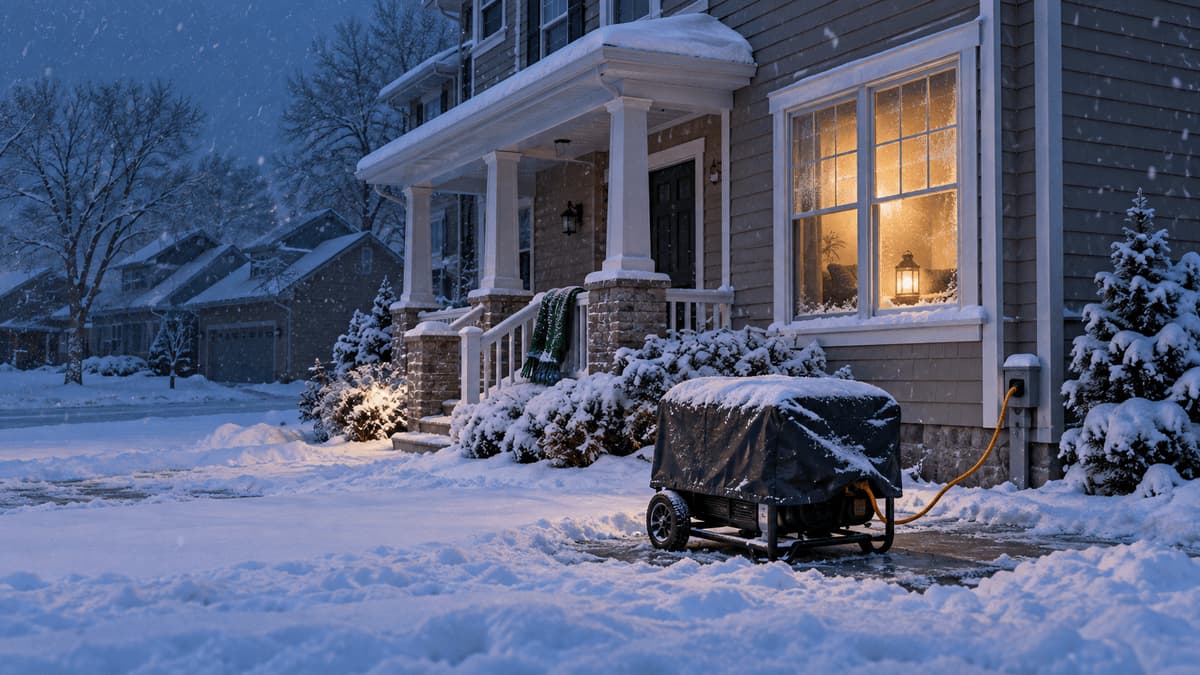
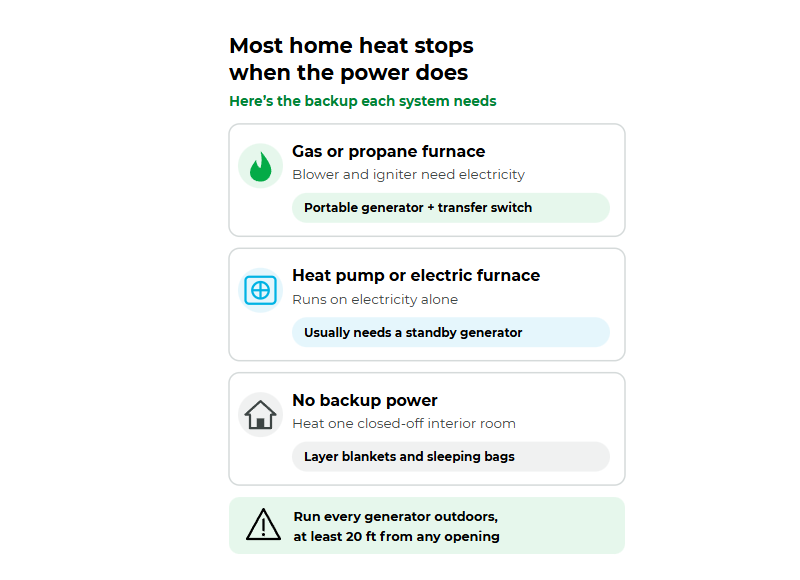
No. Almost every home heating system stops in a power outage, gas furnaces included. Their blowers, igniters, and controls all need electricity. Here's the backup each system needs:
- Gas or propane furnace: a portable generator can run it through a transfer switch.
- Heat pump or electric furnace: usually needs a standby generator sized by an electrician.
- No backup power: heat one closed-off room, and keep every generator outdoors.
Getting ready before the next storm? Take the quick filter match quiz below.
Answer a few quick questions and we'll match you to the right filter for your furnace.
Find your filter match before the next outage
Already know your size? Keep a spare filter on hand for winter.
Shop Filterbuy Air FiltersTL;DR
Most home heating systems stop in a power outage, gas furnaces included, because their blowers and ignition controls need electricity. A gas furnace can run on a portable generator connected through a transfer switch, while heat pumps and electric furnaces usually need a standby generator. Without backup power, heat one closed-off room safely and keep every engine outdoors.
Key Takeaways
Gas and propane furnaces cannot heat in an outage, because their blowers and controls need electricity.
A furnace blower draws about 300 to 875 running watts, so a gas furnace fits on a portable generator.
A 10 kW heat pump backup strip draws more than 11 times the power of the largest furnace blower.
The Centers for Disease Control and Prevention (CDC) advises running generators at least 20 feet from any opening in the house.
After a long, freezing outage, many heat pump makers call for a warm-up period on emergency heat.
At Filterbuy, we make the pleated filters inside furnaces and air handlers, so we care how those systems come through an outage. This guide to heating during a power outage sizes backup power from your own rating plate and restarts each system safely.
Will A Furnace Or Heat Pump Work During A Power Outage?
No. Almost every home heating system stops when the power goes out. A gas or propane furnace burns fuel for heat, but its blower motor, draft inducer, electronic igniter, and control board all need electricity. Heat pumps (including ductless mini-splits) and electric furnaces run on electricity alone. A wood-burning fireplace or stove is the main exception, and its chimney should be professionally inspected each year.
Which Heating Systems Work In A Power Outage
In a dual-fuel home, Filterbuy's advice is to power only the furnace side, because its blower is a far smaller load than the compressor and heat strips. Ask your HVAC technician whether the thermostat can lock out the heat pump.
What Size Generator Do You Need To Run Your Heat?
A gas furnace needs a generator that covers its blower, which draws 300 to 875 running watts and 500 to 2,350 starting watts by horsepower, according to a generator sizing chart published by the Commonwealth of Massachusetts. Heat pumps and electric furnaces need far more, usually a standby unit sized by an electrician.
Furnace Blower Motor Wattage By Horsepower
Size It With The Nameplate Method
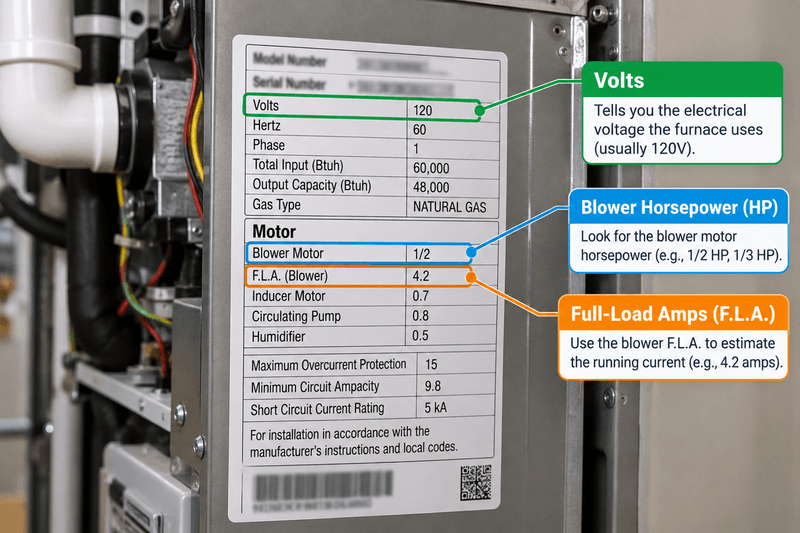
The most accurate generator size comes from your own furnace rating plate. Filterbuy's Nameplate Method turns that label into a number in five steps:
Find the blower horsepower or amps on the rating plate, usually inside the blower door.
If the plate lists only amps, multiply amps by volts for an upper-end estimate.
Add the running watts of everything else you plan to run at the same time.
Add the single largest starting surge, because motors pull extra power as they start.
Choose a generator whose running and starting ratings clear both totals, with headroom.
We ran the math with the Massachusetts figures. A 3/5 horsepower blower (875 watts) and a water pump (1,000 running, 3,000 starting) add up to 1,875 running watts. If the pump starts while the blower runs, demand climbs to about 3,875 watts.
Heat Pumps And Electric Furnaces
Heat pumps are the hardest heating systems to run on backup power. A single-speed compressor surges hard at startup, and a 10 kW auxiliary heat strip draws about 10,000 watts by itself. By our math, that one strip pulls more than 11 times the running power of the largest blower in the Massachusetts chart. Electric furnaces carry similar loads, so matching a heat pump's locked-rotor amps (LRA) to a generator's surge rating is a job for a licensed electrician.
Ductless Mini Splits
A ductless mini-split needs a generator sized to its nameplate current and connected through a transfer switch. As the U.S. Department of Energy explains, ductless air-source heat pumps link an outdoor condenser to wall-mounted indoor heads. Check the owner's manual for generator guidance.
How Do You Power A Furnace With A Generator Safely?
Connect a furnace to a generator only through a transfer switch or approved interlock installed by a licensed electrician, and keep the generator outdoors at least 20 feet from the house. Wisconsin's consumer protection agency recommends a double-pole, double-throw transfer switch and warns never to wire a portable generator directly into a building. That practice, called backfeeding, can energize utility lines and endanger line crews.
Nearly 100 people die in the U.S. each year from carbon monoxide (CO) poisoning caused by portable generators, according to the U.S. Consumer Product Safety Commission (CPSC).
Because of that risk, the CDC's power outage guidance calls for a battery-backup CO detector indoors. CPSC also warns against running a generator on a porch or in a carport, and in snow it advises clearing furnace vents so CO cannot build up inside. If a CO alarm sounds, get everyone outside and call 911.
How Can You Stay Warm Without Heat In A Winter Outage?
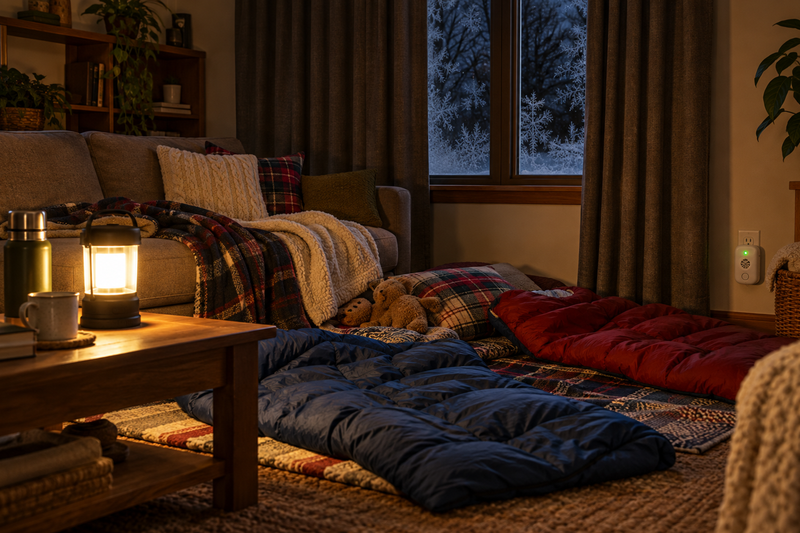
Without backup power, keep everyone in one closed-off interior room and layer up with blankets and sleeping bags. Never heat a home with a gas range or oven, and never bring a grill indoors. If the cold turns dangerous, go to a warming center.
CPSC recommends keeping portable heaters at least three feet from anything that can burn and plugging electric models into a wall outlet instead of a power strip. Never leave one running unattended.
As the house cools, American Red Cross frozen pipe guidance recommends letting cold water drip from faucets served by exposed pipes and opening sink cabinet doors so room air reaches the plumbing.
The CDC treats hypothermia as a medical emergency when body temperature falls below 95°F. Infants and older adults face the highest risk, and NIH MedlinePlus notes that a poorly heated home can cause hypothermia.
How Do You Restart Your Heating System After The Power Returns?
Restart heating equipment in stages once power is steady: clear the vents first, then bring one system back at a time.
During the outage, turn the thermostat off. FEMA's Ready.gov power outage guidance notes that power can return with surges, so unplug electronics too.
Clear snow and ice from furnace vent pipes and outdoor units.
Gas furnace: set the thermostat to heat. If it does not light, check the service switch and breaker. If you smell gas, leave and call the utility from outside.
Heat pump: follow the manual. Many manufacturers call for a period of emergency heat first so the crankcase heater can warm the compressor.
Mini split: make sure each indoor head is heating and showing no error code.
Filter: check for clogged furnace filter symptoms before the long run times a cold house demands.
If a heat pump still will not restart, Filterbuy's heat pump troubleshooting guide separates DIY checks from problems that need a technician. Here is how to find your furnace filter. Filterbuy makes pleated MERV 8, MERV 11, and MERV 13 filters in standard and custom sizes, and your equipment manual should confirm the approved MERV rating before you move up a tier.
What Should You Do Before The Next Winter Storm?
Before the next storm, record your blower wattage and confirm your safety gear works. Filterbuy built each step to close one failure point in this guide.
Read your furnace rating plate and write the blower wattage on the unit.
Test CO alarms monthly, using battery-backup alarms on every level as CPSC advises.
Start and load your generator once a month, as Wisconsin's consumer protection agency advises.
Label the furnace service switch and its breaker so anyone can find them in the dark.
Keep a spare filter in your size on hand.
Work through Filterbuy's tips for protecting your furnace in extreme cold, or get your heat pump ready for winter.
"Most furnaces I get called to after a winter outage aren't broken. The vent pipe is buried in snow, or a breaker tripped when the power came back, so clear the vents and check the breaker before you book a service call."
David Clark, Licensed HVAC Technician
Supporting Statistics
Federal and nonprofit data show why winter outages call for a heating plan.
U.S. customers averaged 11 hours without power in 2024, nearly double the prior decade. Major storms caused 80% of those hours. Our read: plan backup heat for an outage that lasts hours.
Source: U.S. Energy Information Administration
Texas confirmed 246 deaths from the February 2021 winter storm, including 158 from hypothermia. Another 19 were CO poisonings, some caused by ice blocking gas heating vents. That detail is why Filterbuy's restart steps begin with clearing snow and ice.
Source: Texas Department of State Health Services
Nearly half (46%) of U.S. home heating equipment fires happen between December and February. Space heaters account for most heating fire deaths. Our read: treat heater clearance like generator placement.
Source: National Fire Protection Association
Frequently Asked Questions
Can I Plug My Furnace Into A Generator With An Extension Cord?
Usually not. Most furnaces are hardwired, so the safe connection is a transfer switch or interlock installed by an electrician. Never try to feed the house through a wall outlet.
Will A Portable Generator Run A Heat Pump?
Rarely. A central heat pump's compressor surge and backup heat strips demand more than most portable generators can supply.
Is It Safe To Run A Generator In The Garage With The Door Open?
No. CPSC warns that open doors and windows do not provide enough ventilation to prevent a deadly CO buildup. Keep it outside, at least 20 feet away.
Should I Use Emergency Heat After A Power Outage?
Often, after a long, freezing outage. Follow your manual's warm-up timing, then switch back to regular heat, since emergency heat costs more to run.
Get Your Home Ready Before The Next Winter Outage
Heating your home through a winter power outage is easier when backup power and a fresh filter are ready before the storm. Shop Filterbuy air filters by size with fast and free 2-day delivery to most US states, or set up Filterbuy auto-delivery.
Glossary
Auxiliary Heat: Electric heat strips that help when a heat pump cannot keep up.
Crankcase Heater: A small heater that keeps a compressor's oil warm while idle in cold weather.
Dual-Fuel System: A heat pump paired with a gas or propane furnace as backup.
Emergency Heat: A thermostat setting that runs only the backup heat source and keeps the compressor off.
Locked-Rotor Amps (LRA): The current a compressor draws the instant it starts, listed on the nameplate.
MERV: Minimum Efficiency Reporting Value, the scale for how well a filter captures airborne particles.
Transfer Switch: An electrician-installed switch between utility and generator power that prevents backfeeding.