
Heat Pump Troubleshooting Guide (DIY vs Professional)
April 29, 2026
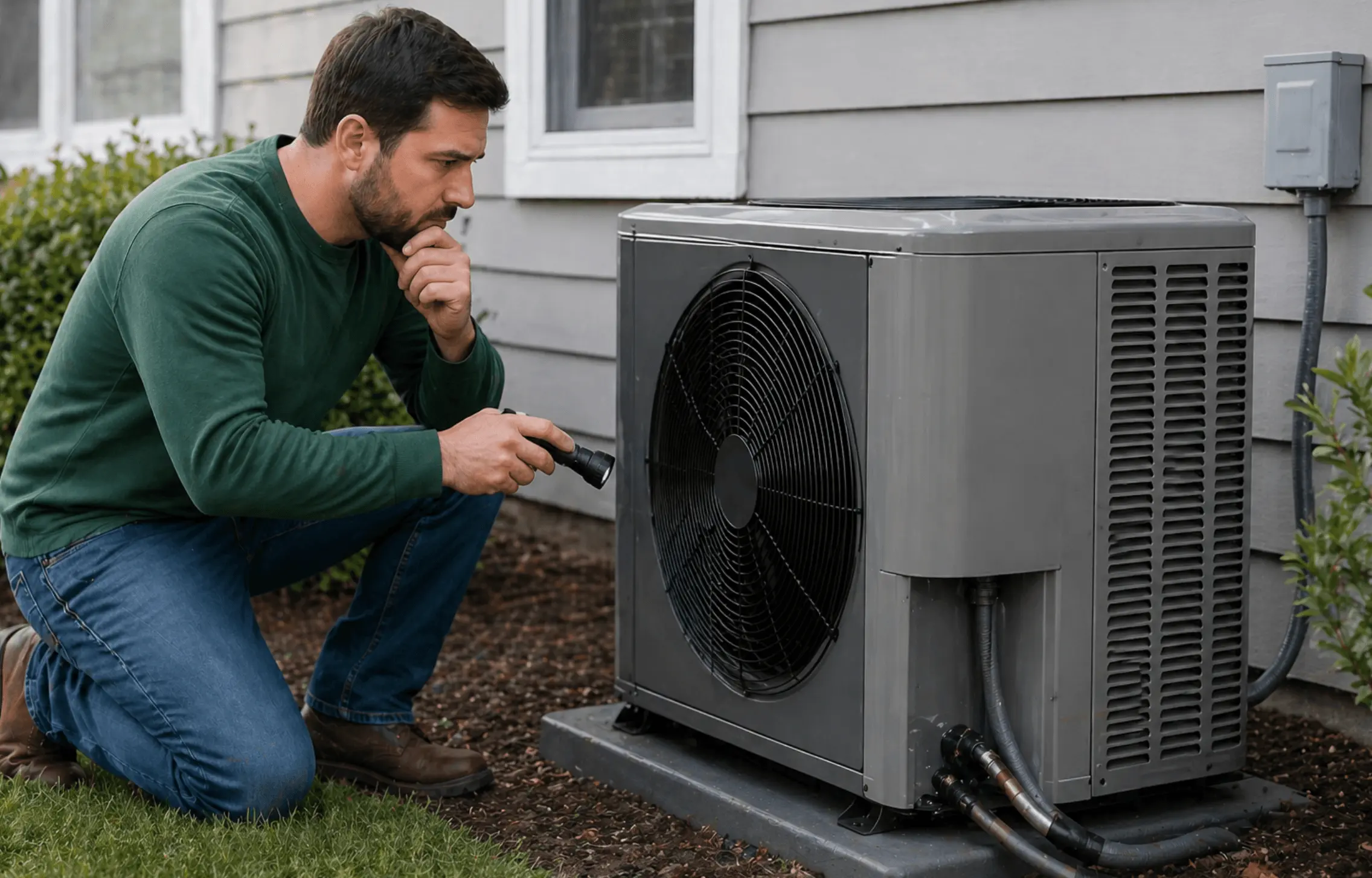
More "my heat pump is broken" calls than you'd expect turn out to be a filter problem you can fix in five minutes for $25. The rest are real repairs, and some of them belong to a licensed pro. This guide tells you which is which.
We're an air filter manufacturer, not an HVAC service company. That matters because nothing in this guide profits from your service call. We'll walk you through the symptom-by-symptom diagnostic checklist, the safety lines you shouldn't cross, the actual repair costs in 2026, and the moment to put down the multimeter and call someone who's licensed for what comes next.
By the time you finish reading, you'll be able to sort the four DIY checks from the issues that need a NATE-certified pro. Most homeowners find their answer in the first ten minutes.
TL;DR Quick Answers
Troubleshooting Guide (DIY vs Professional)
A heat pump troubleshooting guide splits every symptom into DIY vs professional: what you can fix in thirty minutes, and what legally or safely belongs to a licensed pro.. Roughly four DIY checks resolve most calls: power, thermostat, filter, and breaker. Anything past that, especially refrigerant work or compressor issues, requires an EPA Section 608-certified technician. Start with the cheap stuff first. A $25 filter swap fixes more "broken" heat pumps than any tool you can buy.
Top Takeaways
1. Most heat pump issues trace back to airflow, and most airflow problems trace back to the air filter.
2. Start at the thermostat and breaker before assuming a system failure.
3. Brief ice on the outdoor unit is normal in heating mode. Ice that won't clear within an hour is not.
4. When the system short-cycles, meaning it turns on and off in rapid bursts, shut it off and call a pro. Short-cycling damages compressors fast.
5. Refrigerant work is illegal for non-licensed homeowners under EPA Section 608 of the Clean Air Act.
6. A $25 filter swap resolves more service calls than any tool you can buy.
7. Find a trusted, NATE-certified technician on a sunny afternoon. Not at 2 a.m. on the coldest night of the year.
How Heat Pumps Work (and Why Most Problems Trace Back to Three Things)
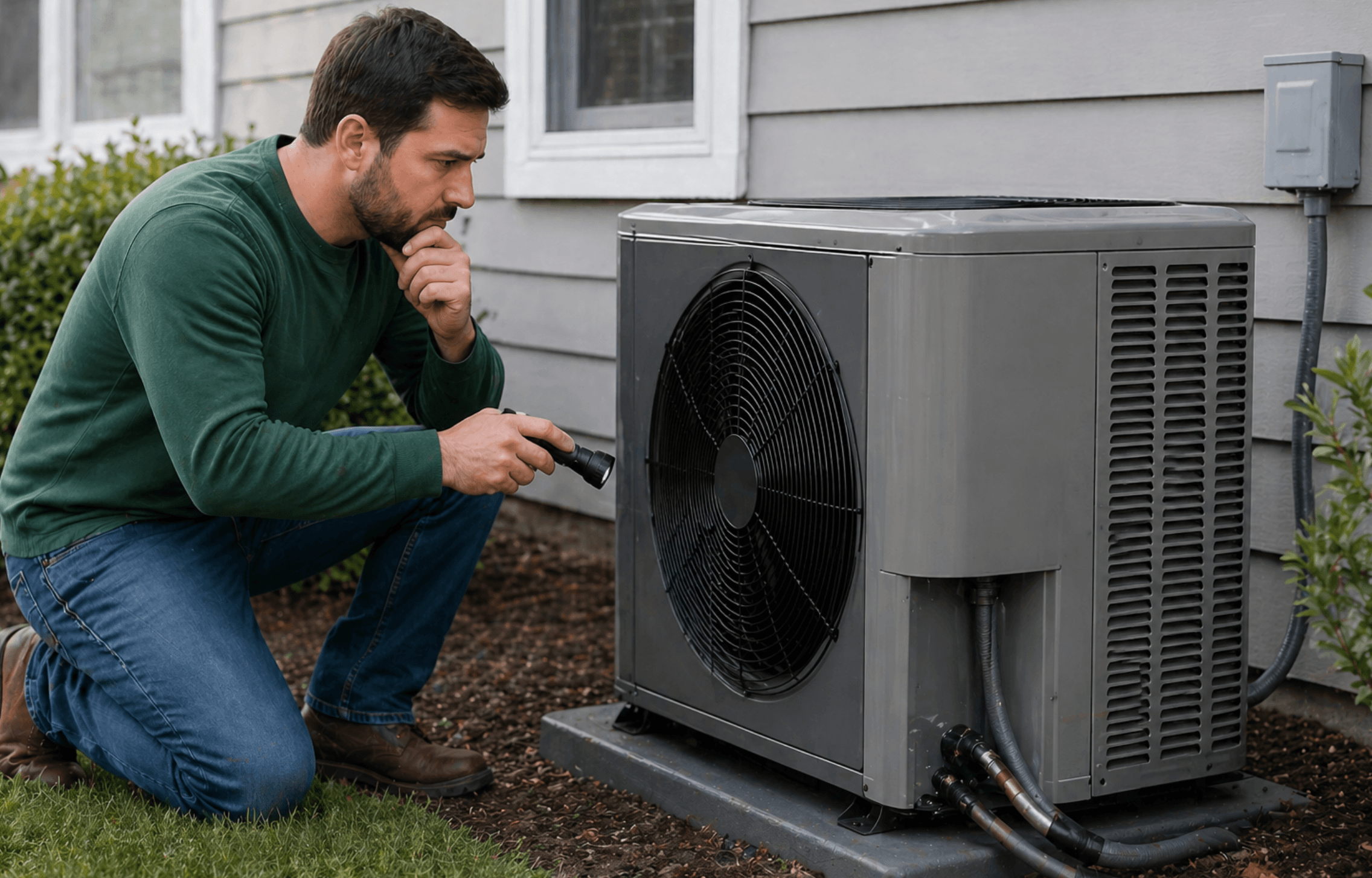
Heat pumps move heat instead of making it. They pull warmth from outdoor air in winter, and they reverse the cycle to cool your home in summer. The system runs year-round, so wear shows up faster than on a furnace or AC alone. For a deeper look at how heat pump technology works, Wikipedia covers the mechanics clearly. The practical takeaway is simple. When your heat pump acts up, the cause almost always shows up in airflow, electrical, or refrigerant. You can sort the first two yourself.
Before You Touch a Tool: 5 Safety Checks
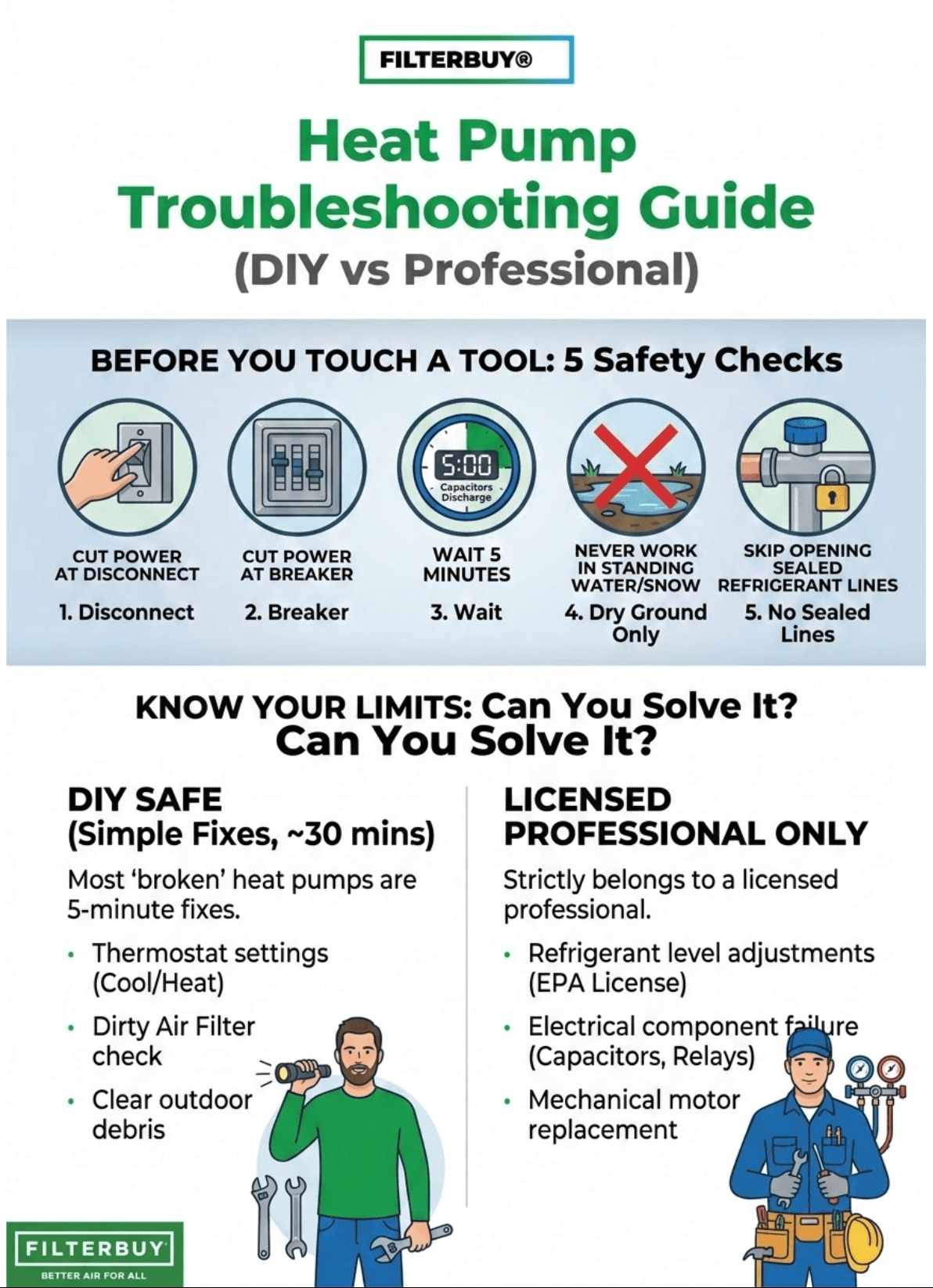
• Cut power at the disconnect AND the breaker before you open any panel.
• Wait five minutes after power-off so capacitors can discharge.
• Don't work on the unit in standing water or snow.
• Have a flashlight ready, plus a multimeter if you own one, and your phone with the model number photographed.
• Skip anything that requires opening a sealed refrigerant line. That work is licensed-only.
Heat Pump Won't Turn On
Usually it's a tripped breaker, a thermostat in the wrong mode, dead thermostat batteries, or a blown fuse. Check the thermostat setting, swap the batteries, and reset the breaker. DIY in roughly 95% of cases.
Running But Not Heating (or Cooling)
Pull the filter and hold it up to a light. If light barely passes through, replace it and let the system run for thirty minutes. Often DIY. If a fresh filter doesn't fix the problem within an hour, call a pro. The likely culprit is refrigerant or a stuck reversing valve.
Frozen or Iced-Over Outdoor Unit
Switch to "emergency heat" or "aux heat" for an hour to let the coil thaw. Inspect the filter. A one-time thaw is fine. Repeat icing means call a pro.
Short-Cycling
The system turns on and off in rapid bursts. Causes range from a dirty filter to a failing capacitor. Replace the filter first. If the cycling continues, stop running the system and call a pro before the compressor takes the hit.
Strange Noises
Rattling is usually loose panel screws, and that's a DIY fix. Grinding, persistent clicking, or a high-pitched whine on startup are pro-only. Those sounds signal motor, contactor, or capacitor issues.
Higher Bills, Same Comfort
Almost always airflow. Replace the filter, clear vegetation around the outdoor unit, and clean indoor vents. If bills don't drop within a billing cycle, schedule a tune-up.
DIY vs. Pro at a Glance
Safe to DIY:
• Reset tripped breaker
• Clear debris from outdoor unit
• Replace thermostat batteries
• Thaw an iced coil with emergency heat
Call a Licensed Pro:
• Refrigerant recharge or leak repair
• Compressor or reversing valve work
• Capacitor or contactor replacement
• Electrical wiring or board replacement
• Anything still failing after DIY checks
If the job requires opening a sealed refrigerant line, touching electrical components, or doing anything you wouldn't want to do on a ladder in the rain, call a pro. That's the simplest filter to apply.
"After years of fielding 'my heat pump is broken' calls, the first thing I ask isn't the brand or the age. I ask when they last replaced the filter. The pause on the other end of the line tells me almost everything we're going to find when the panel comes off."
— Filterbuy HVAC Support Team
7 Essential Resources
These are the sources we lean on when we want straight information about heat pump operation, repair, technician credentials, and home energy use. Every link goes to a government or non-profit page. No resellers.
1. Operating and Maintaining Your Heat Pump — U.S. Department of Energy. The plain-English government guide on routine operation, optimal fan settings, and what a professional service visit should cover.
2. Air-Source Heat Pumps — U.S. Department of Energy. A clear technical overview of how heat pumps move heat, where common installation mistakes happen, and what good performance looks like.
3. Air-Source Heat Pumps — ENERGY STAR. Certified product lookup, cold-climate performance ratings, and current federal tax credit eligibility for new installs.
4. Heat Pumps Overview — U.S. Environmental Protection Agency. The EPA's homeowner-facing primer on heat pump types, indoor air quality benefits, and basic maintenance.
5. Section 608 Technician Certification — U.S. Environmental Protection Agency. The federal rule that explains why refrigerant work requires a licensed technician. DIY refrigerant repair is illegal.
6. North American Technician Excellence (NATE). The largest non-profit certification body for HVAC technicians. Use it to verify that a tech you're hiring actually has the credentials they claim.
7. Use of Energy in Homes — U.S. Energy Information Administration. The data behind how much of your home's annual energy use a working heat pump actually controls. Useful context for repair-versus-replace decisions.
3 Statistics That Frame the Stakes
52%. Space heating and air conditioning accounted for more than half of the average U.S. household's annual energy consumption in 2020. When your heat pump misbehaves, the single largest line item on your utility bill is the one that's wobbling. (U.S. Energy Information Administration)
13%. About 13% of U.S. households used a heat pump as their main heating equipment in 2020. That share has grown every year since, which means this troubleshooting playbook reaches more homeowners each season. (U.S. Energy Information Administration)
10–25%. That's the energy consumption gap between a well-maintained heat pump and a severely neglected one. The number isn't a repair cost. It's the cost of skipping basic upkeep, paid monthly on your electric bill. (U.S. Department of Energy)
Final Thoughts and Opinion
Most heat pump problems are maintenance problems that finally got loud enough to notice. The system has been signaling something was off for weeks, sometimes months. Owners blame those signals on "old age" or "the weather." Almost every time, the real issue is restricted airflow caused by a clogged filter, debris around the outdoor coil, or both. Handle those two things on a calendar instead of when something breaks, and your repair calls will drop fast.
In our experience, every homeowner with a heat pump should be able to diagnose four things confidently: power, thermostat, filter, and breaker. Anything past that is a coin flip on whether DIY is appropriate. The right move is usually to stop, write down what you saw, and call a pro before things get worse. There's no shame in that. The shame is letting $25 of filter neglect turn into a $1,400 reversing valve replacement.
We also believe the right time to find a trusted HVAC technician is right now, on a sunny afternoon. Not at 11 p.m. on the coldest night of the year. Look for NATE certification, EPA Section 608 credentials, and a contractor who provides written diagnostics with the estimate. A pro who won't show their work in writing isn't the one you want.
Next Steps
If your system is working today
Build the maintenance habits that prevent the next call. Replace your filter on a calendar every 1 to 3 months, depending on pets, dust, and occupancy. Clear a 2-foot perimeter around the outdoor unit twice a year. Book a professional tune-up every spring. Our complete heat pump maintenance checklist walks through the full schedule by month.
If your system isn't working right now
Run the DIY checklist in this order: power, thermostat, filter, breaker, outdoor unit. If you've worked through all four and the system still won't perform, you've gathered the exact information a technician needs to diagnose efficiently. Write it down before you call. Note what you tried, what changed, and what didn't.
If you're shopping for a new system or replacing an aging one
Start with the ENERGY STAR certified product list, then talk to two contractors before you sign anything. Heat pumps last 15 to 20 years with maintenance, and 10 to 12 without it. The system you choose now will likely outlast most other major appliances in your home.
Frequently Asked Questions
Why is my heat pump running but not heating?
The most common causes are a clogged filter, frozen outdoor coil, low refrigerant, or a stuck reversing valve. Replace the filter and run the system for thirty minutes. If heat doesn't return, the issue is likely refrigerant or the reversing valve. Both are pro-only repairs.
How do I reset a heat pump?
Turn the thermostat off. Switch the breaker for the air handler and outdoor unit off at the panel. Wait five minutes. Then restore power and set the thermostat back to your desired mode. This resolves a surprising number of "dead" units.
Is it normal for a heat pump to ice up in winter?
A light frost during a defrost cycle is normal. A solid ice block that doesn't clear within an hour means something is wrong. The cause is usually low refrigerant, restricted airflow, or a defrost control malfunction. Run emergency heat to thaw the coil and call a tech.
What is the lifespan of a heat pump?
A well-maintained heat pump typically lasts 15 to 20 years. Without consistent maintenance, replacement usually arrives at year 10 to 12.
Can a dirty filter cause a heat pump to stop working?
Yes. A severely clogged filter can freeze the indoor coil, trip safety switches, and shut the system down entirely. It's the most common single cause of "the heat pump just stopped working."
What MERV rating is best for a heat pump?
For most residential heat pumps, MERV 8 to 11 is the sweet spot. You get strong filtration without restricting airflow. MERV 13 and above requires a system rated for higher static pressure. Check your owner's manual or ask the installer before you upgrade.
Should I repair or replace a heat pump older than 12 years?
Apply the $5,000 rule. Multiply the repair cost by the system's age. If the result exceeds $5,000, replace. A $700 repair on a 15-year-old system works out to $10,500. That usually doesn't pencil out. Invest in a new ENERGY STAR unit instead.
How do I find a qualified heat pump repair technician?
Look for three things: NATE certification, EPA Section 608 credentials, and a willingness to provide written diagnostics with the estimate. A technician who won't put their findings in writing isn't the one you want.
Skip Most Service Calls With One Habit
You can't service the compressor yourself, and you can't recharge refrigerant. Both jobs stay with the pros. What you can do is keep the filter clean. That single habit prevents most of the calls in this guide.