May 6, 2026
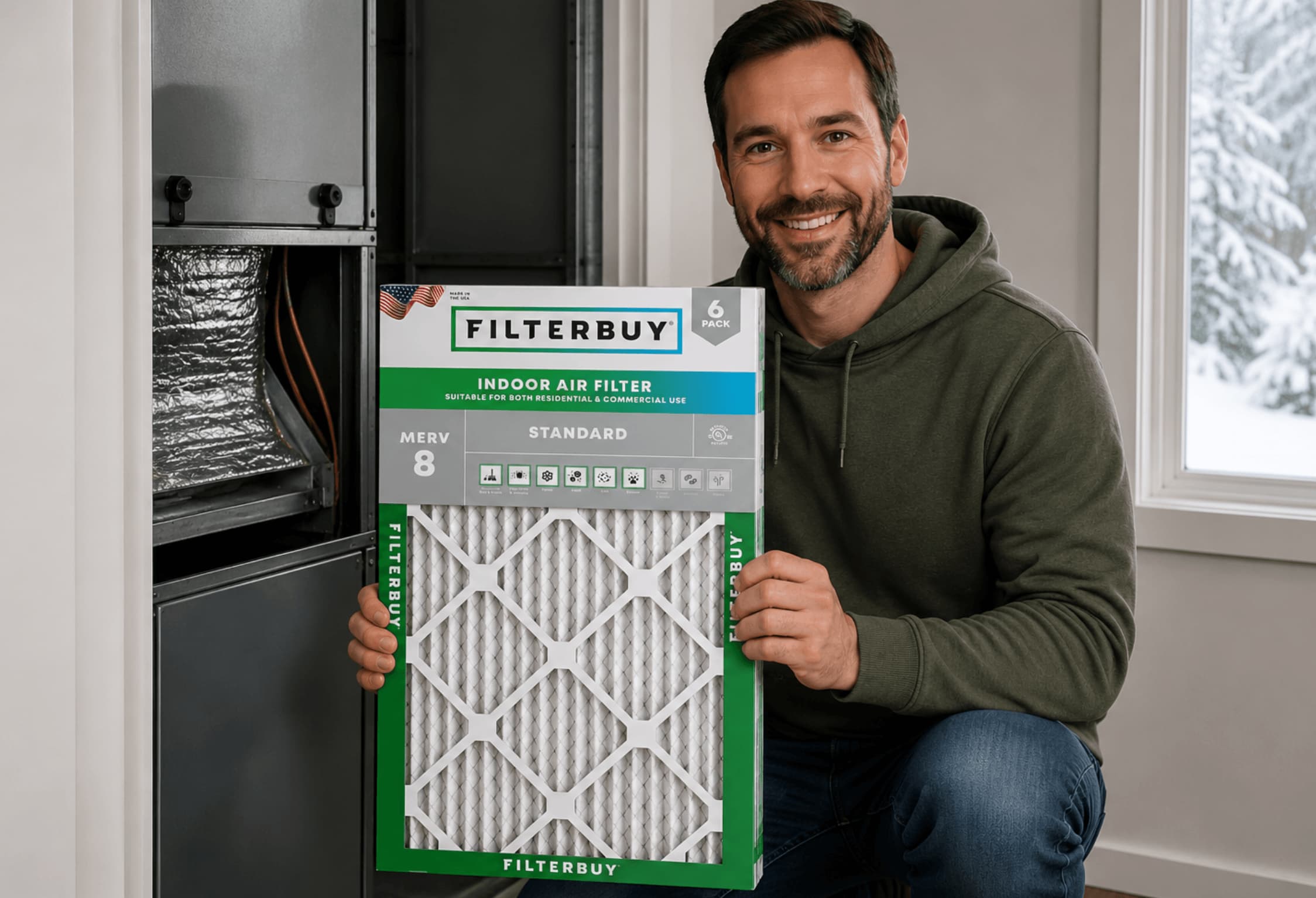
Two things show up in nearly every December heat pump complaint we hear: a filter no one has touched since spring, and an outdoor unit packed with leaves. We've been shipping filters to homes across all 50 states since 2013, and that pattern has held steady for more than a decade. The prep that prevents both is cheap, takes about thirty minutes, and fits inside one weekend.
This page walks through the work. The filter swap, clearing the outdoor unit, the thermostat habits a heat pump rewards (which differ from a furnace), and the warning signs that mean call a pro. Same list we'd hand a neighbor.
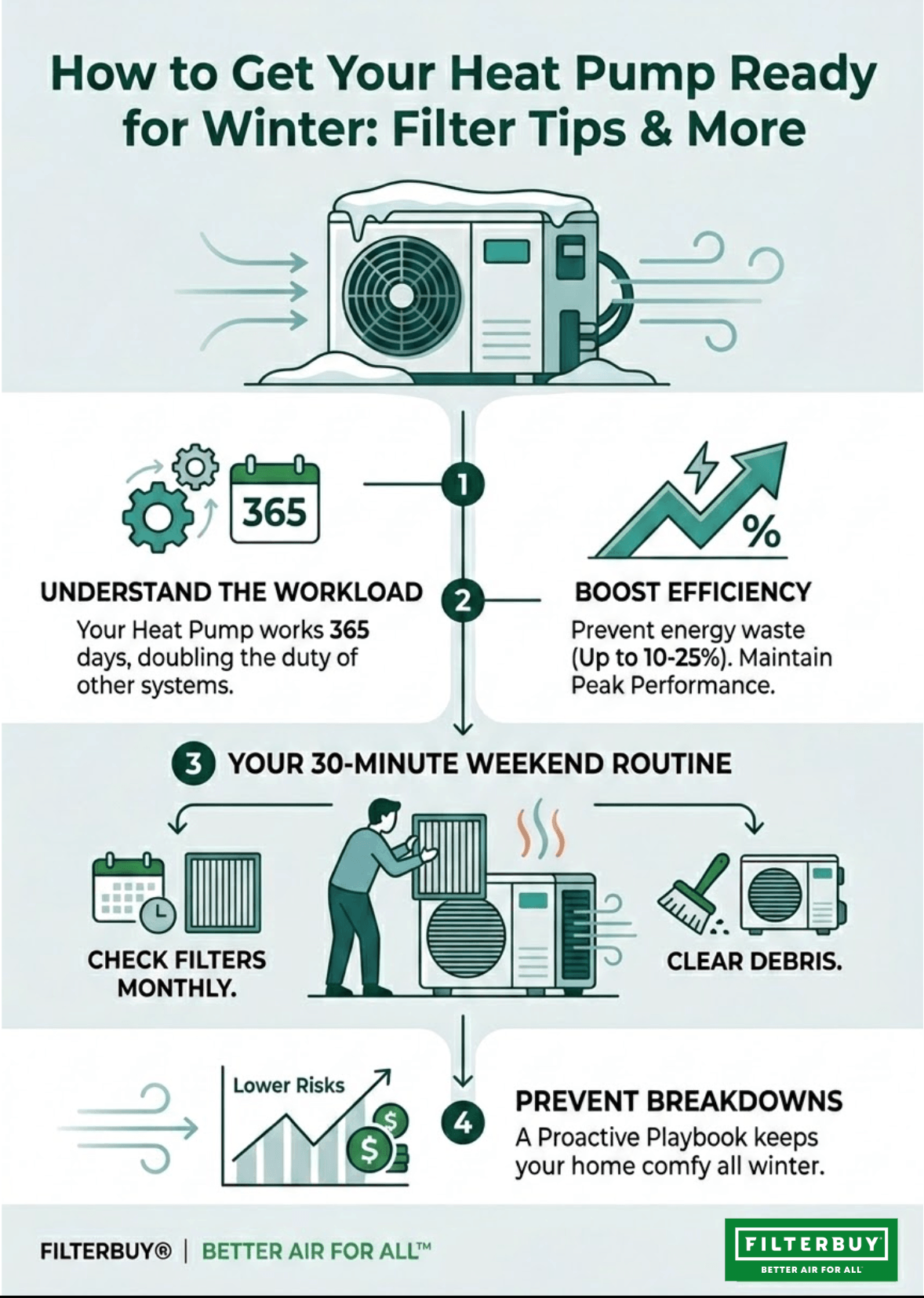
Here's how to get your heat pump ready for winter: a fresh filter, a clear outdoor unit, a steady 68°F thermostat, and a few more tips below. We've been shipping filters to American homes since 2013, and the routine that prevents most winter breakdowns hasn't changed.
• Replace the air filter. A pleated MERV 11 fits most heat pumps.
• Clear leaves and debris from the outdoor unit, leaving 18 to 24 inches of clearance on every side.
• Set the thermostat around 68°F and leave it there. Aggressive setbacks trigger expensive backup heat.
• Test the defrost cycle. Brief steaming or light icing is normal. Persistent ice is not.
• Book a NATE-certified tune-up before first frost. Most run $100 to $200.
The whole job takes about thirty minutes and fits inside one weekend.
1. A heat pump runs every day of the year, which puts roughly twice the wear of a furnace-and-AC pair that splits the seasons. Winter prep matters more for a heat pump, not less.
2. Filter replacement is the cheapest piece of HVAC maintenance you'll ever do, and the one with the largest direct effect on your power bill.
3. Heat pumps reward steady thermostat habits. Aggressive setbacks that work fine on a furnace can trigger expensive backup heat on a heat pump.
4. Standard heat pumps lose efficiency below about 25°F. Cold-climate ENERGY STAR models keep performing down to 5°F and beyond.
5. Most "something's wrong with my heat pump" calls we field trace back to a clogged filter or a defrost cycle the homeowner mistook for a malfunction.
A heat pump moves heat instead of creating it. What that means for prep work: a heat pump is the only HVAC system that uses the same compressor, coils, and reversing valve year-round. Roughly twice the work of a furnace plus a separate AC.
Here's what to walk through before winter hits.
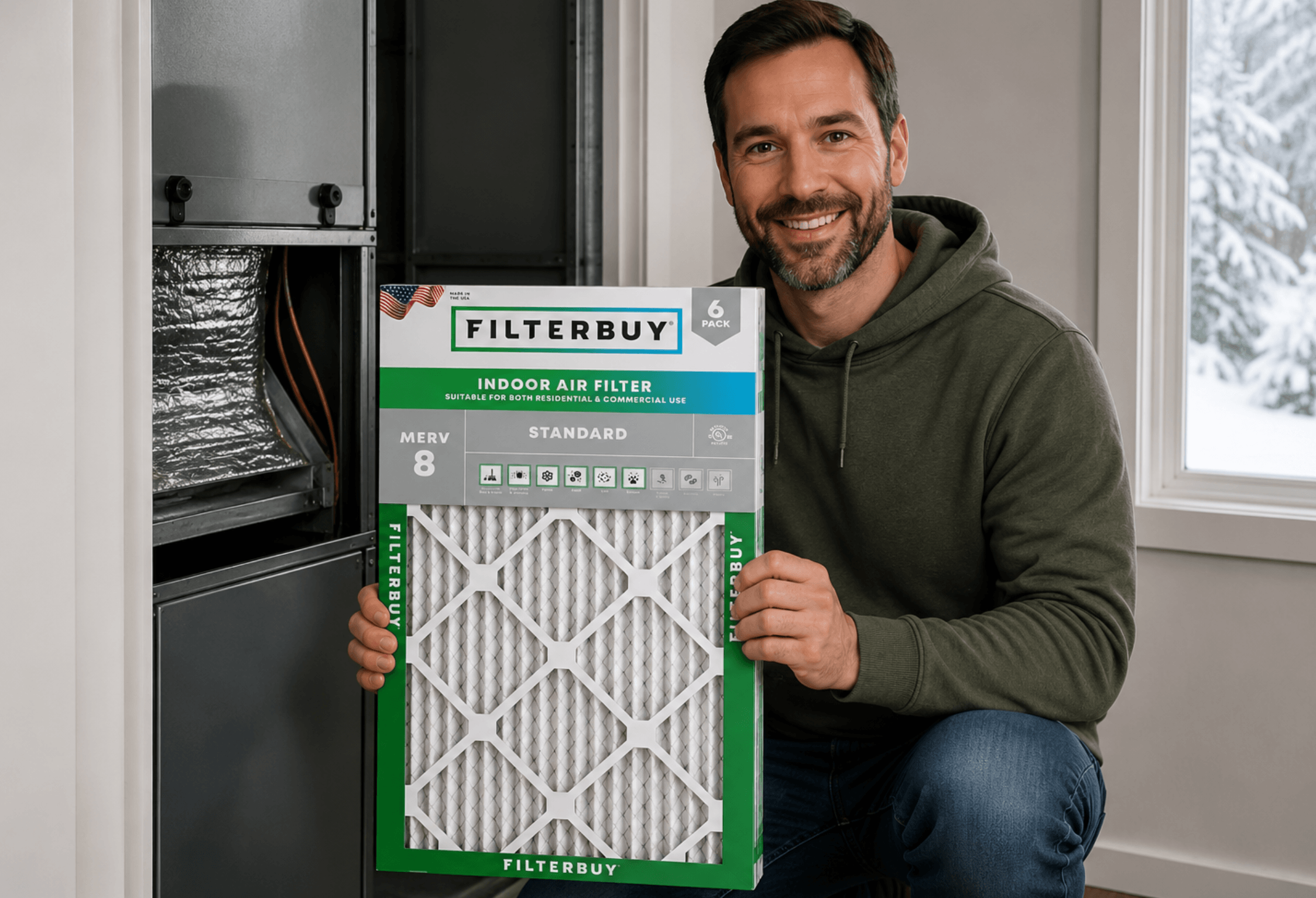
This is where you start every time. A clogged filter restricts airflow, forces the blower to work harder, and pushes your electric bill up on its own. For most heat pumps, a pleated MERV 11 is the right choice. Strong on pollen, dust, and pet dander without strangling the system. MERV 13 makes sense for wildfire residue or fine particulates, but only if your air handler can take the higher restriction. Skip MERV 16 entirely on a residential system. It's hospital-grade and starves airflow.
Your outdoor unit's base should sit at least 4 to 8 inches above the ground, with 18 to 24 inches of clearance on all sides. Pull leaves, dead grass, and any landscaping debris away. If snow stacks against the unit, brush it off gently and don't let it pack against the base. Top-only covers are fine if your area gets a lot of windblown debris. Full wraps are not. They trap moisture, freeze it against the coils, and void most warranties.
Take a flashlight to the outdoor coil. Surface dust, pollen, or pet hair lifts off with a soft-bristle brush. A fin comb straightens bent fins. Anything heavier (oily film, persistent ice, bent panels) is a service call, not a DIY project.
On the first cold morning, your outdoor unit might briefly steam, run in reverse, or sound different than usual. That's the defrost cycle melting frost off the outdoor coil, and it lasts a few minutes. What is NOT normal: ice that sticks around for hours, or repeated defrost cycles inside a short window. Either pattern means call a pro.
Pick a comfortable temperature and leave it there. The U.S. Department of Energy recommends around 68°F for winter heat pump operation, and the math works best when you don't fight that with aggressive setbacks. Drop the temperature too far at night and you'll trigger your auxiliary (resistance) heat, which industry sources put at three to five times the operating cost of the heat pump alone. If your unit has an "emergency heat" setting, leave it off unless your heat pump has failed or temps drop below its rated low.
If you haven't had a service this year, schedule it before first frost. A NATE-certified technician will check refrigerant charge, inspect electrical connections, lubricate motors, and catch the kind of small issue that becomes a $1,500 to $2,500 compressor failure on the coldest morning of January. Most tune-ups run $100 to $200. The math almost always works in your favor.
Standard heat pumps lose meaningful efficiency below about 25°F. Modern cold-climate models handle 5°F and below, but only if you own one.
"In our experience shipping filters to millions of households since 2013, the homeowners who never face a surprise winter breakdown aren't doing anything fancy. They change the filter on schedule, and they keep the outdoor unit clear. That's the playbook."
— Filterbuy HVAC Team
These are the references worth bookmarking. Each one is independent, authoritative, and current.
1. U.S. Department of Energy. Heat Pump Systems Guide. Plain-language overview of how heat pumps work, the major types, and what affects efficiency.
https://www.energy.gov/energysaver/heat-pump-systems
2. U.S. Department of Energy. Operating and Maintaining Your Heat Pump. Federal source on day-to-day use: thermostat habits, filter cadence, and when to call a contractor.
https://www.energy.gov/energysaver/operating-and-maintaining-your-heat-pump
3. ENERGY STAR. HVAC Maintenance Checklist. Print this and bring it to your service appointment. The short version of what a contractor should run on an annual visit.
https://www.energystar.gov/saveathome/heating-cooling/maintenance-checklist
4. ENERGY STAR. Air-Source Heat Pumps. Operating tips most homeowners get wrong: steady temperatures, when to skip Auto mode, and when to use backup heat.
https://www.energystar.gov/products/air_source_heat_pumps
5. U.S. EPA. Improving Indoor Air Quality. Why filtration matters more in winter, when windows stay shut and pollutants concentrate indoors.
https://www.epa.gov/indoor-air-quality-iaq/improving-indoor-air-quality
6. U.S. EPA. Winter Weather and Indoor Air Quality. Cold-month specifics: combustion appliances, ventilation habits, and what to watch for during cold weather.
https://www.epa.gov/emergencies-iaq/winter-weather-and-indoor-air-quality
7. North American Technician Excellence (NATE). Find a Contractor with NATE-Certified Technicians. The non-profit that certifies HVAC technicians. Use the directory to verify credentials before you book service.
1. A neglected heat pump uses 10 to 25% more energy than a maintained one. That's the gap between systems serviced annually and systems that get skipped, measured by the U.S. Department of Energy. The filter alone accounts for a meaningful share of it. Source:
https://www.energy.gov/energysaver/operating-and-maintaining-your-heat-pump
2. Air-source heat pumps deliver 2 to 4 units of heat for every unit of electricity they consume. That's the efficiency advantage that makes them cheaper to run than electric resistance or older combustion systems, and it holds only when airflow is clear and refrigerant charge is correct. Source:
https://www.energy.gov/energysaver/air-source-heat-pumps
3. Nearly half the energy used in a typical American home goes to heating and cooling. Per ENERGY STAR. It's why a $30 filter swap shows up on your power bill faster and more directly than almost any other home maintenance task. Source:
https://www.energystar.gov/saveathome/heating-cooling
Winter prep rewards the dull stuff done consistently, not flashy moves. The homeowners who get the most out of their heat pumps aren't running elaborate routines. They change the filter every couple of months, keep the outdoor unit clear, and book one service visit a year. That's most of it.
The mistake we see most often is treating a heat pump like a furnace. They are not the same animal. A furnace burns fuel and rests for half the year. A heat pump runs every day on the same set of parts. Aggressive thermostat setbacks, ignored filters, and "crank the heat to warm faster" habits cost real money on a heat pump in ways they don't on a furnace.
One more honest point. If your unit is more than 12 to 15 years old and struggling, sometimes the right answer is replacement, not repair. Modern cold-climate models perform at temperatures that would have stalled a heat pump from a decade ago. If a repair quote tops half the cost of a new unit, get a second opinion on replacement before you sign.
• Today: Pull your current filter. If you can't see light through it, replace it before doing anything else.
• This week: Walk the outdoor unit. Clear debris and confirm 18 to 24 inches of clearance on every side, with 4 to 8 inches under the base.
• Before first frost: Book a tune-up if you haven't had one this year.
• Going forward: Set a monthly reminder to check the filter. Most heat pumps need a swap every 1 to 3 months.
• Optional but smart: Auto-delivery so the right filter shows up when it's time. You skip the reminder, and you skip the errand.
Not fully. Wrapping the unit traps moisture, freezes against the coils, and voids most warranties. A top-only cover is fine if you're dealing with falling debris from trees overhead. Otherwise, leave the unit open to airflow on every side.
The U.S. Department of Energy recommends around 68°F as the steady winter setting. Heat pumps reward consistency. Aggressive drops trigger backup resistance heat, which costs significantly more to run than the heat pump itself.
Check it monthly. Replace every 1 to 3 months for most homes, and sooner if you have pets, allergies, or you've been dealing with smoke or renovation dust. ENERGY STAR's rule of thumb: if it looks dirty after a month, change it.
That's often normal. Heat pumps run longer cycles in cold weather to deliver the same comfort. Constant running becomes a problem when paired with weak airflow (filter), short cycling (thermostat or refrigerant), or temperatures below the unit's rated low. Check the filter first.
Brief frost during a defrost cycle is expected and clears within a few minutes. Persistent ice that stays for hours, or returns repeatedly, points to airflow restriction, low refrigerant, or a stuck defrost cycle. That's a service call.
Only when your heat pump has failed or outdoor temperatures drop below its rated low. Emergency heat runs your auxiliary resistance coils alone, which is useful in a pinch but expensive to run. It is not a default winter setting and shouldn't be left on out of habit.
Winter prep isn't complicated. The filter is the easiest piece, and the one with the largest payoff for your bill, your air, and your equipment. Filterbuy makes the filter step easier than the errand itself.
