
Extreme Cold Warning: What It Means and Where Warnings Are Active
October 5, 2026

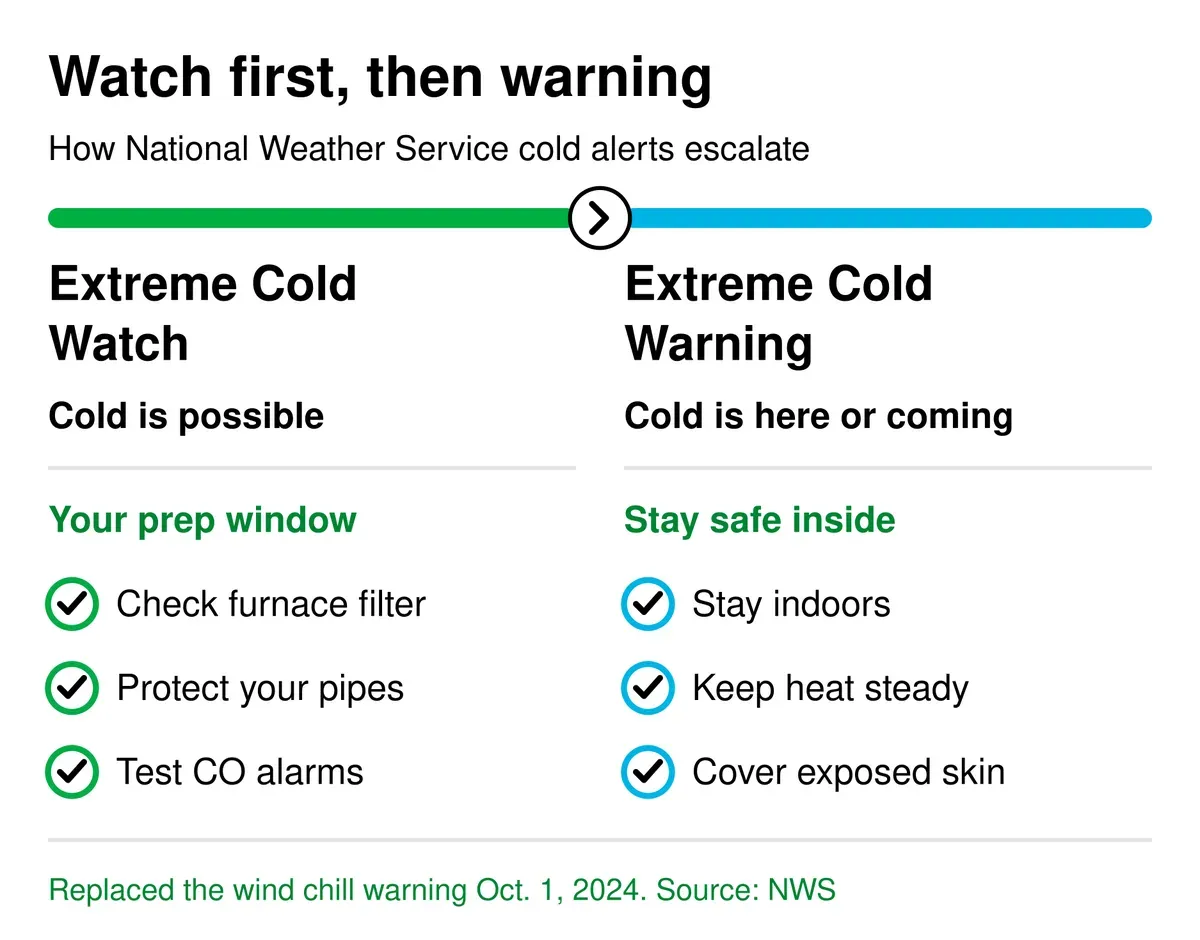
An extreme cold warning means the National Weather Service expects temperatures or wind chills cold enough to threaten life where you live. If one is in effect, stay inside when you can. It replaced the wind chill warning on October 1, 2024, and usually follows an extreme cold watch. When the watch goes out, check your furnace filter and protect your pipes before the coldest hours.
Extreme cold watch: dangerous cold is possible. Prep your home now.
Extreme cold warning: dangerous cold is expected or already here. Stay inside.
Cold weather advisory: dangerous cold below warning level. Cover exposed skin.
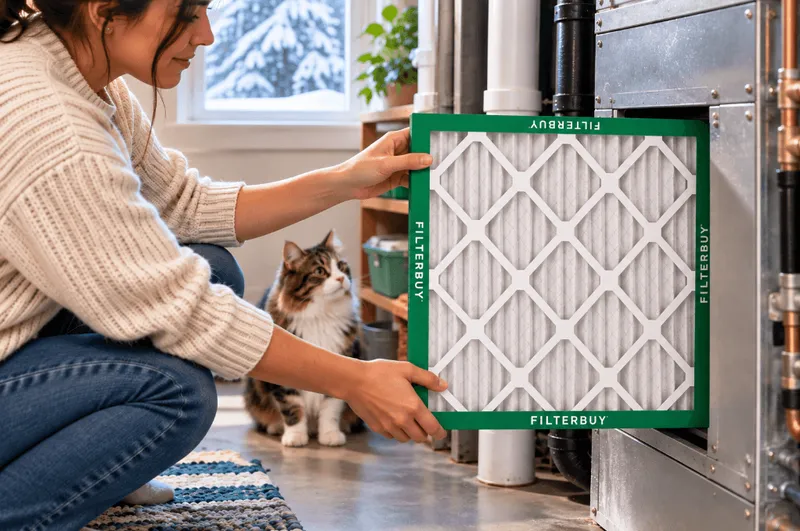
Get your furnace ready before the cold peaks
Answer a few quick questions and we'll match you to the right filter for your home this winter.
Already know your size? Every Filterbuy filter is made to order in our own U.S. plants, in more than 600 sizes, and ships free.
Shop Air FiltersTL;DR
An extreme cold warning is the National Weather Service's most serious cold alert. It goes out when temperatures or wind chills are expected to threaten life where you live. It replaced the wind chill warning on October 1, 2024, and usually follows an extreme cold watch. If one is in effect, stay inside when you can and get your pipes and furnace ready before the coldest hours.
Key Takeaways
An extreme cold watch means dangerously cold air, with or without wind, is possible. An extreme cold warning means it is expected.
Each local NWS office sets its own threshold, from −40°F in northern Minnesota to 15°F on the Mississippi coast.
A wind chill of about −19°F can cause frostbite on exposed skin in roughly 30 minutes.
Furnaces run longer during a cold snap and filters load faster, so Filterbuy's technicians recommend checking yours monthly until the cold breaks.
Our take: Most cold-alert advice stops at your front door. Filterbuy, a family-owned U.S. air filter manufacturer based in Talladega, Alabama, sees an extreme cold watch differently. To us, it starts a countdown for the furnace and filter your family will lean on for days with the windows shut.
What Does an Extreme Cold Warning Mean?
An extreme cold warning means the National Weather Service (NWS) expects temperatures or wind chills cold enough to threaten life in your forecast area. In those conditions, frostbite and hypothermia can set in quickly, so the safest plan is to stay indoors and have your home ready before the cold peaks.
The exact trigger depends on where you live. Each local NWS forecast office sets its own threshold for its climate, which is why a warning in Minnesota means something very different from a warning on the Gulf Coast.
Extreme Cold Watch vs. Extreme Cold Warning vs. Cold Weather Advisory
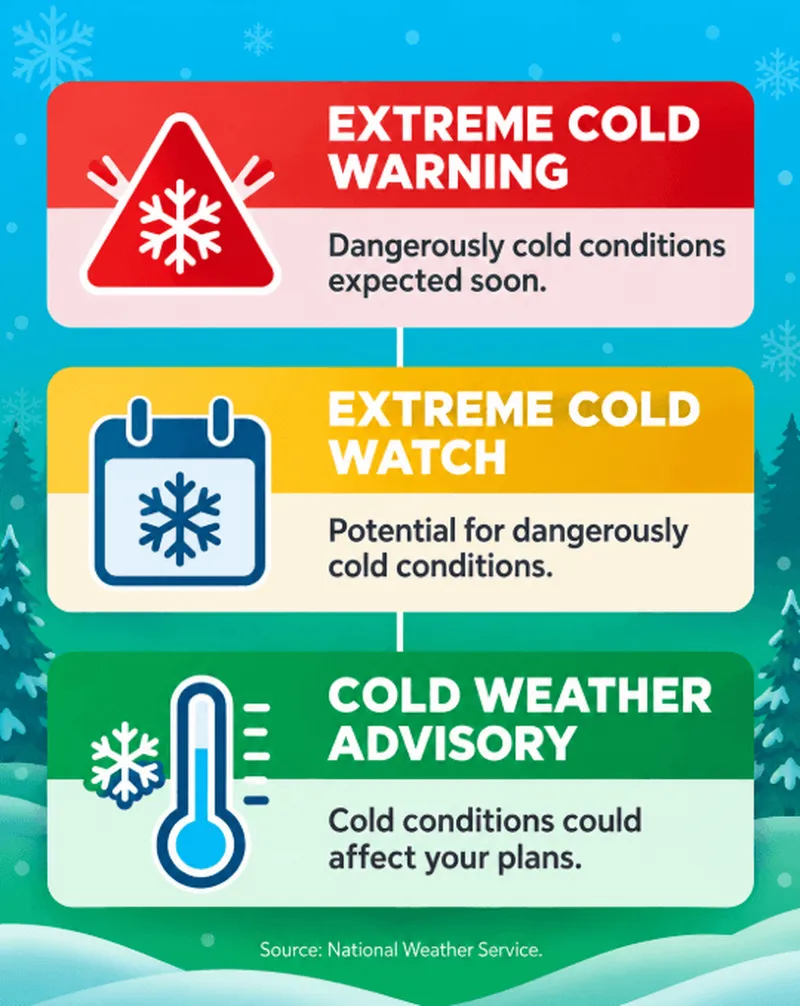
An extreme cold watch means life-threatening cold is possible in the coming days, while an extreme cold warning means it is expected or already here. A cold weather advisory, one step below, flags dangerous cold that falls short of warning level. At Filterbuy, we call the watch “filter day,” because it gives you time to check the furnace filter and protect your pipes before the worst cold arrives.
Source: National Weather Service, Understanding Cold Weather Alerts, and NWS Amarillo.
What Temperature Triggers an Extreme Cold Warning Where You Live?
No single temperature triggers an extreme cold warning nationwide. The Filterbuy team lined up the published criteria from four National Weather Service offices and found that the same alert covers a 55-degree range, from −40°F in northern Minnesota to 15°F on the Mississippi coast.
Thresholds apply to air temperature or wind chill, whichever is colder. Source: NWS forecast offices in Twin Cities, State College, Wilmington, and New Orleans/Baton Rouge, checked October 1, 2026.
What stood out: on the Gulf Coast, the warning does not kick in until 15°F, yet the U.S. Department of Energy says pipes in Southern homes can start freezing around 20°F. That means Southern pipes can be at risk before a warning is ever issued. If you live in the South, treat the cold weather advisory as your cue to protect pipes and check your filter.
Why Did the Extreme Cold Warning Replace the Wind Chill Warning?
The National Weather Service replaced the wind chill warning with the extreme cold warning on October 1, 2024, as part of its Hazard Simplification initiative. The old wind chill alerts applied only when the wind reached a minimum speed. The new extreme cold alerts trigger on air temperature or wind chill, because still air at −30°F is every bit as dangerous as a windy day that feels like −30°F.
Three alerts were renamed nationwide (NWS Amarillo):
Wind Chill Watch became the Extreme Cold Watch.
Wind Chill Warning became the Extreme Cold Warning.
Wind Chill Advisory became the Cold Weather Advisory.
How Cold Is Too Cold?
Cold becomes too cold for exposed skin at a wind chill of about −19°F, when frostbite can set in within 30 minutes. For your home, the American Red Cross advises keeping the heat at 55°F or higher when you are away, so pipes do not freeze.
Sources: National Weather Service wind chill chart; U.S. Department of Energy; American Red Cross; U.S. Environmental Protection Agency.
Where Are Extreme Cold Warnings Active Right Now?
Local NWS forecast offices issue extreme cold warnings county by county, so a map is the quickest way to see where they are in effect. The National Weather Service alert map shows every active warning, watch, and advisory as offices issue them. Once you know your local alert, check your outdoor air on the Filterbuy USA air quality map.
How a Cold Snap Affects Your Indoor Air Quality
A cold snap makes indoor air quality worse. Homes stay sealed and the furnace runs almost nonstop. With the windows shut, dust, pet dander, and combustion byproducts linger longer, and all of that air passes through your HVAC filter far more often than usual.
We see the results every winter. The Filterbuy team has pulled February filters from customers' systems that were completely black after just 30 days of heavy run time. Here's what to do as soon as an extreme cold watch is issued:
Check your furnace filter. Long run times load a filter faster than usual, so if yours looks gray or clogged, replace it before the cold arrives. During a cold snap, Filterbuy's HVAC technicians recommend checking it monthly rather than every 60 to 90 days (cold-snap filter and airflow tips).
Clear outdoor vents. Snow and ice can block furnace, fireplace, and dryer vents. The EPA advises keeping them clear so carbon monoxide and other pollutants do not build up indoors.
Test your carbon monoxide alarms. The CDC recommends battery-backed alarms near every sleeping area. Never run a generator, grill, or charcoal indoors or in a garage (CPSC). As a filter maker, we'll be straight with you: no HVAC filter removes carbon monoxide. Our founder and CEO, David Heacock, puts it plainly: “Carbon monoxide is a gas, so filtration is the wrong tool entirely.” A working alarm is your only warning, and our guide to indoor and outdoor carbon monoxide explains why.
Keep humidity between 30% and 50%. That is the range the EPA recommends, with 60% as the upper limit. In deep cold, stay near the low end to keep condensation off cold windows.
Hold the thermostat steady. Keep the same setting day and night while the cold lasts, and never set it below 55°F if you leave home (American Red Cross).
“Most of the time, I find a filter that hasn’t been touched since the kids went back to school. Pull it out before you pull the trigger on a service call,” says a Filterbuy HVAC-certified technician with more than 10 years of residential and commercial service.
Pro Tip: Swap your filter the day the watch goes out. At Filterbuy, we make every filter to order in our own U.S. plants, in more than 600 sizes, and ship it free. With auto-delivery, the next one arrives before you need it, at 5% off every order.
For a closer look at the whole season, see Filterbuy's guide to winter indoor air quality.
Supporting Statistics
Carbon monoxide deaths run about 3× higher per day in January than in July, a spike the CDC ties to winter heating (CDC MMWR).
About 1,300 U.S. deaths a year are linked to exposure to excessive natural cold (CDC MMWR).
Americans spend about 90% of their time indoors, where some pollutants run 2 to 5 times higher than outdoors (EPA).
Frequently Asked Questions
Is an extreme cold warning the same as a wind chill warning?
Yes. The extreme cold warning is the same alert tier as the old wind chill warning, renamed and broadened by the National Weather Service on October 1, 2024. What changed is the trigger: a wind chill warning needed wind, while an extreme cold warning can be issued for dangerously cold air temperatures alone.
Should I change my air filter before a cold snap?
Yes. At Filterbuy, we recommend checking it the day an extreme cold watch is issued and replacing it if it looks gray or matted. Long run times clog filters faster.
Can I run a generator in my garage during a winter power outage?
No. The Consumer Product Safety Commission warns never to run a portable generator inside a home, garage, basement, crawlspace, shed, or porch.
What's the difference between an extreme cold warning and a freeze warning?
An extreme cold warning protects people from life-threatening cold. A freeze warning protects plants. It is issued when temperatures are forecast to stay below 32°F long enough to kill crops and garden plants, mostly at the start and end of the growing season (NWS).
Does wind chill affect my home's pipes?
No. Wind chill only describes how cold it feels on exposed skin. Pipes and other objects cannot cool below the actual air temperature, so use the air temperature, not the wind chill, to decide when to protect your plumbing (NWS).
Glossary
Extreme Cold Warning: The NWS's highest cold alert, issued when life-threatening cold is expected or occurring.
Extreme Cold Watch: An NWS alert issued when life-threatening cold is possible but timing or location is uncertain.
Cold Weather Advisory: An NWS alert for dangerous cold below warning level; it replaced the wind chill advisory.
Wind chill: The temperature it feels like on exposed skin, measured by how fast wind and cold remove body heat.
Hypothermia: Abnormally low body temperature, below 95°F, that happens when the body loses heat faster than it can produce it.
Carbon monoxide (CO): An odorless, colorless, poisonous gas produced by burning fuel in furnaces, generators, grills, and vehicles.
HVAC filter: The air filter in a home's heating and cooling system that traps dust, dander, and other particles.