filterbuy
 

Shop by

resources
>
air filter maintenance
>
Which Way Does a Furnace Filter Go?

Which Way Does a Furnace Filter Go?

On this page

Installing your furnace filter correctly keeps your HVAC system efficient, protects its components, and ensures clean air. Installing it backward can reduce efficiency by up to 40% and cause damage.

So, Which Way Does a Furnace Filter Go?

The arrow on the filter should always point TOWARD the furnace blower motor, indicating airflow from the return vents, through the filter, into the blower.

And don’t forget to follow the Universal Rule:

Installing backwards reduces efficiency by up to 40% and can damage your HVAC system.

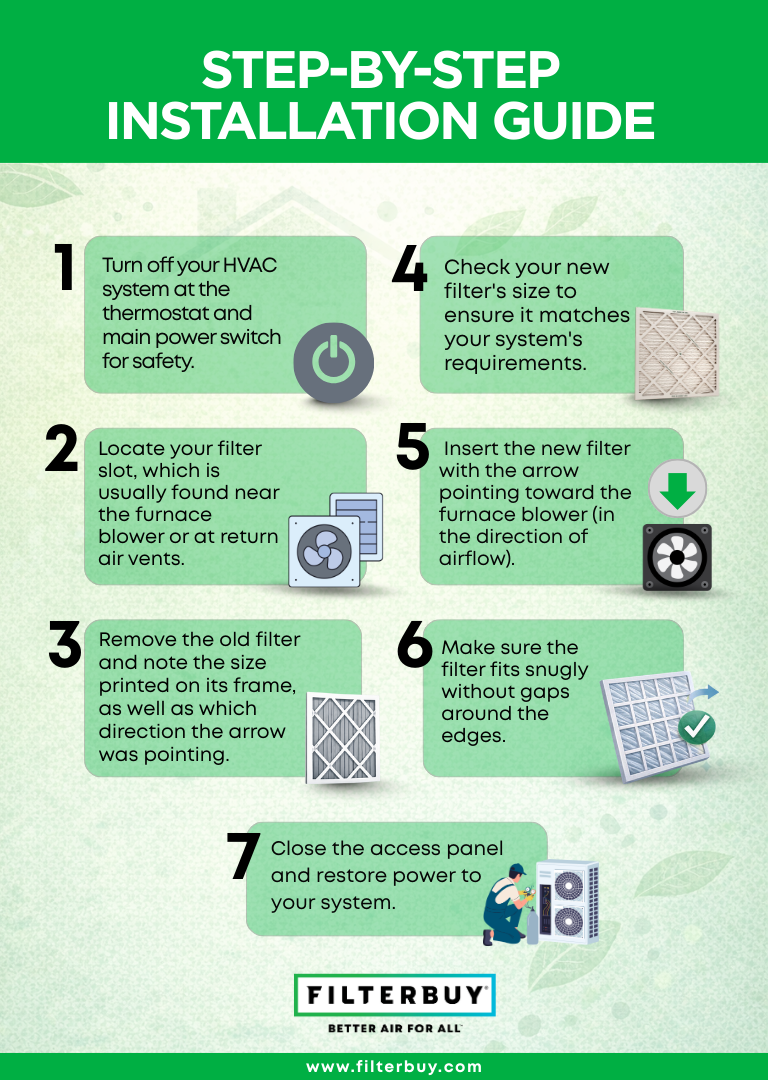
Step-by-Step Installation Guide

Follow these steps to ensure proper filter installation every time:

Step 1: Turn off your HVAC system at the thermostat and main power switch for safety.

Step 2: Locate your filter slot, which is usually found near the furnace blower or at return air vents.

Step 3: Remove the old filter and note the size printed on its frame, as well as which direction the arrow was pointing.

Step 4: Check your new filter's size to ensure it matches your system's requirements.

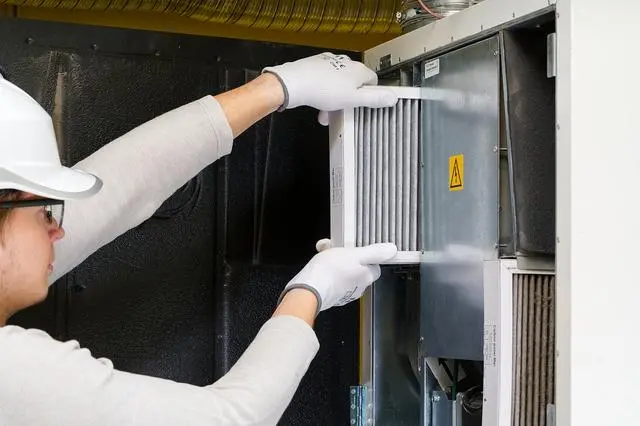
Step 5: Insert the new filter with the arrow pointing toward the furnace blower (in the direction of airflow).

Step 6: Make sure the filter fits snugly without gaps around the edges.

Step 7: Close the access panel and restore power to your system.

Save time with high-quality, properly sized filters delivered to your door. Shop Filterbuy's American-made pleated filters for reliable performance and fast, free shipping.

Special Cases and Solutions

A well-functioning HVAC system is crucial for maintaining comfort and air quality in your home. However, several factors can impact its performance and longevity. Understanding the challenges your system may face and how to address them can help you avoid costly repairs and ensure optimal efficiency.

Filters Without Arrows

Some basic filters don't have directional arrows. In these cases, look at the filter media itself. The side with lighter, less dense material should face the blower. You can also check the frame—the side with the wire or metal support structure typically faces away from the blower.

Wall-Mounted Return Vents

For filters installed in wall-mounted return air vents, the same rule applies: the arrow should point toward the ductwork that leads to your furnace or air handler.

Pleated Filters

With pleated filters, the direction of the pleats doesn't matter—only the airflow arrow. The pleats are designed to increase surface area for better filtration, regardless of their orientation.

The Golden Rule: Follow the Arrow

Every furnace filter has a directional arrow printed on its frame. This arrow should always point toward the furnace blower. Think of it like the direction air travels through a straw—the arrow shows which way air flows through the filter.

The filter captures particles as air moves from your return ductwork toward the furnace's blower motor. When installed correctly, the arrow aligns with this natural airflow direction, allowing the filter to trap dust, pollen, and other contaminants before they reach your HVAC system's internal components.

Understanding Your Furnace Configuration

Different furnace setups require slightly different approaches:

Furnace TypeUpflow (Vertical)Downflow (Vertical)Horizontal
Filter LocationBottom of unitTop of unitSide-mounted
Arrow DirectionPoints UP ⬆️Points DOWN ⬇️Points HORIZONTALLY ➡️
Common InstallationNorthern climates, basementsWarmer regions, atticsCrawl spaces, utility rooms
Airflow PatternPulled from bottom, pushed upwardPulled from top, pushed downwardPulled from side, pushed horizontally

Choosing the Right Filter

Proper installation is only part of the equation. Selecting the right filter for your needs ensures optimal performance and air quality.

Filter Sizes

Measure your existing filter or check the size printed on its frame. Standard sizes are typically listed as length x width x thickness (for example, 16x25x1). If you can't find your exact size, Filterbuy offers custom filters to fit any system.

MERV Ratings

The Minimum Efficiency Reporting Value (MERV) indicates how well a filter captures particles. For most homes:

Special Considerations

If you live in areas with wildfire smoke, high pollen counts, or have family members with respiratory issues, consider higher MERV-rated filters. Just ensure your system can handle the increased airflow resistance.

Browse Filterbuy's complete selection of MERV-rated filters to find the perfect match for your home's needs.

Never Run Out of Filters Again

Join over 50,000 households who trust Filterbuy's filter subscription service. Get American-made filters delivered automatically at the perfect replacement interval.

Frequently Asked Questions

Which way should the arrow face when putting in an air filter?

The arrow should always point toward the furnace blower, in the direction of airflow through your system.

What happens if you install a furnace filter backwards?

A backwards filter reduces airflow, decreases filtration effectiveness, strains your HVAC system, and can lead to higher energy bills and equipment damage.

Is there a wrong way to put a furnace filter in?

Yes—installing the filter so the arrow points away from the blower is incorrect and can harm your system's performance.

Will my furnace be okay without a filter?

Never run your furnace without a filter. This allows dust and debris to accumulate on internal components, potentially causing serious damage and poor air quality.

How do I install a furnace filter with no arrows?

Look for the lighter, less dense side of the filter media—this side should face the blower. The wire support structure typically faces away from the blower.

Does furnace filter direction affect airflow?

Absolutely. Installing a filter backwards significantly restricts airflow and reduces your system's efficiency.

How often should I replace my furnace filter?

Most filters should be replaced every 1-3 months, depending on your home's conditions. Homes with pets, allergies, or high dust levels may need more frequent changes.

How Do I Know Which Way My Furnace Filter Goes?

Quick Answer: Look for the printed arrow on your filter's cardboard frame—it should always point toward your furnace blower motor, in the direction air flows through your system.

At Filterbuy, we print clear directional arrows on all 600+ filter sizes we manufacture in our American facilities. After helping over two million households since 2013, we've learned that this simple marking prevents the most common HVAC maintenance mistake homeowners make.

Here's your foolproof 10-second check. Stand in front of your furnace and locate where your filter sits. Air moves from your return vents (where air gets pulled into the system) through the filter, then into the blower motor. The arrow follows this path—it should point away from where air enters and toward the blower.

For upflow furnaces (most common in basements), the arrow points up toward the blower at the top of the unit. For downflow furnaces (typically in attics), the arrow points down. For horizontal furnaces (in crawl spaces or utility closets), the arrow points horizontally toward the blower.

Still unsure? Here's our engineering team's memory trick: "Arrow flies toward the fan." The blower fan is always your destination point.

Pro Tip from Filterbuy Manufacturing: Before removing your old filter, take a quick photo with your phone showing which direction the arrow pointed. This creates a reference for your next filter change—our Care Club members report this eliminates second-guessing completely.

What Does the Arrow on My Air Filter Mean?

Quick Answer: The arrow indicates airflow direction. It shows which way air travels through the filter media—from the "dirty air" side to the "clean air" side.

Don't take your indoor air for granted! That small arrow is actually telling you something critical about how your filter captures pollutants. At Filterbuy, where we've manufactured over 10 million filters, we design each one with a specific directional structure that only works when air flows the correct way through the media.

Think of your filter like a one-way funnel. Air enters the loose, fluffy side of the filter media (where the arrow starts) and exits through the denser, tighter side (where the arrow points). This graduated density is what traps particles efficiently—dust, pollen, pet dander, and mold spores get caught in progressively tighter layers as air moves through.

The arrow shows the path air should travel: from your return air vents, through the filter, and into your furnace blower. When installed correctly with the arrow pointing toward the blower, your filter captures particles before they reach your HVAC system's internal components. This protects both your equipment and your family's indoor air quality.

What happens if you ignore the arrow? Air hits the dense side of the filter first, creating immediate resistance. Our testing at Filterbuy's manufacturing facilities shows this can reduce airflow efficiency by up to 40%, forcing your system to work significantly harder. You're essentially asking your HVAC system to push air through the filter backwards—like trying to use a funnel upside down.

Remember: The arrow isn't just a suggestion. It's your guide to proper filtration and system protection. Following it ensures you're getting the full MERV-rated performance from your American-made Filterbuy filter.

Can I Install My Furnace Filter Upside Down?

Quick Answer: No—installing a furnace filter upside down creates the same problems as installing it backwards. The arrow must point toward the blower regardless of the filter's orientation.

Here's what we've learned from analyzing thousands of HVAC service calls: "upside down" and "backwards" both mean the arrow is pointing the wrong direction. Whether your filter is horizontal, vertical, or diagonal, the arrow rule never changes—it must point toward the furnace blower motor in the direction of airflow.

Let's make the invisible visible here. When you flip a filter upside down or install it backwards, you're forcing air to fight through the filter media in the wrong direction. The graduated density structure we engineer into every Filterbuy filter is designed for one-way airflow. Reversing this creates unnecessary resistance that strains your entire HVAC system.

The real-world impact from our customer data: Homeowners who unknowingly ran filters upside down reported a 25-35% increase in energy bills before discovering the error. Your HVAC system has to overcome that additional resistance with every heating and cooling cycle, which adds up quickly on your monthly utility costs.

Here's your verification checklist before closing your filter compartment:

First, confirm the arrow on the filter frame is visible and pointing toward the blower motor. Second, make sure the arrow aligns with the airflow direction in your specific furnace configuration—up for upflow furnaces, down for downflow systems, or horizontally toward the blower for horizontal installations. Third, verify the filter sits flush in its slot with no gaps around the edges where unfiltered air could bypass.

Pro Tip from Filterbuy's Engineering Team: If you're standing at your furnace and can read the arrow comfortably, you're probably looking at the wrong side. The arrow should be pointing away from you, toward the interior of your HVAC system. This simple visual check has helped thousands of our customers catch installation errors before they impact system performance.

As your neighbors who happen to be filter manufacturing experts, we've designed Filterbuy's pleated filters with extra-clear arrow markings specifically to prevent this common mistake. You're the hero of your household's air quality—getting the direction right is your first step toward protection.

Why Does Filter Direction Matter for My HVAC System?

Your system on a backwards filter. Installing a filter backwards disrupts airflow, forcing your system to work harder while driving up energy costs and risking damage. It also compromises filtration, allowing dust, allergens, and other contaminants to circulate through your home. Over time, this added strain can shorten your HVAC system’s lifespan and lead to expensive repairs.

Protect your HVAC investment. Always follow the arrow on your filter. It’s there to ensure proper airflow toward the blower motor. With clearly marked directional arrows, Filterbuy filters make installation effortless, so you can keep your system running efficiently and your air clean.

What Happens When You Install a Filter Backwards?

At Filterbuy, we're obsessed with proper filter installation—because after analyzing millions of HVAC service calls, we know that something as simple as backwards filter installation can slash your system efficiency by 40%. Here's exactly what happens when that arrow points the wrong way:

Reduced Airflow: A backwards filter restricts air movement through your system, forcing your furnace to work harder. This increased strain leads to higher energy bills and potential system damage.

Poor Air Filtration: When air flows against the filter's design, it can't capture particles effectively. Dust, allergens, and other contaminants circulate through your home instead of being trapped.

System Strain: Your HVAC equipment has to overcome the additional resistance, which can lead to premature wear and costly repairs. In extreme cases, reduced airflow can cause your system to overheat and shut down.

Shortened Equipment Life: The combination of restricted airflow and poor filtration puts unnecessary stress on your furnace components, potentially reducing their lifespan significantly.

Protect Your HVAC Investment

Don't risk system damage from incorrect installation. Filterbuy filters feature clearly marked directional arrows and come with installation instructions. Shop our complete selection or schedule professional installation through Filterbuy HVAC Solutions.

Key Takeaways