
Wet Air Filter? Here Is What Is Going On and How to Stop It
July 23, 2026

Quick Answer: A wet air filter almost always means water is not draining out of your HVAC system the way it should. The most common reason is a clogged drain line or an overflowing condensate pan. It is not normal, and it does need to be fixed right away because it can lead to mold growth inside your home.
What to Do Right Now About a Wet Filter
If you just found a wet filter, do these four things before anything else. Do not wait to see if it dries out on its own.
-
1Turn off your HVAC system
Running the system with a wet filter can push mold spores through your home and damage the equipment. Shut it off at the thermostat right away.
-
2Remove and throw away the wet filter
A wet filter cannot be dried and reused. Toss it. Mold can start growing on it within 24 to 48 hours.
-
3Look for visible water around the unit
Check for puddles or dripping near the indoor air handler. This will help you figure out where the moisture is coming from.
-
4Do not turn the system back on until the cause is fixed
Put in a new dry filter and leave the system off until you have figured out and resolved the source of the moisture.
Mold can start growing inside your HVAC system in as little as 24 to 48 hours when there is standing moisture. Once mold is in the system, it gets pushed into every room of your home every time the air runs.
The fastest fix starts with a fresh filter. Once you have shut off the system and tossed the wet one, grab a replacement before you do anything else. FilterBuy ships filters in hundreds of sizes directly to your door — usually in 1 to 2 days.

What Causes a Wet Air Filter
Your HVAC system naturally creates moisture as it cools air. That moisture is supposed to drip into a pan and drain away through a drain line. When something blocks that process, water builds up and eventually reaches your filter.
Clogged Drain Line
Over time, algae, dust, and debris build up inside the drain line and block it. When the line is blocked, the water has nowhere to go and overflows onto your filter. This is the number one cause of wet filters.
Overflowing Condensate Pan
The condensate pan sits under the evaporator coil and catches dripping water. If the pan gets clogged with dirt or rust, water backs up and spills over. You will often see a puddle under or near your indoor unit when this happens.
Leaking Drain Fitting or Pipe
The drain line connects to your system with fittings that can crack or come loose over time. If water is leaking from a joint instead of flowing out properly, it can pool at the bottom of the unit and soak the filter.
Evaporator Coil Dripping Directly onto the Filter
If your system was not installed correctly, condensation from the evaporator coil can drip straight down onto the filter instead of into the pan. This is an installation problem that needs a professional to correct.
Incorrectly Installed Filter
If the filter is not seated properly in its slot, it can sit in the path of dripping condensation. Always make sure your filter fits snugly with no gaps around the edges.
Very High Indoor Humidity
In rare cases, extremely high humidity from a separate source like a plumbing leak can cause moisture to collect on and around the filter. This is usually not enough on its own to fully soak a filter.
Why You Shouldn’t Ignore a Wet Air Filter
It can be tempting to just swap out the wet filter and move on. But the wet filter is a warning sign, not the actual problem. If you only replace the filter without finding the cause, the new filter will get wet too and you will have a much bigger issue on your hands.
Mold loves moisture and darkness. The inside of your HVAC system is both. Once mold grows in your system, it spreads spores through your air every time the system runs. This can cause serious health problems, especially for anyone with asthma or allergies.
A clogged drain line is also a quick, inexpensive fix. But if water sits long enough to damage your air handler or grow mold inside the ductwork, repairs can cost hundreds to thousands of dollars.
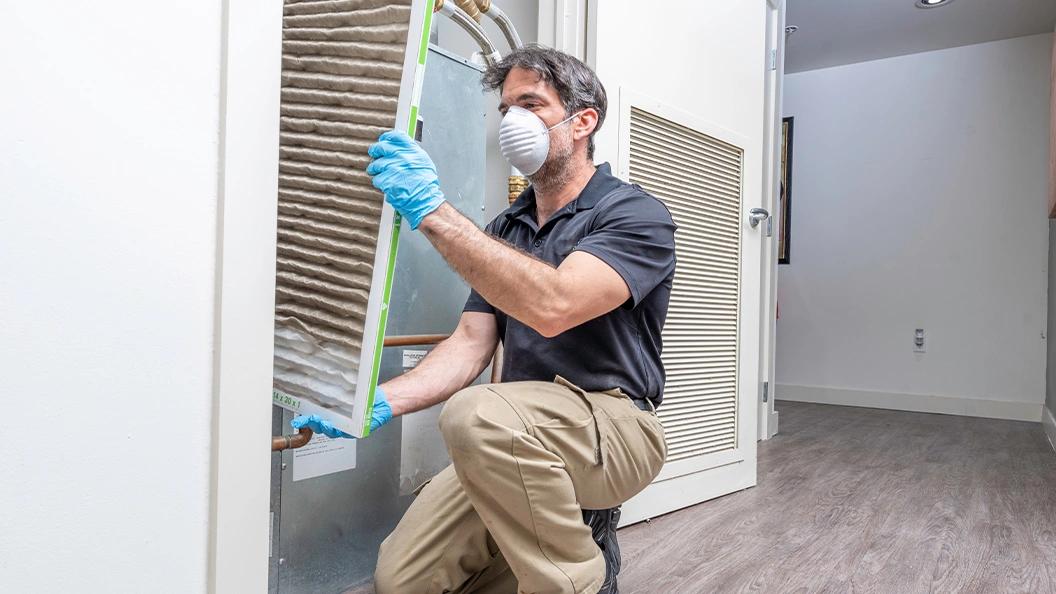
What You Can Fix Yourself vs. When to Call a Pro
Some of these fixes are easy to do on your own. Others need a trained HVAC technician.
| The Problem | The Fix | Who Does It |
|---|---|---|
| Clogged drain line | Flush with water and distilled white vinegar, or use a wet dry vacuum on the drain outlet | ✔ DIY Friendly |
| Dirty condensate pan | Wipe out the pan with a damp cloth and mild bleach solution | ✔ DIY Friendly |
| Loose drain fitting | Reseat or replace the fitting | ✔ DIY Friendly |
| Filter not seated correctly | Reinstall filter with a snug fit and no gaps | ✔ DIY Friendly |
| Evaporator coil dripping on filter | Requires repositioning or adjusting the coil and drain pan alignment | 🔧 Call a Pro |
| Mold found inside the unit | Professional cleaning and sanitizing of the system | 🔧 Call a Pro |
| Cracked or corroded drain pan | Pan replacement | 🔧 Call a Pro |
Common Questions About Wet Air Filters
Below our air filter experts answer a few more common questions related to wet air filters.
Can I dry out the wet filter and put it back in?
No. A wet filter should always be thrown away and replaced with a new one. Even if the filter looks dry after sitting out, it can still have mold growing inside the fibers that you cannot see. Never reuse a wet filter.
How do I know if my drain line is clogged?
The most common signs are water around or under your indoor unit, a wet or damp air filter, or your AC shutting off on its own. Many modern units have a float switch that turns the system off when the pan is too full. You can also check the end of the drain line outside. If water is not dripping out when the AC is running, the line may be blocked.
Could a wet filter be causing my AC to freeze up?
Yes. A wet or clogged filter blocks airflow across the evaporator coil. Without enough warm air moving over it, the coil gets too cold and freezes. If you see ice on your indoor unit, turn the system off and let it thaw before checking the filter and drain line.
How much does it cost to fix a drainage problem?
If you can clear the drain line yourself with vinegar or a wet dry vacuum, the cost is basically zero. If you need a technician, a basic drain cleaning typically runs between $75 and $200. If there is mold or a cracked pan that needs replacing, costs can go higher, which is why catching it early makes a big difference.
Is a wet filter covered by my HVAC warranty?
Generally no. Manufacturer warranties cover defects in parts, not water damage from maintenance issues like clogged drains. Your homeowners insurance may cover water damage in some cases, especially if the damage was sudden and accidental. Check your policy or call your insurance agent to find out.
How often should I check my condensate pan?
A quick look every time you change your filter is a good habit. If you see standing water in the pan, that is a sign your drain line is not clearing properly. Catching it early means a quick vinegar flush instead of a service call.
READ MORE: 10 Ways to Improve Indoor Air Quality