
Black Furnace Filter? Dangerous Mold, Soot & Carbon Monoxide
March 19, 2026
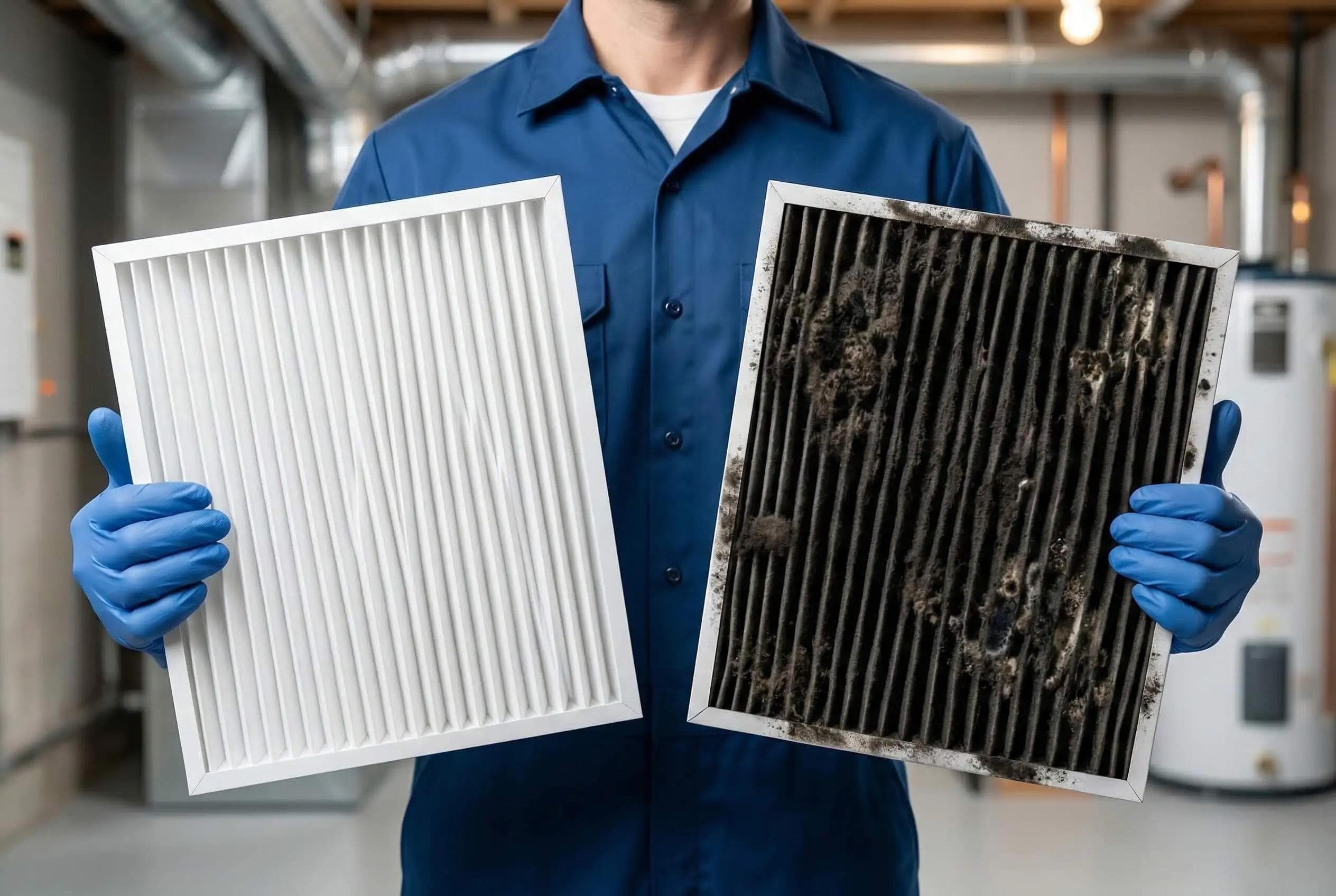
Your Furnace Filter Is Black. Here’s How to Read What It’s Telling You.
If your filter is black and you smell burning, rotten egg, or chemical odors, leave your home immediately and call 911 or your gas company.
Pull a jet-black furnace filter from your system, and your gut’s probably right. That color isn’t normal, and depending on what caused it, it can mean anything from a straightforward particulate overload to something that genuinely needs a professional before you run the system again.
We’ve been manufacturing and shipping filters out of our U.S. facilities for over a decade, and we’ve helped a lot of homeowners figure out exactly what caused their furnace filter to go black. Most of the time, the answer is fixable: heavy candle use, a recently renovated room, or a wildfire season that overwhelmed the system. But sometimes it points to active mold in the ductwork, or combustion gases getting into the airstream from a furnace with a cracked heat exchanger. Those situations don’t fix themselves.
All filters darken with use. A dark furnace filter that’s shifted from white to gray or light brown after 60 to 90 days is doing exactly what it should. Jet black is something different. It tells you the filter captured something unusual, and you need to know what that was before you just swap it and walk away. Knowing where the furnace filter is located on your specific system is also worth confirming if you haven’t replaced one before.
If you want background on how your furnace actually works, an overview of central heating furnaces is a clear starting point. And if your system is getting up in years, our guide on how long a furnace should last is worth reading alongside this one. Age plays a direct role in some of the more serious causes we’ll cover.
TL;DR Quick Answers
Black Furnace Filter
A black furnace filter means your system captured something beyond everyday dust. The four causes, in order of urgency: mold growth in the ductwork, black soot from candles or gas appliances, combustion gas byproducts from a failing heat exchanger, and extreme particulate overload from wildfire smoke or construction.
A gray or tan filter after 60–90 days is normal. Jet black — especially within days or weeks — is not.
What to do:
Turn off your HVAC immediately
Replace the filter wearing gloves, and an N95 mask
Test every CO detector in your home
If the new filter blackens within 48 hours, call a licensed HVAC technician before running the system again
A black furnace filter is a diagnostic, not just a dirty filter. Swap it — but find out why it happened first.
Top Takeaways
A gray or light-brown filter after 60 to 90 days is normal. Jet black, especially if it appeared quickly, is a reason to investigate before you just swap it out.
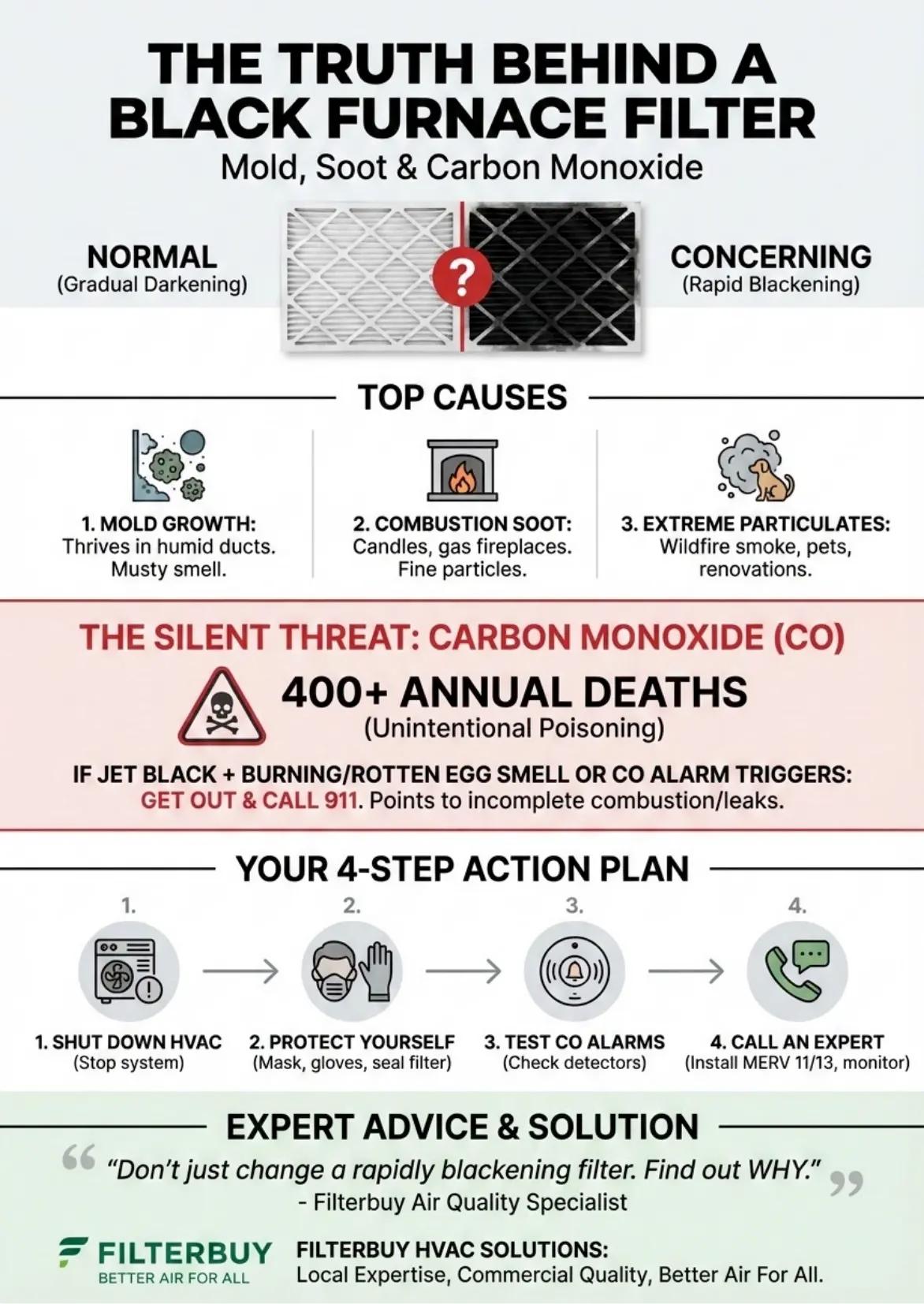
The four causes of a black furnace filter are mold growth, soot from combustion sources (candles, fireplaces, gas appliances), carbon monoxide or combustion gas leaks, and extreme particulate load from wildfire smoke or construction.
Carbon monoxide and cracked heat exchangers are the most dangerous causes on that list. Rapid blackening plus headaches, nausea, or a CO detector alert means get out of the house and call 911.
Don’t run your HVAC with a black filter in it. You’ll strain the system and risk circulating mold spores, soot, or combustion particles through your home.
MERV 11 and MERV 13 filters catch significantly more mold spores, fine soot, and combustion particles than MERV 8. If your home has an active soot or particulate problem, step up your filter rating.
Replacing the filter is step one. Figuring out why it went black is step two. If you can’t explain it, get an HVAC professional in before running the system again.
Every floor of your home needs a working carbon monoxide detector. This matters even more if your furnace is over 10 years old.
The 4 Most Common Causes of a Black Furnace Filter
1. Mold Growth on the Filter and Ductwork
Black mold on a furnace filter is one of the more alarming causes of sudden, extreme filter discoloration, and unfortunately, one of the more common ones too. Mold thrives in dark, humid spaces. Your return air duct can be exactly that kind of environment, especially in humid climates or if there’s moisture anywhere near the air handler.
When a mold colony establishes itself upstream, it releases spores. Your filter catches them — but a saturated filter can’t do that job anymore, and those spores start cycling back into your home’s air. If the filter discoloration came with a musty smell, or if household members have had more allergy symptoms than usual, mold is the first place to look.
What to Do
Turn off your HVAC system immediately. Replace the filter with gloves and an N95 mask on. Have a professional inspect your ductwork for mold contamination before running the system again.
2. Black Soot from Combustion Sources
Soot gets overlooked more than it should. The fine carbon particles from incomplete combustion build up on filter media faster than most people expect, and the sources are often things homeowners don’t think of as air quality problems. A single paraffin candle can deposit a remarkable amount of carbon particulate into your air supply. Gas fireplaces running with an off-air-to-fuel ratio, wood-burning stoves, and gas ranges venting toward your living space all produce the same result.
When you find black soot on a filter, it shows a recognizable pattern: heaviest near the center of airflow, with a fine, powdery feel when touched. If you’ve been burning candles or running a fireplace regularly, that’s likely your explanation. Cut or reduce the soot source, put a fresh filter in, and consider stepping up to MERV 11 or MERV 13 to catch finer combustion particles going forward.
3. Carbon Monoxide and Combustion Gas Leaks
If your filter is black and you notice a burning smell, rotten egg odor, or if your carbon monoxide detector has triggered, don’t attempt to diagnose this yourself. Get everyone out of the house, including pets, and call 911 or your gas utility’s emergency line from outside.
Black furnace filter carbon monoxide connections happen when a filter turns black fast, within a few days to a couple of weeks. That speed is a visible symptom of incomplete combustion inside the furnace. It typically points to a cracked heat exchanger, a malfunctioning burner, or improper venting. Any of those conditions can let combustion byproducts, including carbon monoxide, into your home’s airstream. Carbon monoxide is odorless and colorless, but the black particulate byproducts from the same combustion event will show up on the filter.
Older furnaces are especially vulnerable to heat exchanger cracks. If yours is 15 to 20 years old and you’re seeing rapid filter blackening, get a licensed HVAC technician to inspect the system before running it again. Every floor of your home needs a working carbon monoxide detector. That’s not optional.
4. Extreme Particulate Load in the Air
Sometimes a black filter is evidence that your system dealt with more airborne particles than a normal 60-to-90-day cycle accounts for. Wildfire smoke, nearby construction, a home with several pets, a high-traffic HVAC system: all of these can blacken a filter faster than you’d expect, and none of them point to a dangerous system issue.
If you’ve had wildfire smoke in your area recently, or you just finished a renovation, that’s likely what happened. A black air filter in those conditions means the filter did its job — it pulled what was in your air out of circulation. Replace it, increase how often you change it during heavy-particulate periods, and check your local Air Quality Index to understand what your clogged furnace filter was up against.
Use these markers to read furnace filter discoloration at a glance:
Normal filter darkening
Light gray to medium gray or tan after 60 to 90 days
No odor, no health symptoms
Consistent with normal household activity
Action: Replace on schedule.
Concerning discoloration
Jet black, especially within days or weeks
Rapid darkening in under a month or a week
Musty, burning, or chemical odor present
Accompanied by headaches, nausea, or allergy flares
Action: Investigate the cause immediately.
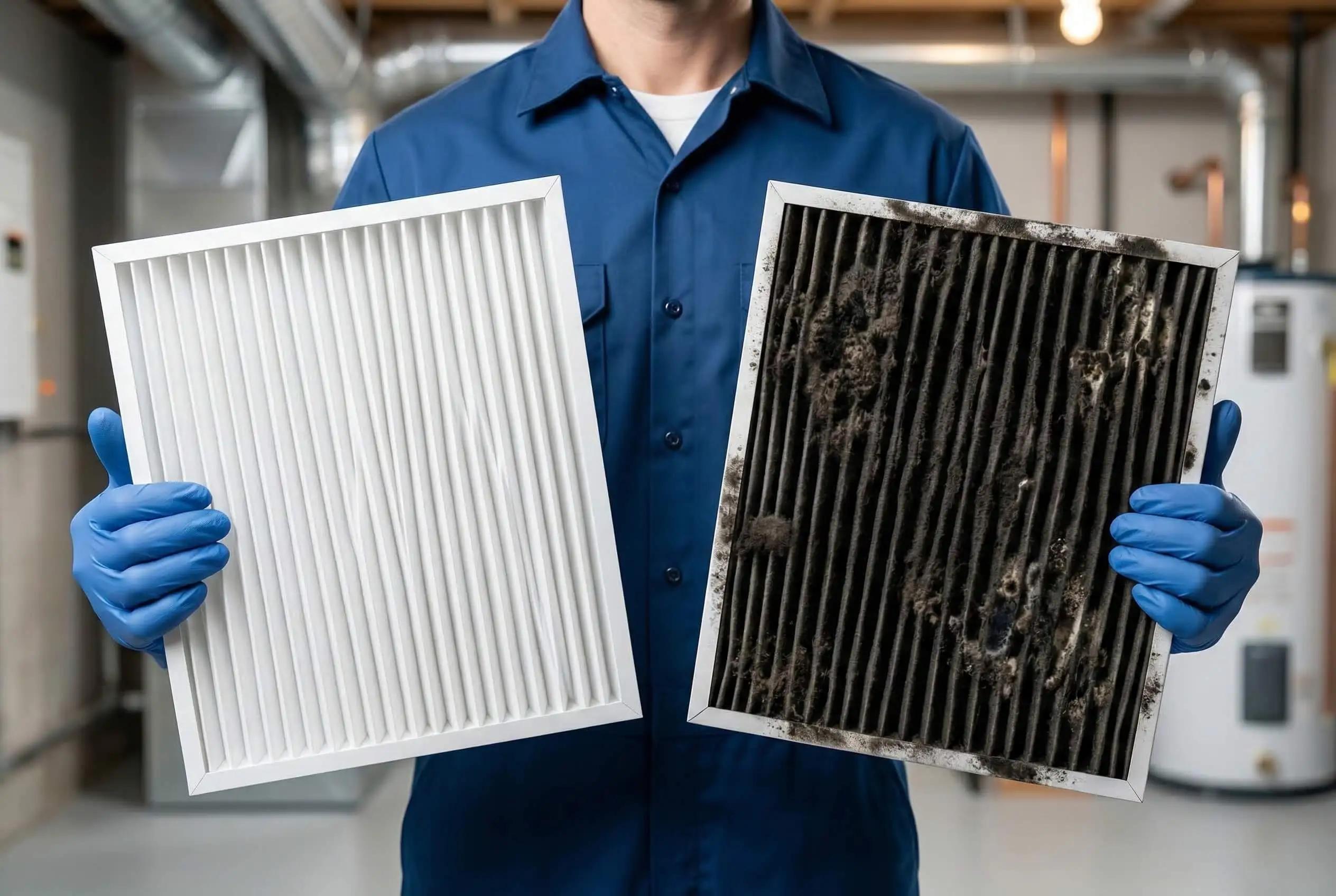
“In over a decade of manufacturing filters and talking directly with homeowners, the single most dangerous mistake we see is people assuming a black filter is just a dirty one. Sometimes that’s true. But when a filter goes from clean to black in a week or two, your HVAC system is trying to tell you something is wrong — not just with the filter, but with the system behind it. A cracked heat exchanger, an active mold bloom in the ductwork, a combustion issue: these happen in real homes every day. Change the filter, yes. But don’t stop there. Find out why it happened.”
— Filterbuy Air Quality Specialist, U.S.-Based HVAC & Indoor Air Quality Expert | Filterbuy, Inc.
7 Resources We Actually Use When Helping Homeowners
These are the sources our team reaches for when homeowners call with questions about filter health, air quality, and HVAC safety.
1. EPA: Indoor Air Quality
The EPA’s hub for indoor air quality guidance, covering pollutants, mold, combustion gases, and health effects. Start here.
epa.gov/indoor-air-quality-iaq
2. CDC: Mold and Dampness in Buildings
The CDC’s guidance on mold exposure, health impacts, and remediation protocols. Read this if you suspect mold caused your black filter.
3. EPA: Carbon Monoxide’s Impact on Indoor Air Quality
How carbon monoxide gets into indoor environments, the health risks, and what the EPA recommends for detectors and furnace maintenance.
epa.gov — Carbon Monoxide & Indoor Air Quality
4. U.S. Department of Energy: Maintaining Your Heating System
The Department of Energy’s data on how dirty filters affect efficiency. Covers maintenance schedules and filter change best practices.
energy.gov — HVAC Filter Maintenance
5. Wikipedia: Furnace (Central Heating)
A clear overview of how residential furnaces operate, covering heat exchangers, combustion systems, and airflow. Helps you recognize when something’s off.
en.wikipedia.org/wiki/Furnace_(central_heating)
6. Filterbuy: How Long Does a Furnace Last? Gas vs. Electric vs. Oil
If you’re seeing rapid blackening in an older system, read this next. Older furnaces are significantly more vulnerable to heat exchanger cracks and combustion problems.
filterbuy.com — How Long Does a Furnace Last?
7. CPSC: Carbon Monoxide Information Center
The Consumer Product Safety Commission’s CO resource: detector requirements, statistics, and emergency guidance. Bookmark it.
cpsc.gov — Carbon Monoxide Information Center
3 Numbers That Change How You Look at a Black Filter
These aren’t filler stats. Each one connects directly to what a black furnace filter might mean for your home.
The CDC reports that more than 400 Americans die from unintentional carbon monoxide poisoning unrelated to fires every year. CO is odorless and colorless. A filter blackened by combustion issues may be your only visible warning sign before a CO detector triggers.
Source: CDC — Carbon Monoxide Poisoning Data
The EPA reports that indoor air is often 2 to 5 times more polluted than outdoor air. In homes with active mold, soot sources, or combustion gas intrusion, that gap gets wider. Your furnace filter is the first line of defense between your family and whatever’s in the air.
Source: EPA — Indoor Air Quality Overview
The U.S. Department of Energy found that replacing a dirty, clogged air filter with a clean one can cut your air conditioner’s energy use by 5 to 15 percent. A black furnace filter isn’t only a safety concern. It’s costing you money every month it stays in.
Source: U.S. Department of Energy — Maintaining Your Air Conditioner
Our Honest Take on What a Black Filter Actually Means
After years of manufacturing filters and talking with homeowners about what ends up in them, we’ve come to think of the air filter as the most overlooked part of the whole HVAC system. It’s cheap, it’s easy to change, and it gives you more information about your home’s air than almost anything else you can check yourself.
A dirty furnace filter that’s gone jet black isn’t just a dirty system. It’s your home’s diagnostic report. What the filter captured, and how fast it got there, tells you something specific about what’s in your air.
The two mistakes we see most often: ignoring the black filter and running the system anyway, or swapping it out without asking why it went black that fast. Both approaches can take a manageable problem and make it a serious one.
We’ve heard from homeowners who changed their filter only to find the furnace filter turned black again within weeks. The system was still trying to communicate. If your filter keeps darkening faster than it should, your home’s air environment has changed. Find out what changed.
Most of what causes a black filter is fixable. Mold responds to professional remediation. Soot sources can be cut significantly or eliminated. HVAC technicians repair combustion issues every day. And if it’s truly a high-particulate environment, the right filter on a tighter change schedule handles the load.
We built Filterbuy to make clean air easier to get and easier to keep. That’s why we stock over 600 sizes, ship factory-direct, and make auto-delivery as simple as possible. For a full breakdown of black furnace filter causes and solutions organized by filter type and MERV rating, our resources hub is the next stop.
How to Handle a Black Furnace Filter: 7 Steps, in Order
Work through these in sequence. Knowing when to replace a black furnace filter is the easy part: the moment it’s black. Knowing why it happened is what these steps are for. Don’t jump to step 6 until you’ve cleared the ones before it.
Turn off your HVAC system. Running it with a black filter restricts airflow and stresses the blower motor. If mold or soot is the cause, every minute it runs keeps pushing contaminated air through your home.
Remove the filter carefully. If mold is a possibility, put on disposable gloves and an N95 mask. Seal the black filter in a plastic bag before disposing of it so spores or particles don’t re-enter the air.
Inspect before you replace. Look closely. Jet black with a powdery texture: likely soot. Patchy dark black with a musty smell: likely mold. Uniform deep black across the whole filter face, appearing within days or weeks: possible combustion issue. Note the color, texture, smell, and how fast it darkened.
Check for moisture near the air handler. Look for water stains, condensation, or visible mold growth near your return air duct, air handler, or furnace. Find any of those and don’t restart the system until an HVAC professional clears it.
Test every carbon monoxide detector in your home. Replace batteries. If you don’t have CO detectors on every floor, install them before running the furnace again. The CPSC and EPA both recommend this, and for good reason.
Install the right replacement filter. Match the size and pick the MERV rating for your situation. For heavy particulate loads or soot sources, Filterbuy MERV 11 or MERV 13 captures finer particles, including pet dander, mold spores, fine dust, and combustion byproducts, while keeping healthy airflow.
Check the new filter after 24 to 48 hours. If it’s already darkening, stop the system and call a licensed HVAC technician. Rapid re-blackening means the root cause is still active. Don’t wait on this one.
Frequently Asked Questions About Black Furnace Filters
Why is my furnace filter black after one week?
One week is fast enough to take seriously. The most likely explanations are a combustion gas leak or cracked heat exchanger in the furnace, an active mold colony in the ductwork, an air return leak pulling unfiltered air from a contaminated space, or an extreme outdoor air quality event like nearby wildfire smoke. A healthy filter should take 60 to 90 days of normal use before it needs replacing. If yours went black in a week, turn the system off and get it inspected before running it again.
Is a black furnace filter dangerous?
It depends on what caused it. A filter blackened by candle soot or heavy household dust is inefficient and needs replacing, but it’s not an immediate health threat. Mold contamination is a different story: that’s a genuine health risk, particularly for anyone with asthma or respiratory sensitivities. A filter blackened by combustion byproducts may mean carbon monoxide is getting into your air supply, which is potentially life-threatening. When you’re not sure, treat it as dangerous until you’ve ruled out the serious causes.
What does a black furnace filter mean?
It means your filter captured an unusually high volume of particulates, or a specific type that produces deep discoloration: mold spores, soot, or combustion carbon. The color alone doesn’t tell you which cause is responsible. Factor in how quickly it blackened, whether there’s an odor, and whether anyone in your home has had new health symptoms. Put those three things together and use the diagnostic information in this guide to narrow it down.
Why is my furnace filter black after one month?
One month is faster than the standard 60-to-90-day schedule, but not necessarily a sign of anything dangerous. High-particulate households, those with multiple pets, recent renovations, regular candle use, or nearby wildfire activity, can genuinely exhaust a filter in 30 days. That said, if the filter is jet black rather than dark gray or brown, or if you can’t point to a clear particulate source, dig into it. Replace the filter and watch how fast the new one darkens.
Can a black furnace filter make you sick?
Yes, depending on what’s on it. A mold-saturated filter actively releases spores back into your air circulation, worsening allergy symptoms, triggering asthma attacks, and causing respiratory irritation. A filter blackened by combustion byproducts may mean CO or other gases are in your air supply, which can cause headaches, dizziness, and nausea. At high enough concentrations, the outcome can be fatal. Even heavy soot loading raises the fine particulate matter in your breathing environment. Replace it and find the source.
What MERV rating do I need if my filter keeps turning black?
If confirmed particulate overload is the issue, stepping up from MERV 8 to MERV 11 or MERV 13 will capture finer particles more effectively. Filterbuy’s MERV 13 is our highest residential rating, built for homes with elevated air quality concerns. Keep in mind that a higher MERV rating means the filter fills up faster: plan to change it every 45 to 60 days. If the blackening comes from mold or combustion, the MERV upgrade doesn’t solve the underlying problem. Fix the source first, then pick the right filter.
When should I replace a black furnace filter?
Now. There’s no version of this where running your HVAC system on a jet-black filter is a good idea. A severely clogged filter chokes airflow to your blower motor, drags down heating and cooling efficiency, and, depending on the cause, can push harmful particles through your home. Don’t wait for your scheduled replacement date. If it’s black, change it today.
Find Your Filter — Free Shipping on Every Order
Over 600 sizes. Made in the USA. Shipped factory-direct with no markups and no middlemen. Not sure of your size? Our filter size finder takes about 30 seconds.