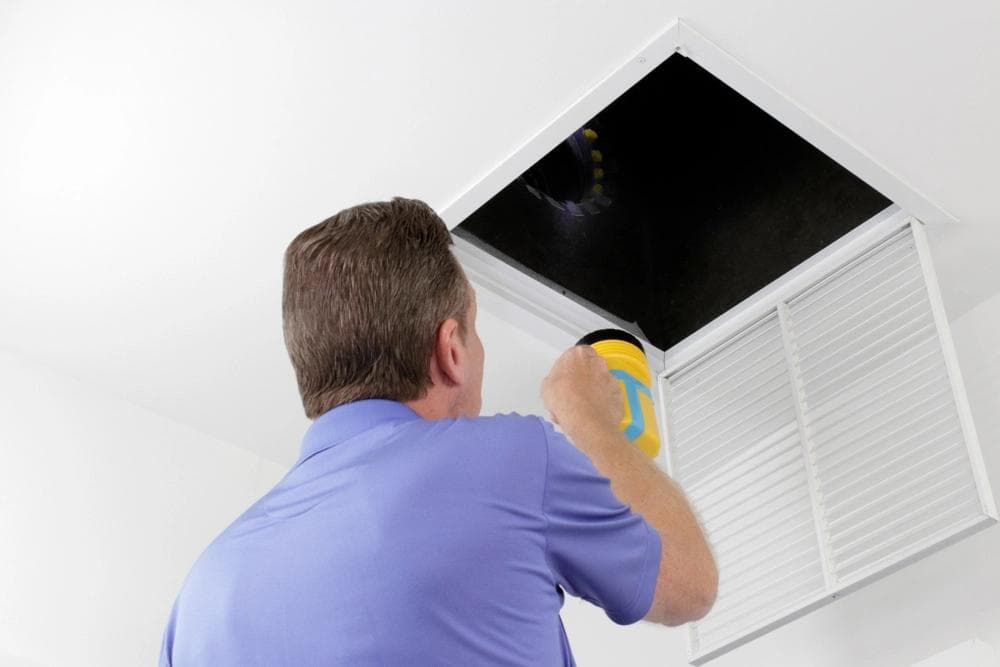
Your furnace filter is not always in the same place from one home to the next. Builders and installers choose different filter locations based on the furnace style, the duct layout, and how the system was designed to be serviced. This blog mentions the most common filter locations by system type, so you can find yours quickly and replace it the right way.
Most furnace filters sit on the return air side, either at the furnace cabinet or behind a return grille inside the home.
Upflow, downflow, and horizontal furnaces can all use different filter slots, even if they are the same brand and size.
Some homes have more than one return grille, but that does not always mean there are multiple filters.
The correct airflow direction matters, so check the arrow printed on the filter frame before installing it.
If you cannot find a filter slot at the furnace, check the largest return grille first, especially in hallways and main living areas.
| System layout | Most common filter location | What it looks like |
|---|---|---|
| Upflow furnace | Filter slot at the side or bottom of the furnace, or a return grille | Narrow slot near the blower area, or a large grille in a hallway |
| Downflow furnace | Return grille, or filter slot near the top of the cabinet | Often in a closet install, sometimes in the door or ceiling return |
| Horizontal furnace | Filter slot on the side of the unit, or return grille | Common in attic or crawlspace installs |
| Air handler or heat pump | Return grille or filter rack at the air handler | Similar to a furnace setup, but the cabinet may look different |
Most homes place the filter where return air enters the system. That protects the blower and the indoor coil from dust and debris before air circulates again.
Look in these spots first:
Behind the largest return air grille on a wall, ceiling, or floor.
In a thin filter slot on the furnace or air handler cabinet, usually near the blower compartment.
Inside a thicker media cabinet attached to the furnace or air handler.
Once you find the return grille or filter slot, you have usually found the filter location for that system.
An upflow furnace is common in basements, garages, and utility closets. Air typically enters low, then moves upward through the furnace and into the supply ducts.
What to check:
A filter slot on the side of the furnace near the bottom section.
A filter rack at the bottom of the furnace where return air enters.
A large return grille in a central hallway or living area, especially in older homes.
If you see a narrow slot with a removable cover near the blower area, that is often the filter rack for an upflow furnace.
A downflow furnace is common in homes built on a slab and in closet installations. Air typically enters near the top and moves downward before it feeds the ductwork.
What to look for:
A return grille in the ceiling near the furnace closet.
A return grille in the closet door, depending on the install.
A filter slot near the top portion of the furnace cabinet.
Downflow systems often hide the filter in plain sight, so checking the largest return grille in the home is still a strong first step.
A horizontal furnace is often installed in an attic, crawlspace, or tight mechanical area. The furnace lies on its side, and the filter location depends on how the return duct connects.
Check for:
A filter slot on the side of the furnace cabinet near where the return duct connects.
A filter grille at a central return opening inside the home.
A filter rack built into a return box near the unit, especially in attic installs.
If the unit is in an attic, the filter may still be inside the home at the return grille, which makes replacement easier.
Some homes use an air handler instead of a gas furnace. The filter still sits in the return air path, either at the return grille or at the air handler cabinet.
Common places to check:
Behind a large return grille in a hallway or main living area.
In a filter rack at the air handler cabinet, usually near the blower section.
Even when the heating source changes, the filter’s job stays the same, so the location patterns do not change much.
Once you pull the old filter out, check the arrow printed on the filter frame. That arrow should point toward the blower or air handler, which is the direction air is moving into the equipment.
Ways to confirm direction:
If the filter is behind a return grille, the arrow usually points away from the room and into the duct.
If the filter is in a cabinet slot, the arrow usually points into the furnace or air handler.
If you install the filter backward, the system may still run, but the filter will not perform as intended.
Some homes have more than one return, and some systems use more than one filter. If you cannot find it quickly, you can narrow it down with a consistent search pattern.
Follow this search order:
Find the largest return grille and check behind it first.
Check the furnace or air handler cabinet for a slim filter slot near the blower area.
Look for a media cabinet attached to the return duct near the unit.
If you have multiple returns, check each return grille for a filter.
If you still cannot locate it, it is reasonable to call a technician, because running a system without a filter in the correct place can allow dust to build up on sensitive components.
After you locate the filter, match the size printed on the frame and confirm the thickness. Many systems use common sizes, but some older homes and media cabinets use less common dimensions.
Once you know the size and thickness, choosing a replacement becomes much easier. Filterbuy helps you match that size with the right MERV rating and reorder without hassle.
Filterbuy sells filters by MERV rating, including MERV 8, MERV 11, and MERV 13.
Filterbuy also offers custom air filters if your size is hard to find.
If you want replacements to show up on a schedule, Filterbuy offers an auto delivery subscription option.
The best replacement is the one that fits the slot correctly and supports airflow, so always match size first before changing efficiency levels.
Most furnace filters sit behind a return grille or in a filter slot on the equipment cabinet. If you identify your system layout and follow a consistent search order, you can usually find it quickly and install the replacement in the correct direction. Once you know your size, Filterbuy’s standard and custom options can help you stay consistent with replacements without turning it into a guessing game.
Installers place filters based on the furnace layout, duct design, and what is easiest to service. That is why two similar homes can have filters in different locations.
Start with the largest return grille in a hallway or main living area. Many homes place the filter behind that grille.
Yes. Some homes use multiple return grilles with filters, or a filter at the equipment plus a return grille filter. Do not assume you have multiple filters just because you see multiple returns.
Look for the airflow arrow on the filter frame. The arrow should point toward the blower or air handler, which is the direction the air travels into the equipment.
The system may still run, but the filter may not capture particles as intended. It can also reduce efficiency and increase strain if the filter does not seat properly.
Many systems use a return grille filter instead of an equipment slot. Check the return grilles in the home, especially the largest one.
Not always. Some horizontal systems still use a filter behind a return grille inside the home to make replacement easier. Check the return grille first, then look near the return duct connection at the unit if needed.

