
Are Generic Air Purifier Filters Safe? An Honest Look | Filterbuy
November 16, 2026
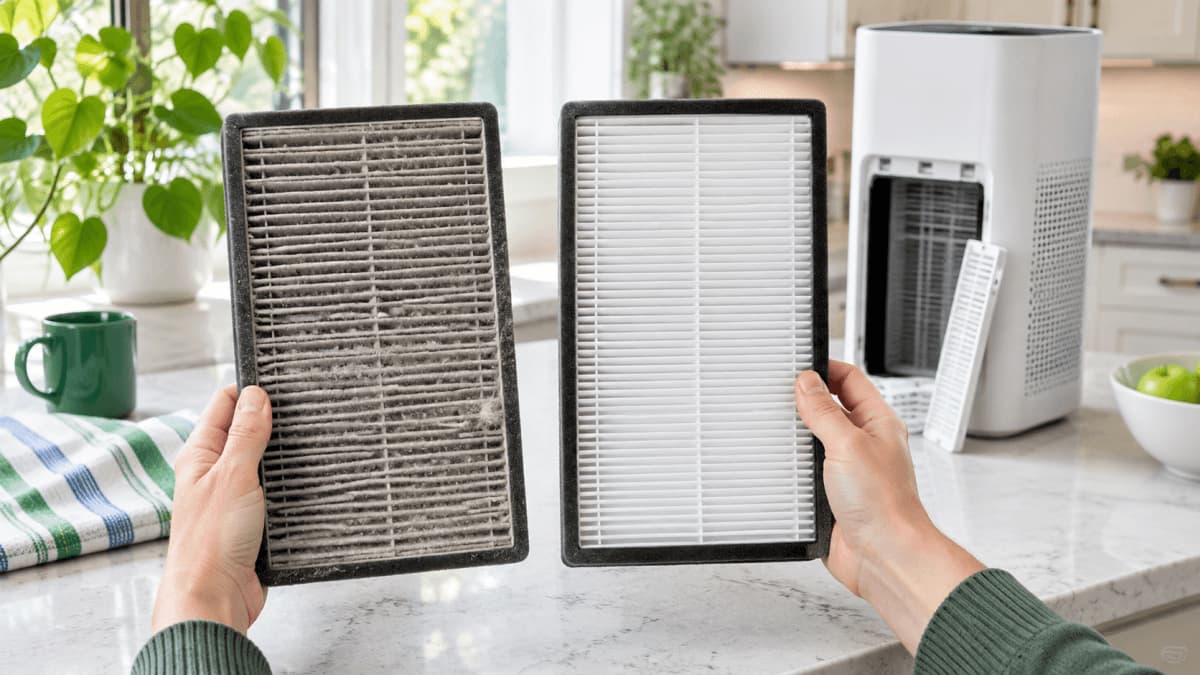
Filterbuy has made pleated air filters since 2013, and we also build compatible replacements for GermGuardian purifiers. An independent replacement can cost far less than the purifier maker's own cartridge, and it's fair to wonder whether the savings come out of your air. Sometimes they do.
TL;DR
Generic air purifier filters are safe when they match your purifier's part number and seal tightly, and when the label states efficiency at a specific particle size. Using one won't void your warranty under U.S. federal law unless the warranty supplies filters free, though a manufacturer can still refuse to cover damage the filter itself causes. The real risk with a poorly made filter is weaker capture, not a hazard in your home.
Key Takeaways
Filterbuy judges a replacement on whether its part number and gasket match the original and its media spec names a particle size.
Under the U.S. Department of Energy definition, HEPA means capturing at least 99.97% of 0.3 micron particles. A "HEPA-type" label doesn't claim that standard.
Under the Magnuson-Moss Warranty Act, a third-party filter can't void your purifier warranty on its own.
A purifier's CADR was measured with its original filter in place, so a replacement only earns that rating by matching it.
Purifier safety concerns usually trace to ozone-producing add-ons such as ionizers, not the filter.
Are Generic Air Purifier Filters Safe To Use?
Yes, a well-made generic air purifier filter is safe to use. A filter is a passive part with no electronics, and it gives off nothing on its own. The real question is performance: does it capture and seal as well as the original?
When safety does come up, it's usually about the purifier. The American Lung Association's air cleaning guidance advises choosing units that skip ionizers and ultraviolet or disinfection features, and that produce no ozone.
Do Aftermarket Air Purifier Filters Work As Well As OEM Filters?
Yes, a well-built aftermarket air purifier filter can match an OEM filter. Whether a given one does depends on its fit, its media claims, and its construction.
Fit is the factor most people overlook. Listings show off the pleated media, but to a filter maker the frame and gasket, which no photo shows, matter just as much. If a compatible filter runs a few millimeters short or has a thin gasket, some air slips around it and leaves the purifier unfiltered.
Media claims come next. The Department of Energy's HEPA definition sets the bar at no less than 99.97 percent removal of 0.3 micron particles. A "True HEPA" label claims that U.S. standard, while H13 is a European class rated at 99.95 percent, as Filterbuy's guide to H13 HEPA filters explains. "HEPA-type" and "99% HEPA" make no claim at a defined particle size, and HEPA ratings explained decodes the rest of the label.
Construction is the last piece. CADR is measured on the whole purifier with its original filter installed, so a replacement only delivers that rating when its media and pleat depth match and it seals just as well. The same checks apply to carbon stages, and Filterbuy's breakdown of carbon vs. HEPA filter layers explains both.
OEM Vs Aftermarket Air Purifier Filter: How They Compare
OEM air purifier filters come from the purifier's own brand at the brand's price. Aftermarket filters range from compatibles built to the original part's specs to bargain generics claiming to fit a long list of models.
Will A Generic Filter Void Your Air Purifier Warranty?
No. A generic filter won't void an air purifier warranty on its own. The Magnuson-Moss Warranty Act bars manufacturers from making coverage depend on their own branded parts.
Under 16 CFR 700.10, the FTC rule on prohibited tying, a warranty that says "use only ABC replacement parts" is prohibited unless those parts come free.
So if your warranty says "non-genuine filters void this warranty," it's overstating the law. If a claim is denied because of a filter, ask the manufacturer to explain how the filter caused the defect, since the exception covers damage a filter causes, not the fact that you used one. A few habits make claims easier:
Keep the order confirmation for each filter.
Buy compatibles listed against the original part number.
Register the purifier so the purchase date is on file.
This is general information, not legal advice.
How To Tell A Safe Generic Air Purifier Filter From A Risky One
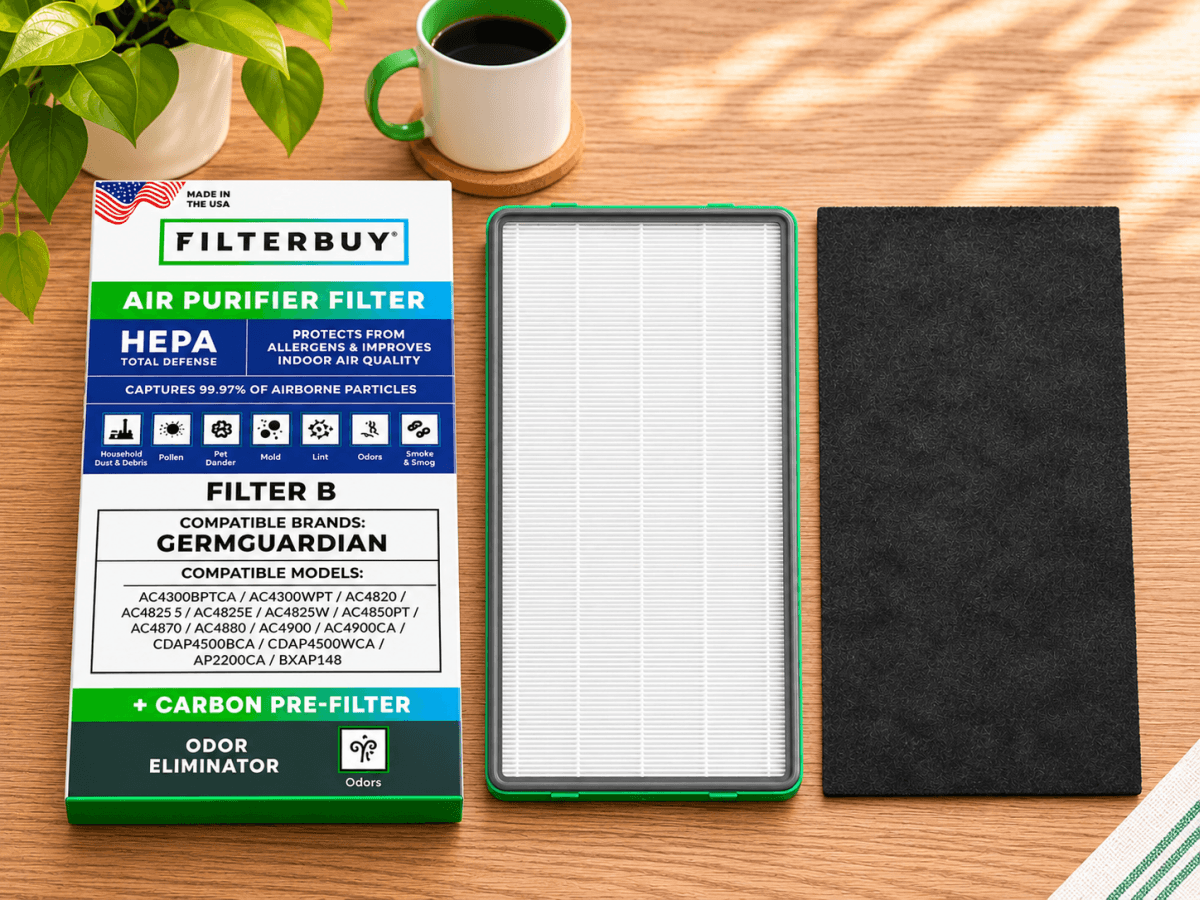
Before a generic filter goes into the housing, it should pass five checks. Filterbuy's own product pages list the part number each filter replaces, its dimensions, and its media rating, as every seller should. A listing that hides them is your first warning sign.
Match the part number, not just the purifier model. It's printed on the old filter's frame, a surer guide than fit lists copied between sellers.
Read the media spec, not the listing title. Look for an efficiency figure paired with a particle size, because "99% HEPA-type" without one isn't a measurable claim.
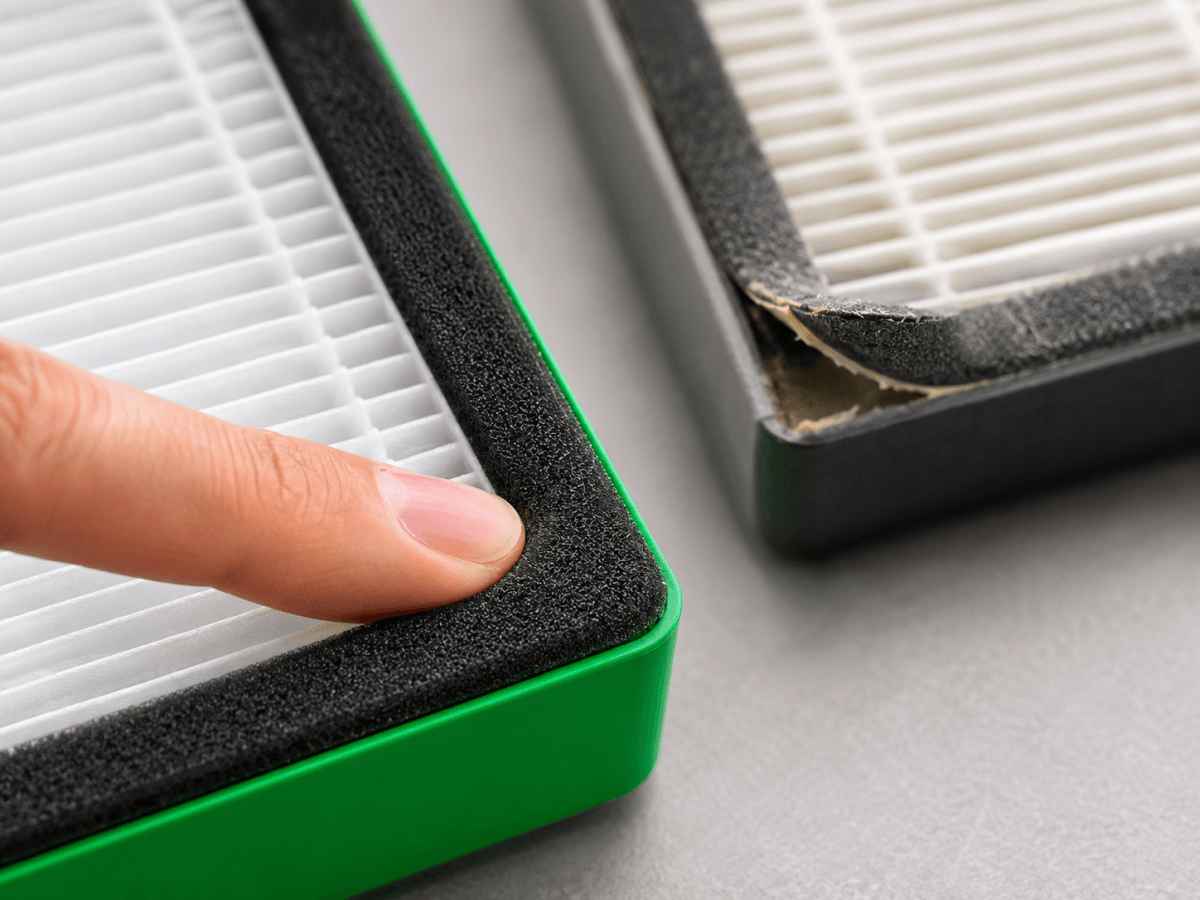
Check the seal. Run a finger along the gasket or foam edge. It should run unbroken and stay glued down, with enough give to compress against the housing.
Confirm who stands behind it. A named manufacturer with a returns policy is easier to hold to its claims.
Inspect it when it arrives. Send it back if the frame is bent, the pleats are torn, carbon is shaking loose, or there's a strong chemical odor. If an odor appears later, Filterbuy's guide on why an air purifier smells helps track it down.
Install it with the airflow arrow pointing the way Filterbuy's air purifier filter direction guide shows, and note the date. Our guide on how often to replace air purifier filters lists replacement intervals for each filter stage, and these signs your air purifier filter is clogged tell you when a filter is due early.
A 60-Second Fit Check After You Install It
Three quick tests after installation catch what a box can't reveal:
The door test. The filter door should close without pushing. If it takes force, the frame is oversized and may be crushing the gasket.
The light test. With the purifier unplugged, shine a flashlight along any filter edge you can see. Light slipping around the frame means there's a gap.
The sound test. Run the purifier on high and listen near the filter door. A new whistle or hiss usually means air is sneaking past.
When An OEM Filter Is The Better Choice
Filterbuy sells compatible filters, but we'll still be straight with you: an OEM filter is the better pick when no compatible matches your exact part number, when your warranty or a subscription includes free filters, or when the purifier reads a chip on the filter to track its life. If a filter light refuses to reset after a swap, Filterbuy's air purifier troubleshooting guide covers the fix.
What Filterbuy Makes, And What We Don't
Filterbuy is an American air filter manufacturer that makes compatible purifier filters, a point of view we want to be upfront about. Our line covers the GermGuardian Filter B replacement, GermGuardian Filter C replacement, and GermGuardian Filter E replacement. Each is a complete assembly, with pleated HEPA media and an activated carbon panel in a single frame, because the frame and gasket are where fit is won or lost.
We don't make a filter for every purifier yet. If you own a GermGuardian, our GermGuardian replacement filter guide matches your model to the right filter. For any other brand, buy the OEM filter or a compatible one that passes our five-check framework for OEM and compatible filters.
For bad air days, EPA's Guide to Air Cleaners in the Home recommends an HVAC filter rated at least MERV 13, or as high as your system can handle. Filterbuy's rule: when the AQI tops 100, switch to a MERV 13 filter if you have an HVAC system (check your HVAC manual to confirm it fits), and run a HEPA air purifier in each room, sized using what size air purifier you need.
Supporting Statistics
1. 4 Of 8 FTC Warning Letters Targeted Air Purifier Sellers
FTC staff warned eight companies in July 2024.
Five flagged claims that buyers must use specified parts to keep coverage.
Four of those five went to air purifier sellers.
Source: FTC Warns Companies to Stop Warranty Practices That Harm Consumers' Right to Repair
2. 65 CFM Of CADR For A 100 Square Foot Room
EPA lists 130 cfm for 200 square feet, both assuming an 8-foot ceiling.
Source: Guide to Air Cleaners in the Home
3. 3 Test Particles, Measured At Top Fan Speed
AHAM tests CADR with smoke, dust, and pollen.
Filter efficiency alone does not set cleaning output.
Source: Air Cleaner Performance FAQs
Frequently Asked Questions
Do Aftermarket Air Purifier Filters Work?
Yes. Aftermarket air purifier filters work well when they match the original part number and seal tightly in the housing.
Is OEM Better Than Aftermarket For Air Purifier Filters?
Even as a compatible-filter maker, Filterbuy recommends OEM when nothing compatible matches your part number or your filters come free. Otherwise, a quality compatible matching the original's size and seal can perform about as well for less.
Will A Generic Filter Void My Air Purifier Warranty?
Not on its own. Unless your warranty supplies filters free, federal law bars a manufacturer from voiding it because you used a third-party filter, though it can still decline to repair damage the filter caused.
Can A Cheap Air Purifier Filter Damage My Purifier?
Usually not. A filter has no moving parts, so a poor replacement means weaker cleaning rather than a broken purifier. The exception is a frame that won't seat properly or breaks apart.
What Does HEPA-Type Mean On A Replacement Filter?
HEPA-type is a marketing label that doesn't claim the U.S. benchmark of 99.97 percent capture at 0.3 microns. Look for efficiency stated at a particle size, as on Filterbuy's product pages.
Find A Replacement Filter You Can Trust
Shop Filterbuy's air purifier replacement filters to see every model we make, built and shipped factory-direct with fast and free 2-day delivery to most US states. Auto Delivery keeps the next one coming.
Glossary
A replacement made by a company other than the purifier's brand, such as Filterbuy.
An original equipment manufacturer filter, sold by the purifier's brand.
High efficiency particulate air: at least 99.97 percent capture of 0.3 micron particles, per the U.S. Department of Energy.
Clean air delivery rate, the filtered airflow a portable air cleaner delivers.
An American air filter manufacturer that makes pleated HVAC filters and compatible air purifier filters.
The Air Quality Index, EPA's 0 to 500 scale for outdoor air.
Minimum Efficiency Reporting Value, a 1 to 16 rating for HVAC filters.
The 1975 federal law governing consumer product warranties.