
Are Ozone Air Purifiers Safe? What You Should Know
November 19, 2026
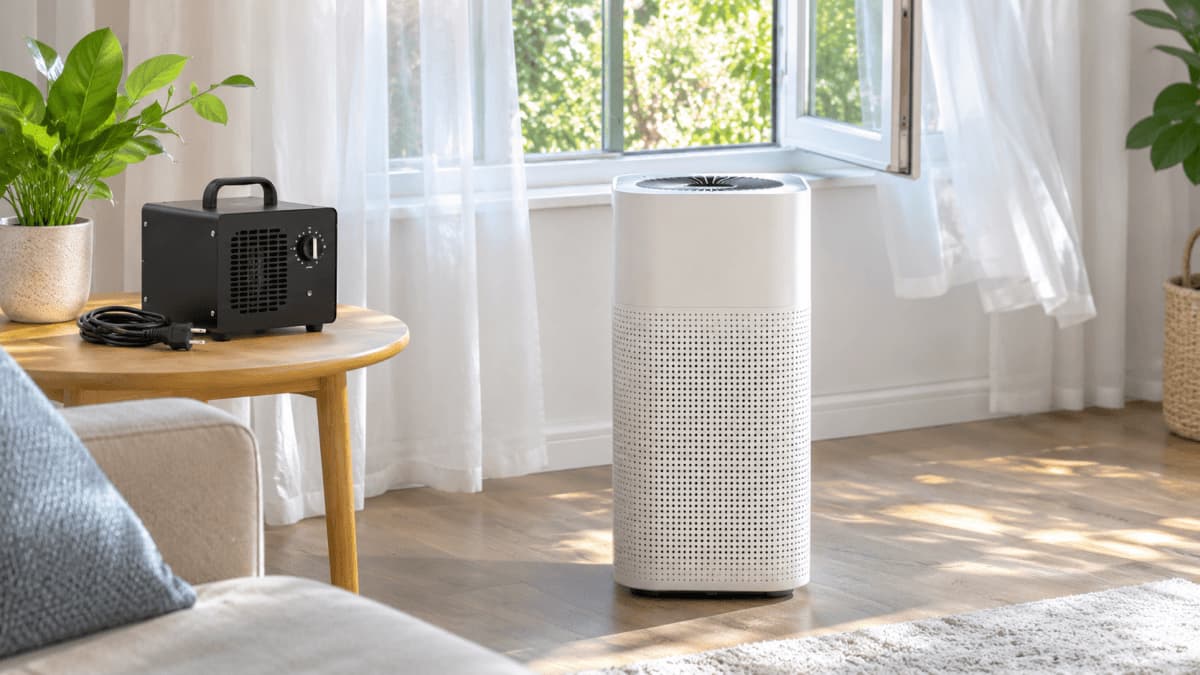
Ozone air purifiers are not safe to run in an occupied home. Most are sold as ozone generators and release ozone, a lung irritant that can cause coughing and chest pain, on purpose. At Filterbuy, a U.S. air filter manufacturer, we judge every air cleaner by a simple test: does it remove something from the air, or add something to it? A mechanical HEPA purifier removes particles without adding ozone, so it is the safer choice.
TL;DR
Health agencies, including the U.S. Environmental Protection Agency and the California Air Resources Board (CARB), advise against ozone generators sold as air purifiers. Ozone irritates the lungs and can worsen asthma, and it does nothing to remove dust or pollen. Most air purifiers will not make you sick, but models that emit ozone can. Pick a mechanical HEPA purifier without an ionizer, and check that it is CARB certified.
Key Takeaways
Ozone air purifiers are not safe for occupied rooms. EPA reports that even low amounts of ozone can cause chest pain and coughing, while breathable levels do little to clean the air.
Ionizers and electrostatic precipitators can give off smaller amounts of ozone as a byproduct.
California limits air cleaners to ozone emissions below 0.050 parts per million (ppm).
Filterbuy's rule of thumb: choose devices that remove pollutants over devices that add a gas.
Filterbuy's line for any AQI over 100: switch your HVAC system to an EPA-recommended MERV 13 filter if it is rated for one, and run HEPA purifiers in each room.
Are Ozone Air Purifiers Safe?
No. Ozone air purifiers should not run in rooms where people or pets spend time. EPA's review of ozone generators sold as air cleaners explains that inhaled ozone can damage the lungs and may worsen chronic respiratory diseases such as asthma.
An ozone generator turns oxygen into ozone with an electrical charge or ultraviolet light. Filterbuy calls the problem with this approach the dose trap. EPA found that at levels within public health standards, ozone has little ability to remove indoor air contaminants. To treat odors, a generator has to put out more ozone than is safe to breathe. Some devices EPA reviewed made 10 times more ozone on high than on medium, so no setting is both safe and effective.
What Does Ozone Do To Your Body?
EPA lists chest pain, coughing, shortness of breath, and throat irritation, even at low amounts. New York State Department of Health guidance on ozone-generating air cleaners adds eye and nose irritation and names people with asthma, people with heart disease, and children as more vulnerable.
Can Air Purifiers Make You Sick?
No, a mechanical HEPA air purifier will not make you sick. By the remove-or-add test, air purifier side effects come from devices that add something to the air, mainly ozone generators, ionizers, and some electronic cleaning stages. If your throat feels sore or you notice a sharp, electrical odor near a purifier, switch it off and open a window. Our guide to what ozone smells like explains more.
Air Purifier Side Effects And Their Causes
Which Air Purifiers Produce Ozone?
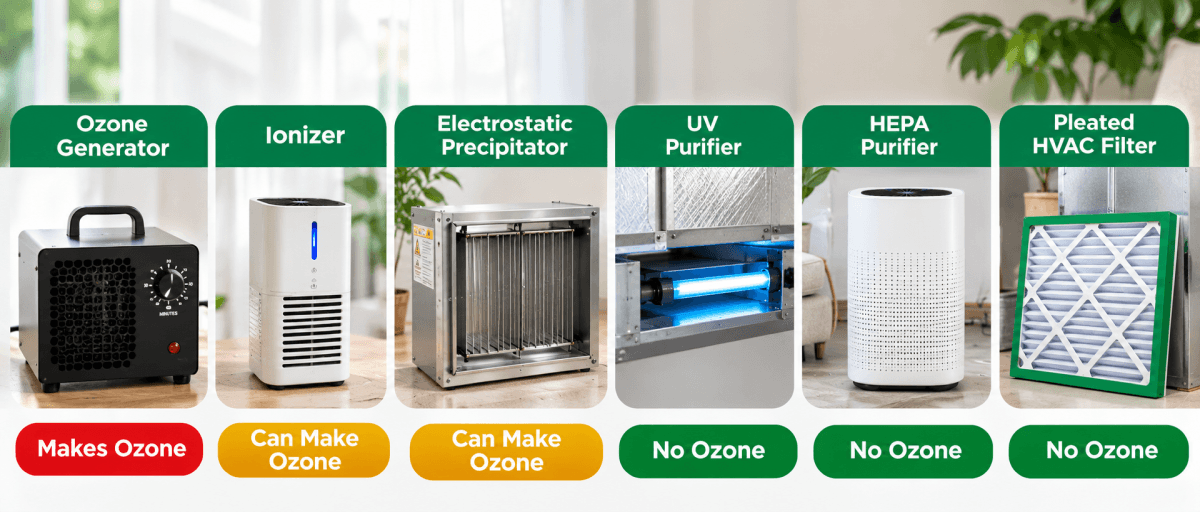
Ozone generators make ozone on purpose. Ionizers, electrostatic precipitators, and some ultraviolet (UV) or photocatalytic oxidation (PCO) units can release smaller amounts as a byproduct. Mechanical HEPA purifiers and passive pleated air filters produce none.
Filterbuy Ozone Source Check
Qualitative editorial ratings based on agency guidance.
Pleated filter media, Filterbuy's included, can carry an electrostatic charge built into the fibers. Unlike an ionizer, that charge draws no power, so it makes no ozone. With UV units, the lamp's wavelength decides. See our guides on whether HVAC UV lights produce ozone and our in-duct UV vs portable air purifier comparison.
Marketing Terms That Mean Ozone
The New York State Department of Health lists marketing terms sellers use in place of ozone, including activated oxygen, super oxygen, trivalent oxygen, energized oxygen, and mountain-fresh air. Filterbuy's advice: treat any listing that uses these phrases as an ozone generator.
Is There A Safe Level Of Ozone From An Air Purifier?
Two regulators set a 0.05 ppm ozone ceiling. The U.S. Food and Drug Administration (FDA) applies it to indoor medical devices, while CARB's indoor air cleaner regulation applies it to every air cleaner sold in California.
Ozone Limits For Air Cleaning Devices
In Filterbuy's view, an ozone limit is only a minimum. Before you buy, check these:
Look for ARB Certified on the box or find the model on CARB's certified list, where Mechanical units make no ozone and Electronic units have passed the 0.050 ppm test. See what CARB certification means.
On ionizer, UV, and PCO units, look for the UL 2998 mark. Our guide to UL 2998 zero ozone certification explains what the test verifies.
Skip anything sold as an ozone generator or described in activated oxygen language.
Read past the word HEPA. Some HEPA purifiers also include an ionizer or ozone stage, so find that switch and leave it off.
Choose a True HEPA purifier with a Clean Air Delivery Rate (CADR) tested under AHAM's air filtration standards program, run by the Association of Home Appliance Manufacturers.
Do Ozone Generators Remove Odors, Mold, Or Viruses?
Not at levels that are safe to breathe. EPA reports that ozone does not effectively remove carbon monoxide or formaldehyde, and at safe levels it does not effectively remove viruses, bacteria, or mold. Ozone can also mask odors without removing them.
Odors respond better to source removal and fresh air, along with activated carbon, which traps odor-causing gases. For whole-home odor control, Filterbuy's pleated carbon odor eliminator filters pair activated carbon with particle filtration. Confirm your system is rated for the filter before you switch.
Already Own An Ozone Generator? What To Do Now
Stop using it where people or pets spend time, and switch to methods that add nothing to the air:
Unplug it and open windows to air out the room.
Check the model against CARB's list of potentially hazardous ozone generators.
For odors, remove the source and add activated carbon filtration.
For airborne particles such as dust and pollen, run a mechanical HEPA purifier sized to the room.
What Is The Safer Way To Clean Indoor Air?
The safer path pairs source control with two layers of filtration. Mechanical HEPA purifiers cover the rooms you use, and a pleated HVAC filter cleans the air your system circulates through the house while the fan runs, and neither adds ozone.
A True HEPA filter captures at least 99.97% of particles at 0.3 microns. To size a purifier, look for a smoke CADR of at least two-thirds of the room's square footage. Worked example: a 12 by 14 foot bedroom is 168 square feet, so look for a smoke CADR of 112 or higher.
For the central system, pleated MERV 13 air filters capture finer particles than basic filters. MERV 13 is not equivalent to True HEPA, as our MERV 13 vs HEPA comparison explains. Check your HVAC manual or ask a licensed technician to confirm your system is rated for MERV 13 before you upgrade.
Both layers matter most when the outdoor Air Quality Index (AQI) tops 100. EPA recommends upgrading to a MERV 13 or higher HVAC filter during smoky periods if your system can accommodate it.
Filterbuy's action line for any AQI over 100: if you have an HVAC system, switch to an EPA-recommended MERV 13 filter, and run HEPA air purifiers in each room. These filters capture particles such as smoke but do not remove ozone gas. Our guide to running an air purifier during wildfire season covers the room-by-room setup.
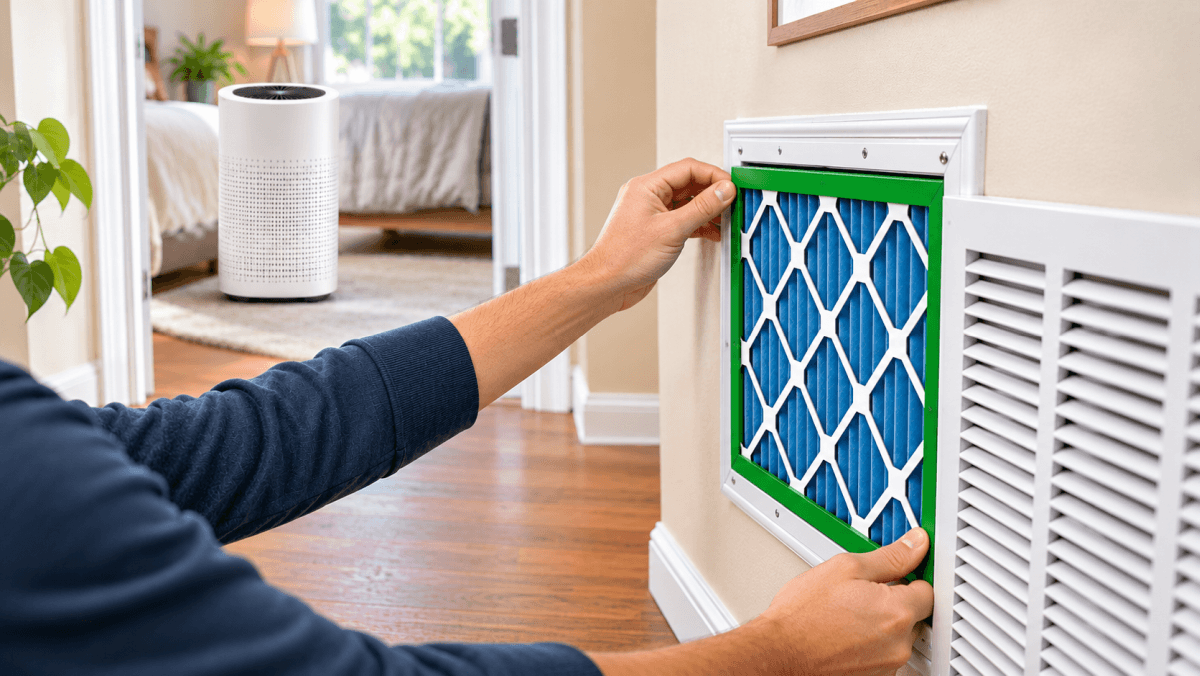
We build filters that catch particles and add nothing back to the air. When a product's main selling point is a gas it releases into your home, our advice is to skip it and put a good filter to work instead.
Supporting Statistics
Ozone generators can far exceed safe limits.
An EPA research lab tested one commercial ozone generator.
On maximum, indoor ozone topped 100 ppb in well-ventilated spaces.
In poorly ventilated spaces, it reached nearly 1 ppm.
That is 2 to nearly 20 times the 0.05 ppm ceiling FDA and CARB use.
Source: Contribution to Indoor Ozone Levels of an Ozone Generator
Federal rules treat ozone as a toxic gas.
FDA says ozone has no known useful medical application.
Ozone from indoor medical devices is capped at 0.05 ppm.
Millions of people are especially sensitive to ozone.
27.8 million people in the U.S. had current asthma in 2023.
That is 8.4% of the population, or about 1 in 12.
Ozone can worsen asthma.
Source: Most Recent National Asthma Data
Frequently Asked Questions
Can An Ozone Air Purifier Make You Sick?
Yes. Ozone can cause coughing, chest pain, and shortness of breath, and it can make asthma worse. Turn the device off, air out the room, and see a doctor if symptoms continue.
Is It Safe To Run An Ozone Generator When No One Is Home?
Not safely. EPA says ozone use in empty spaces requires controlled conditions so no person or pet is exposed, and its by-products are poorly understood.
Do Ionizer Air Purifiers Produce Ozone?
Some do, though usually less than an ozone generator. Choose a CARB-certified, UL 2998-verified model, or skip the ionizer.
Are HEPA Air Purifiers Safe?
Yes. A mechanical HEPA purifier uses only a fan and a filter, so it produces no ozone. Skip models with an ionizer.
How Do I Know If My Air Purifier Emits Ozone?
Check the manual for the words ozone, ionizer, or activated oxygen, then search CARB's lists.
Clean Your Air Without Adding Ozone
Filterbuy manufactures pleated MERV 8 air filters, MERV 11 air filters, and MERV 13 filters in the USA that capture particles and add nothing back to your air. Order standard sizes or custom air filters with fast and free 2-day delivery to most US states, or set up an air filter subscription. Filterbuy also sells air purifier replacement filters for select GermGuardian models. Confirm the MERV level your system is rated for before you order.
Glossary
- Ozone:
- A reactive gas of three oxygen atoms (O3) and the main component of smog.
- HEPA Filter:
- High-efficiency particulate air filter. True HEPA captures at least 99.97% of particles at 0.3 microns.
- CADR:
- Clean Air Delivery Rate. AHAM's rating for how much filtered air a purifier delivers.
- CARB Certification:
- California approval that an air cleaner is electrically safe and emits less than 0.050 ppm ozone.
- MERV:
- Minimum Efficiency Reporting Value. The ASHRAE 52.2 rating for HVAC filter particle capture.