
Why Does My Air Purifier Smell?
August 11, 2026
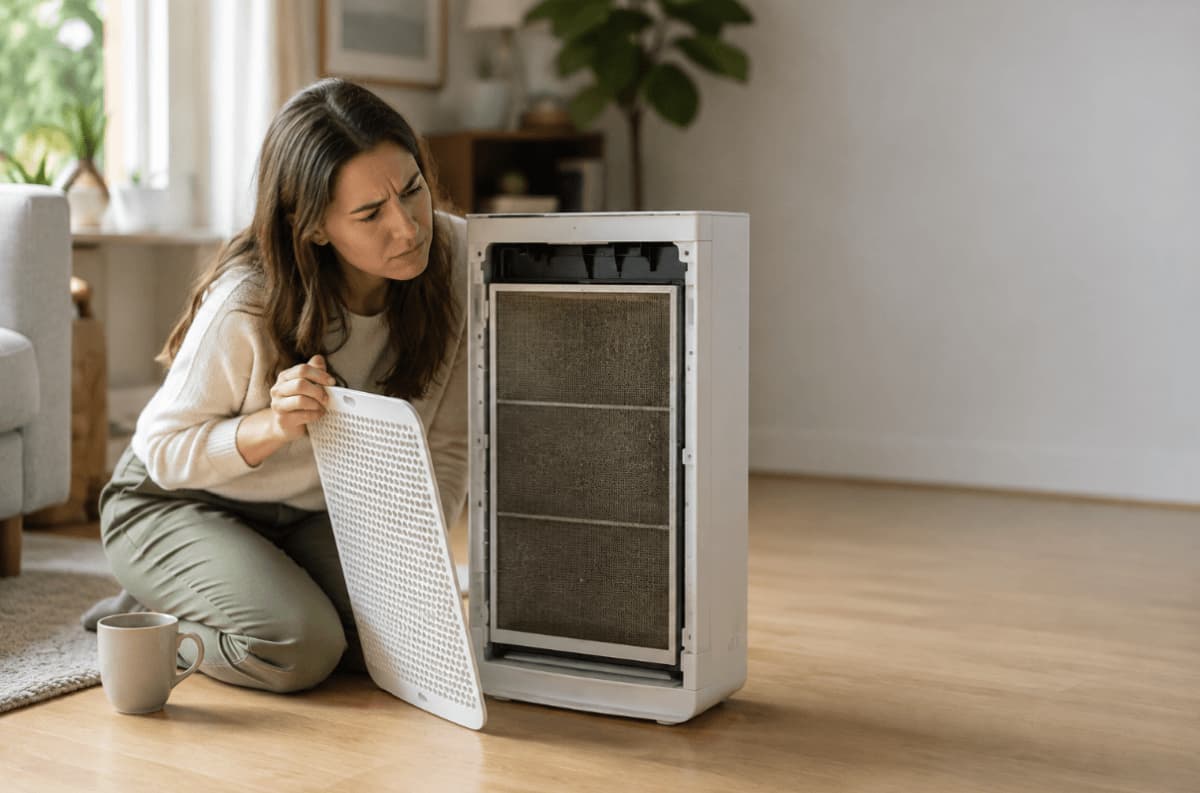
Match the smell to the cause: sour means the carbon filter is spent, musty means moisture and mold inside the unit, and stale or plastic means a brand-new unit is off-gassing. Only one of those three calls for a new filter right away. Here is how to tell them apart.
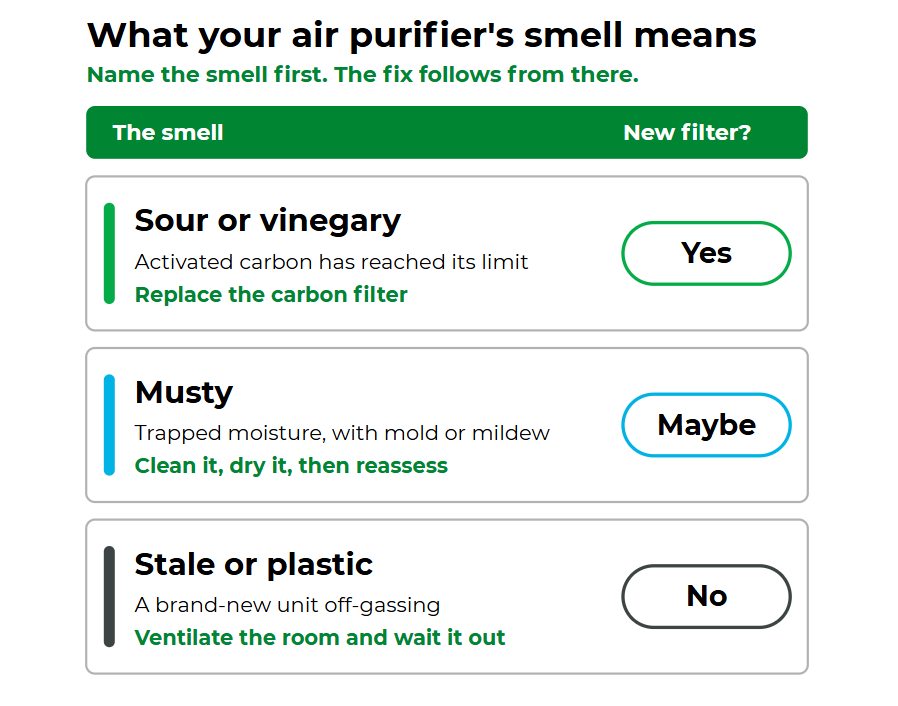
Sour or vinegary — the activated carbon has reached its adsorption limit. Replace the carbon filter.
Musty — trapped moisture has let mold or mildew grow inside the unit. Clean the filter tray and casing, move the purifier somewhere drier, and replace the filter if the smell stays.
Stale or plastic — a new unit off-gassing. Ventilate the room and it typically fades within a few hours to two days.
If it turns out you need a replacement, the quick match below will point you to the right one.
Answer 3 quick questions and we will match you to your filter.
Already know what you need? Shop Filterbuy filters.
If your air purifier is giving off an odd odor, you're not alone. In most cases, the smell is far less serious than it seems. The fix usually comes down to identifying which type of smell you're dealing with. Musty, sour, and stale each have a distinct cause, and each calls for a different response.
Key Takeaways
Musty smells are often caused by mold or mildew buildup, which can occur when filters or internal components are exposed to excess moisture. Regular cleaning and timely filter replacement can resolve this.
Sour odors are typically linked to an aging carbon filter, especially in humid conditions. Replacing the carbon filter is the most reliable fix.
Stale or plastic smells usually come from a brand-new unit off-gassing during its break-in period. This fades on its own with ventilation and time.
Regular maintenance and smart placement can prevent most odor issues and keep your purifier running at its best.
The 3 Most Common Air Purifier Smells
Not every strange odor means your unit is broken or your filter needs replacing right away. Before you do anything, narrow it down.
What a Musty Smell Means
A musty smell coming from your air purifier almost always points to trapped moisture. When humidity builds up inside the unit, particularly in filters that haven't been dried or replaced regularly, it creates the right conditions for mold, mildew, or bacteria to grow. The purifier then pushes air through that growth and spreads the odor into the room.
This is more likely to happen in bathrooms, basements, or any space that tends to stay damp. It can also occur if the unit was stored without being fully dried, or if it sits near a humidifier or an open window during humid weather.
A musty smell doesn't always mean the unit is ruined. Start by cleaning the filter tray and outer casing with a dry cloth, then move the unit to a drier location. If the smell persists after cleaning, the filter may have mold set in, and at that point, replacement is the better call.
What a Sour Smell Tells You
A sour smell is specific to activated carbon filters, and it has a straightforward chemical explanation. As activated carbon nears the end of its useful life, or when it has been exposed to high humidity, the oxygen-containing functional groups on the carbon surface (particularly carboxyl and lactone groups) begin to break down. This process produces acetic acid as a byproduct, which is what gives off that slightly vinegary or sour odor.
This is not a defect. It's a normal sign that the carbon has reached or is approaching its adsorption limit. The filter has done its job and simply needs to be replaced. Ventilating the room won't resolve it. Only a fresh carbon filter will.
What a Stale or Plastic Smell Means
Opened a brand-new air purifier and noticed a stale or faintly plastic smell? That's off-gassing from the unit's housing, internal components, or packaging materials. It’s the same thing that happens with many new electronics or plastic products.
This smell is not a filter issue, and it's not a sign that something is wrong. Run the unit in a well-ventilated room, ideally near an open window, and the smell will typically fade within a few hours to a couple of days. No filter replacement needed.
Why the Carbon Filter Smells Sour
Activated carbon works by adsorbing odor-causing gases and volatile organic compounds (VOCs) onto its porous surface. The carbon surface is lined with functional groups, specifically carboxyl and lactone groups, that help trap those molecules. Over time, and especially in humid conditions, those functional groups break down. When they do, they release acetic acid, which smells sour or vinegary.
This process happens faster in humid environments because moisture accelerates the breakdown of those surface groups. A carbon filter sitting in a damp room will exhaust its adsorption capacity sooner than one kept in a dry space.
One important distinction: carbon filters address gaseous pollutants and odors, but they don't capture mold spores, dust, or allergens. That's the job of the HEPA layer. A sour carbon filter smell and a musty mold smell are two separate issues, even if they show up around the same time.
If your air purifier smells sour, the answer is simple: replace the carbon filter.
Which Smells Mean You Need a New Filter
Here's a quick breakdown:
| Smell | Replace Filter? | Likely Cause | Time Since Last Replacement |
|---|---|---|---|
| Sour | Yes | Adsorption capacity is spent | Typically 3–6 months+ |
| Musty | Maybe | Mold growth on filter or unit | Varies; more likely if overdue or used in humid conditions |
| Stale or plastic | No | Off-gassing from the unit itself | Not filter-related; common in new units |
One smell worth a brief mention: a strong chemical or chlorine-like odor is less common and harder to explain through normal filter wear.
If you notice something sharp or chemical in nature, especially from a unit that isn't new, power the unit off and check the manufacturer's guidance before running it again.
How to Keep Your Air Purifier Smelling Clean
A few simple habits make a real difference over time.
Placement matters. Keep the unit away from humid areas. Bathrooms, laundry rooms, and spaces near humidifiers are the most common culprits for musty smells. A dry, central location with good airflow lets the unit perform better and helps filters last longer.
Ventilate the room regularly. Running an air purifier in a sealed room with high humidity speeds up carbon filter degradation. Even cracking a window now and then helps maintain a healthier environment for the unit.
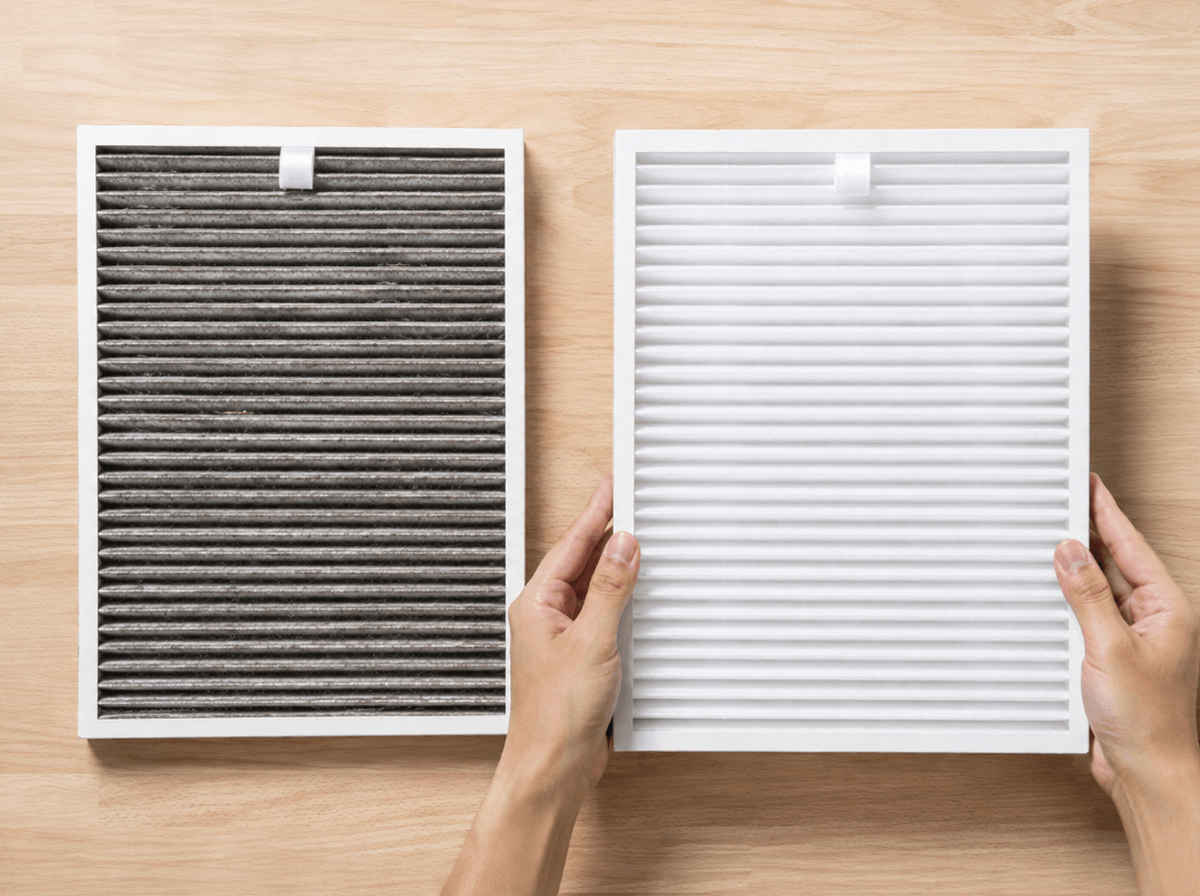
Check your filters on a schedule, not just when something smells off. Most manufacturers recommend checking filters every one to three months depending on usage and air quality. Waiting until you notice an odor usually means the filter has already been underperforming for a while.
Replace carbon filters before they're fully spent. A fresh carbon filter restores the unit's ability to adsorb odors and VOCs.
Filters with the right carbon media and adequate carbon weight, like those used in Filterbuy replacement filters, make a meaningful difference in how long that capacity lasts and how well your unit controls odors between replacements.
Frequently Asked Questions
Is it normal for a new air purifier to smell?
Yes. A faint stale or plastic smell from a new unit is normal and comes from off-gassing in the housing and packaging. Run the unit in a ventilated room, and the smell should clear within a few hours to two days. It's not a filter issue and doesn't require any replacement.
How often should I replace the carbon filter to avoid odor?
Most carbon filters should be replaced every three to six months, though this varies by usage intensity and humidity levels. If you notice a sour or vinegary smell before that window, treat it as an early sign that the carbon has reached its adsorption limit and replace the filter sooner.
Can a smelly air purifier make air quality worse?
It depends on the cause. A unit with mold growth in the filter can circulate mold spores, which is a genuine air quality concern. A spent carbon filter simply stops removing odors and VOCs effectively. It doesn't actively harm air quality, but it's no longer doing its job. Either way, resolving the smell improves the unit's overall performance.