
How Often To Replace Air Purifier Filters
August 17, 2026
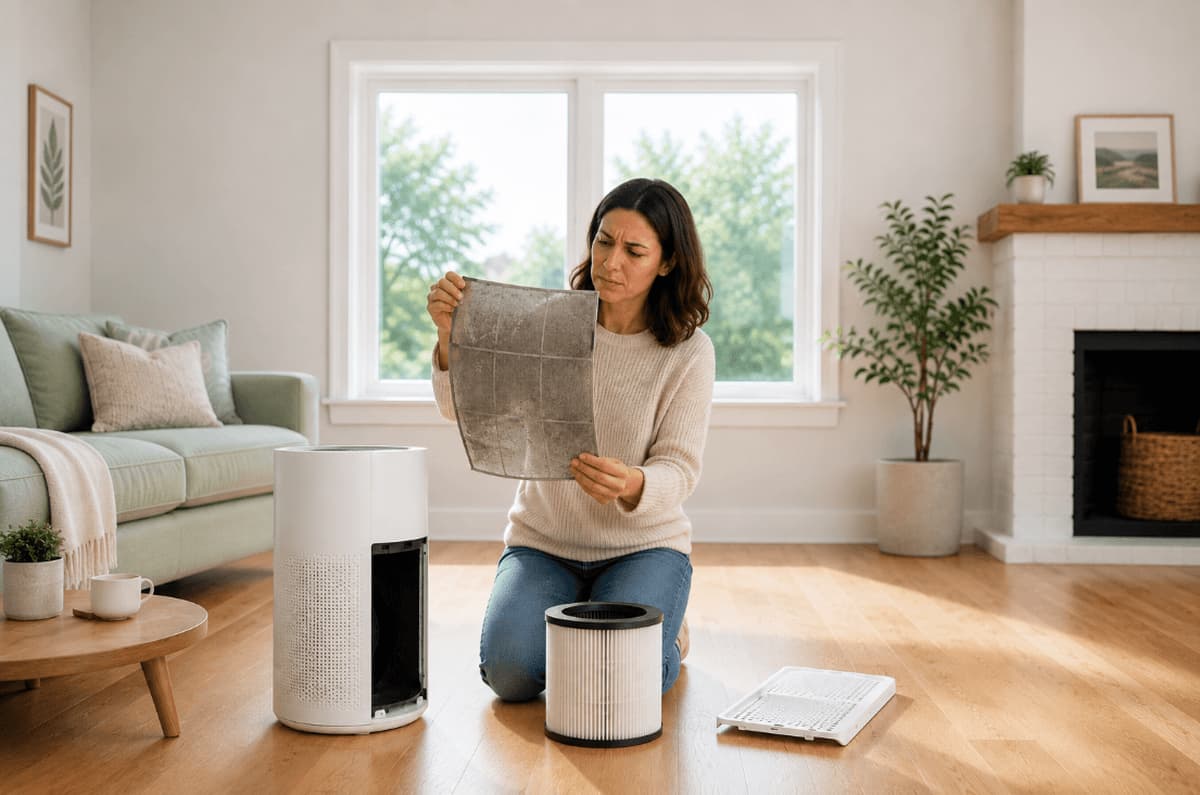
Pre-filters need attention every 30 days, HEPA filters last around 12 months under typical residential use, and carbon filters saturate in 3 to 6 months. Each filter type wears out at a different rate, and physical warning signs are more reliable than most indicator lights.
Your air purifier manual says one thing. The filter indicator light says another. Meanwhile, the unit is running three separate filters that don't expire on the same schedule. It's a frustrating situation, and “check your manual” doesn't cut it when the manual gives a single blanket number for everything.
Key Takeaways
Different filter types in air purifiers have varying lifespans and need to be checked individually.
Physical signs of filter wear, such as discoloration or reduced airflow, are more reliable than indicator lights.
Relying solely on generic manual recommendations can lead to ineffective filtration and diminished air quality.
Regular maintenance and monitoring ensure optimal performance and longevity of your air purifier.
Your Air Purifier Doesn't Have One Filter. It Has A Stack.
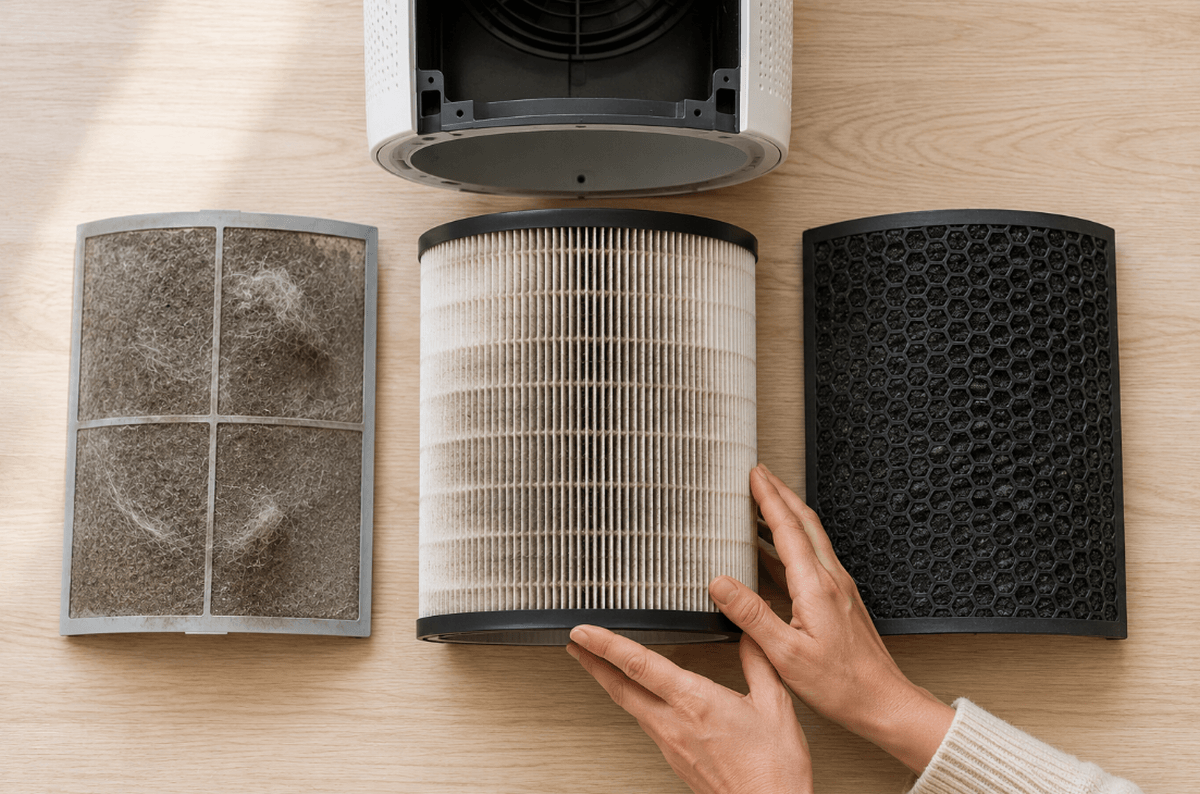
Most residential air purifiers use a three-stage filtration arrangement. The pre-filter captures large particles like pet hair, lint, and visible dust. Behind it, the HEPA media layer traps fine particulates, including dust mite debris, pollen, and smoke particles, down to 0.3 microns. The activated carbon stage handles gases and odors that the other two stages can't capture.
These three components don't wear out at the same rate. Treating them as a single unit with one replacement date is what leads to either overspending on filters you don't need yet or running degraded filtration without realizing it.
How Often To Replace A Pre-Filter
Typical interval: every 30 days. If your unit uses a washable pre-filter, rinse it monthly and let it dry completely before reinstalling. Replace it outright when the mesh warps, holds discoloration after rinsing, or shows visible tears.
Several conditions shorten that 30-day interval. If you have shedding pets, run the unit 24/7, or live in a carpeted space that traps particulate, the pre-filter will load up faster. Construction or renovation nearby, even a neighbor's project that pushes dust into your air intake, can cut the effective life to two weeks or less.
Skipping pre-filter maintenance incurs downstream costs. When the pre-filter clogs, airflow drops across the entire unit. The HEPA layer then works harder than it should, loading up faster and forcing earlier replacement of the stack's most expensive component.
How Often To Replace A HEPA Filter
Typical interval: 12 months at standard residential runtime (roughly 8 to 10 hours per day at medium fan speed, per AHAM maintenance benchmarks). That interval assumes a pre-filter is doing its job in front of the HEPA layer.
A few factors compress that 12-month window significantly. Running the unit continuously at high speed, living in a room with a heavy particle load, or exposure to wildfire smoke, heavy pollen seasons, or wood-burning stoves can pull the effective life down to 6 to 9 months. If your air purifier ran continuously during a wildfire smoke event, treat the filter as if it has already logged several months of normal use.
One thing worth stating clearly: HEPA media is not washable. Rinsing or vacuuming a HEPA filter damages the fiber structure that enables fine-particle capture. Doing so doesn't extend the filter's life. It accelerates its failure. Once HEPA media is loaded, it needs to be replaced, not cleaned.
How Often To Replace A Carbon Or Charcoal Filter
Typical interval: 3 to 6 months. The shorter end of that range applies to homes with heavy cooking, pets, smokers, or significant VOC exposure from new furniture, fresh paint, or recently installed flooring.
Carbon filters don't fail the way pre-filters and HEPA filters do. They don't clog. They saturate. When the carbon bed is full, it stops adsorbing gases and odors, and the only symptom is that the odor return. There's no visible sign of loading, no change in airflow, and no indicator light that reliably indicates saturation.
Filter construction matters here. Thin sheets with a light carbon coating saturate much faster than thick pelletized carbon beds. If your unit uses a thin carbon pre-filter layer rather than a dedicated carbon stage, expect to replace it on the shorter end of the range regardless of conditions.
Quick Reference: Air Purifier Filter Replacement Intervals
| Filter Type | Typical Interval | Replace Sooner If |
|---|---|---|
| Pre-filter (disposable) | Every 30 days | Pets, carpeted rooms, 24/7 runtime, nearby construction |
| Pre-filter (washable) | Rinse monthly; replace when warped or discolored | Visible tears, discoloration that doesn't rinse out |
| HEPA filter | Every 12 months | Wildfire smoke, heavy pollen load, continuous high-speed runtime |
| Activated carbon filter | Every 3 to 6 months | Pets, cooking odors, smoking, new furniture or paint, VOCs |
7 Signs Your Filter Is Due Before The Calendar Says So
Physical evidence beats the indicator light every time. Here's what to look for:
Odors return between cleanings. If a smell you dealt with before is back, that's a saturated carbon stage, not a cleaning problem.
Weaker airflow at the same fan setting. If the unit feels like it's moving less air than it used to, the pre-filter or HEPA layer is likely restricting flow.
The unit is louder, or the fan cycles up more often. The motor compensates for reduced airflow by working harder.
Visible gray or brown loading on the pleat faces. A quick visual inspection of the HEPA or pre-filter tells you more than any indicator.
Dust is settling faster on surfaces near the unit. Reduced capture efficiency shows up on your furniture before it shows up on your filter light.
A musty smell when the unit kicks on. This points to moisture trapped in a loaded HEPA filter, a sign the filter is well past due.
The filter indicator light is on. This one's last for a reason. Most indicator lights are runtime timers, not sensors. They count operating hours and trigger at a preset threshold regardless of the actual filter condition.
“We get calls all the time from people who replaced their filter because the light came on, then called back a month later wondering why their unit still smells,” says a Customer Service Manager at Filterbuy. “The light is a prompt to check the filter, not a diagnosis. If you check it and it looks clean and the unit is performing well, you have more time.”
Trust what you can see and smell over what the light reports.
What Shortens Filter Life In Real Homes
Think of these as multipliers on whichever interval applies to your setup, not separate intervals to calculate from scratch.
Runtime hours are the biggest driver. A unit running 24/7 accumulates roughly three times the load of one running 8 hours a day.
Pets contribute hair and dander that accelerate pre-filter loading and increase the VOC load on the carbon stage.
Smoking indoors puts a heavy demand on both carbon and HEPA filters simultaneously.
Cooking produces fine particulate and oils that clog carbon faster than most other household sources.
Wildfire smoke seasons are their own category. A two-week smoke event can do the equivalent of months of normal filter work.
High humidity increases the risk of moisture retention in HEPA media.
Renovation dust from drywall, sanding, or flooring work loads pre-filters and HEPA filters in days, not weeks.
Note: If multiple conditions apply to your home, default to the shorter end of each filter's range.
How To Check A Filter In Under Two Minutes
Checking a filter takes less time than waiting for an alert.
Power off and unplug the unit. Open the housing.
Most units have a front or side panel that releases with finger pressure or two screws.
Pull each filter stage and examine the intake side.
Pre-filters will show visible loading. HEPA filters show gray or brown discoloration across the pleat faces. Carbon layers won't visually indicate saturation, so rely on odor performance as your indicator.
Write the install date directly on the filter frame with a permanent marker before reinstalling. It takes five seconds and eliminates the guesswork next time you check.
Remember, room size and daily runtime both affect how quickly your filters load. If you want to dial in those details for your specific setup, we have a guide that covers both in depth.
Get On A Filter Schedule That Actually Works
Inconsistent filter replacement is the main reason air purifiers underperform. The fix isn't complicated. It's having the right filters on hand and knowing when each stage needs attention.
Filterbuy carries replacement filters for a wide range of residential air purifier configurations. Order the filters you need, write the install date on the frame when you put them in, and set a calendar reminder for the next check.
No need to wait for a light that may not reflect the actual filter condition. Head to Filterbuy to find your replacement filters and get on a schedule that keeps your unit running at full performance.
Frequently Asked Questions
Can You Wash And Reuse A HEPA Filter?
No. Washing a HEPA filter damages the fine fiber structure that captures particles as small as 0.3 microns. Once that structure is compromised, the filter cannot perform as rated. HEPA filters must be replaced, not cleaned.
What Happens If You Never Change An Air Purifier Filter?
A clogged pre-filter reduces airflow and accelerates HEPA loading. A saturated carbon stage stops capturing odors entirely. A loaded HEPA filter can restrict airflow enough to cause the motor to overheat. Filtration performance degrades well before you see or smell any obvious sign of failure.
Do Air Purifier Filters Expire If The Unit Isn't Running?
Not in a meaningful way. Filters stored in a sealed unit or in clean packaging don't degrade significantly over time on their own. The interval clock starts when the filter begins capturing particles and gases. Runtime is what matters, not calendar age.
How Do I Reset The Filter Indicator Light?
The process varies by unit, but most models require holding a reset button for 3 to 5 seconds after replacing the filter. Check your unit's manual for the exact sequence. Keep in mind that resetting the light restarts the runtime timer. It doesn't confirm that the new filter is installed correctly.
Is It Worth Replacing Filters, Or Should I Just Buy A New Air Purifier?
If the motor, housing, and fan are functioning well, replacing filters is almost always the better value. A full set of replacement filters costs a fraction of a new unit. The exception is an older unit where replacement filters are discontinued or priced disproportionately high relative to current purifier options.