
Durham Real-Time AQI Tracker


Get Alerts For Unhealthy AQI In Your Area
When air quality in your area reaches unhealthy levels, we'll send you a quick alert, along with expert tips on how to reduce your exposure.
What's Actually In Durham Air Today?
What High AQI Means for Your Lungs in Durham
How to Read AQI
The Air Quality Index (AQI) measures how polluted the air is and how it may affect your health.
0–50 (Good): Air quality is satisfactory.
51–100 (Moderate): Acceptable, but some pollutants may pose minor concerns.
101–150 (Unhealthy for Sensitive Groups)
151–200 (Unhealthy)
201–300 (Very Unhealthy)
301+ (Hazardous)
Moderate
Still okay for most, but if you have asthma or allergies, take it easy and avoid long outdoor workouts.
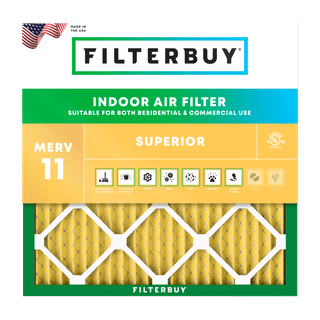
Shop MERV 11 filters→What's the Right Filter for Your AQI Level?
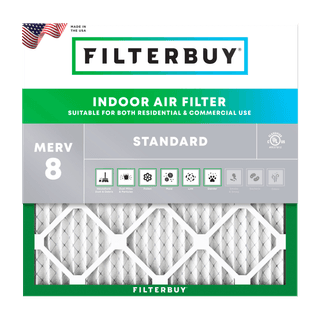
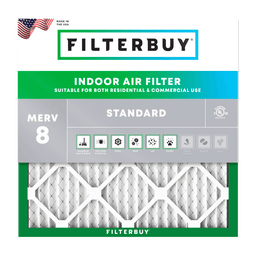
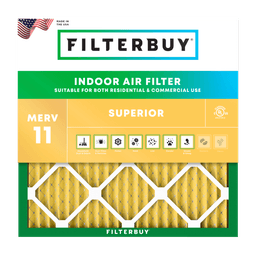
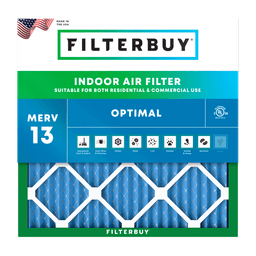


Check Today's Live Real Time Air Quality Index AQI Map in Durham, NC Now
Air quality in Durham can change by the hour, and the live map above shows Durham air quality now. Filterbuy makes the filters that decide how much of that air you breathe inside, so this page reads each number by the pollutant behind it.
TL;DR
The live Durham air quality map shows the AQI in real time from EPA AirNow and state monitors. Readings of 0–50 are Good, and above 100, sensitive groups should cut back outdoors. Ozone causes most warm-season spikes and particles cause the rest, so timing matters most on ozone days and your HVAC filter on particle days.
Key Takeaways
Durham County's one state air monitor is Durham Armory, in the DAQ Raleigh Region network.
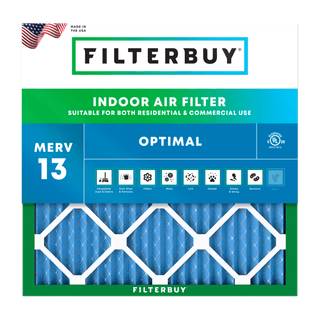
Look at the pollutant before you act: ozone calls for changing when you go outside, and PM2.5 (fine particles) calls for a MERV 13 filter.
Pollen isn't in the AQI, so a pollen-dusted April morning can still read Good.
How to Read the Durham AQI Map in Under a Minute
Filterbuy's four-step check:
1. Look at the color. It shows who should adjust their plans.
2. Find the pollutant. With ozone, head out earlier in the day. With PM2.5, close up and let the filter work. See how the AQI is calculated.
3. Check tomorrow. DAQ posts the next-day forecast by 3 p.m.
4. Glance at your filter. During smoke, replace it once it looks dark brown or black.
What Each Durham AQI Color Asks You to Do
Most AQI charts give one action for each color. Filterbuy splits each level by the pollutant the map names, since an orange ozone afternoon and an orange smoke day call for different steps.
Categories per EPA AirNow. The actions, including the AQI 100 action line, are Filterbuy's.
Why the Durham Reading Can Lag Behind the Sky
The official Durham AQI can trail what you see for two reasons.
1. NowCast averaging. AirNow reports a weighted average of recent hours, so a fast-moving plume shows up late.
2. One county monitor. Durham County has one state site, Durham Armory, upgraded to a T640X continuous particle monitor in DAQ's latest network plan. Readings in Research Triangle Park can differ.
Filterbuy's team tested the lag with EPA's NowCast formula on a modeled smoke plume. The index read 42 points low as smoke arrived and 79 points high as it cleared, so waiting for green can keep windows shut too long.
Is It Safe to Breathe the Air in Durham Today?
Whether Durham's air is safe today depends on the live reading. Up to 100, most people carry on as usual. Above 100, people with asthma, COPD or heart disease, children, older adults and outdoor workers should ease off hard exertion, and above 150, everyone should. If you have a health condition, follow your doctor's plan.
Who Writes Durham's Air Quality Forecast
Durham has no air agency of its own, so the N.C. Division of Air Quality forecasts the Triangle. Read it on the NC DEQ air quality forecast page or the North Carolina Air Quality Portal, or get it by email through free EnviroFlash alerts.
How Air Quality Shifts Across Durham Neighborhoods
Traffic explains most of the block-by-block difference in Durham air pollution today. The Durham Freeway (NC 147) runs through downtown and carries 44,000 to 87,000 vehicles a day, according to the City of Durham's Reimagine Durham Freeway study. Homes along it and along I-85, I-40 and I-885 sit closer to exhaust and nitrogen dioxide than neighborhoods toward the Eno River.
The freeway was cut through Hayti, a historic Black business district. For nearby readings, compare Filterbuy's Raleigh AQI map or the statewide North Carolina AQI map. Filterbuy's Michelle Wan often hears one mistake near busy roads:
"I hear the same assumption from homeowners near highways and industrial parks: they think changing their filter more often will fix a high pollution problem. The rating matters far more than the schedule. A fresh MERV 8 filter still lets most fine particles through, while a MERV 13 filter catches far more of them."
Michelle Wan, Brand Manager and Air Quality Writer, Filterbuy

What Drives a High AQI in Durham
Two pollutants set nearly every high Durham reading.
Ground-level ozone forms when vehicle and industrial emissions react in heat and sunlight, peaking on hot, still afternoons. The Triangle, Durham County included, was designated nonattainment for the 1997 federal ozone standard in April 2004 and redesignated to attainment in December 2007.
Fine particulate (PM2.5) is soot and smoke 2.5 micrometers or smaller, mostly from traffic and wood burning, plus smoke from distant fires. PM2.5 reaches deep into the lungs.
The two behave differently indoors, too. Ozone reacts with surfaces and fades, while particles linger until a filter catches them. Across a Durham year, the lead pollutant shifts:
March to October: Ozone season, with the most risk on hot, still afternoons.
Summer: Distant smoke can arrive within hours, as in June 2023.
Late fall and winter: Wood smoke on cold, still nights can raise PM2.5.
How the Triangle Compares With Other North Carolina Metros
In the American Lung Association's 2026 report, Raleigh-Durham-Cary ranks cleaner for ozone than the Triad or Charlotte. Its weaker area is short-term particle spikes.
American Lung Association, 2022–2024 data. Rank among the most polluted U.S. metros.
When Distant Wildfire Smoke Reaches Durham
Large wildfires are rare in Durham County, but smoke from fires elsewhere still drifts in. For June 7, 2023, NC DEQ forecast a Code Red for the Triangle as Canadian wildfire smoke pushed fine particulate into the unhealthy range. Check the AirNow Fire and Smoke Map for official conditions, then Filterbuy's Durham wildfire and smoke map for smoke-day steps.
What to Do When Durham's AQI Reaches 100
A Code Orange Air Quality Action Day means DAQ expects an AQI of 101–150, which is unhealthy for sensitive groups. Check AirNow and the DAQ forecast first, and follow any official advice. Filterbuy's action line sits one point lower, at AQI 100. From there, we tell Durham customers to take four steps:
1. Put MERV 13 in your HVAC system. It's the whole-home layer.
2. Set the thermostat fan to On. Auto filters only during heating or cooling, as our air purifier vs. HVAC filter guide explains.
3. Run a portable HEPA air cleaner in each occupied room, bedrooms first. If you can buy only one, put it where someone sleeps.
4. Close up the house. Keep windows and doors shut, and skip candles, frying, smoking and vacuuming without a sealed unit.
When ozone drives the number, moving outdoor time to the morning matters most.
No Ductwork? Options for Durham Homes Without Central Air
Some Durham homes rely on window units or mini splits and have no filter slot. In those homes, portable HEPA air cleaners are the primary defense rather than an add-on. Filterbuy doesn't sell them, and HEPA never belongs in a furnace slot.
Size each unit by clean air delivery rate (CADR). The EPA Guide to Air Cleaners in the Home calls for a smoke CADR of at least two-thirds of the room's square footage, so a 12-by-14-foot bedroom (168 square feet) needs about 112.
A DIY box-fan cleaner with a MERV 13 filter is a fair stopgap, per EPA research. Use a certified fan made in 2012 or later, and never leave it unattended.
Switch window units to recirculate on high-particle days, but never seal up a hot house without cooling.
Skip ozone generators sold as purifiers. EPA warns no federal agency has approved them for occupied spaces.
Our Take: Ozone Days and Particle Days Need Different Moves
Filterbuy has made pleated air filters in the United States for over a decade, and on bad-air days customers mostly ask whether a better filter helps. The answer depends on the pollutant.
Ozone is a gas that a pleated filter barely touches, so limiting afternoon exertion helps more. Particles are where MERV 13 and the fan setting pay off.
Smoke also loads filters faster than everyday dust, so check yours often during smoke and replace it once it looks dark brown or black. As EPA notes, that can be well before the normal interval, so keep a spare on hand.
Choosing a Filterbuy Filter for Durham AQI Levels
Pick a tier for your conditions, then order it in your size. The table shows where Filterbuy's MERV 8, MERV 11 and Odor Eliminator filters fit alongside MERV 13.
Measure your filter slot before ordering.
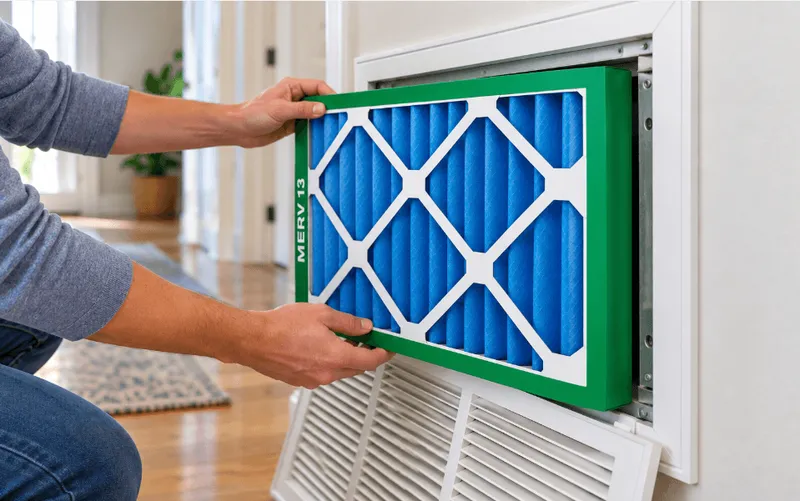
For smoke events, EPA recommends a filter rated MERV 13 or higher in the central system, and notes that most furnaces and HVAC systems can use it without problems when it's replaced often. Confirm your size with Filterbuy's air filter sizes guide, order MERV 13 or custom air filters, and set up filter auto-delivery so a spare is ready.
Supporting Statistics
1. Only 17% of traffic nitrogen dioxide fades within 100 meters of a major road.
Just 21% by 300 meters, per EPA scientists in nearby Research Triangle Park.
Source: U.S. EPA, via the National Library of Medicine
2. North Carolina has met the 2015 federal ozone standard statewide since 2017.
Source: N.C. Department of Environmental Quality
3. Home HVAC systems usually run less than 25% of the time.
Frequently Asked Questions
Glossary
AQI (Air Quality Index): The 0–500 outdoor air scale. EPA sets its categories.
PM2.5: Fine particles 2.5 micrometers or smaller.
Ground-level ozone: A lung-irritating gas formed from emissions in sunlight.
Filterbuy: A family-owned U.S. filter maker in Talladega, Alabama, and publisher of this map.
CADR: Clean air delivery rate, a purifier's filtered airflow in cubic feet per minute.
MERV: Minimum Efficiency Reporting Value, the 1–16 filter capture scale.