
Nitrogen Dioxide (NO2): Sources, Health Effects, and Indoor Protection
July 14, 2026
Author: Michelle Wan, Brand Manager and Air Quality Writer | Reviewer: David Clark, Licensed HVAC Technician | Publish Date: July 14, 2026
Can an Air Filter Remove Nitrogen Dioxide (NO2)?
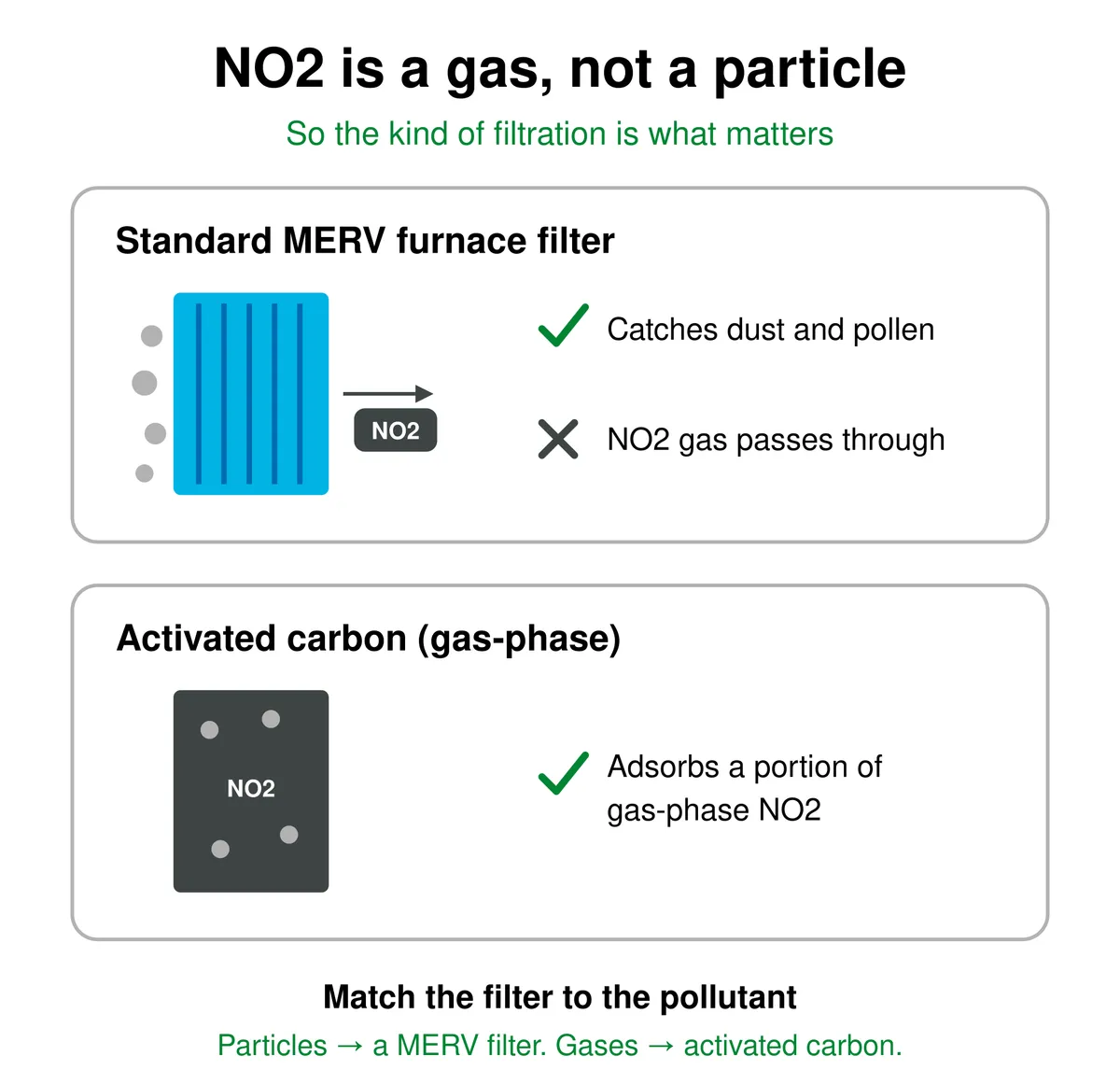
A standard MERV furnace filter won’t remove nitrogen dioxide, because NO2 is a gas — not a particle. MERV filters are built to capture particles like dust and pollen as air moves through your HVAC system, so gas molecules pass right through the fibers.
Lowering NO2 comes down to source control (vent gas stoves and space heaters outdoors), keeping distance from heavy traffic, and gas-phase filtration such as activated carbon, which can adsorb a portion of gas-phase pollutants like NO2.
- Particle filtration (MERV): captures dust, pollen, and other airborne particles.
- Gas-phase filtration (activated carbon): adsorbs a portion of gas-phase NO2 and odors.
Answer a few quick questions and we’ll match you to the right filter for your home.
Prefer to browse? Shop Filterbuy air filters →
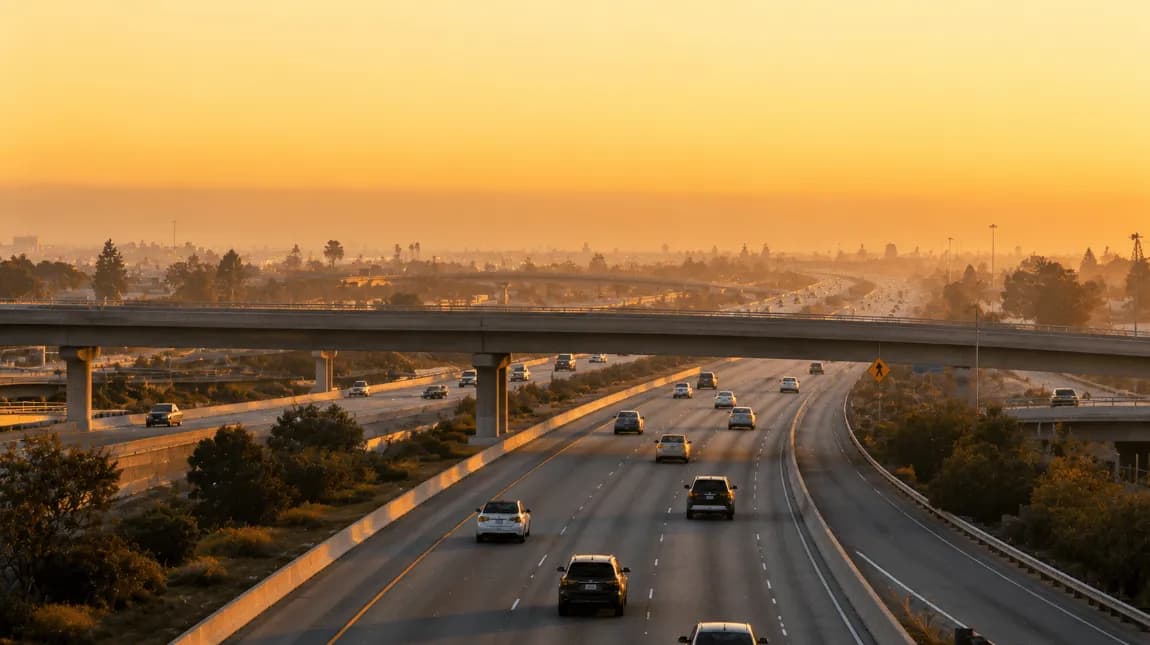
Nitrogen dioxide (NO2) is a reddish-brown gas produced mainly by burning fuel in vehicles, power plants, and industrial equipment. Outdoors, NO2 concentrates near highways, ports, and rail yards, where it irritates airways and can worsen asthma. It can also move indoors through open windows, attached garages, and combustion appliances. Filterbuy breaks down what NO2 actually is, where it comes from, and where ventilation, source control, and the right filtration strategy each play a distinct role in limiting exposure.
TL;DR Quick Answers
Nitrogen dioxide (NO2) forms when fuel burns at high temperatures, so outdoor levels are highest near busy roads, diesel equipment, and industrial combustion. Short-term spikes can trigger coughing, wheezing, and asthma flare-ups, while long-term exposure is linked to reduced lung function in children. Because NO2 is a gas rather than a particle, standard MERV-rated furnace filters, including the ones Filterbuy manufactures, do not remove it. Lowering exposure depends on limiting time near traffic corridors, venting combustion appliances to the outdoors, and using gas-phase filtration such as activated carbon media where needed.
Key Takeaways
Nitrogen dioxide (NO2) is a gaseous pollutant, not a particle, and it forms primarily from burning fossil fuels in vehicles, power plants, and industrial equipment.
The EPA's National Ambient Air Quality Standard for NO2 is 53 parts per billion averaged annually and 100 parts per billion averaged over one hour, based on the 98th percentile of daily maximums across three years.
NO2 concentrations drop off sharply with distance from a source, so homes and schools near highways, rail yards, or ports typically see the highest outdoor exposure.
Standard particulate furnace filters, including the MERV-rated filters Filterbuy manufactures, capture dust, pollen, and other particles but are not designed to adsorb gas-phase pollutants like NO2.
Gas stoves and other unvented combustion appliances can push indoor NO2 levels higher than typical outdoor levels.
Venting combustion sources outdoors, limiting time near heavy traffic, and using gas-phase filtration such as activated carbon media are the most effective ways to lower NO2 exposure.
The question I hear most often about nitrogen dioxide is some version of “isn't that basically smog?” It isn't, and that mix-up is exactly why I wanted to write this guide. NO2 has almost no smell or color at the concentrations most people actually breathe, so it never triggers the same reaction that smoke or dust does, even though it can be sitting right outside a window facing a busy street. I worked with David Clark, our licensed HVAC technician, to make sure the filtration section below reflects what a technician can actually install in a home, not just what reads well on paper. My goal is to separate what NO2 actually is from what a filter can and cannot do about it, so you are not left guessing. - Michelle Wan
What Is Nitrogen Dioxide (NO2)?
Nitrogen dioxide is one of a group of highly reactive gases known as nitrogen oxides, or NOx. It forms quickly when fuel burns at high temperatures, most often from cars, trucks, buses, off-road equipment, and power plants. NO2 is one of six criteria air pollutants regulated under the Clean Air Act, and EPA and WHO both use it as the indicator pollutant for the larger NOx group because it is the component of greatest health concern. NO2 also reacts in sunlight to help form ground-level ozone and fine particle pollution, so a single tailpipe or stack can contribute to more than one pollutant at once.
Where Does Outdoor NO2 Pollution Come From?
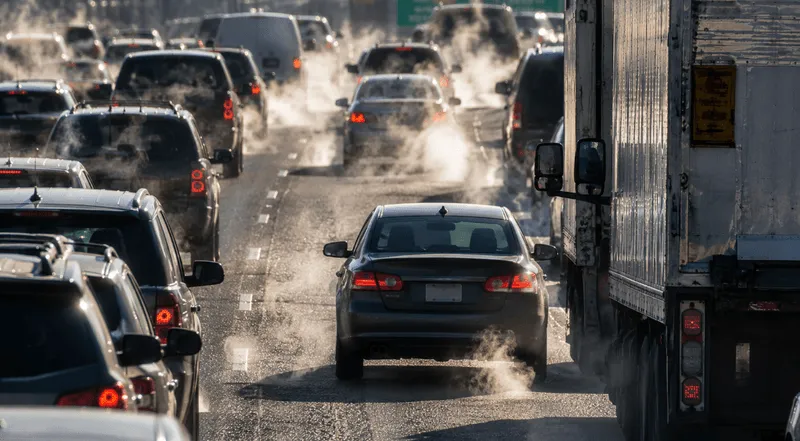
Traffic exhaust is the dominant outdoor source of NO2 in most U.S. cities, followed by power generation and industrial combustion. Because NO2 reacts and disperses quickly, concentrations fall off sharply with distance from the source. Monitoring near major roadways consistently shows higher readings than monitors set back from traffic, which is why EPA requires near-road monitoring in large urban areas. Warehousing and freight corridors add a similar, more localized effect from truck traffic and idling.
What We Hear From Customers: Homeowners along a truck route or near a rail yard are consistently the ones asking Filterbuy the most detailed filter replacement questions. It is rarely a coincidence. Proximity to a steady combustion source tends to matter more than people expect until they start paying attention to it.
How Far Is Far Enough? A meta-analysis of near-road monitoring data led by EPA researchers found that NO2 lingers longer than most other traffic pollutants. Only 17 to 21 percent of near-road NO2 disperses within the first 100 to 300 meters, compared with more than half of carbon monoxide and black carbon over that same stretch. A home three football fields from a highway is still breathing most of the NO2 concentration measured at the road's edge, even though other traffic pollutants have largely thinned out by then.
Quick Self-Check: Signs Your Home May Sit In A Higher NO2 Zone
Your home sits within roughly 300 meters, or about three football fields, of a highway, major arterial road, rail yard, or port.
Your neighborhood has a dedicated EPA near-road monitor, which usually signals a location already flagged for elevated traffic pollution.
Windowsills and exterior walls facing the road collect noticeably more soot or grime than the back of the house.
Your household cooks with a gas range and rarely runs a range hood vented to the outdoors.
What Are The Health Effects Of NO2 Exposure?
Short-term exposure to elevated NO2 can irritate the airways, causing coughing, wheezing, and difficulty breathing, and it is linked to more emergency room visits and hospital admissions among people with asthma. Longer-term exposure is associated with reduced lung function and a greater likelihood of developing asthma in children. People who live near major roadways, children, older adults, and people with asthma or COPD carry the highest risk. NO2 is also one of the pollutants EPA factors into the daily Air Quality Index, so a location's AQI reading is not only about smoke or ozone. The WHO's 2021 global air quality guidelines update cut the recommended annual average for NO2 from 40 to 10 micrograms per cubic meter, reflecting a larger body of evidence on health effects at lower concentrations than previously understood.
In Plain Numbers: EPA's 53 parts-per-billion annual standard and WHO's 10 micrograms-per-cubic-meter guideline use different units, so they are hard to compare at a glance. Converted to the same scale, EPA's annual limit works out to roughly 100 micrograms per cubic meter, about ten times looser than the WHO guideline. The two organizations are not just wording the same number differently. WHO's target is genuinely stricter.
How Does Outdoor NO2 Get Inside Your Home?
Outdoor NO2 enters homes through open windows and doors, gaps in the building envelope, and attached garages, especially in houses close to busy roads. Indoor levels can climb even higher when combustion appliances such as gas stoves, ovens, or unvented space heaters add their own NO2 on top of what drifts in from outside, a pattern EPA's page on nitrogen dioxide's impact on indoor air quality lays out in detail. In homes without gas-burning appliances, indoor NO2 levels are typically about half of outdoor levels. In homes that cook with gas and lack adequate venting, indoor levels can exceed outdoor levels, particularly right around the stove during and after cooking. Gas stoves are also a leading indoor source of VOCs, so a household tackling one combustion-related pollutant is often well positioned to address the other with Filterbuy's guide to removing VOCs from indoor air.
A Detail That Surprises Most Readers: The room most likely to post the highest NO2 reading in a home with a gas range is the kitchen itself, not the outdoor air leaking in. Thinking of NO2 as strictly a highway problem means the stove behind you gets overlooked.
What Ventilation And Filtration Steps Help With NO2?
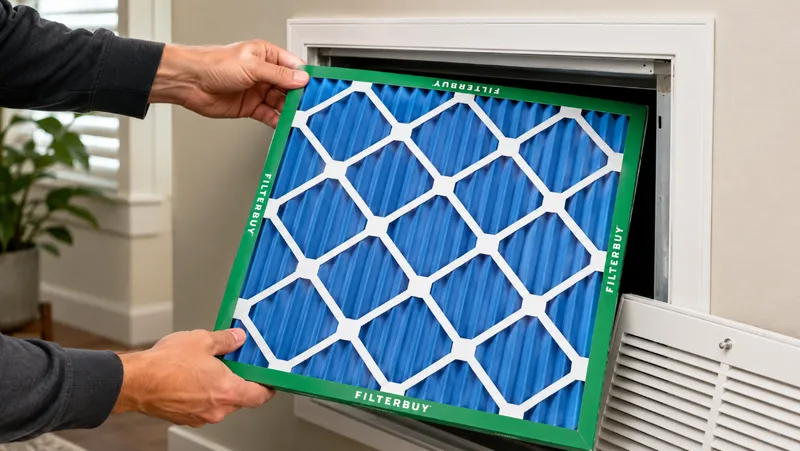
NO2 is a gas, not a particle, so it calls for a different approach than typical dust and allergen filtration. Standard MERV-rated furnace filters are built to capture particulate matter like dust, pollen, and pet dander as air passes through the HVAC system, but their fibers do not adsorb gas molecules the way a sorbent material does. Reducing NO2 exposure starts with source control: vent gas stoves and space heaters to the outdoors, use a range hood that exhausts outside rather than recirculates, and keep combustion appliances properly tuned. Where gas-phase filtration is needed, activated carbon filtration can adsorb a portion of gas-phase pollutants, and while Filterbuy markets carbon media for odors and VOCs specifically, the same sorbent principle applies to other gas-phase pollutants like NO2. EPA's guide to air cleaners in the home notes that no air cleaner removes all gaseous pollutants and that performance depends heavily on how much sorbent material the filter contains. Pairing source control, ventilation, and the right filter type for the pollutant in question is the most realistic path to healthier indoor air.
“The most common misconception I run into is that a higher MERV rating automatically helps with gases like NO2. It doesn't. MERV measures how well a filter catches particles, full stop. Once people understand that one distinction, the rest of this decision gets a lot easier.” - Michelle Wan, Filterbuy Air Quality Writer
After manufacturing filters for over a decade and serving more than two million households, we've learned that no single filter type solves every air quality problem. The question we hear most about nitrogen dioxide is whether a better filter fixes it, and the honest answer is no—not by itself. NO2 is a gas, so it calls for a different strategy than the particulate filtration most of our products are built for. That is why we point customers toward source control and gas-phase media, in addition to a properly rated furnace filter, when NO2 is a concern.
— David Heacock, Founder and CEO, Filterbuy
Essential Resources
The EPA's overview of nitrogen dioxide pollution covers how NO2 forms, its role as the NOx indicator pollutant, and near-road monitoring requirements.
AirNow's air quality guide for nitrogen dioxide explains the current NAAQS levels and practical steps for reducing personal exposure.
The American Lung Association's nitrogen dioxide resource page details respiratory health effects and which groups face the highest risk.
The CDC's ToxFAQs sheet on nitrogen oxides summarizes exposure routes, symptoms, and regulatory limits in accessible language.
OSHA's nitrogen dioxide chemical data page provides the workplace exposure limit for context on how outdoor and occupational standards differ.
HUD User's indoor air quality guidance outlines ventilation and source-control strategies for homes with fuel-burning appliances.
The California Air Resources Board's air cleaning devices guide compares particle filtration and gas-phase filtration so consumers can match a device to the pollutant they are targeting.
Supporting Statistics
Traffic NO2 Drives Childhood Asthma. A U.S. Department of Transportation-funded study tied traffic-related NO2 to a measurable share of childhood asthma nationally.
141,900 new childhood asthma cases in 2010 were attributable to NO2, about 18 percent of that year's total.
Urban children faced roughly double the risk of rural children.
Source: U.S. Department of Transportation, Bureau of Transportation Statistics
Gas Stoves Spike Indoor NO2. Cooking with gas raises NO2 well above what electric stoves produce.
NO2 runs 50–400 percent higher in homes with gas stoves than in homes with electric stoves.
Source: American Public Health Association, 2023 policy brief citing EPA estimates
Satellite Data Finds Hidden Hotspots. Highways are not the only place NO2 spikes.
NASA satellite mapping shows NO2 spikes near food processing facilities and high-rise apartments over 10 stories.
Source: NASA Earth Observatory
Final Thoughts And Opinion
Nitrogen dioxide is easy to overlook because it rarely announces itself the way smoke or dust does, but its footprint near highways and industrial corridors is well documented. Our take, after walking through this topic with our own HVAC reviewer, is that making an invisible gas visible only matters if it changes what you do next. Reduce it at the source when possible, ventilate combustion appliances to the outdoors, and layer in gas-phase filtration where it makes sense, rather than expecting a standard particulate filter to do a job it was not built for.
Next Steps
Check Filterbuy's real-time air quality and wildfire smoke map before spending extended time near a highway or industrial area.
Confirm your gas stove, oven, or space heater is vented to the outdoors, and use a range hood that exhausts outside rather than recirculates.
Ask an HVAC professional whether a gas-phase or activated carbon filtration option makes sense for your home alongside your regular furnace filter.
Keep up with routine Filterbuy furnace filter changes to maintain strong particulate filtration for dust, pollen, and other airborne particles.
FAQ
Is Nitrogen Dioxide The Same As Ozone?
No. Nitrogen dioxide and ozone are related but different pollutants. NO2 comes directly from combustion, while ground-level ozone forms afterward, when NO2 and other compounds react in sunlight. NO2 is a precursor to ozone rather than the same gas.
Can Air Filters Remove Nitrogen Dioxide?
Standard MERV-rated particulate filters are built to capture dust, pollen, and other particles, not gases, so they are not an effective tool against NO2 on their own. A gas-phase filter that uses activated carbon or another sorbent can adsorb some gas-phase pollutants, including NO2, though EPA notes that no air cleaner removes all gaseous pollutants from a home.
What Is A Safe Level Of Nitrogen Dioxide?
In the United States, the EPA's health-based standard is 53 parts per billion averaged over a year and 100 parts per billion averaged over one hour. The World Health Organization's global guideline is stricter, at 10 micrograms per cubic meter annually. Converted to the same unit, that WHO figure is roughly ten times tighter than the EPA's annual limit, reflecting newer evidence on health effects at lower concentrations.
Does Wildfire Smoke Contain Nitrogen Dioxide?
Yes. Wildfire smoke is a mixture of gases and particles that includes NO2 along with carbon monoxide, volatile organic compounds, and fine particulate matter, in addition to the traffic and industrial sources that produce NO2 year-round. During an active fire event, check Filterbuy's live wildfire and smoke map to see how smoke and the pollutants it carries are moving through your area.
How Can I Reduce My Exposure Near A Busy Road?
NO2 concentrations drop off quickly with distance from traffic, so even a modest setback from the roadway helps. Indoors, keep windows closed during high-traffic periods, run ventilation that draws from a cleaner air source when possible, and avoid prolonged outdoor activity directly alongside heavy traffic corridors.
Glossary
NO2 (Nitrogen Dioxide): A reddish-brown gas formed when fuel burns at high temperatures, used by EPA and WHO as the indicator pollutant for the broader nitrogen oxides group.
NOx (Nitrogen Oxides): A family of reactive gases that includes nitrogen dioxide (NO2) and nitric oxide (NO), produced mainly by combustion.
Criteria Pollutant: One of six common air pollutants, including NO2, for which EPA sets National Ambient Air Quality Standards under the Clean Air Act.
NAAQS: National Ambient Air Quality Standards, the EPA's legal limits for criteria pollutants in outdoor air.
ppb (Parts Per Billion): A unit used to measure very low concentrations of a gas in air, such as NO2.
Near-Road Monitoring: EPA-required air quality monitoring stations placed close to major roadways to capture peak traffic-related pollution.
Gas-Phase Filtration: A filtration method that uses a sorbent material, such as activated carbon, to adsorb gaseous pollutants rather than solid particles.
MERV (Minimum Efficiency Reporting Value): A rating scale for how effectively a particulate air filter captures particles of different sizes.
Activated Carbon: A porous sorbent material used in gas-phase filters to adsorb certain gases and odors, including a portion of gas-phase NO2.
VOC (Volatile Organic Compound): A category of carbon-based chemicals that evaporate easily into the air, often from fuels, solvents, and building materials.
About The Author
Michelle Wan: View Michelle Wan's Author Profile
Michelle Wan is Filterbuy's Brand Manager and Air Quality Writer. She covers outdoor and indoor air quality topics, translating pollutant science and EPA guidance into practical steps homeowners can act on.
Reviewed by David Clark, Filterbuy's Licensed HVAC Technician.