
AQI Explained for People with Asthma or COPD
May 19, 2026
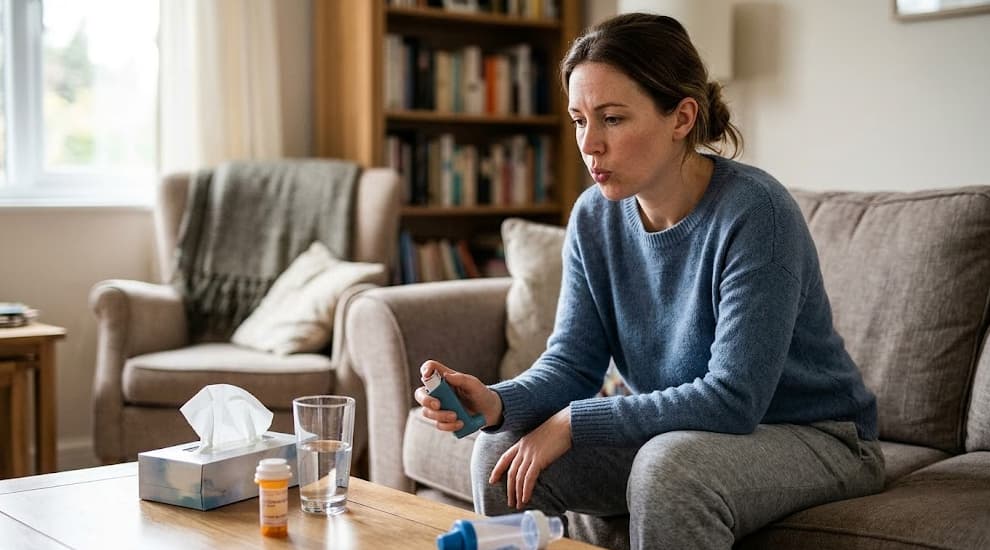
You check your phone’s weather app and see an orange alert: "Unhealthy for Sensitive Groups." You might wonder, does that include me? And if I stay inside, am I actually safe?
With wildfire smoke becoming more frequent and heat waves driving up ozone levels, air quality alerts are becoming a regular part of life. But for the millions of people living with asthma or Chronic Obstructive Pulmonary Disease (COPD), these numbers aren't just weather statistics; they are vital health indicators.
Navigating the Air Quality Index (AQI) can be confusing. Between the colors, numbers, and changing advice, it's hard to know exactly when to worry. This guide cuts through the confusion with plain-language explanations of what the AQI means for your lungs and clear, practical steps to protect yourself, both outdoors and inside your home.
Key Takeaways
The Air Quality Index (AQI) measures the level of air pollution and its impact on health, making it an essential resource for individuals with asthma, COPD, and other respiratory conditions.
Understanding the AQI can help you make informed decisions about when it’s safe to go outdoors and when precautions are necessary.
Pay attention to the colors and numbers of the AQI to assess air quality risks; lighter colors indicate better air quality, while darker colors signal higher pollution levels.
Simple steps like staying indoors, using air purifiers, and wearing masks can help protect your lungs during high AQI levels.
Staying informed and proactive about air quality can significantly improve your respiratory health and overall well-being.
What Is AQI and Why It Matters More If You Have Asthma or COPD
The Air Quality Index, or AQI, is the yardstick the U.S. Environmental Protection Agency (EPA) uses to report daily air quality. Think of it like a thermometer for the atmosphere: it runs from 0 to 500. The higher the AQI value, the greater the level of air pollution and the greater the health concern.
For the general population, air quality might be an afterthought until the sky turns hazy. However, if you manage a chronic lung condition, your threshold for danger is much lower.
Asthma and COPD fall under what the EPA classifies as "sensitive groups." This means your lungs are more reactive to irritants. Exposure to poor air quality can trigger inflammation, tighten airways, and lead to symptom onset much faster than in someone with healthy lungs. Understanding the AQI helps you predict these risks before you step out the door.
AQI Colors and Numbers Explained (With Asthma & COPD in Mind)
The EPA divides the AQI into six categories. Each category corresponds to a different level of health concern and is assigned a specific color to make it easy to understand at a glance.
Here is how people with asthma or COPD should interpret these ranges:
| AQI Range | Color | What It Means | What People with Asthma/COPD Should Do |
|---|---|---|---|
| 0–50 | Green | Good | Air quality is satisfactory. Enjoy your outdoor activities as normal. |
| 51–100 | Yellow | Moderate | Acceptable for most. However, if you are unusually sensitive to ozone or particle pollution, consider reducing prolonged outdoor exertion. |
| 101–150 | Orange | Unhealthy for Sensitive Groups | Caution Zone. General public is less likely to be affected, but you are at greater risk. Reduce prolonged or heavy exertion outdoors. |
| 151–200 | Red | Unhealthy | Everyone may begin to experience health effects; sensitive groups may experience more serious health effects. Avoid prolonged outdoor exertion. |
| 201–300 | Purple | Very Unhealthy | Health alert: everyone may experience more serious health effects. Avoid all outdoor physical activity. |
| 301+ | Maroon | Hazardous | Health warning of emergency conditions. Everyone is more likely to be affected. Remain indoors. |
Important Note: Do not treat the "Orange" range as mild. If you have asthma or COPD, this is your signal to start taking precautions.
What “Unhealthy for Sensitive Groups” Really Means
You will often see the phrase "Unhealthy for Sensitive Groups" on weather reports. This specific category (AQI 101–150) is critical because it draws a line between the general public and those with specific health conditions.
Who is in this group?
People with lung disease (such as asthma and COPD)
People with heart disease
Children and teenagers
Older adults
When the air quality hits this orange level, you might feel fine initially. However, inflammation in the airways can build up over hours of exposure. You do not need to "push through it." If the AQI is orange, prioritize your lung health over outdoor errands or exercise.
If you have asthma or COPD, orange AQI days are already a caution zone. Don't wait for the alert to turn red to take action.
The Two Air Pollutants That Most Often Trigger Breathing Problems
While the AQI tracks five major pollutants, two are the primary culprits for triggering asthma and COPD flare-ups.
Particle Pollution (PM2.5)
These are tiny particles—2.5 micrometers in diameter or smaller—found in smoke, haze, and dust. Because they are so small, they can bypass your nose's natural defenses and penetrate deep into the lungs, and even enter the bloodstream. This is the primary concern during wildfire smoke events or near heavy traffic.
Ground-Level Ozone
Ozone is good when it's high up in the atmosphere, protecting us from the sun, but at ground level, it's a harmful pollutant. It forms when pollutants from cars and power plants react with sunlight. This is why ozone alerts often happen on hot, sunny afternoons. Ozone acts like a sunburn on your lungs, irritating the airways and making it difficult to breathe deeply.
What to Do at Each AQI Level (Quick Action Guide)
Knowing the numbers is one thing; knowing how to act is another. Here is a quick decision guide for managing your day.
Green (0–50):
Outdoors: Go for it! Great time for exercise.
Indoors: Open windows to ventilate your home if the temperature allows.
Yellow (51–100):
Outdoors: Generally safe. If you are extremely sensitive, listen to your body.
Indoors: Keep standard air filtration running.
Orange (101–150):
Outdoors: Limit time outside. Reduce the intensity of activities (walk instead of jog).
Indoors: Close windows. Check that your HVAC filter is clean.
Symptoms: Keep your rescue inhaler accessible.
Red (151–200):
Outdoors: Avoid long or intense outdoor activities. Reschedule errands if possible.
Indoors: Run air purifiers or HVAC systems with high-efficiency filters.
Symptoms: Watch closely for wheezing or shortness of breath.
Purple/Maroon (201+):
Outdoors: Avoid all outdoor activity.
Indoors: Create a "clean room" (more on this below). Keep indoor activity low.
Symptoms: Follow your asthma/COPD action plan strictly.
How to Check AQI the Right Way
Don't just look out the window—some dangerous pollutants, like ozone, are invisible. Use trusted resources like AirNow.gov or the AirNow app, which provides official EPA data.
When checking, look for the pollutant-specific AQI. Is the alert for ozone or PM2.5? If it's an ozone alert day, air quality often worsens in the afternoon. This means you might be able to safely run errands in the early morning before the sun "cooks" the pollutants into ozone.
Turning “Stay Indoors” Into Real Protection at Home
When the news says "stay indoors," it assumes the air inside your house is cleaner than the air outside. But outdoor pollution enters through open windows, doors, and natural ventilation gaps. Here is how to ensure your home is actually a safe haven.
Why Indoor Air Quality Matters on High AQI Days
If your home isn't sealed or filtered properly, the indoor AQI can eventually match the outdoor AQI. To protect your lungs, you need to actively manage your indoor environment.
Simple Ways to Reduce Exposure Indoors
Keep the envelope closed: Shut all windows and doors. Seal up drafty gaps with towels if smoke is heavy.
Stop adding to the problem: Don't burn candles, use incense, or smoke indoors. Avoid frying food, which creates its own particle pollution.
Run your system: If you have central AC, run it on "recirculate" mode so it doesn't pull in fresh outdoor air.
The Role of HVAC Air Filters
Your HVAC system is your first line of defense against particle pollution. The air filter in your furnace or AC unit captures dust and debris, but during high AQI events, filter quality matters.
MERV Ratings: Filters are rated by MERV (Minimum Efficiency Reporting Value). A higher rating means it catches smaller particles.
PM2.5 Capture: To capture the fine particles found in smoke and smog (PM2.5), many experts suggest using a higher-efficiency filter, such as a MERV 13, provided your system can handle the airflow.
Limitations: Standard mechanical filters capture particles, not gases. They won't remove ozone or chemical odors, but they are highly effective against smoke and dust.
Always check your system's manual to find the right filter size and maximum MERV rating.
Wildfire Smoke Days: Extra Precautions for Asthma and COPD
Wildfire smoke is a concentrated source of PM2.5 and can travel thousands of miles. During a smoke event:
Stay indoors as much as possible.
Create a clean-air room. Choose a room (like a bedroom) with few windows. Run a portable air cleaner in this room and keep the door closed to create a sanctuary for sleeping.
Check your filter. Smoke clogs filters faster than normal dust. Check your HVAC filter more frequently and replace it if it looks dirty.
Follow your plan. Have your medication ready and consult your written asthma/COPD action plan.
When to Seek Medical Care
This article is for educational purposes only and is not a substitute for medical advice. If you experience unusual or severe symptoms, such as difficulty breathing, chest pain, tightness, or dizziness. Consult your clinician or seek emergency care immediately.
To help prevent potential health issues, consider improving your indoor air quality with premium pleated filters, such as those from Filterbuy, which reduce allergens and pollutants in your home.
Take the Next Step for Better Air Quality
You can't control the weather or the outdoor air quality, but you can control the air inside your home. Ensuring your HVAC system is equipped with the right filter is one of the easiest ways to protect your lungs from outdoor pollution.
Not sure if your current filter is up to the task? Check out our guide on finding your filter size or explore our selection of high-efficiency filters designed to capture fine particles.
Frequently Asked Questions
What AQI is bad for asthma?
AQI values above 100 (Orange/Unhealthy for Sensitive Groups) are considered unhealthy for people with asthma. At this level, you should reduce prolonged outdoor exertion to prevent symptom flare-ups.
Is AQI 150 dangerous for COPD?
Yes, an AQI approaching or exceeding 150 is in the "Unhealthy" (Red) range. For someone with COPD, this level of pollution can significantly irritate the airways and make breathing difficult, so staying indoors is recommended.
What does “Unhealthy for Sensitive Groups” mean?
This category (AQI 101–150) means the general public is unlikely to be affected, but older adults, children, and people with lung or heart disease are at greater risk of experiencing symptoms.
Is PM2.5 or ozone worse for asthma?
Both are dangerous. Ozone is a powerful irritant that can trigger immediate attacks, while PM2.5 particles penetrate deep into the lungs and cause inflammation. The "worst" pollutant often depends on the season (ozone in summer, PM2.5 during fires/winter).
Should I exercise outside when AQI is orange or red?
It is generally best to avoid outdoor exercise when the AQI is orange or red if you have a lung condition. Exercise makes you breathe deeper and faster, pulling more pollutants into your lungs.
How can I improve indoor air quality on high AQI days?
Keep windows closed, run your air conditioner on strict recirculation, avoid frying foods or burning candles, and use high-quality air filters to trap incoming particles.
Can air filters help during bad air quality days?
Yes. High-efficiency HVAC filters (like MERV 13) and portable air purifiers can significantly reduce the amount of fine particle pollution (PM2.5) circulating inside your home.
How often should I check AQI?
During wildfire season or summer heat waves, check the AQI daily. Because air quality can change rapidly with the wind or time of day, checking it in the morning and afternoon is a good habit.