
Raleigh Real-Time AQI Tracker


Get Alerts For Unhealthy AQI In Your Area
When air quality in your area reaches unhealthy levels, we'll send you a quick alert, along with expert tips on how to reduce your exposure.
What's Actually In Raleigh Air Today?
What High AQI Means for Your Lungs in Raleigh
How to Read AQI
The Air Quality Index (AQI) measures how polluted the air is and how it may affect your health.
0–50 (Good): Air quality is satisfactory.
51–100 (Moderate): Acceptable, but some pollutants may pose minor concerns.
101–150 (Unhealthy for Sensitive Groups)
151–200 (Unhealthy)
201–300 (Very Unhealthy)
301+ (Hazardous)
Moderate
Still okay for most, but if you have asthma or allergies, take it easy and avoid long outdoor workouts.
Shop MERV 11 filters→What's the Right Filter for Your AQI Level?
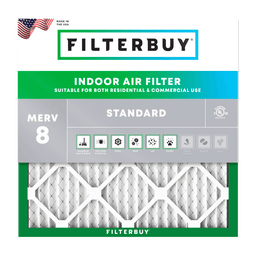
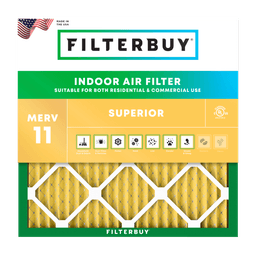
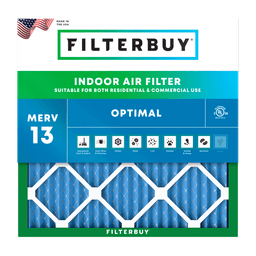

Live Air Quality Index AQI Map Raleigh North Carolina Today | Filterbuy.com
Check Raleigh's current air quality conditions below—then consider what's happening inside your home. After manufacturing air filters for over a decade and serving more than two million households, we've learned something most AQI maps won't tell you: outdoor readings only capture half the story.
When Raleigh's AQI spikes from Triangle traffic, pollen season, or drifting wildfire smoke, those same pollutants infiltrate your home and get recirculated through your HVAC system. Our customer data shows that households in humid climates like North Carolina often face compounding challenges—outdoor particulates mixing with indoor moisture creates ideal conditions for mold and allergen buildup that standard AQI readings never reflect.
This page provides real-time outdoor conditions across Wake County, plus the indoor air quality insights we've gathered from helping millions of families breathe cleaner air.
TL;DR Quick Answers
Live Air Quality Index AQI Map Now Today in Raleigh, North Carolina
Where to check: Visit AirNow.gov and enter your Raleigh ZIP code for real-time AQI data updated continuously from local monitoring stations.
Current conditions typically range:
Green (0-50) most days — safe for outdoor activities
Yellow to Orange (51-150) during the summer ozone season and high pollen periods
Elevated readings are possible during wildfire smoke events
What Raleigh residents should know:
Ground-level ozone peaks on hot summer afternoons
Spring and fall pollen impact air quality beyond what AQI measures
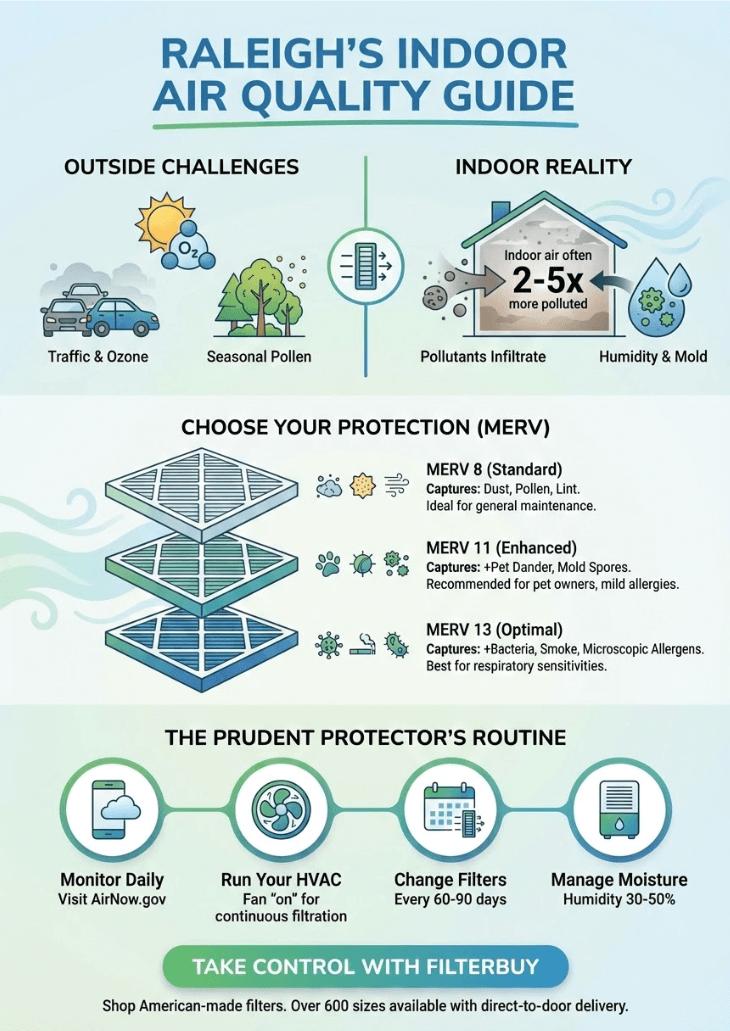
Indoor pollutant levels often reach 2-5 times outdoor concentrations
Protect your indoor air:
Close windows when AQI exceeds 100
Run HVAC with fan set to "on" for continuous filtration
Use MERV 11 or MERV 13 filters to capture fine particles
Pro Tip from our experience: After serving thousands of Raleigh-area households, we've found that families who monitor AQI daily and maintain consistent filter replacement schedules experience noticeably better indoor air comfort—especially during the Triangle's challenging ozone and pollen seasons.
Top 5 Takeaways
1. Monitor Raleigh's AQI Daily
Visit AirNow.gov for real-time data
Check conditions before outdoor activities
Pay extra attention May–September (ozone season)
Monitor spring and fall for pollen impacts
2. Indoor Air Is Often Worse Than Outdoor Air
EPA research confirms indoor pollutants are 2-5x higher than outdoor levels
Your home concentrates particles from multiple sources
Indoor air quality matters most—your family spends 90% of their time inside
3. Raleigh Faces Unique Challenges
Ground-level ozone from I-40/I-440 traffic
Intense seasonal pollen from athe bundant tree canopy
Humidity-driven mold and biological growth
Construction dust from rapid regional development
4. Your HVAC Filter Is Your Primary Defense
Close windows when AQI exceeds 100
Run your system to continuously filter indoor air
MERV 11 captures pet dander and mold spores
MERV 13 captures fine particles and allergens
5. Consistency Beats Perfection
Change filters every 60-90 days
A maintained MERV 11 outperforms a neglected MERV 13
Set reminders or subscribe for automatic delivery
The best filter strategy is one you'll actually follow
Understanding Raleigh's Air Quality Index
The index considers five major pollutants: ground-level ozone, particulate matter, carbon monoxide, sulphur dioxide, and nitrogen dioxide. The scale runs from 0 to 500, with higher numbers indicating greater cause for health concern. For most citizens, the most important pollutants are ozone in the summer months of the year and fine particulate matter (PM2.5) throughout the year.
It typically enjoys moderate air quality compared to larger metropolitan areas, but that doesn't mean Triangle residents can ignore it. Wake County's rapid growth means more vehicles on roads like I-40, I-440, and US-1, contributing to ozone formation when summer heat bakes vehicle emissions in stagnant air.
What AQI Levels Mean for Your Health
Readings between 0 and 50 are good air quality - perfect conditions for outdoor activities at Umstead, Lake Johnson, or Dorothea Dix Park.
Once it goes to 101-150, it becomes unhealthy for sensitive groups. Children, the elderly, and those with breathing problems should restrict outdoor activities for a longer period of time during these times. Readings from 151-200, not just sensitive populations, are affected, and you should consider moving workouts and extended activities indoors.
AQI levels that are above 200 are serious health concerns. Very unhealthy conditions (201-300) call for a health alert, and residents should greatly curb the time spent outdoors.
Hazardous readings include those above 300, which indicate emergency conditions where all outdoor activities are frowned upon.
Why Indoor Air Quality Matters More Than You Think
From our experience working with North Carolina households, we've identified a pattern that surprises most homeowners. During poor outdoor air quality events, indoor particulate levels often exceed outdoor readings within hours. Your HVAC system cycles air continuously, and without proper filtration, it simply redistributes pollutants throughout your living space.
The compounding factor with its humid sub-tropical climate is moisture. High humidity encourages mold growth and dust mites, with their associated pollutants added to whatever particulates enter from the outside. A home's indoor air quality is a cumulative issue - the pollutants from the outside being mixed with the indoor-generated pollutants that come from cooking, pet dander, and the residues from cleaning products, as well as from off-gassing from furniture and building materials.
Protecting Your Family When AQI Rises
Monitor conditions proactively. Check Raleigh's AQI before planning outdoor activities, especially for children and family members with asthma or respiratory sensitivities. Morning hours typically offer better air quality than afternoons during ozone season.
Create cleaner indoor air. Your HVAC system's air filter serves as the primary defense against airborne particulates entering your living space. During elevated outdoor AQI conditions, that filter works overtime—capturing pollen, dust, smoke particles, and other pollutants before they circulate through your home.
Reduce indoor pollution sources. Vacuum regularly with a HEPA-equipped machine, minimize use of aerosol products, ensure proper ventilation when cooking, and address any moisture issues that could promote mold growth.
The Role of HVAC Filtration in Indoor Air Quality
Your heating and cooling system circulates all the air in your home multiple times daily. The filter you choose determines what gets captured versus what keeps recirculating for your family to breathe.
After manufacturing millions of filters and hearing from customers across climate zones, we've found that consistent filter replacement matters as much as filter selection. A poor-quality filter that is clogged offers worse protection than a new ordinary filter. For Raleigh homes, usually the combination of humidity, pollen, and general particulate load means replacing filters every 60-90 days (more frequently during peak pollen season or smoke events).
"What outdoor AQI readings can't tell you is that your HVAC system becomes either your best defense or your biggest liability during poor air quality events—after manufacturing over 10 million filters and serving more than two million households, we've seen firsthand how the right filtration transforms a home from a pollution trap into a genuine clean air sanctuary."
-The Filterbuy Team
Your Air Quality Toolkit: Resources We Rely On and Recommend
Don't take your indoor air for granted - and don't guess about what's going on outside of your door either. After over a decade of manufacturing air filters and helping more than two million households breathe cleaner air, we've learned which resources actually matter when you need reliable air quality information. These are the same tools we point our own customers to when they ask how to stay ahead of poor air quality days in the Triangle.
Check Current Conditions Before You Head Outside: EPA AirNow Raleigh
This is the first place to stop before doing any outdoor activity. AirNow uses real-time data from regulatory-grade monitors to provide data across the entire county of Wake and in the familiar color-coded format. We recommend bookmarking this page—knowing current conditions is the first step to protecting your family.
Resource: https://www.airnow.gov/?city=Raleigh&state=NC&country=USA
See Wildfire Smoke Before It Reaches Your Home: EPA Fire and Smoke Map
Here's something that surprises many Raleigh homeowners: smoke from fires hundreds of miles away can push your local AQI into unhealthy ranges with little warning. This map shows active fires, smoke plume trajectories, and real-time PM2.5 readings—giving you the heads-up you need to close windows and check your air filter before smoke arrives.
Resource: https://fire.airnow.gov/
Plan Tomorrow's Activities Today: NC Division of Air Quality Forecasts
Being proactive meansknowingw what's coming, not just being reactionary to what's already here. The NC Division of Air Quality has daily forecasts for both ozone and particulate matter for the entire state (100 counties).
Understand the Bigger Picture: NC State Air Quality Portal
For Prudent Protectors who want to dig deeper than basic AQI numbers, this NC State University resource offers historical trends, ozone modeling, and wind pattern data specific to the Triangle. Understanding these patterns helps you anticipate—not just react to—air quality changes in your area.
Resource: https://airquality.climate.ncsu.edu/
Track What AQI Doesn't Measure: NC DEQ Pollen Monitoring
Here's what most air quality maps won't tell you: pollen isn't included in standard AQI calculations, yet it significantly affects respiratory health for millions of Triangle residents. The NC Division of Air Quality operates the only state-run pollen sampler in North Carolina, right here in Raleigh. During pollen season, these daily reports help you understand the full picture of what's floating through your air.
Resource: https://www.deq.nc.gov/about/divisions/air-quality/air-quality-monitoring/pollen-monitoring
Know When to Modify Outdoor Plans: EPA AQI Health Guidance
The color codes are helpful, but understanding what each level actually means for your family's health is what empowers you to make smart decisions. This EPA guide explains how different AQI categories affect sensitive groups—children, older adults, and anyone with asthma or heart conditions. Knowledge is protection.
Resource: https://www.airnow.gov/aqi/aqi-basics/
Anticipate Weather-Driven Air Quality Changes: NWS Raleigh Forecasts
Air quality doesn't exist in a vacuum—weather patterns directly influence how pollutants concentrate or disperse over the Triangle. The National Weather Service Raleigh office integrates meteorological factors like temperature inversions and stagnant air conditions into their forecasts, helping you stay one step ahead.
Resource: https://www.weather.gov/rah/airquality
What the Research Confirms—And What We've Seen Firsthand
After manufacturing filters for over a decade and serving more than two million households, we've developed insights that go beyond published research. Here's what federal data reveals—combined with real-world observations from millions of filter shipments and customer interactions.
Indoor Air Is Often Worse Than Outdoor Air
The Research: EPA studies found that Americans spend 90% of their time indoors, where pollutant concentrations are frequently 2 to 5 times higher than outdoor levels. During certain activities, indoor levels can exceed outdoor concentrations by 100 times or more.
Source: U.S. Environmental Protection Agency, "Indoor Air Quality" https://www.epa.gov/report-environment/indoor-air-quality
Raleigh Faces Persistent Ozone Challenges
The Research: The American Lung Association's 2024 "State of the Air" report found:
Raleigh-Durham achieved its best-ever particle pollution levels
However, ozone smog actually increased
Metro area ranked 116th worst nationally for ozone pollution
Nationally, 131 million Americans (39%) live in areas with unhealthy air pollution
A Notable Trend: Raleigh-area customers increasingly choose MERV 11 and MERV 13 over basic MERV 8 filters. This shift accelerated around 2018 and continues today. Customer feedback ranks outdoor air infiltration among the top three reasons for upgrading filter efficiency.
Source: American Lung Association, "State of the Air 2024 - Raleigh-Durham" https://www.lung.org/media/press-releases/sota-raleigh-2024
Air Quality Directly Impacts Respiratory Health
The Research:
Approximately 25 million Americans currently have asthma
Ozone and particulate matter are recognized triggers for respiratory symptoms
EPA's Science Advisory Board ranks indoor air pollution among the top five environmental risks to public health
Real-World Results: Customers upgrading from MERV 8 to MERV 11 or MERV 13 consistently report:
Fewer symptom days for sensitive family members
Reduced reliance on standalone air purifiers
Noticeable improvement in overall indoor air comfort
That feedback matters more to us than any specification sheet.
Source: U.S. Environmental Protection Agency, "Why Indoor Air Quality is Important to Schools" https://www.epa.gov/iaq-schools/why-indoor-air-quality-important-schools
Final Thoughts and Opinion
After over a decade of manufacturing air filters and serving more than two million households—including thousands in Raleigh-Durham—we want to share a perspective that goes beyond the data.
The Shift We've Witnessed
Something changed in how people think about indoor air. We watched it happen through our order data and customer conversations.
Before 2020:
Most customers defaulted to MERV 8 filters
Filter changes happened reactively
Indoor air quality was an afterthought
After 2020:
MERV 11 and MERV 13 adoption accelerated dramatically
Customers asked informed questions about particle capture efficiency
Families connected filtration to respiratory health
Subscription services grew as homeowners prioritized consistency
Our opinion: This heightened awareness isn't temporary. Once you understand that your home's air can be meaningfully improved, you don't go back to ignoring it.
You can't control what happens outside your walls.
You can't reduce I-40 traffic, eliminate pollen from Raleigh's tree canopy, or stop ozone from forming on hot afternoons.
But you can control what happens inside.
Your HVAC system circulates air through your home multiple times daily. The filter determines what stays airborne and what gets captured.
Our opinion after a decade in this industry:
Indoor air quality is one of the most impactful, most affordable, and most overlooked ways to protect your family's health and comfort.
The families who understand this—who check air quality index readings, maintain consistent filter schedules, and match filtration to their needs—breathe easier in every sense.
We believe you can be one of them. And we're here to make it simple.
Next Steps: Take Control of Your Indoor Air Today
Understanding Raleigh's air quality challenges is the first step. Now it's time to take action. Here's a clear roadmap to protect your family's indoor air—starting today.
Step 1: Know Your Current Filter Situation
Before making changes, assess what you're working with.
Check your existing filter:
Locate it in the return air vent, air handler, or furnace
Note the size printed on the frame (length x width x depth)
Identify the current MERV rating
Assess condition—is it visibly dirty or clogged?
Step 2: Evaluate Your Household's Specific Needs
Not every home requires the same filtration approach.
Consider your household members:
Anyone with asthma, allergies, or respiratory sensitivities?
Young children or elderly family members?
Immune-compromised individuals?
Step 3: Set Up Air Quality Monitoring
Stay informed about Raleigh's daily conditions so you can respond proactively.
Bookmark these resources:
AirNow.gov for real-time AQI readings
EPA's Air Quality Flag Program for daily forecasts
Local news weather segments for air quality alerts
Step 4: Establish a Consistent Replacement Schedule
The most effective filter is one that gets changed regularly. Consistency matters more than perfection.
General replacement guidelines by filter depth:
1-inch filters → Every 30-60 days
2-inch filters → Every 60-90 days
4-inch filters → Every 6-12 months
Step 5: Find Your Exact Filter Size
Getting the right size ensures proper fit and maximum efficiency.
How to measure:
Remove your current filter
Look for the size printed on the frame (nominal size)
Measure actual dimensions if no size is printed
Note the depth (1", 2", or 4" are most common)
Common Raleigh-area sizes:
20x20x1
20x25x1
16x25x1
20x20x4
16x25x4
Step 6: Choose Your Filtration Level
Based on your household assessment, select the MERV rating that matches your needs.
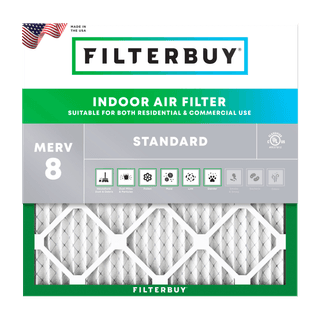
MERV 8 — Standard Protection
Captures dust, pollen, and lint
Ideal for general maintenance
Budget-friendly for homes without specific concerns
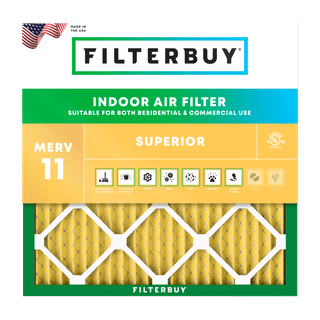
MERV 11 — Enhanced Protection
Captures finer particles, including pet dander and mold spores
Recommended for mild allergies or 1-2 pets
Balances efficiency with airflow for most systems
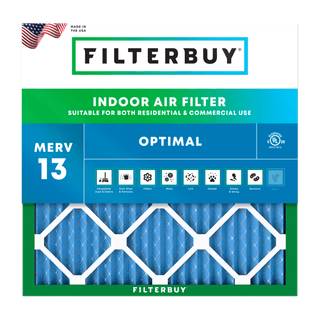
MERV 13 — Optimal Protection
Captures bacteria, smoke particles, and microscopic allergens
Recommended for respiratory sensitivities, multiple pets, or high-pollution exposure
Meets ASHRAE recommendations for improved indoor air quality
Step 7: Optimize Your Overall Indoor Air Strategy
Filter replacement is foundational, but a comprehensive approach delivers the best results.
Additional steps to consider:
Schedule annual HVAC maintenance — Professional cleaning keeps your system efficient
Seal air leaks — Weather stripping and caulking reduce outdoor pollutant infiltration
Control humidity — Keep indoor levels between 30-50% to discourage mold and dust mites
Ventilate strategically — Use exhaust fans when cooking; ventilate when outdoor AQI is good
Reduce indoor pollution sources — Choose low-VOC paints and cleaners; avoid smoking indoors
Consider supplemental filtration — Portable air purifiers can address specific rooms or concerns
Frequently Asked Questions
Q: Where can I find live, real-time AQI data for Raleigh, North Carolina?
A: The most reliable source is AirNow.gov, the official EPA air quality monitoring platform.
Q: What do the different AQI numbers and colors mean for Raleigh residents?
A: The Air Quality Index uses a 0-500 color-coded scale to communicate health risk.
Green (0-50) — Good, Yellow (51-100) — Moderate, Orange (101-150) — Unhealthy for Sensitive Groups, Red (151-200) — Unhealthy, Purple (201-300) — Very Unhealthy, Maroon (301-500) — Hazardous
Q: Why does Raleigh's AQI fluctuate, and what causes poor air quality days?
A: After shipping filters to Raleigh-Durham since our earliest days, we've identified clear patterns in local air quality fluctuations.
Primary causes of poor AQI in Raleigh:
Ground-Level Ozone
Seasonal Pollen
Wildfire Smoke
Construction Particulates
Weather Patterns
Q: How does Raleigh's outdoor AQI affect the air quality inside my home?
A: Outdoor air quality directly impacts indoor air—often more than homeowners expect.
Q: What should I do when Raleigh's live AQI shows unhealthy levels?
A: After helping families navigate air quality challenges for over a decade, here's the response protocol our Raleigh customers find most effective.
Immediate actions:
Limit outdoor exertion
Close windows and doors
Adjust HVAC settings
Check your filter status
Protect Your Family From Raleigh's Air Quality Challenges
Now that you understand how Raleigh's live AQI impacts your indoor air, take the next step by equipping your HVAC system with the right filter for your home. Shop Filterbuy's complete selection of American-made air filters—over 600 sizes available with direct-to-door delivery—and start breathing easier today.