
Durham, NC Live Wildfire Smoke Map
Get Alerts For Wildfires In Your Area
The moment a wildfire starts near you, you'll get an instant alert and simple tips to reduce your smoke exposure.
What's In The Smoke
30xSmaller than a human hair
Fine enough to reach deep into the lungs. A MERV 13 is built to capture it.
How Far It Travels


It Doesn't Stay Local
Smoke rides the wind far downwind — you can get smoky air with no fire nearby.
What To Do During A Smoke Event
Simple steps to reduce indoor exposure.
- Stay In, Close UpShut windows and doors to keep smoke out.
- Set Fan To "On"Keeps air cycling through your filter, not just when heating or cooling.
- Recirculate AirSwitch off fresh-air intake so you're not pulling smoke in.
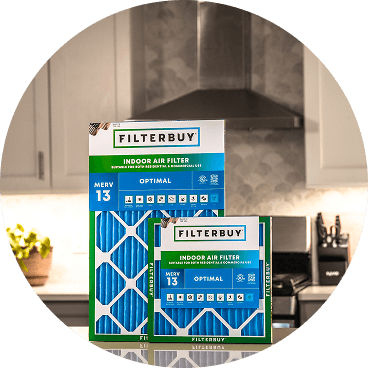
- Run A MERV 13Built to capture the fine PM2.5 in smoke.
- Add A PurifierExtra filtration for the room you use most.
- Wear an N95 if OutsideFits snug to block fine particles — a cloth mask won't.


The Best Air Filter For Wildfire Smoke
During smoke events, the EPA recommends upgrading to a MERV 13 filter — or the highest-rated filter your system can handle — to help reduce the fine particles smoke brings indoors. MERV 13 is the level most home HVAC systems can run while still capturing PM2.5, the fine particulate that makes up the bulk of wildfire smoke.
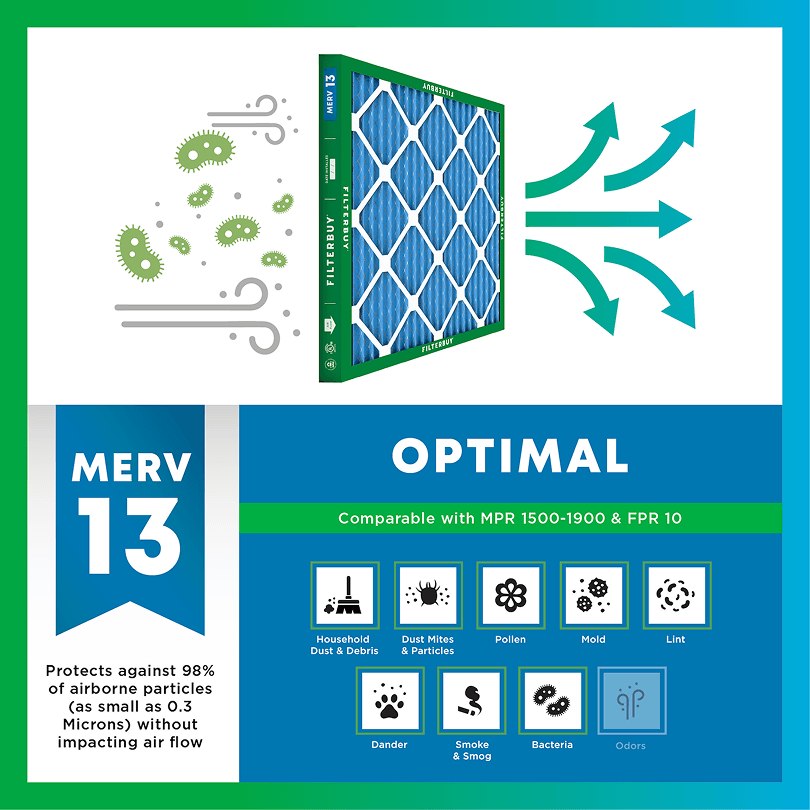
- Captures PM2.5 particles
- Blocks ash, soot, and smoke odor
- Keeps your indoor air safe—even when the outdoor air is dangerous
- Meets the EPA's recommended rating for filtering fine wildfire smoke particles.

Wildfire Smoke FAQs
Facts About Wildfires
Over 70,000 wildfires burn in the U.S. every year.
Wildfire smoke can travel 1,000+ miles, affecting states that aren't even near the blaze.
Exposure to wildfire smoke can worsen asthma, trigger heart issues, and lead to ER visits.
Indoor air can hold more fine particles during wildfire events unless it's properly filtered.
The EPA advises using MERV 13 filters or portable HEPA air cleaners during wildfire smoke events.
Don't Wait Until The Smoke's Inside.
Use the live wildfire smoke tracker and upgrade your air filters today to protect your lungs and your home.
Shop Filters For Smoke Protection
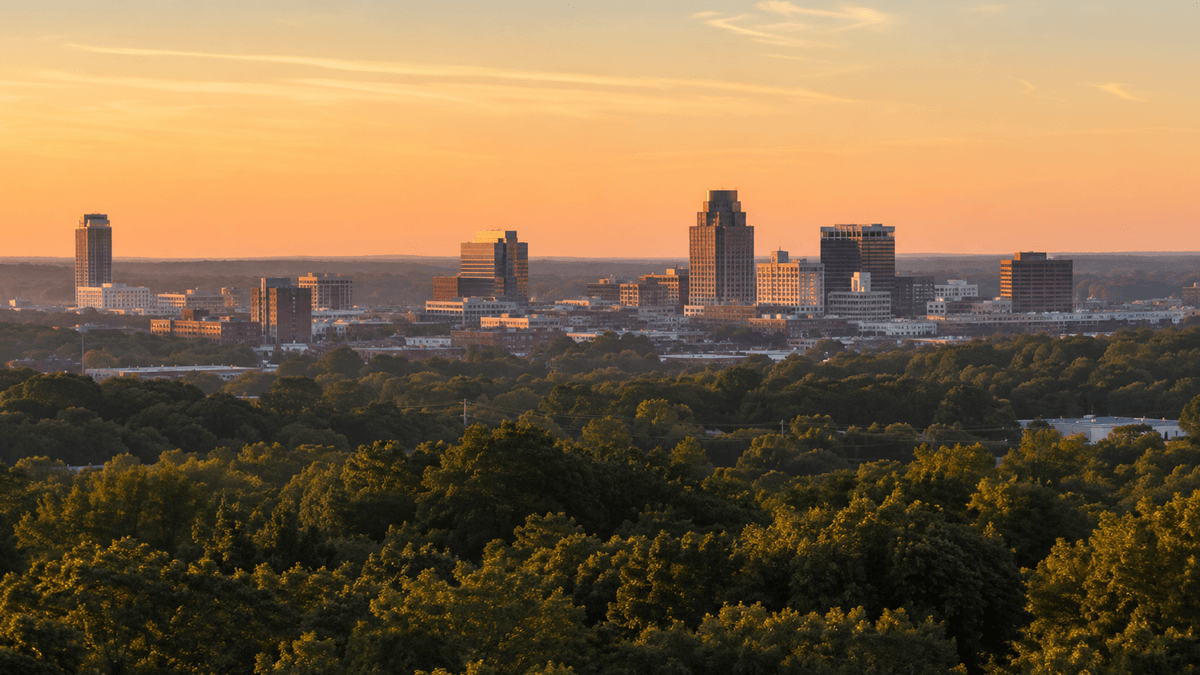
Live Durham, NC Forest Wildfire & Smoke Map Today: Local Air Quality Tracking & Indoor Protection Solutions From Filterbuy.com's Air Obsessed Experts
By Michelle Wan, Brand Manager and Air Quality Writer at Filterbuy, drawing on the company's decade of U.S. filter manufacturing. Reviewed by David Clark, Licensed HVAC Technician, Filterbuy HVAC Solutions, for accuracy on airflow, static pressure, and system compatibility.
Published August 2, 2026 · Updated August 2, 2026.
Durham residents usually smell smoke before they see fire. Haze settles over the Eno, the sky goes milky, and the nearest wildfire is hundreds of miles away. This page tracks live fire and smoke conditions across Durham County, then turns that reading into what to change indoors.
TL;DR
Durham rarely has a large forest wildfire inside the county line, but it regularly has smoke carried in from the mountains, the coastal plain, or Canada. The map below shows fire detections, satellite plumes, and the current NowCast AQI at the Durham Armory monitor. When that reading passes 100, close the house, switch your HVAC to recirculate, and run a MERV 13 with the fan on.
Key Takeaways
Durham's smoke is usually imported. A clear fire map and a bad AQI reading can both be true at once.
North Carolina has two wildfire seasons: spring (March–May) and fall (October–December), but Durham's smoke peaks in summer.
Debris burning causes nearly half of North Carolina wildfires.
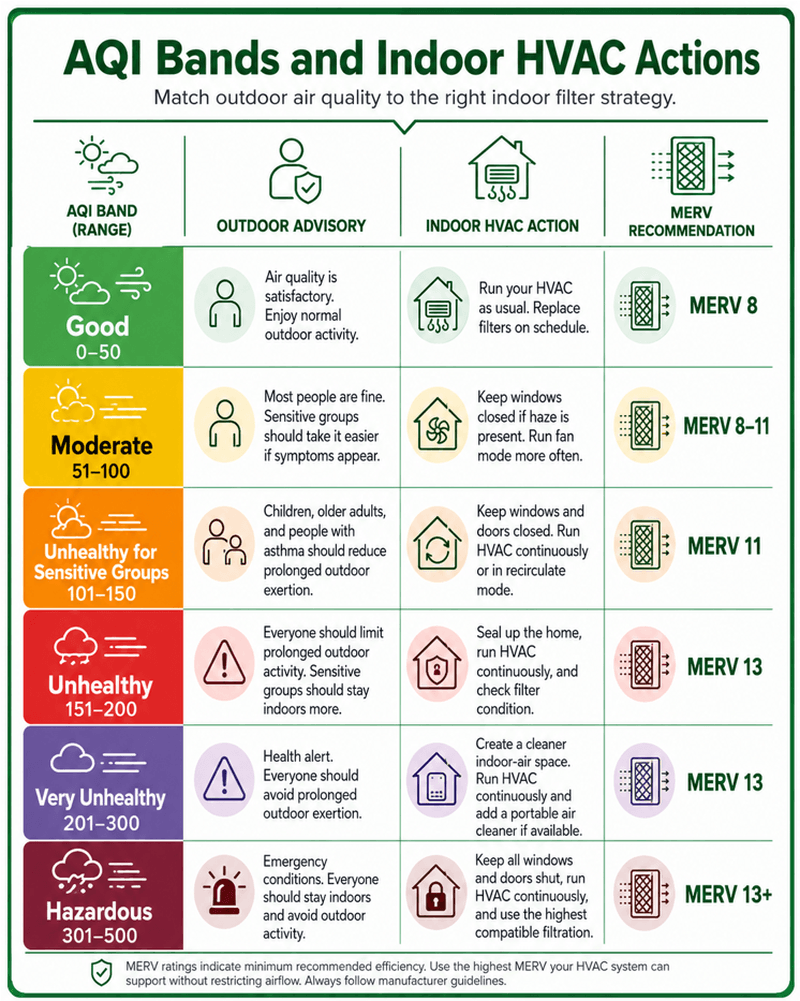
AQI 101 is the action line for sensitive groups; 151 for everyone.
The EPA recommends MERV 13 during smoke events, replaced when it looks dark.
Is There a Wildfire Burning in Durham, NC Right Now?
Usually not. Durham County sits in the Piedmont, without the fuel beds of the mountains or the peat soils of the coast, so large forest fires here are rare, and most smoke starts elsewhere. Confirm on the map and the N.C. Wildfire Public Viewer.
Three sources supply Durham's smoke, each with a season:
Canadian wildfires, peaking in summer. In June 2023, they pushed NC DEQ to declare a Code Red across the Triangle.
In-state fires, in the March–May and October–December seasons. Smoke from the Uwharrie, Croatan, Pisgah, and Nantahala forests, plus southeastern peat fires, drifts inland.
Prescribed and debris burns, late winter into spring. A brief, sharp smell with no wildfire behind it.
How to Read the Durham Smoke Map Correctly
Read the NowCast AQI at the nearest monitor, then switch on the plume layer. Three details separate a useful reading from a misleading one.
Smoke plumes are off by default. Toggle the NOAA plume layer on, or you see monitors and fires but not the smoke.
NowCast is not an hourly average. It weighs recent hours, so it reacts quickly to incoming smoke.
Durham County has one regulatory monitor. The Durham Armory site is the county's only federally approved instrument, so the official Durham AQI is a central-Durham reading. The EPA cautions that smoke varies over small distances, so in south Durham, RTP, or past Bahama, cross-check the Armory number against the nearest sensor on the Fire and Smoke Map. Sensor data is corrected before display but not used for regulatory decisions.
What Each AQI Level Means for a Durham Household
Sensitive groups act at AQI 101, everyone at 151. The indoor column is how Filterbuy turns each Air Quality Index band into an HVAC decision.
Table 1 - Durham AQI action table
Readings are NowCast AQI at the Durham Armory monitor and can change within the hour during a smoke event.
How to Protect Your Indoor Air on a Durham Smoke Day
Close the house, switch the HVAC to recirculate, install a MERV 13 filter, and set the fan to On. We build these filters, so we will also say what one cannot do: nothing about the air already inside, and nothing at all if it does not seal in the slot. Wildfire smoke is dominated by PM2.5, per NC DEQ, and a standard fiberglass filter stops lint and dust, not that fraction.
Seal the envelope. Close windows, doors, and the fireplace damper; block door gaps.
Switch to recirculate and close any fresh-air intake so the system stops pulling smoke in.
Install a MERV 13 filter, or the highest efficiency your system safely accommodates.
Move the fan from Auto to On so the filter works between cycles.
Build one clean room. Add a portable HEPA cleaner in the bedroom, sized so its smoke CADR is two-thirds of the room's area.
Outdoors on a smoke day, the CDC recommends a properly fitted N95. Cloth and surgical masks do not filter PM2.5.
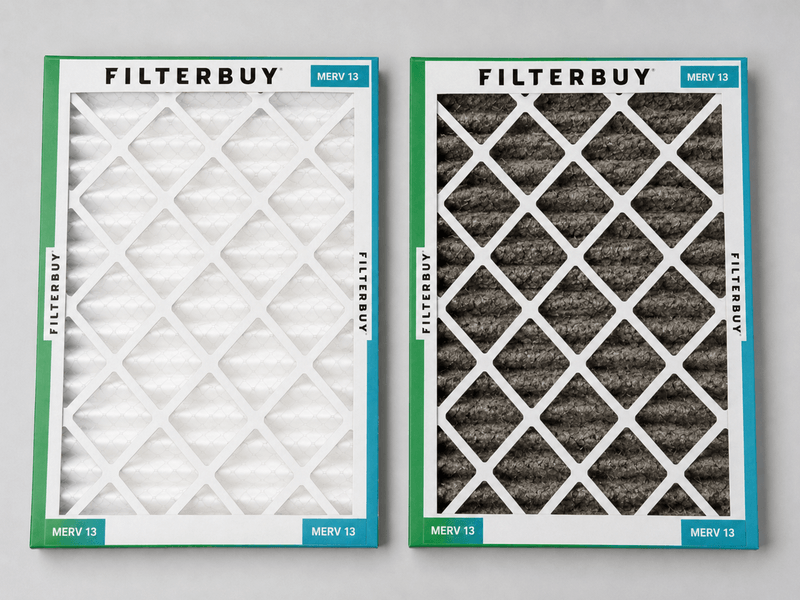
Change the filter on appearance, not the calendar. The EPA advises replacing a filter when it looks dark brown or black. A MERV 13 that normally runs 60–90 days can be finished in weeks of smoke.
Researching MERV 13 vs HEPA for wildfire smoke when figuring out how to keep wildfire smoke out of your house? Get the Best MERV filter for wildfire smoke for your family’s maximum protection.
Why We Read a Durham Smoke Map Differently
Filterbuy has manufactured air filters in the United States since 2013, so we read a smoke map as a filtration problem, not a weather story. The map describes the air outside; your filter decides how much of it you breathe.
That framing matters more in Durham than in a city that burns. The American Lung Association gives the Raleigh-Durham metro a passing grade for year-round particle pollution and only a C for short-term spikes. Read those together and the local problem takes shape: an annual average that looks fine, individual days that are bad. An average never warns you a smoke day is coming, which is why the households that ride one out are the ones that already had a MERV 13 on the shelf.
What Should I Do After the Smoke Clears?
Open the house back up. Sealing traps smoke along with everyday pollutants, so the EPA advises airing out once air quality improves. When the map returns to green, open windows and reopen the fresh-air intake. Leave the MERV 13 in until it looks dark: a loaded filter costs airflow long after the sky looks normal.
The mistake I see is buying the highest MERV available and forcing it into a slot it does not fit. A MERV 13 that seals outperforms a MERV 16 that lets air slip around the frame, because unfiltered air takes the easiest path. In a smoke event, I would rather someone run a well-fitted MERV 13 and change it early than run something heavier and starve the blower.
David Clark, Licensed HVAC Technician, Filterbuy HVAC Solutions
Essential Resources: 7 Tools Every Durham Household Should Bookmark
Filterbuy keeps this list current across every wildfire and smoke page we publish, so it holds only sources our team checks.
1. See Exactly Where the Smoke Is Right Now
AirNow Fire and Smoke Map, U.S. EPA and U.S. Forest Service NowCast AQI from monitors and sensors, plus fire detections and NOAA plumes. Toggle the plume layer on; it is off by default.
2. Confirm Whether a Fire Is Real
North Carolina Wildfire Public Viewer, N.C. Forest Service Reported and active wildfires statewide. Red active, green reported, brown contained, gray controlled.
3. Know Tomorrow's Air Before You Plan Your Day
N.C. Air Quality Portal forecast, NC DEQ and the State Climate Office Next-day AQI forecasts by county: PM2.5 year-round, ozone March to October.
4. Get Alerted Instead of Checking All Day
Sign up for EnviroFlash alerts, EPA with state air agencies. Free alerts when Durham's forecast hits the level you choose. Sensitive groups should set it at Moderate.
5. Follow the Federal Playbook Indoors
EPA guidance on smoke and heat, U.S. EPA. The guidance behind the MERV 13 recommendation: fit, replacement timing, clean room setup.
6. Tell Wildfire Smoke Apart From a Prescribed Burn
NC DEQ smoke and prescribed burn guide, Division of Air Quality. Explains the health difference and lists the regional DAQ office for reporting smoke.
7. Check the Burn Ban Before You Light Anything
Check N.C. burn ban status, N.C. Forest Service. Confirm status before any outdoor burn; debris burning causes most N.C. wildfires.
Supporting Statistics
1. Smoke days send people to the emergency room.
Asthma ED visits ran 17% above expected across 19 smoke days.
Period: April–August 2023.
2. A better filter roughly halves indoor PM2.5.
High-efficiency filter, fan continuous: about 50% lower PM2.5.
Low-efficiency filter, same setting: about 24% lower.
The filter rating, not the fan alone, drives the difference.
3. Durham's problem is spikes, not averages.
Raleigh-Durham ranks 106th worst nationally for short-term particle pollution, graded C; year-round levels pass.
Data years: 2022–2024.
Frequently Asked Questions
Glossary
AQI (Air Quality Index): The EPA's color-coded 0–500 scale for daily air quality.
NowCast AQI: The AQI calculation on the AirNow Fire and Smoke Map, weighted toward recent hours.
PM2.5: Fine particulate matter 2.5 micrometers or smaller, the main health concern in wildfire smoke.
MERV: Minimum Efficiency Reporting Value, the 1–16 scale for how well a filter captures particles. MERV 13 is the EPA's target for smoke.
HEPA: High Efficiency Particulate Air filtration, used in portable cleaners.
Recirculate mode: An HVAC setting that circulates indoor air through the filter rather than drawing outdoor air.
Prescribed burn: A planned, controlled fire that reduces fuel loads to prevent larger wildfires.
Durham Armory monitor: The NC DEQ regulatory monitor serving Durham County.
Subscribe to wildfire smoke alerts for Durham, NC, to get a heads-up before the next event reaches your area.