
What Does “Unhealthy for Sensitive Groups” Mean? AQI Levels Explained
July 14, 2026

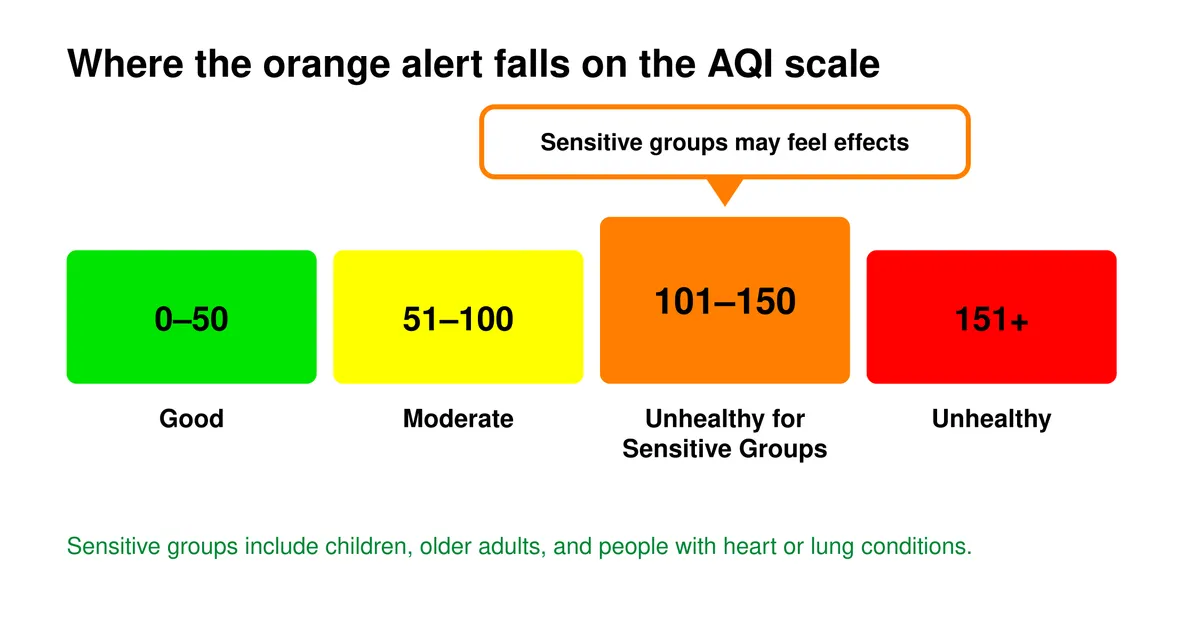
“Unhealthy for Sensitive Groups” is the orange band on the Air Quality Index — AQI 101 to 150 — the range where sensitive groups may start to feel effects while most healthy adults won’t. Sensitive groups include children, older adults, and people with heart or lung conditions. These alerts are usually driven by fine particles (PM2.5) and ground-level ozone, and you can keep the air inside your home clean by closing windows and running your HVAC with a filter that captures fine particles.
- AQI 0–50 · Good — air quality is satisfactory.
- AQI 51–100 · Moderate — acceptable for most people.
- AQI 101–150 · Unhealthy for Sensitive Groups — sensitive groups may feel effects; the general public likely won’t.
- AQI 151+ · Unhealthy — everyone may begin to feel effects.
Not sure which filter captures the fine particles behind these alerts? Take the quick match quiz below — or start shopping at filterbuy.com.
Answer 3 quick questions and we’ll match you to your perfect filter.
Millions of Americans live in areas with unhealthy levels of air pollution, but what does it actually mean when your weather app flashes an orange alert for "Unhealthy for Sensitive Groups"?
The Air Quality Index (AQI) is a tool used by government agencies to communicate air quality. The "Unhealthy for Sensitive Groups" range (AQI 101–150) can be particularly confusing because it falls between "Moderate" and "Unhealthy" for everyone. Should you cancel your run? Do you need a mask? Is it safe for your kids to play outside?
This guide will explain what this alert means, who is at risk, and the practical steps you can take to help keep your family breathing easily.
Key Takeaways:
"Unhealthy for Sensitive Groups" (AQI 101–150) means some people may experience mild symptoms, but the general public is unlikely to be affected.
Who is at risk? Children, older adults, and people with lung or heart conditions are more likely to feel the effects of pollution sooner than others.
Main culprits: Fine particle pollution (PM2.5) and ozone are usually the drivers of these alerts.
Simple actions help: Reducing strenuous outdoor exercise and improving indoor filtration can significantly lower your risk.
Indoors is safe: Your home can remain a safe haven with clean air even when outdoor levels are elevated.
What Are “Sensitive Groups” in Real Life?
When you see the term "sensitive groups," it’s easy to assume it refers to a rare condition or only those who are hospitalized. In reality, sensitivity to air pollution is common and often situational. You might be in a sensitive group during one stage of your life (like childhood or pregnancy) and not in another.
Who Is Considered Part of a Sensitive Group?
According to the EPA and health experts, the following people are considered more vulnerable to air pollution:
Children and teenagers: Their lungs are still developing, and they tend to breathe more air per pound of body weight than adults because they are more active.
Older adults: People over 60 are more likely to have undiagnosed heart or lung conditions that pollution can aggravate.
People with lung disease: This includes asthma, chronic obstructive pulmonary disease (COPD), and emphysema.
People with heart disease: Pollution can stress the cardiovascular system.
People with diabetes: Emerging research suggests air pollution can affect insulin sensitivity.
Pregnant individuals: Exposure to high levels of pollution can impact fetal development.
Active adults: People who work or exercise vigorously outdoors breathe deeper and faster, bypassing the nose's natural filtration and pulling pollutants deeper into the lungs.
For a deeper dive into how air quality impacts different demographics, the Virginia Department of Health offers excellent resources on understanding these risks.
Why Sensitive Groups May Feel Effects at Lower AQI Levels
Why does an AQI of 115 make an asthmatic person wheeze while their neighbor feels nothing? It comes down to biology and the specific types of pollutants involved.
PM2.5 and the Respiratory System
Particulate Matter 2.5 (PM2.5) refers to tiny particles, mostly from smoke, exhaust, and industrial dust, that are 2.5 microns or smaller. Because they are so microscopic, they don't just irritate the throat; they penetrate deep into the lungs and can even enter the bloodstream.
For a healthy adult, the body can clear these particles out relatively well over time. However, for a child with developing lungs or an adult with compromised lung function, these particles cause inflammation more quickly. Research published by the NCBI highlights how PM2.5 can irritate alveolar walls and impair lung function.
If you are concerned about how chronic exposure affects the body, read more about the long-term effects of air quality on human health.
Ozone and Airway Irritation
Ground-level ozone acts like a sunburn on the lungs. According to the EPA, ozone triggers inflammation and can cause airway constriction. For someone with asthma, this constriction can trigger an attack at levels that wouldn't bother someone without the condition.
What AQI Levels Mean for Sensitive Groups
The AQI scale is color-coded for easy at-a-glance understanding. Here is how the levels break down regarding health risks:
AQI 0–50 (Green/Good): Air quality is satisfactory. There is virtually no risk.
AQI 51–100 (Yellow/Moderate): Air quality is acceptable. However, unusually sensitive people should consider reducing prolonged outdoor exertion.
AQI 101–150 (Orange/Unhealthy for Sensitive Groups): This is the threshold where sensitive groups may experience health effects. The general public is not likely to be affected.
AQI 151+ (Red/Unhealthy and above): Everyone may begin to experience health effects; members of sensitive groups may experience more serious health effects.
To see what the pollution levels are in your area right now, check the live air quality index (AQI) map.
Early Symptoms Sensitive Groups May Notice
Usually, "Unhealthy for Sensitive Groups" alerts are about awareness, not panic. However, it is important to recognize the early signs that the air quality is affecting you. These symptoms are often reversible once you move to cleaner air.
Common early warning signs include:
Throat or eye irritation (burning or itching)
Unexplained coughing or mild wheezing
Shortness of breath during activities that usually don't tire you out
Fatigue or feeling "heavy" in the chest
Reduced exercise tolerance (e.g., getting winded faster on a run)
When It’s Time to Take Action
If you notice these symptoms appearing during outdoor activity, listen to your body. If the symptoms improve shortly after moving indoors into air-conditioned or filtered air, it is a strong indicator that the outdoor air quality was the trigger.
Simple Steps Sensitive Groups Can Take on Poor AQI Days
When the forecast hits the orange zone (AQI 101–150), you don't necessarily need to lock the doors and hide. You just need to be smarter about your exposure.
Reduce Outdoor Exposure
You don't have to stay inside all day, but you should limit strenuous activity.
Take it easy: Instead of a high-intensity run, go for a walk.
Timing matters: Ozone levels often peak in the mid-afternoon. Plan outdoor activities for the early morning when the air is typically cleaner.
Keep Outdoor Pollution Outside
Your home should be your sanctuary.
Close up: Keep windows and doors shut to prevent smoke and smog from drifting inside.
Recirculate: If you have an air conditioner, run it. Make sure the fresh air intake (if your system has one) is closed, or set your thermostat to "recirculate" to stop pulling in dirty outdoor air.
Use HVAC Filtration to Support Indoor Air
Your HVAC system is your first line of defense. By running the fan and using the right filter, you can scrub particulate matter from the air inside your home.
How HVAC Filters Help Support Cleaner Indoor Air
Many people think of air filters just as a way to protect their furnace, but they are powerful tools for respiratory health. A standard fiberglass filter might stop lint and dust bunnies, but it won't stop the microscopic particles (PM2.5) that trigger asthma or lung issues.
Understanding MERV Ratings
To capture the fine particles associated with "Unhealthy for Sensitive Groups" days, you need a filter with a higher efficiency rating.
MERV 8: Captures pollen and dust mites. Good for standard protection.
MERV 11: Captures pet dander and smaller particles. Better for mild allergies.
MERV 13: The gold standard for residential homes. MERV 13 filters are dense enough to capture bacteria, smoke, and smog particles (PM2.5).
For more on choosing the right filter, check out the EPA's Guide to Air Cleaners in the Home. Note that while higher MERV ratings filter more, you must ensure your HVAC system can handle the airflow restriction.
Why Filter Replacement Frequency Matters
When air quality is poor, especially during wildfire season or high-smog summer days, your filter works overtime. It will clog faster than usual. A dirty filter not only harms your HVAC system but also reduces air-cleaning effectiveness. If you are in a high-pollution area, check your filter once a month.
What You Don’t Need to Worry About
It is easy to see an alert on your phone and feel anxious, but context is key.
Short spikes are usually okay: AQI can fluctuate. A brief spike into the 100s for an hour is very different from sustained exposure over days.
Not all "Moderate" days need action: Unless you are extremely sensitive, yellow days (AQI 51–100) rarely require changes to your routine.
You can control your environment: Even if the cities with the best and worst air quality surround you, your indoor air quality is largely under your control.
Stay Informed, Not Alarmed
An "Unhealthy for Sensitive Groups" alert is a tool, not a danger warning. It is a signal to check in with your body and, if you fall into a vulnerable category, adjust your plans. By taking simple steps like closing windows, reducing heavy exercise, and upgrading your air filter, you can keep your lungs healthy regardless of what the air pollution levels are outside.
Curious how your area stacks up? Check out Filterbuy's report on U.S. cities with the worst air quality or learn how cities are improving air quality for the future.
Frequently Asked Questions
Is AQI 101–150 dangerous for everyone?
No. This range (Code Orange) mainly affects sensitive groups, such as children, the elderly, and those with lung conditions. Most healthy adults will not notice symptoms and do not need to take specific precautions unless they are exercising heavily outdoors.
Should children stay indoors when AQI is unhealthy for sensitive groups?
Children do not necessarily need to stay indoors all day, but parents should limit prolonged or vigorous outdoor exertion. For example, a leisurely walk is likely fine, but intense soccer practice might need to be shortened or moved indoors to reduce irritation.
Can indoor air really stay clean during poor outdoor AQI?
Yes. By keeping windows and doors closed and using an HVAC system with a high-quality filter (like MERV 13), you can significantly reduce the amount of outdoor pollution that enters your home.
Do I need to worry about short AQI spikes?
Generally, no. Health effects from pollution are usually driven by sustained exposure (24-hour averages). Short-lived spikes are typically not a concern unless you immediately feel symptoms like coughing or shortness of breath.
What’s the easiest way to protect sensitive lungs at home?
The most effective way is to run your HVAC system consistently (even if heating/cooling isn't needed, run the fan), use appropriate Filterbuy MERV-rated filters that capture fine particles, and ensure you replace those filters regularly so they remain effective.