Can Wildfire Smoke Inhalation Cause Headaches? Learn Why It May Trigger Long-Term Health Effects
May 5, 2026

Yes, headaches often show up early when you breathe smoky air. The CDC notes them as an early warning sign of smoke exposure, and research has found that ER visits for headaches increases on days when there is wildfire smoke.
What is inside wildfire smoke?
PM₂.₅ (very small dust)
Nitrogen oxides (irritating gas)
Formaldehyde (irritating gas)
Carbon monoxide
These can:
Irritate your nose, throat, and lungs
Lower the oxygen in your blood
Widen blood vessels in your brain
Turn on pain signals
All of these changes can lead to migraines or tight “band” headaches, especially if you already get headaches.
Key points
Breathing wildfire smoke can cause a headache.
Particulate matter, gases, low oxygen level, and dilated blood vessels all trigger the pain.
Invest in a filter or purifier, wear a snug fit mask when outside, and hydrate.
Call a doctor immediately if the headache appears suddenly, is very strong, or persistent.
Why smoke can make your head hurt
Tiny particles (PM₂.₅) enter your lung and bloodstream. They make your body swell and can turn on pain signals.
Gases such as nitrogen oxides and formaldehyde can irritate your nose and sinuses. This bothers the trigeminal nerve, causing headache.
Carbon monoxide and less oxygen cause brain blood vessels to dilate. That can start a migraine.
If any of these things happen, you will feel the pain right away, especially if you already get headaches often.
Who gets a headache first?
People who already have a history are more likely to develop headaches or migraines during wildfire. Children, elderly, and pregnant women, and patients with respiratory conditions and other chronic diseases like diabetes and heart diseases are at high risk too.
Smoke fire causes long term health effects
Wildfire smoke is not only a short-term problem. Exposure for days lets tiny dust and gases stay in your lungs and bloodstream, increasing your risk of asthma attacks, COPD, heart disease, and even early death. One 2025 study found that hospital visits for heart and lung problems stayed high for three months after major fires.
In other countries, doctors tracked the town and saw higher rates of heart disease for 2½ years and breathing problems for five years.
How can you lower your risk of developing a headache?
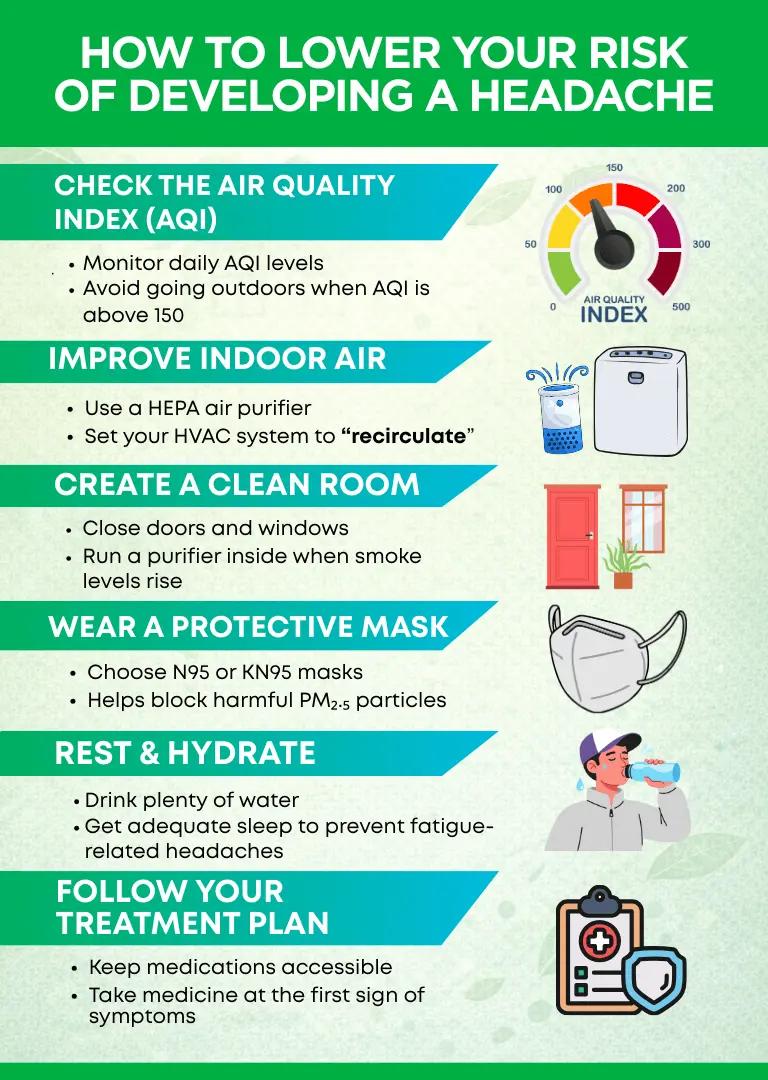
Always check the Air Quality Index (AQI). Never go out if the AQI is more than 150.
Improve indoor air. Invest in a HEPA purifier and set your HVAC system to “recirculate.”
Secure a room. Close your doors and windows in one room and run a purifier inside whenever there is smoke outside.
Wear a mask outdoors. N95 or KN95 are the most effective against PM₂.₅.
Get enough rest and drink more water. Dehydration and overfatigue can worsen headaches.
Follow your treatment plan. Always keep your medications handy and take one as soon as early symptoms appear.
Upgrade your HVAC filter
Your home’s HVAC system can also help reduce smoke exposure. Thin filters aren’t good against smoke and fine particles. Invest in a MERV 13 (or higher) filter. They can capture about 95% of particles per pass.
Buy the correct filter size and model to ensure efficiency. Call for professional help if needed.
When to get medical help
Seek medical care if a smoke-related headache:
Starts suddenly and is unusually severe
Comes with confusion, weakness, or vision changes
Does not improve after smoke clears or after usual treatment
Don’t ignore these signs. You could possibly be experiencing a more serious condition, such as carbon-monoxide exposure.
Stay ahead of the smoke
Wildfire smoke often happens fast, but you can prepare well to limit its harm.
Invest in an air purifier
Wear a mask when the air is smoky
Get enough rest and drink more water
Install a high-efficiency filter in your heating or cooling system.
These measures do more than ease headaches. They keep you safer whenever smoke is in the air.
Frequently Asked Questions
1. Can smoke inhalation lead to headaches?
Yes. Breathing in wildfire smoke can cause headaches, especially in people sensitive to air pollutants. Studies and health agencies like the CDC confirm the connection between smoke exposure and increased visits for headache-related symptoms.
2. Why do I get a headache when there’s a fire nearby?
Smoke carries tiny particles and gases that irritate the nose, sinuses, and lungs. These can trigger inflammation or affect nerves linked to headache pain—particularly in people prone to migraines or sinus issues.
3. What are the signs you’ve inhaled too much smoke?
Common symptoms include coughing, sore throat, sinus irritation, burning eyes, fatigue, and headache. In more serious cases, you might also feel dizzy, short of breath, or nauseated.
4. How can I relieve a headache caused by wildfire smoke?
Get indoors, close doors and windows, and turn on a HEPA air purifier or AC set to recirculate. Drink water and rest. If you use medication for headaches or migraines, take it as directed. If the pain doesn’t improve, contact a healthcare provider.
5. What air quality level means I should stay inside?
If the Air Quality Index (AQI) goes above 100, sensitive groups should limit outdoor activity. Once it passes 150, it’s considered unhealthy for everyone.
6. What kind of air purifier is best for smoke?
Look for a purifier with a true HEPA filter and a clean air delivery rate (CADR) that suits your room size. It should be able to exchange the air at least four times per hour.
7. Will an N95 mask protect me from wildfire smoke?
Yes. A snug-fitting N95 or KN95 mask can filter out most of the fine particles in smoke. Cloth and surgical masks don’t provide the same level of protection.
8. Can running the air conditioner help reduce headaches from smoke?
It can. Using an AC system to recirculate with a MERV 13 or higher filter helps reduce the number of harmful particles inside your home. Studies show this setup significantly lowers exposure compared to homes without AC.
9. Should I take extra steps to protect children during smoke events?
Yes. Children breathe more air per pound of body weight, so they’re more affected by poor air. Keep them inside, run a purifier in their room, and make sure they stay hydrated.
10. Can frequent smoke exposure lead to long-term headaches?
It’s possible. Repeated exposure to smoke may increase inflammation and affect blood vessels over time, which could lead to more frequent headaches in people already prone to them.