
Long-Term Effects of Air Quality on Human Health
September 9, 2026

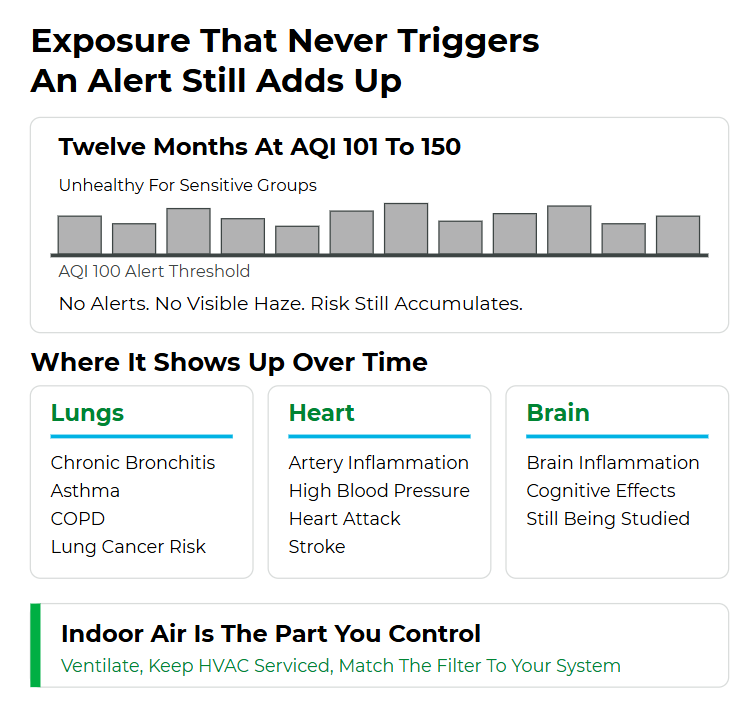
Long-term exposure to polluted air is linked to chronic respiratory disease, cardiovascular damage, and, in emerging research, neurological effects. The damage builds gradually, and it does not take a wildfire or an ozone alert. According to the EPA and AirNow, an AQI above 100 already raises risk for children, older adults, and people with respiratory or heart conditions, and sustained exposure in the 101 to 150 range carries cumulative consequences over time.
Lungs: chronic bronchitis, asthma, and COPD progression.
Heart: artery inflammation linked to high blood pressure, heart attack, and stroke.
Brain: emerging research on neuroinflammation and cognitive effects.
Outdoor air is mostly out of your hands. Indoor air is not. The EPA estimates Americans spend about 90 percent of their time indoors, and that indoor air can be two to five times more polluted than outdoor air when sources go unmanaged.
Ventilation, HVAC upkeep, and the right filter are the levers you have at home. Shop Filterbuy Air Filters.
Answer a few quick questions and we will match you to a mini split setup sized for your space.
Long-term exposure to air pollution quietly raises the risk of chronic respiratory disease, cardiovascular damage, and neurological harm, even at moderate AQI levels above 100. Most people don't realize the damage builds gradually, without dramatic pollution events or obvious warning signs. Here's what the research says, and what you can do about it at home.
What You Need to Know:
AQI levels above 100 carry cumulative health risks over time, even without major pollution events.
Long-term exposure affects the lungs, heart, and brain.
Children, older adults, and those with existing health conditions are most vulnerable.
Indoor air is often more polluted than outdoor air.
Ventilation, HVAC upkeep, and the right air filter are your best tools at home.
Most conversations about air pollution focus on the worst days: wildfire smoke turning skies orange, ozone alerts keeping kids indoors. But research points to a quieter threat. When an AQI regularly sits between 100 and 150, with no alerts and no visible haze, the body still accumulates damage over time.
That's the scenario this article is built around.

What AQI Level Actually Signals Risk?
The Air Quality Index (AQI) is a standardized scale used by the EPA and AirNow.gov to communicate how clean or polluted the air is at any given time. According to the EPA's AQI framework (airnow.gov), the scale runs as follows:
0–50 (Good): Air quality poses little or no risk.
51–100 (Moderate): Acceptable for most people, but unusually sensitive individuals may experience minor effects.
101–150 (Unhealthy for Sensitive Groups): Children, older adults, and people with respiratory or heart conditions face increased risk. The general public is less likely to be affected.
151–200 (Unhealthy): Everyone may experience health effects; sensitive groups face serious effects.
201–300 (Very Unhealthy): Health alert conditions. Significant effects across the general population.
301+ (Hazardous): Emergency conditions. The entire population is at risk of serious harm.
The critical insight here is that chronic exposure to AQI levels in the 101–150 range carries cumulative health consequences, even without the dramatic spikes that trigger public warnings.
Based on the EPA, fine particulate matter (PM2.5) and ground-level ozone (the two most monitored pollutants) don't need to reach hazardous levels to cause lasting physiological damage. Consistent moderate-to-unhealthy readings over months or years are enough.
How Does Long-Term Air Pollution Affect the Respiratory System?
The lungs are the most direct point of contact with polluted air, and the long-term consequences of sustained exposure go well beyond a persistent cough.
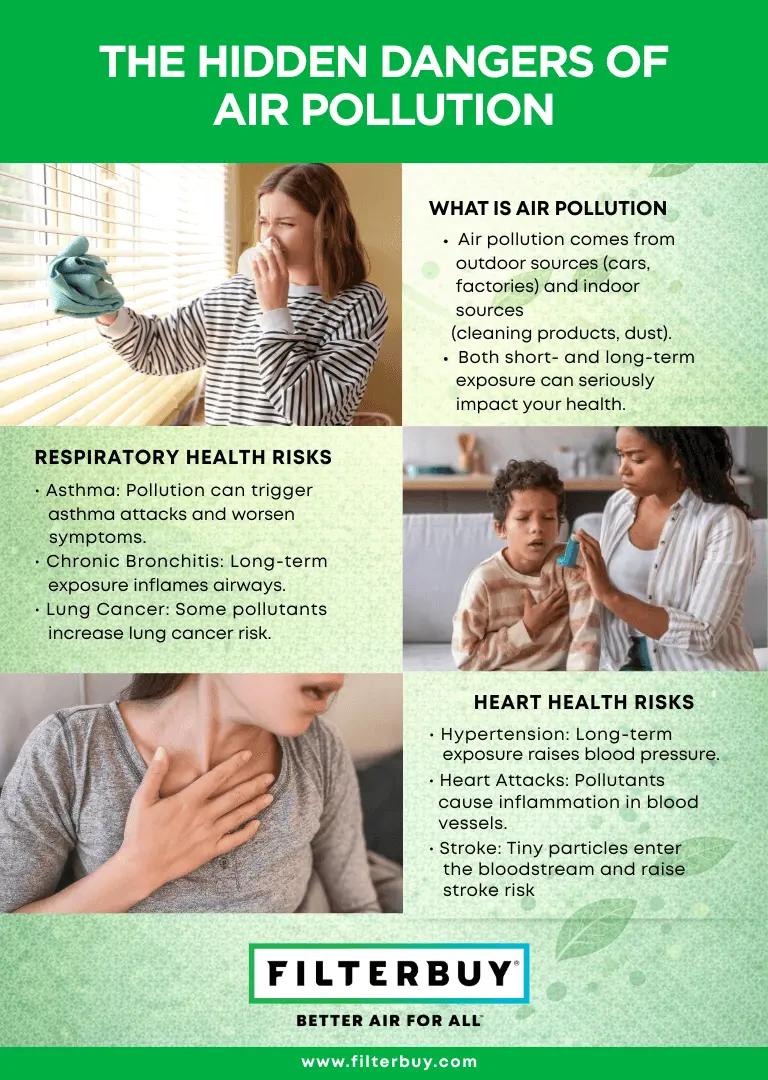
Chronic bronchitis develops when the bronchial tubes are repeatedly inflamed by inhaled pollutants, leading to lasting structural changes in the airways.
Asthma, rather than being simply triggered by bad air days, can be both caused and progressively worsened by long-term exposure to particulate matter and ozone, making it harder to manage over time.
Chronic obstructive pulmonary disease (COPD) is a progressive condition in which lung function declines irreversibly; air pollution is a recognized contributor to its development and acceleration, according to the EPA.
Lung cancer risk also increases with sustained exposure to certain environmental pollutants. The EPA classifies fine particulate matter (PM2.5) as a likely human carcinogen based on epidemiological evidence, and outdoor air pollution as a whole has been classified as a Group 1 carcinogen by the International Agency for Research on Cancer (IARC).
How Does Long-Term Air Pollution Affect the Cardiovascular System?
The cardiovascular effects of chronic air pollution exposure are well-established, and for many people, more dangerous than the respiratory ones.
Fine particulate matter is small enough to cross from the lungs into the bloodstream. Once there, PM2.5 triggers systemic vascular inflammation, which damages artery walls and promotes the buildup of plaques. According to the American Heart Association (AHA), long-term exposure to PM2.5 is associated with increased risk of hypertension, coronary artery disease, heart attack, and stroke.
The World Health Organization (WHO) estimates that ambient air pollution contributes to approximately 4.2 million premature deaths per year globally, with ischemic heart disease and stroke accounting for the largest share of that burden. The risk is not limited to people with pre-existing conditions. Studies cited in WHO's ambient air quality guidelines show elevated cardiovascular mortality even in populations without diagnosed heart disease.
Prolonged residence in areas with chronically elevated AQI, particularly those in the 151–200 (Unhealthy) range, compounds this risk significantly.
What Does Research Say About the Cognitive and Neurological Effects of Air Pollution?
This is a rapidly evolving area of research, and the findings are striking, though they should be interpreted with appropriate caution given how recently the field has emerged.
Emerging research suggests that fine particulate matter and ultrafine particles may cross the blood-brain barrier, potentially triggering neuroinflammation. Several large epidemiological studies have found associations between long-term air pollution exposure and elevated risk of Alzheimer's disease and Parkinson's disease, though researchers continue to study the precise mechanisms involved.
The WHO's 2021 global air quality guidelines note evidence linking air pollution to adverse effects on cognitive development in children, including impacts on attention and learning. Other studies have identified associations between higher pollution exposure and increased rates of depression and anxiety in adults, although these findings remain preliminary and causality has not been firmly established.
One finding does stand out consistently: the brain is not insulated from what the lungs breathe. Chronic exposure to polluted air, particularly PM2.5 and nitrogen dioxide, appears to affect neurological health over time, with children and older adults facing the greatest documented risk.
How Can You Reduce Air Pollution Exposure at Home?
Outdoor air quality is largely outside individual control, but indoor air quality is not. The EPA estimates that Americans spend approximately 90% of their time indoors, and indoor air can be two to five times more polluted than outdoor air when pollution sources go unmanaged.
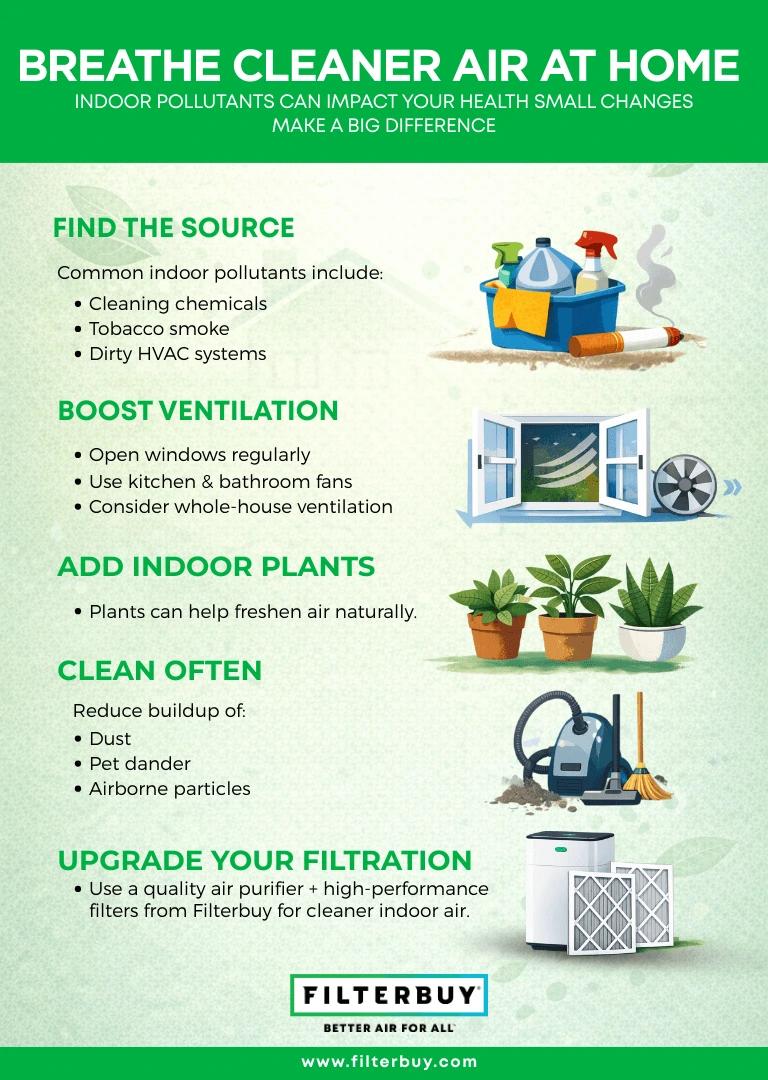
Start by identifying indoor pollution sources. Combustion appliances (gas stoves, fireplaces, furnaces), tobacco smoke, cleaning products, building materials, and volatile organic compounds (VOCs) from paints and adhesives are among the most common contributors to poor indoor air quality.
Improve ventilation. Opening windows when outdoor AQI is in the Good or Moderate range, running exhaust fans in kitchens and bathrooms, and considering whole-house ventilation systems all help dilute indoor pollutants and replace stale recirculated air.
Maintain your HVAC system. A heating and cooling system with a poorly maintained or clogged filter actively recirculates particulate matter, dust, and allergens through your home. Replacing filters on schedule (every 60 to 90 days for standard filters, and more frequently in high-use or high-pollution environments) is one of the highest-impact steps you can take.
Choose the right filter MERV rating. Not all air filters capture the same pollutants. MERV (Minimum Efficiency Reporting Value) ratings measure how effectively a filter traps particles of different sizes. Higher-rated filters capture finer particles, including PM2.5.
Filterbuy's MERV rating guide explains what each rating captures and which rating is appropriate for your system. If you're unsure what size filter your HVAC unit requires, the filter sizing guide covers how to measure correctly.
For a full range of filtration options suited to different home environments, browse the Filterbuy air filter category page.
Take Control of the Air You Breathe at Home
You can't control what's happening two miles upwind. But you can control what circulates through your home's air. Start with the fundamentals: check your local AQI regularly, ventilate when conditions allow, and make sure your HVAC system is working with your indoor air quality, not against it.
Choosing the right filter MERV rating for your system is one of the most effective and lowest-effort steps available. Explore Filterbuy's MERV rating guide, use the filter sizing guide to confirm your measurements, and browse the full air filter range to find the right fit for your home.
Frequently Asked Questions
How does poor air quality affect long-term health?
Long-term exposure to polluted air is associated with chronic respiratory diseases (including asthma, bronchitis, and COPD), cardiovascular damage (including hypertension, heart attack, and stroke), and, based on emerging research, potential neurological effects such as cognitive decline and increased dementia risk. These effects accumulate gradually, often without acute symptoms until significant damage has occurred.
What AQI level is unhealthy?
According to AirNow.gov and the EPA, an AQI above 100 is considered potentially harmful for sensitive groups (children, older adults, and people with respiratory or heart conditions). An AQI above 150 is classified as unhealthy for the general population. Sustained exposure to AQI levels in the 101–150 range, even without acute spikes, carries cumulative health risks over time.
Who is most at risk from long-term air pollution exposure?
Children, adults over 65, pregnant individuals, and people with pre-existing respiratory or cardiovascular conditions face the greatest risk. Children are particularly vulnerable because their lungs are still developing, and they breathe more air relative to their body weight than adults do.
Can poor air quality make asthma or COPD worse?
Yes. Long-term exposure to fine particulate matter (PM2.5) and ground-level ozone can both trigger and progressively worsen asthma symptoms, reduce lung function, and accelerate the decline associated with COPD. The EPA recognizes air pollution as a primary environmental driver of respiratory disease exacerbation.
Can indoor air quality affect your health over time?
Yes. The EPA estimates indoor air can be two to five times more polluted than outdoor air. Chronic exposure to indoor pollutants (from combustion appliances, cleaning products, VOCs, and inadequately filtered HVAC systems) contributes to the same respiratory and cardiovascular risks associated with outdoor air pollution.
When should you stay indoors because of air quality?
The EPA and AirNow.gov recommend that sensitive groups limit prolonged outdoor activity when the AQI exceeds 100. For the general population, staying indoors and reducing physical exertion outdoors is advisable when the AQI surpasses 150. At AQI 200 and above, the EPA issues health alerts for everyone.
How can you reduce air pollution exposure at home?
Key steps include identifying and minimizing indoor pollution sources, improving ventilation when outdoor AQI is favorable, maintaining HVAC systems on schedule, and using air filters with an appropriate MERV rating for your home and health needs. These measures directly reduce the concentration of fine particulate matter and allergens circulating in indoor air.
How do you know if air quality is affecting you?
Common indicators include persistent coughing, shortness of breath, frequent headaches, fatigue, and irritation of the eyes, nose, or throat, particularly if symptoms improve when you leave a specific indoor or outdoor environment. Individuals with asthma or COPD may notice more frequent flare-ups during high-AQI periods. Tracking local AQI daily provides useful context for symptom patterns.