
Best Cabin Air Filters for Asthma Sufferers
June 12, 2026

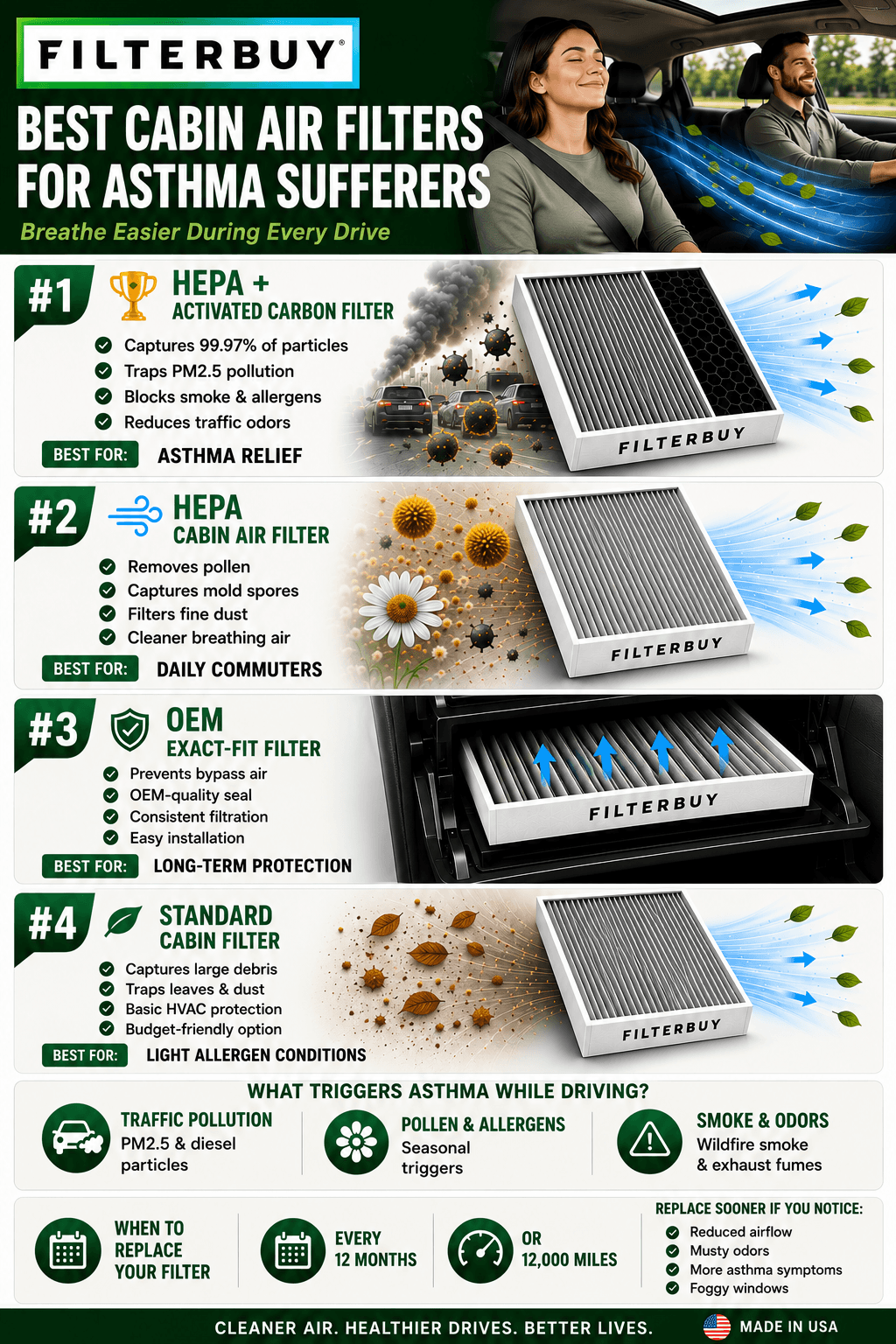
The best cabin air filter for asthma sufferers is a HEPA filter combined with activated carbon. While standard filters only capture large debris, HEPA-certified filters trap 99.97% of airborne particles as small as 0.3 microns, including pollen, smoke, PM2.5, and mold spores that can trigger respiratory irritation. Activated carbon adds another layer of protection by reducing exposure to traffic-related gases and odors.
Have you ever noticed your allergies flaring up the moment you hit the highway? Driving can quickly worsen respiratory symptoms, as urban traffic pollution constantly surrounds your vehicle. Standard cabin air filters simply don't provide enough protection for sensitive lungs. Upgrading to a specialized filter can make a massive difference, but which one is right for you?
In this guide, we'll explore why driving can trigger asthma and review the best cabin air filters to help you breathe easier on your daily commute.
Key Takeaways
Driving exposes you to high levels of traffic-related pollution, which can aggravate asthma and allergy symptoms.
Standard cabin air filters are often insufficient for filtering out pollutants like dust, pollen, and harmful particles.
Upgrading to a specialized cabin air filter can significantly improve air quality inside your vehicle, reducing respiratory irritation.
Choosing the right filter involves considering factors such as filtration efficiency, compatibility with your car, and filter lifespan.
Taking proactive measures, like upgrading your cabin air filter, can make commuting more comfortable and healthier for sensitive lungs.
Why Can Driving Trigger Asthma Symptoms
Driving can trigger asthma symptoms because your vehicle's air intake constantly pulls in concentrated traffic pollution. Exhaust fumes and fine particulate matter build up rapidly inside closed cabins.
How does traffic pollution inside your vehicle affect you
Stop-and-go traffic exposes drivers to high levels of exhaust fumes. PM2.5 exposure is a serious concern for anyone with respiratory issues. Research published in The Lancet Planetary Health found the United States ranks among the highest globally for traffic-related pediatric asthma cases. Approximately 240,000 new childhood asthma cases annually are linked to traffic pollution exposure. Traffic-related nitrogen dioxide (NO₂) is strongly associated with asthma symptoms and respiratory irritation.
Why is the air inside your car more polluted than outside
The air inside your vehicle can be up to five times more polluted than the air outside. Urban commuters often sit directly behind diesel exhaust pipes during stop-and-go traffic. Tunnel driving and wildfire smoke also trap polluted air directly inside your car.
What are the common asthma triggers found during commuting
Common asthma triggers found during a commute include pollen, smoke, and mold spores. Diesel particulate matter, smog, and pet dander also circulate freely. Many of these particles are small enough to pass directly through standard factory cabin filters.
Why Do Standard Cabin Air Filters Fail Drivers With Asthma
Standard cabin air filters fail drivers with asthma because they are built to stop large debris, not microscopic allergens. If you need a cabin air filter for respiratory health, a basic paper filter will let you down.
What do standard cabin filters actually catch
Standard cabin filters catch leaves, large dust particles, and heavy debris. They protect your car's HVAC blower motor from getting clogged. They do not filter the air well enough to protect your lungs.
What is the problem with fine particles
The problem with fine particles is their microscopic size. PM2.5, smoke, and microscopic allergens easily slip through basic filter fibers. You end up breathing in these irritants during your entire drive.
Why does filter fit matter
Filter fit matters because any gap allows unfiltered air into the cabin. This is known as bypass air. Your filter must be manufactured to exact OEM tolerances. An airtight fit ensures no bypass gaps let dirty air sneak past the filter.
What to Look For in a Cabin Air Filter for Asthma
The best cabin air filter for asthma requires HEPA media, carbon protection, and an airtight fit.
Why do you need HEPA-certified filtration
HEPA-certified filtration traps 99.97% of airborne particles as small as 0.3 microns. You need HEPA-certified synthetic media to block microscopic asthma triggers.
How does activated carbon protection help
Activated carbon protection helps reduce exposure to traffic fumes and gaseous pollutants. It also traps unpleasant odors from outside your vehicle.
Why does HVAC airflow matter too
A good filter cleans the air without restricting airflow to your HVAC system. A premium filter reduces pressure drop so your AC and heater still blow strong.
How does exact fitment prevent unfiltered air
Exact fitment prevents unfiltered air from bypassing the filter media. Tight sealing and exact OEM tolerances ensure all incoming air passes through the HEPA material.
How Filterbuy HEPA Cabin Air Filters Support Cabin Air Filter Respiratory Health
Filterbuy auto cabin air filters use HEPA-certified synthetic media to trap 99.97% of airborne particles as small as 0.3 microns, including bacteria, pollen, mold spores, smoke, and pet dander.
Every filter is manufactured 100% in the USA to exact OEM tolerances, with advanced hydrocharging technology that permanently magnetizes every fiber for maximum particle capture without restricting airflow.
Available for hundreds of vehicles across all major makes and models, use the vehicle selector at filterbuy.com to find the right fit for your car.
What is advanced hydrocharging technology
Advanced hydrocharging technology permanently magnetizes every fiber in the filter. This captures more contaminants throughout the filter's full lifespan.
Do HEPA filters restrict your car's airflow
Filterbuy provides HEPA protection without restricting airflow. Our design prioritizes pressure drop reduction to ensure proper HVAC airflow maintenance.
Where are Filterbuy car filters made
Filterbuy cabin filters are 100% manufactured in the USA. We also use recyclable materials to support a healthier environment.
How easy is a DIY cabin filter replacement
DIY replacement takes just a few minutes. We provide a tool-free installation process and a QR code installation guide on the box. You should swap yours every 12 months or 12,000 miles.
Shop Filterbuy HEPA cabin air filters today to protect your lungs on the road.
How Often Should Asthma Sufferers Replace a Cabin Air Filter
Asthma sufferers should replace their cabin air filter every 12 months or 12,000 miles. You should change it more often in wildfire-prone regions, heavy urban traffic, or high-pollen areas. Dirty filters may reduce airflow and increase trapped contaminant buildup inside your vehicle.
Signs Your Cabin Air Filter Needs Replacement
Your vehicle will often tell you when it is time for a new filter. Watch for these common signs:
Musty odors coming from your AC vents.
Reduced airflow when you turn the fan up high.
Increased allergy symptoms during your drive.
More dust building up inside your cabin.
Foggy windows that take too long to clear up.
Upgrade Your Daily Commute with Better Air
Standard filters focus on keeping large debris out of your car's mechanical systems. HEPA filtration targets the fine airborne particles relevant to your respiratory health. You deserve to breathe easy on your way to work or during school pickups.
Upgrade to HEPA cabin filtration to support your respiratory health. Use the vehicle selector to find your filter at Filterbuy.
Frequently Asked Questions
Can a cabin air filter help with asthma?
Yes, a HEPA cabin air filter may help reduce exposure to airborne particles that can trigger asthma symptoms, including pollen, smoke, mold spores, and fine particulate matter.
What is the best cabin air filter for asthma sufferers?
Look for a HEPA-certified cabin air filter with activated carbon filtration and an exact OEM fit to help reduce exposure to airborne irritants while maintaining HVAC airflow.
Do HEPA cabin air filters restrict airflow?
High-quality HEPA cabin air filters are designed to capture fine particles without restricting airflow to your HVAC system.
How often should asthma sufferers replace a cabin air filter?
Drivers with asthma or allergies should generally replace their cabin air filter every 12 months or 12,000 miles, or sooner in high-pollution or wildfire-prone areas.
Can a dirty cabin air filter worsen allergy or asthma symptoms?
A clogged cabin air filter may reduce airflow and allow more airborne particles to circulate inside the vehicle cabin.
What particles can HEPA cabin air filters capture?
HEPA-certified cabin air filters can capture bacteria, pollen, mold spores, smoke, pet dander, and fine particulate matter as small as 0.3 microns.
Are cabin air filters helpful during wildfire season?
HEPA cabin air filters may help reduce exposure to fine smoke particles and PM2.5 during wildfire season while driving.
What is bypass air in a cabin air filter?
Bypass air is unfiltered air that leaks around poorly fitting cabin air filters instead of passing through the filtration media.