
Best Cabin Air Filters for Allergy Relief | Filterbuy
June 1, 2026
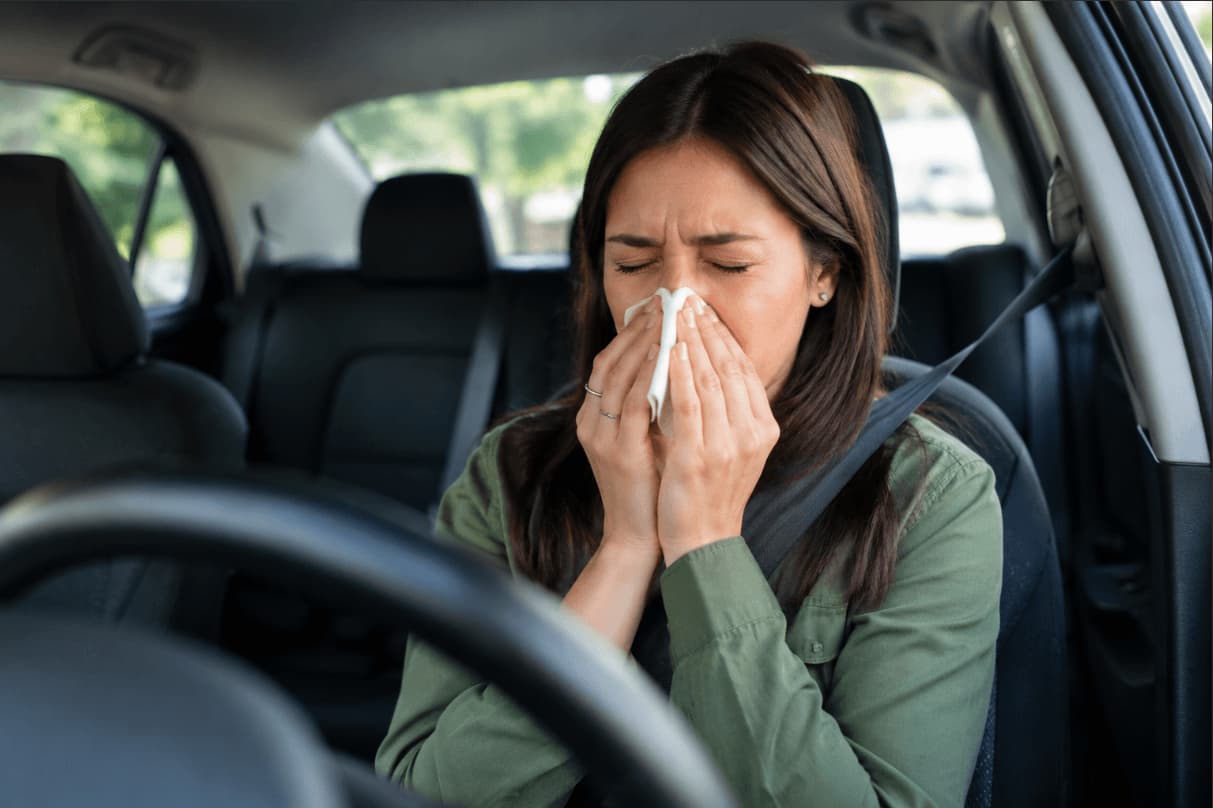
More than 100 million Americans experience allergies every year. If you are one of them, you know how frustrating it is to deal with a runny nose, itchy eyes, and constant sneezing. But your allergy symptoms shouldn't tag along when you get in your car.
Unfortunately, vehicle HVAC systems pull massive amounts of outside air right into the cabin. This means the air inside your vehicle can become heavily concentrated with pollen, dust, smog, and mold spores. Vehicle cabin pollution can even spike dangerously high during heavy traffic congestion.
Most factory-installed cabin air filters catch the obvious stuff, like leaves and large dirt particles. However, many factory filters simply are not designed for allergy-sensitive drivers. They let microscopic irritants slip right through the vents and into your lungs.
Key Takeaways
Standard factory cabin air filters are often insufficient for individuals with allergies, as they fail to block microscopic irritants.
HEPA filters are the gold standard for air filtration, capable of capturing allergens like pollen, dust, and even mold spores.
Upgrading to a high-quality cabin air filter can significantly improve air quality inside your vehicle, offering relief for allergy-sensitive drivers.
Choosing the right filter involves understanding the specific filtration ratings and ensuring compatibility with your car's make and model.
Can a Cabin Air Filter Help With Allergies?
Quick Answer: Yes. A high-quality cabin air filter can significantly reduce allergy symptoms while driving. HEPA-rated filters, in particular, trap microscopic irritants that standard paper filters often miss.
When you drive, you are constantly exposed to outdoor air quality. Standard filters just cannot keep up with the microscopic threats floating around. A better filter targets the specific allergy triggers commonly found in vehicles, including:
Seasonal pollen
Mold spores
Pet dander
Road dust
Wildfire smoke particles
Traffic smog and fine particulate matter (PM2.5)
What Makes a Cabin Air Filter Good for Allergies?
Choosing the right filter means looking past the marketing jargon. Here is what actually matters when you need a cabin air filter for pollen, smoke, and seasonal allergies.
HEPA Filtration Matters
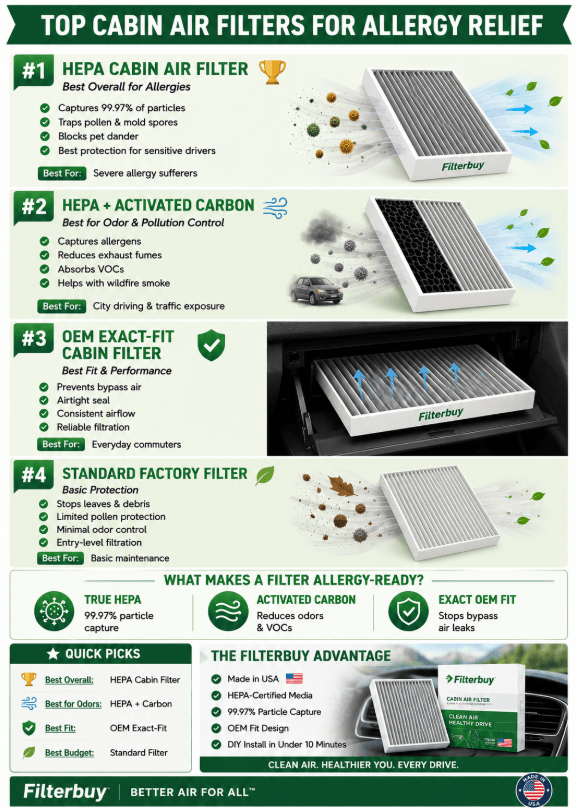
HEPA stands for High Efficiency Particulate Air. To meet guidelines set by organizations like the DOE, a HEPA-certified synthetic media must have a 99.97% capture rate for particles as small as 0.3 microns.
Why does micron size matter? Because the most irritating allergens are tiny. Pollen, mold spores, smoke, pet dander, and bacteria easily pass through cheap filters. HEPA media acts like a microscopic net, catching these tiny triggers before they reach your face.
Activated Carbon Helps With Odors & Exhaust
Allergies often make your respiratory system highly sensitive to strong smells and chemicals. An activated carbon layer tackles this problem. It absorbs volatile organic compounds (VOCs), traffic pollution, and wildfire smoke. This layer helps remove secondary respiratory irritants and keeps your car smelling fresh.
Exact Fit Prevents “Bypass Air”
You can buy the best filter material in the world, but it is useless if it does not fit perfectly. Gaps around poorly fitting filters allow unfiltered air leakage. This is known as "bypass air."
When dirty air sneaks around the edges of the filter, you breathe in pollen and dust anyway. Look for filters made to exact Original Equipment Manufacturer (OEM) tolerances. An airtight seal is incredibly important for allergy relief.
HEPA vs Standard Cabin Air Filters
Not sure if the upgrade is worth it? Here is a quick breakdown of how standard paper filters compare to HEPA cabin air filters.
| Feature | Standard Cabin Air Filter | HEPA Cabin Air Filter |
|---|---|---|
| Particle Capture | Large dust, dirt, and leaves | Microscopic particles down to 0.3 microns |
| Pollen Filtration | Moderate — misses fine pollen | Excellent — captures nearly all pollen |
| PM2.5 Capture | Poor | Highly effective |
| Odor Reduction | None, unless carbon is added | Excellent, when paired with carbon |
| Airflow Performance | High | Optimized to balance flow and filtration |
| Allergy Support | Minimal | Maximum relief |
Why Allergy Sufferers Should Replace Cabin Air Filters More Often
For the average driver, the standard recommendation for filter replacement is between 15,000 and 30,000 miles. But if you suffer from allergies, you should not wait that long.
The allergy recommendation is to replace your cabin air filter every 12 months or 12,000 miles. It is especially helpful to install a fresh filter right before the spring pollen season begins.
A dirty filter holds onto moisture, dust, and mold. If you wait too long, you are just blowing that contaminated air back into your face. Watch out for these warning signs that indicate you need a replacement:
Musty or stale smells coming from the vents
Reduced airflow when the AC or heat is on
Increased fan noise from the HVAC system
Excessive dust accumulation on your dashboard
Worsening allergy symptoms while driving
What to Look for Before Buying a Cabin Air Filter
Ready to buy? Make sure the filter checks all of these boxes before you check out.
HEPA-Certified Media
Do not settle for "HEPA-like" claims. Look for true HEPA-certified media that guarantees high-efficiency particle capture.
Activated Carbon Layer
If you commute in heavy traffic or live near wildfire zones, an activated carbon layer is a must-have for reducing odors and smoke.
Exact Vehicle Fitment
Bypass air ruins filtration. Ensure the brand you buy from guarantees exact fitment for your specific car's make, model, and year.
USA Manufacturing
Domestically manufactured filters often adhere to stricter quality control standards. This ensures you get a durable, reliable product.
Easy Installation
You should not need to pay a mechanic to do this job. Look for filters that support tool-free installation and include helpful resources, such as QR code instructions.
Recommended HEPA Cabin Air Filter for Allergy Sufferers
When you want to stop sneezing behind the wheel, we have the exact solution you need.
Filterbuy auto cabin air filters use HEPA-certified synthetic media to trap 99.97% of airborne particles as small as 0.3 microns, including bacteria, pollen, mold spores, smoke, and pet dander. Every filter is manufactured 100% in the USA to exact OEM tolerances, with advanced hydrocharging technology that permanently magnetizes every fiber for maximum particle capture without restricting airflow. Available for hundreds of vehicles across all major makes and models, use the vehicle selector at filterbuy.com to find the right fit for your car.
Our hydrocharging technology is a game-changer. It reduces pressure drop in your HVAC system while capturing contaminants throughout the entire lifespan of the filter. Plus, we offer multi-pack options, subscription convenience, and free 2-day shipping. Shop Filterbuy HEPA cabin air filters now.
Is It Easy to Replace a Cabin Air Filter Yourself?
Yes. Replacing your cabin air filter is one of the easiest DIY-friendly maintenance items you can tackle.
In most vehicles, the filter is conveniently located right behind the glove box. You can usually swap it out in under 10 minutes. There are no special tools required. Many filter brands even provide QR code installation guides right on the box to walk you through the process step-by-step.
Clear the Air for a Better Drive
Clean cabin air matters for your daily comfort and your long-term health. Standard filters just cannot stop the microscopic pollen and dust that trigger your sneezing fits. HEPA filtration offers meaningful improvement for allergy-sensitive drivers.
Remember, replacing filters consistently is just as important as choosing the right one in the first place. If seasonal allergies, road dust, smoke, or traffic pollution make driving uncomfortable, upgrading to a HEPA cabin air filter may help reduce your exposure to airborne irritants while on the road. Find the right HEPA cabin filter for your vehicle at Filterbuy.
Frequently Asked Questions
Can a dirty cabin air filter cause allergy symptoms?
Yes. A clogged cabin air filter can trap moisture, dust, pollen, and mold spores over time. When airflow passes through a dirty filter, those contaminants may circulate through the vehicle’s vents and contribute to allergy irritation while driving.
Does a cabin air filter block pollen?
Standard cabin air filters may capture larger pollen particles, but HEPA-certified filters are designed to trap much smaller airborne particles — including fine seasonal pollen, mold spores, and dust.
What is the best type of cabin air filter for allergies?
Drivers with allergies typically benefit most from HEPA-certified cabin air filters combined with activated carbon filtration. This combination helps capture airborne particles while also reducing odors and traffic-related pollutants.
How often should you replace a cabin air filter if you have allergies?
For allergy sufferers, replacing the cabin air filter every 12 months or 12,000 miles is generally recommended, especially before peak pollen season.
Can cabin air filters help with wildfire smoke?
HEPA cabin air filters paired with activated carbon may help reduce exposure to fine smoke particles and airborne pollutants commonly associated with wildfire conditions.
Is it easy to replace a cabin air filter yourself?
In many vehicles, the cabin air filter is located behind the glove box and can be replaced in under 10 minutes without special tools.
Do HEPA cabin air filters restrict airflow?
High-quality HEPA cabin air filters are designed to capture fine particles while maintaining proper HVAC airflow. Advanced filtration technologies can help reduce pressure drop while improving contaminant capture.
What particles can a HEPA cabin air filter capture?
HEPA-certified cabin air filters are designed to trap airborne particles including pollen, mold spores, smoke particles, pet dander, bacteria, and fine particulate matter as small as 0.3 microns.