
How Long Do Cabin Air Filters Last? Replacement Timeline & Tips
June 15, 2026
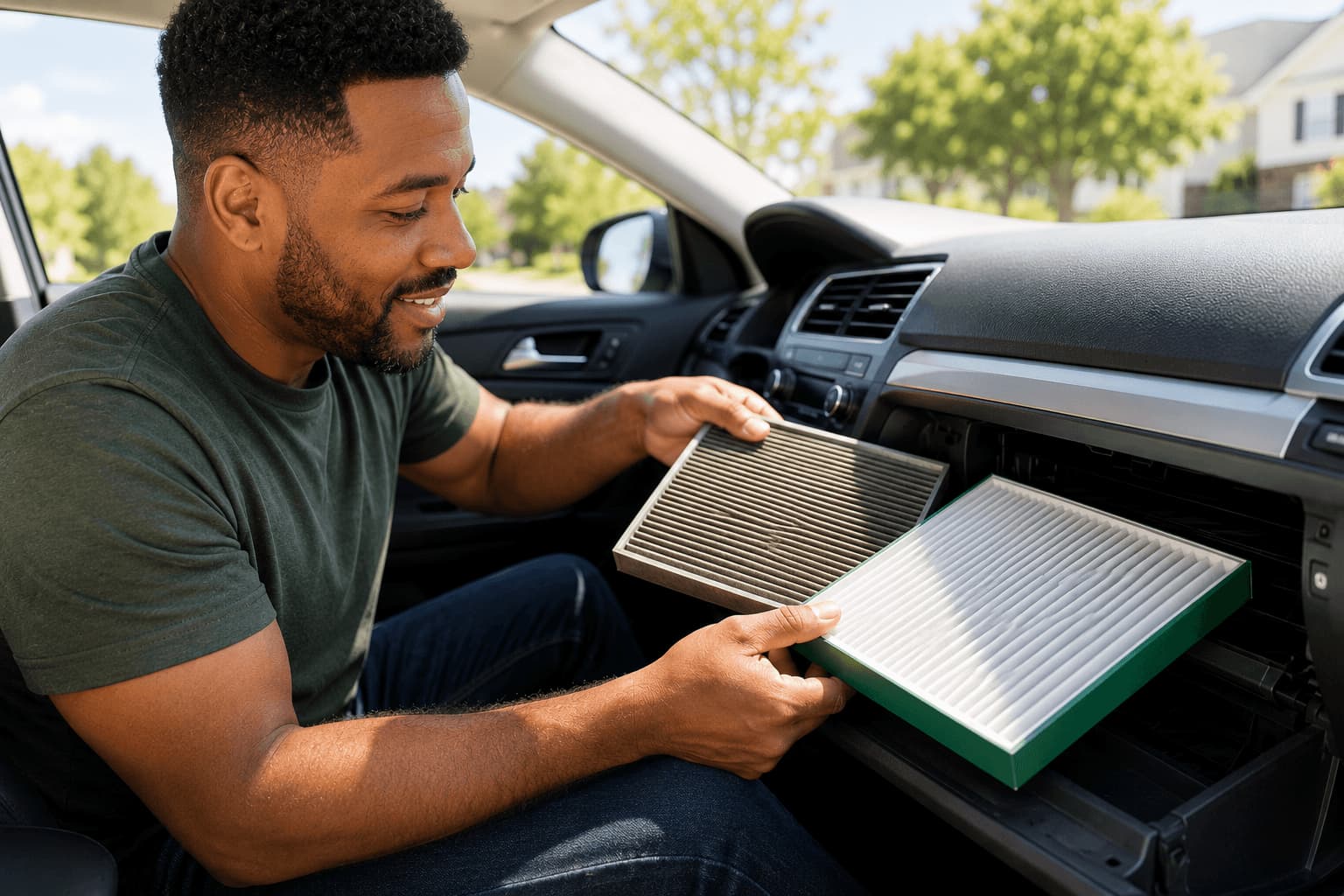
Drivers often forget about the cabin air filter until a problem pops up. You might notice the air smells stale. The vents might feel weak. Or maybe the windshield takes way too long to defog on a chilly morning.
So, how long do cabin air filters last? The truth is that a cabin air filter does not expire on a fixed date. Its lifespan depends entirely on how much dust, pollen, smoke, road debris, and pollution it has to trap.
Think of it like a sponge. Once it fills up with dirt, it cannot absorb any more. Replacing your filter every 12 months or 12,000–15,000 miles is a safe general rule. But let’s break down exactly what impacts that timeline and how you can tell when your car needs a fresh filter.
Key Takeaways
The lifespan of a cabin air filter is not fixed and depends on factors such as dust, pollen, smoke, and other pollutants it encounters.
A general guideline is to replace your cabin air filter every 12 months or 12,000–15,000 miles.
Driving conditions, such as dusty roads or urban areas with heavy pollution, can shorten the life of your filter.
Signs your cabin air filter needs replacing include reduced airflow from vents, unpleasant odors in the car, and increased dust inside the cabin.
Regularly checking and replacing your cabin air filter ensures cleaner air inside your vehicle and better performance of your HVAC system.
How Long Do Cabin Air Filters Usually Last
Most cabin air filters should be replaced about once a year.
Mileage-based guidance usually falls around 12,000 to 15,000 miles. Manufacturer recommendations will vary depending on your specific vehicle. Ford, for example, recommends a replacement around 15,000 to 20,000 miles for many models. Meanwhile, auto experts at AAA note that many factory intervals range from 15,000 to 30,000 miles.
For Filterbuy auto cabin air filters, we suggest using the approved replacement interval of every 12 months or 12,000 miles. Your owner’s manual should always be the final reference for vehicle-specific maintenance timing.
Think of 12 months or 12,000–15,000 miles as a safe window for many drivers. But if your car deals with heavy dust, thick smoke, spring pollen, or daily city traffic, your cabin air filter will fill up much faster.
How Does Driving Condition Affect Cabin Air Filter Lifespan
Your driving environment plays a massive role in filter health. Use this simple table as a good rule of thumb for replacement timing.
| Driving Condition | Suggested Replacement Timing |
|---|---|
| Normal daily driving | Every 12 months or 12,000–15,000 miles |
| Heavy city traffic | Closer to every 12 months or 12,000 miles |
| Dusty or rural roads | Check every 6 months |
| High-pollen areas | Replace before or after peak allergy season |
| Wildfire smoke or poor air quality | Inspect sooner after heavy exposure |
| Construction zones or off-road driving | Check more often; replace if visibly dirty |
Note: If you frequently drive on dirt roads, park under messy trees, or live in a high-pollen area, checking your cabin air filter every six months is a smart move.
What Affects Cabin Air Filter Lifespan
Multiple factors can shorten the life of your cabin air filter beyond just mileage.
Dusty roads and construction zones will clog a filter much faster than normal highway driving. If you regularly travel down unpaved roads, your filter is the main shield keeping that grit out of your vehicle's interior.
Heavy traffic and city pollution expose your vehicle to concentrated exhaust, smog, brake dust, and fine particles. Since city air is denser with these pollutants, the filter reaches its maximum capacity sooner, trapping them before they reach your lungs.
Seasonal pollen in spring and summer can load a filter quickly, a common issue for drivers in heavily wooded or agricultural areas.
Wildfire smoke or poor outdoor air quality contains fine particulate matter that gets trapped in the filter fibers, drastically shortening its useful life after heavy exposure.
Frequent heat or A/C use also plays a role. The more often outside air is pulled through the HVAC system, the harder the filter works. If you run the fan constantly, you push more air and more particles through the filter media.
5 Signs Your Cabin Air Filter Needs Replacing
How can you tell it's time for a new cabin air filter? Look for these five common signs:
Weak airflow from the vents: A clogged filter restricts airflow, making your fan feel weak even on a high setting. You'll notice that your A/C or heater isn't blowing as hard as it used to.
Musty or stale odors: Trapped dust, moisture, and debris in the filter can create unpleasant, musty smells inside your car when you turn on the heat or air conditioning.
Foggy windows that are slow to clear: Restricted airflow makes it harder for your defroster to clear moisture from the windshield. A clean filter allows a strong blast of dry air to defog the glass quickly.
More dust inside the cabin: If your dashboard gets dusty right after you clean it, the filter might be too full to trap new particles. This allows fine dirt to bypass the filter and settle on your interior surfaces.
Worsening allergy symptoms while driving: A dirty filter can allow more pollen, dust, and mold spores into the cabin. If you're sensitive to airborne allergens, you might notice more irritation during your commute.
What Happens If You Do Not Replace Your Cabin Air Filter
Skipping one replacement probably will not ruin your car overnight. However, a dirty cabin air filter forces your HVAC system to work much harder.
Reduced airflow places unnecessary strain on the HVAC blower motor. This leads to worse A/C and heating performance. You will also notice lingering odors, more dust settling on your dashboard, and slower windshield defogging.
Automotive experts note that cabin filters get clogged over time simply by doing their job. Replacing them on schedule helps keep your vehicle's ventilation working efficiently.
Can you check a cabin air filter yourself?
Absolutely. Many cabin air filters sit right behind the passenger glovebox. The exact location always depends on your specific vehicle, so check your owner's manual first.
Pull the filter out and inspect it. Look for dark dust, packed debris, dead leaves, bugs, moldy spots, or bent edges. If the filter looks dirty, smells musty, or you have noticed weak airflow recently, replacement is the better option.
Filterbuy auto cabin air filters include a helpful QR code on every package. This links directly to model-specific directions to make installation a breeze.
How often should I replace my cabin air filter?
For most drivers, swapping out the cabin air filter once a year is a solid plan. It's a simple schedule to remember and often aligns with other routine maintenance, like oil changes.
If you live in an area with a lot of dust, smoke, or pollen, you might need to check and change it more frequently. As a general rule, Filterbuy recommends a new cabin air filter every 12 months or 12,000 miles to keep your car's air fresh.
What Should I Look For In A Replacement Filter
The best replacement filter is one that traps even the smallest particles without hindering your car's HVAC system.
Filterbuy's auto cabin air filters are made with HEPA-certified material, capturing 99.97% of airborne particles like bacteria, pollen, smoke, and dander. We use a unique hydrocharging process to magnetically charge each fiber, maximizing particle capture while maintaining airflow.
Each filter is made in the USA to precise OEM standards, ensuring a perfect fit for hundreds of makes and models.
Replace Your Cabin Air Filter Before It Feels Dirty
Most cabin air filters are designed to last for about a year, or roughly 12,000 to 15,000 miles. However, this is just a baseline. If you frequently drive in dusty areas, high-pollen zones, or smoky conditions, your filter will clog up much faster.
Pay attention to the warning signs. If you notice the airflow from your vents seems weak, detect a musty or unpleasant odor, find your windows fogging up unexpectedly, or see a layer of dust settling inside your car, it’s a clear signal that your filter needs to be replaced.
A fresh cabin air filter not only improves your HVAC system's performance but also ensures the air you breathe is clean and free of irritants.
Ready to breathe easier? Find the right filter for your car at Filterbuy.
Frequently Asked Questions
How long do cabin air filters last?
Most cabin air filters last about 12 months or 12,000–15,000 miles. Some vehicles may have different manufacturer intervals, so drivers should check the owner’s manual.
What is the normal cabin air filter replacement interval?
A common cabin air filter replacement interval is once per year or every 12,000–15,000 miles. Some factory intervals may be longer, but dusty, smoky, or high-pollen driving conditions can require earlier replacement.
How do I know if my cabin air filter is bad?
Common signs include weak airflow from the vents, musty odors, more dust settling inside the car, foggy windows that clear slowly, and allergy-like irritation while driving.
Can a dirty cabin air filter affect the A/C?
Yes. A clogged cabin air filter will restrict airflow through the HVAC system. This reduced air volume can make the A/C feel significantly weaker.
Should I replace my cabin air filter every year?
Yes, annual replacement is a good rule of thumb for most drivers. Filterbuy auto cabin air filters should be replaced every 12 months or 12,000 miles.
Do cabin air filters last longer if I do not drive much?
They may last longer by mileage, but time still matters. Dust, moisture, pollen, and debris can collect inside the housing even if the car sits parked. Replacing the filter once a year is still a smart maintenance habit.
Can I clean and reuse a cabin air filter?
Most disposable cabin air filters should be replaced, not washed and reused. Washing a paper or synthetic filter can ruin the fibers. If the filter is dirty, musty, damaged, or packed with debris, a new replacement is the safer option.