
Best Cabin Air Filters for Pets | Filterbuy
June 1, 2026
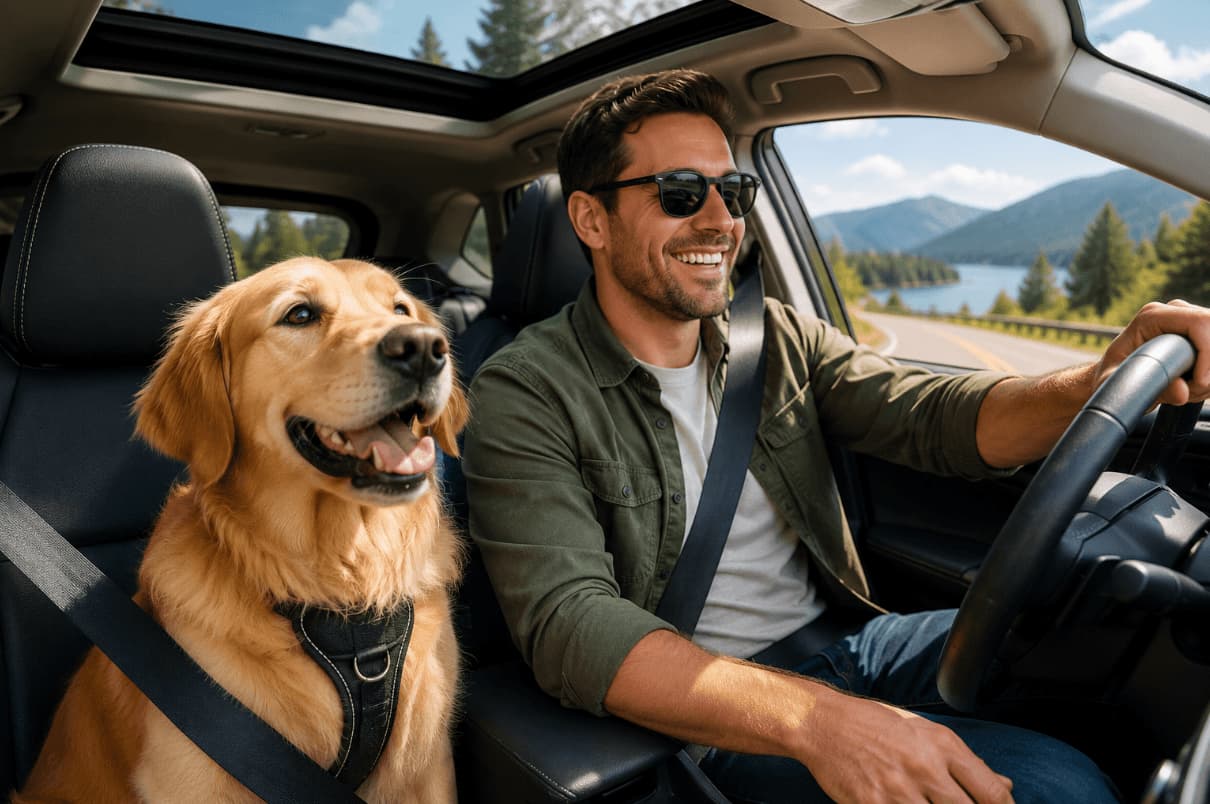
Taking your furry friend on a road trip is a great experience. But traveling with pets often brings unwanted guests into your vehicle. We are talking about pet dander, loose dog hair, and lingering odors.
More than 66% of U.S. households own a pet. That means many drivers are dealing with poor cabin air quality. In fact, the air inside your vehicle can be up to five times more polluted than the air outside. Standard cabin filters often miss microscopic pet dander, allowing it to blow directly into your face.
Most cabin air filters catch the obvious stuff. Filterbuy goes further. Upgrading your filter can drastically improve the air quality inside your vehicle. Let's look at why you need a specialized filter to handle the unique challenges of traveling with pets.
Key Takeaways
The air inside your vehicle can be significantly more polluted than the air outside, posing potential health risks.
Standard cabin air filters often fail to capture microscopic particles like pet dander, reducing air quality.
Upgrading to a high-quality cabin air filter, such as those offered by Filterbuy, can effectively improve the air inside your car and provide a cleaner, healthier environment for you and your passengers.
Specialized filters are essential for dealing with the unique challenges of traveling with pets, ensuring better filtration and overall air quality.
Why Pet Owners Need a Better Cabin Air Filter
Standard paper filters are great at catching leaves and large dust particles. They fall short when you introduce a shedding dog or cat into the mix.
Pet Dander Is Smaller Than Most Drivers Realize
Pet dander consists of microscopic flecks of skin shed by cats, dogs, and birds. These particles are incredibly tiny. They easily pass through basic paper filters. When you turn on your car's air conditioning, the system recirculates the cabin air. This means it just keeps blowing the same tiny dander particles back at you.
Dog Hair Can Restrict HVAC Airflow
Heavy shedding is a real problem for car vents. Loose hair gets pulled into the air intake system. Over time, this hair builds up inside the vents and directly on the filter face. This thick layer blocks airflow and strains your blower motor. You will likely notice a weak breeze from your vents and foggy windows on cold mornings.
Odors Don’t Just Disappear
We all know the wet dog smell. It happens after a hike in the rain or a trip to the beach. These odors are caused by volatile organic compounds (VOCs). If your filter lacks odor-fighting technology, those smells stay trapped in the cabin. A standard filter simply cannot pull odors out of the air.
What to Look for in the Best Cabin Air Filter for Pets
Not all aftermarket filters are created equal. If you want the best cabin air filter for dog owners, you need to check a few specific boxes.
HEPA-Certified Filtration
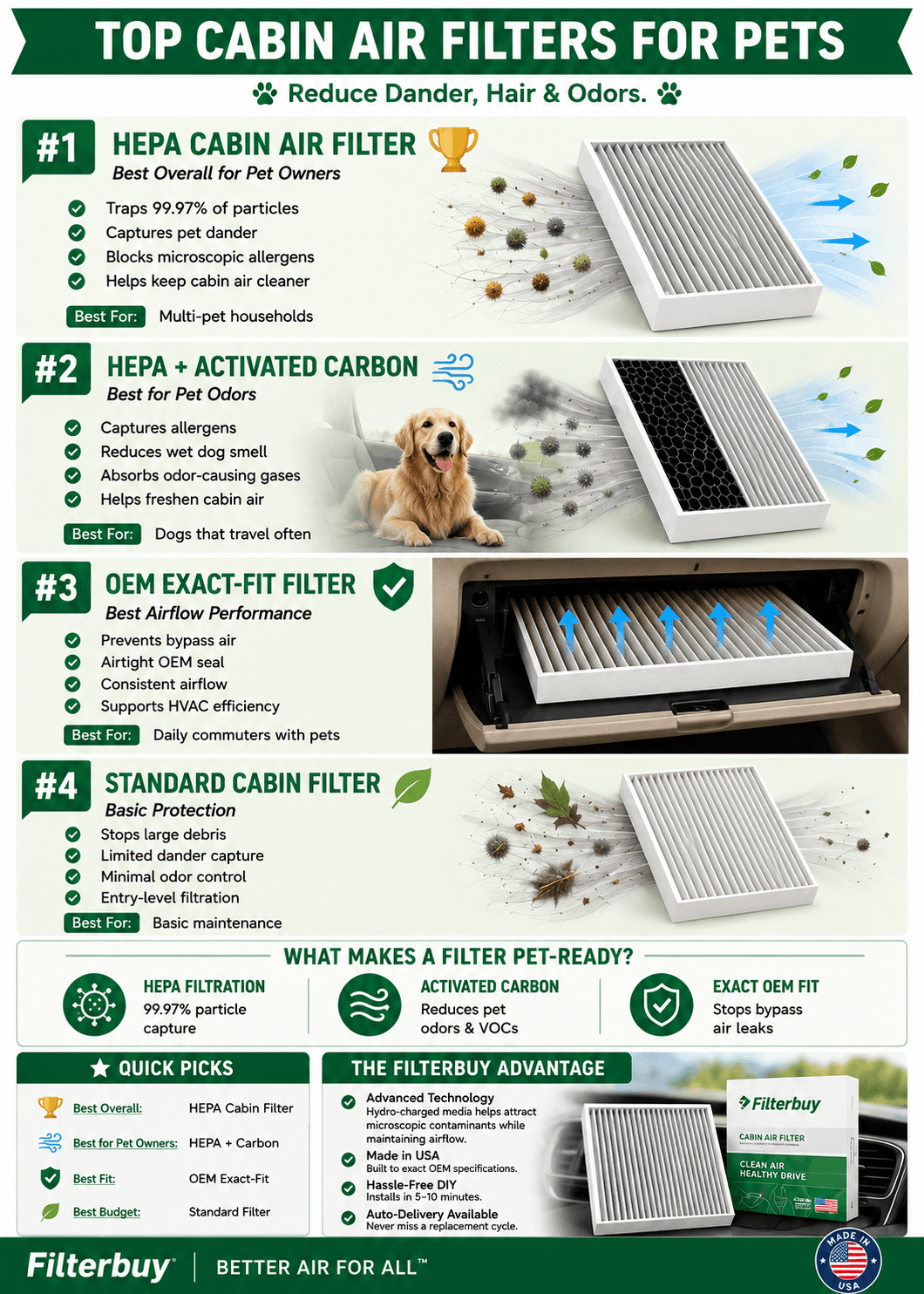
To capture dander, you need HEPA-certified synthetic media. This advanced material traps 99.97% of airborne particles as small as 0.3 microns. It is highly effective at stopping pet dander, pollen, smoke, mold spores, and fine particulate matter.
Activated Carbon for Odor Control
To fight that wet dog smell, look for a filter with an activated carbon layer. Carbon acts like a sponge for gases. It captures odor-causing particles and helps reduce odors effectively.
Exact OEM Fit Matters
Your filter must fit perfectly into the housing slot. If it is too small, air will simply flow around the edges. This is known as bypass air. An exact OEM fit creates an airtight seal, forcing all the air to pass directly through the filter media.
Airflow Performance
A dense filter is useless if your car's fan cannot push air through it. High-quality filters capture small particles while maintaining a low pressure drop. This protects your HVAC efficiency. Good airflow is essential for heating, cooling, and quickly defogging your windows.
Why Filterbuy HEPA Cabin Air Filters Are a Smart Choice for Pet Owners
Filterbuy auto cabin air filters use HEPA-certified synthetic media to trap 99.97% of airborne particles as small as 0.3 microns — including bacteria, pollen, mold spores, smoke, and pet dander. Every filter is manufactured 100% in the USA to exact OEM tolerances, with advanced hydrocharging technology that permanently magnetizes every fiber for maximum particle capture without restricting airflow. Available for hundreds of vehicles across all major makes and models — use the vehicle selector at Filterbuy to find the right fit for your car.
Designed for Pet Dander & Fine Particles
Our advanced hydrocharging technology gives us an edge. We permanently magnetize the filter fibers. They actively pull in microscopic contaminants like a magnet. This ensures your filter captures more dander and fine particles throughout its entire lifespan.
Helps Reduce Pet Odors Without Restricting Airflow
Our filters balance HEPA media with strong airflow performance. They capture the tiny particles that carry pet smells while allowing your HVAC system to breathe easily. Your car stays smelling fresh, and your AC blows cold.
Exact OEM Tolerances Help Prevent Bypass Air
We design our filters to match exact OEM dimensions. This guarantees an airtight fit inside your specific vehicle. You will not have to worry about bypass gaps letting dirty air sneak into the cabin.
Easy DIY Installation for Busy Pet Owners
You do not need to pay a mechanic to change your filter. It is a quick job you can do in your driveway. Installation is typically tool-free and takes 5–10 minutes. We even include QR code instructions in the box to guide you.
Convenient Replacement Options
We make stocking up easy. You can buy 1, 2, 3, or 4-pack options depending on your needs. You can also sign up for a subscription so a fresh filter arrives right when you need it. Every order comes with free 2-day shipping.
How Often Should Pet Owners Replace a Cabin Air Filter?
The standard recommendation is to replace your cabin air filter every 12 months or 12,000 miles. Pet owners usually need to change it sooner. Heavy shedding, frequent road trips with pets, and multi-pet households will clog a filter fast. You might need a fresh filter every 6 to 9 months.
Signs Your Cabin Air Filter Needs Replacing
A persistent musty smell is coming from the vents
Noticeably reduced airflow when the fan is on high
Increased fogging on the windshield
More visible dust and hair are accumulating on the dashboard
Allergy symptoms acting up while driving
Can a Cabin Air Filter Help With Pet Allergies?
Many drivers ask if a better filter will help with their sneezing. A high-quality HEPA cabin air filter may help reduce exposure to common allergens. It is designed to trap airborne particles that can trigger allergy symptoms. This includes pet dander, pollen, mold spores, smoke particles, and PM2.5 pollution.
DIY Cabin Air Filter Replacement: What Pet Owners Should Know
Replacing your own filter saves time and money. Here is what you need to know before you start.
Where Most Cabin Air Filters Are Located
In the vast majority of cars, the cabin air filter is located directly behind the glovebox. You usually just squeeze the sides of the glovebox to lower it down. In some vehicles, the filter housing is located under the dashboard on the passenger side.
How Long Does a Replacement Take
It is one of the easiest car maintenance tasks you can do. The entire process usually takes 5–10 minutes. Most modern cars do not require any tools at all.
Why Regular Replacement Matters for Pet Owners
Heavy shedding leads to rapid hair accumulation in your dash. This blocks your airflow and forces your AC blower motor to work twice as hard. Regularly changing the filter prevents costly HVAC repairs down the road.
Standard Cabin Filter vs. HEPA Cabin Filter
| Feature | Standard Cabin Filter | HEPA Cabin Filter |
|---|---|---|
| Captures large dust | Yes | Yes |
| Captures pet dander | Limited | Yes |
| Helps reduce odors | Limited | Better with carbon layer |
| Fine particle filtration | Basic | Advanced |
| Airflow protection | Varies | Designed for optimized airflow |
| Allergy support | Minimal | May help reduce exposure |
Drive Cleaner: Upgrade Your Air Quality Today
Pet owners face unique challenges regarding vehicle air quality. From lingering odors to restricted airflow caused by dog hair, standard filters simply cannot keep up. Upgrading to HEPA filtration offers a practical, premium solution. You get excellent odor control, superior dander capture, and optimized airflow.
Are you ready to stop breathing in pet dander on your morning commute? Use the vehicle selector at Filterbuy to find the perfect HEPA cabin filter for your car today.
Frequently Asked Questions
What is the best cabin air filter for pets?
The best choice is a HEPA cabin air filter. It uses dense synthetic media to trap microscopic pet dander and hair that standard paper filters leave behind.
Can a cabin air filter remove pet dander?
Yes. A HEPA-certified cabin air filter traps 99.97% of airborne particles down to 0.3 microns, which easily catches pet dander circulating in the air.
How often should pet owners replace a cabin air filter?
While the standard is 12 months, pet owners should check their filter every 6 to 9 months. Heavy shedding can clog the filter much faster.
Does dog hair damage a cabin air filter?
Dog hair will not damage the filter media, but it will block it quickly. A thick layer of hair restricts airflow, which can eventually strain your car's blower motor.
Can a cabin air filter help with pet odors in a car?
Yes, if you choose the right one. A filter featuring an activated carbon layer captures odor-causing particles and helps reduce stubborn pet smells.
Are HEPA cabin air filters worth it for pet owners?
Absolutely. They provide vastly superior filtration for fine dander and hair, leading to cleaner air and a much more comfortable driving experience.
Where is the cabin air filter located in most vehicles?
You will usually find the cabin air filter housing located right behind the glovebox on the passenger side of the vehicle.
Can a dirty cabin air filter make allergies worse?
Yes. A dirty, clogged filter cannot trap new allergens. It can also become a breeding ground for mold, blowing those spores directly into the cabin.
What’s the difference between a standard and HEPA cabin air filter?
Standard filters use basic paper to catch large dust and debris. HEPA filters use advanced synthetic media to trap microscopic particles, dander, and fine pollutants.
How long does it take to replace a cabin air filter?
For most vehicles, it takes about 5 to 10 minutes. It is a simple DIY job that rarely requires any specialized tools.