How Often Should You Replace Your Cabin Air Filter?
May 23, 2026
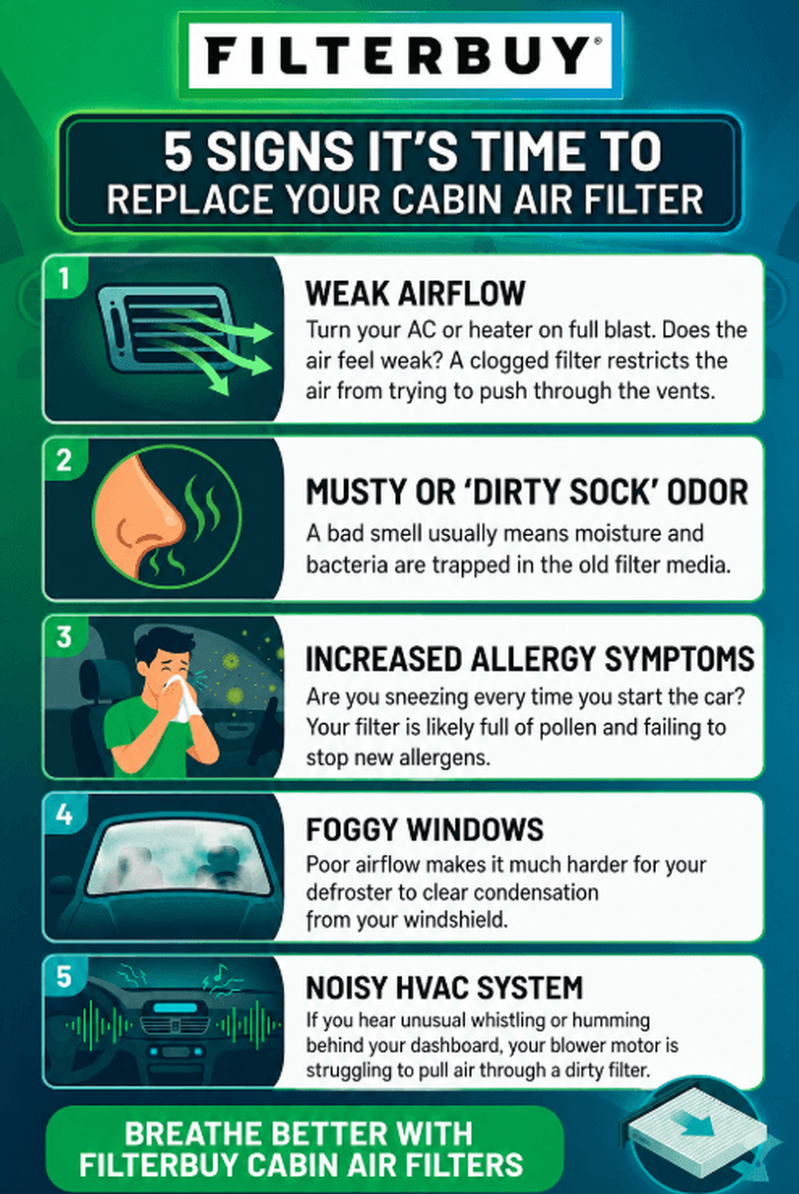
Most automotive experts recommend replacing your cabin air filter every 12,000–15,000 miles, or once a year, whichever comes first. Drivers in high-pollen, dusty, or heavily polluted areas may need to replace it more frequently. Reduced airflow from vents and musty smells are the most common warning signs.
Key Takeaways
Replace your cabin air filter every 12,000–15,000 miles or once a year
Drivers in dusty, high-pollen, or high-pollution environments may need to replace it more often
Common warning signs include reduced airflow from vents, musty odors, and windows that fog up and won't clear
Cabin air filters and engine air filters are two separate components serving entirely different functions
Most cabin air filters cost between $15 and $50 and can be inspected without any tools
What Is the Standard Cabin Air Filter Replacement Interval?
The standard recommendation from most automotive experts is to replace your cabin air filter every 12,000 to 15,000 miles, or at least once a year. For most drivers, those two benchmarks align closely, but annual replacement is a useful default if you're not tracking mileage precisely.
That said, your vehicle's owner's manual is the most reliable reference. Manufacturers set specific maintenance intervals based on the make, model, and HVAC system design, so recommendations can vary.
If you drive fewer miles than average but live somewhere with high levels of dust, pollen, or air pollution, lean toward replacing on time rather than by mileage alone. The filter's condition depends not just on how far you've driven, but on what it's been filtering out.
Cabin Air Filter vs. Engine Air Filter: What's the Difference?
These are two entirely separate components, and confusing them is one of the most common car maintenance mix-ups.
The cabin air filter cleans the air that circulates through your HVAC system, specifically the air you and your passengers actually breathe inside the vehicle. It's designed to remove pollen, dust, allergens, exhaust fumes, and other contaminants from the cabin environment.
The engine air filter cleans the air flowing into the engine for combustion. Its job is to protect engine components from debris, not to protect the people inside the car.
The symptoms that point to each filter are also distinct:
Both filters need regular attention. But if you're experiencing stale air, reduced airflow, or lingering smells inside the car, the cabin air filter is the one to check first.
How to Check Your Cabin Air Filter in 60 Seconds
You don't need a mechanic to inspect your cabin air filter. Here's a quick visual check you can do yourself:
Locate the filter. In most vehicles, the cabin air filter sits behind the glove box, under the dashboard, or under the hood near the base of the windshield. Check your owner's manual if you're unsure.
Remove the filter. Most cabin air filters slide or clip out without tools. Wear gloves if you'd prefer not to handle the debris directly.
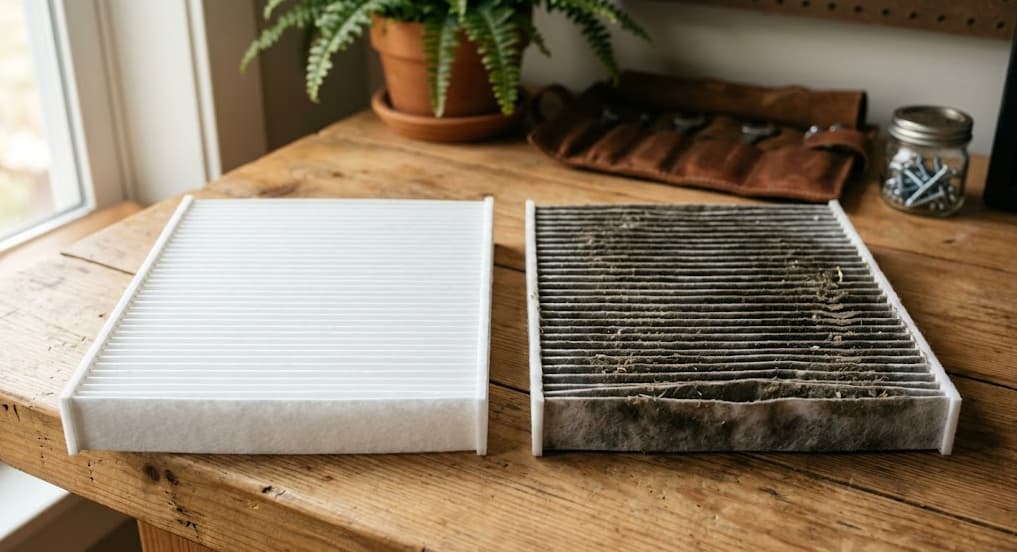
Look at the surface. A fresh filter looks light gray or white. A dirty one will show visible dust buildup, debris, insects, or dark discoloration. Check the edges for cracking, which is another sign it's past its prime.
Check for mold. If the filter smells musty or you can see any mold growth, replace it immediately, regardless of mileage.
Reinstall or replace. If the filter looks heavily soiled, cracked, or contaminated, swap it out. If it looks relatively clean and has no odor, it may have some life left in it.
The whole process takes about a minute. Making it part of your annual vehicle check is an easy habit that pays off in air quality and HVAC performance.
Ignoring these signs doesn't just mean bad air quality. Over time, a severely clogged cabin air filter puts additional strain on the HVAC system. Components like the blower motor and heater fan resistor can overheat from the extra load, leading to costly repairs.
A dirty cabin air filter can also slightly reduce fuel efficiency, since the engine has to work harder to compensate for the restricted HVAC system. When it's time to replace yours, Filterbuy cabin air filters are a reliable option designed to fit your vehicle and keep the air inside it clean.
Frequently Asked Questions
How often should you change a cabin air filter?
Most automotive experts recommend replacing your cabin air filter every 12,000 to 15,000 miles, or once per year. Drivers in areas with high pollen, pollution, or dust may need to replace the filter more often. Always check your vehicle's owner's manual for manufacturer-specific guidance.
What are the signs of a bad cabin air filter?
The most common signs include reduced airflow from the vents, musty or acrid odors inside the car, windows that fog up and struggle to clear, a dustier interior, and louder fan noise. If any of these symptoms appear before your scheduled replacement interval, inspect the filter immediately.
What happens if you don't replace your cabin air filter?
A neglected cabin air filter allows allergens, soot, exhaust fumes, and other contaminants to enter the cabin unchecked. It also puts strain on the HVAC system, potentially causing the blower motor or heater fan to overheat and fail. Poor windshield visibility from reduced defrost performance can also become a safety hazard.
Can a dirty cabin air filter affect your air conditioning?
Yes. A clogged cabin air filter restricts the airflow that the A/C system depends on to cool the cabin. Even with the A/C running at full power, a blocked filter can prevent cool air from reaching passengers effectively, reducing the system's efficiency.
How much does a cabin air filter cost?
Most cabin air filters cost between $15 and $50, depending on the vehicle make and model. Higher-end filters with activated charcoal layers (which help neutralize odors) may cost slightly more. Filterbuy cabin air filters fall within this range and are available for a wide range of vehicles, making them a straightforward pick when it's time to replace yours. It's one of the more affordable maintenance items on any vehicle.
Can you check a cabin air filter yourself?
Yes. Most cabin air filters are accessible without tools. The filter is typically located behind the glove box, under the dashboard, or near the base of the windshield under the hood. Check your owner's manual for the exact location in your vehicle.
Is the cabin air filter the same as the engine air filter?
No. The cabin air filter cleans the air inside the passenger compartment, while the engine air filter cleans the air flowing into the engine for combustion. They serve completely different functions and are located in different parts of the vehicle.