Most drivers don't think about their car's cabin air filter until something goes wrong. But this small part silently decides what you breathe on every drive.
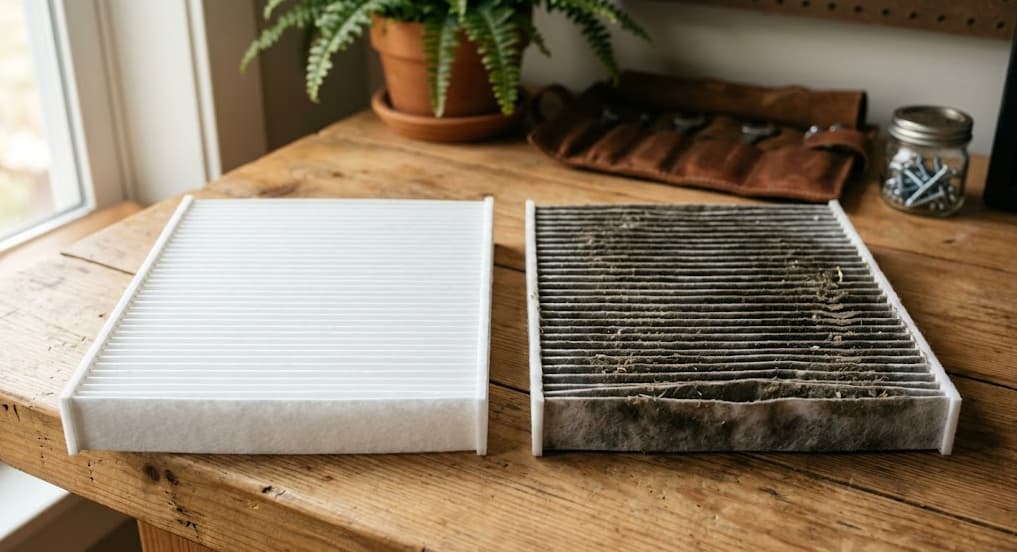
A clogged filter doesn't just make your car's air dirtier; it also strains your AC, restricts airflow, and can lead to unexpected repair costs.
So, how often should you replace it? The quick answer is every 12,000–15,000 miles, or roughly once a year. If you frequently drive in areas with heavy dust, traffic, or high pollen levels, you may need to replace it sooner.
Remember, a dirty filter means dirty air, weaker AC performance, and unnecessary wear and tear on your vehicle's HVAC system.
Here's everything you need to know if your filter is overdue for a change. And what ignoring it could actually be costing you.
Protects Air Quality: A clean cabin air filter ensures you breathe fresher, healthier air by blocking dust, pollen, and pollutants.
Improves Vehicle Efficiency: Replacing a clogged filter helps maintain smooth airflow, which can improve your air conditioning performance.
Watch for Warning Signs: Unusual odors, weak airflow, or excessive dust in your car are clear indications that it's time to check your filter.
Regular Maintenance Matters: Check your vehicle’s manual for mileage recommendations, but inspecting your filter every 12,000 to 15,000 miles is a good rule of thumb.
Avoid Hidden Costs: Neglecting your cabin air filter can lead to unpleasant driving and potentially damage your HVAC system.
The average American drives around 13,500 miles per year. Based on that number, most automakers recommend replacing the cabin air filter every 12,000 to 30,000 miles.
However, your local environment plays a huge role in how long a cabin air filter lasts. If you spend hours idling in dirty city traffic, your filter works overtime. Here is a simple breakdown of when you should swap yours out:
| Driving Condition | Time Interval | Mileage |
|---|---|---|
| Normal driving | 12–24 months | 15,000–30,000 miles |
| City / high pollution | 6–12 months | 10,000–15,000 miles |
| Dusty / rural roads | 6–12 months | 5,000–12,000 miles |
| Severe (smoke/allergies) | 3–6 months | Under 10,000 miles |
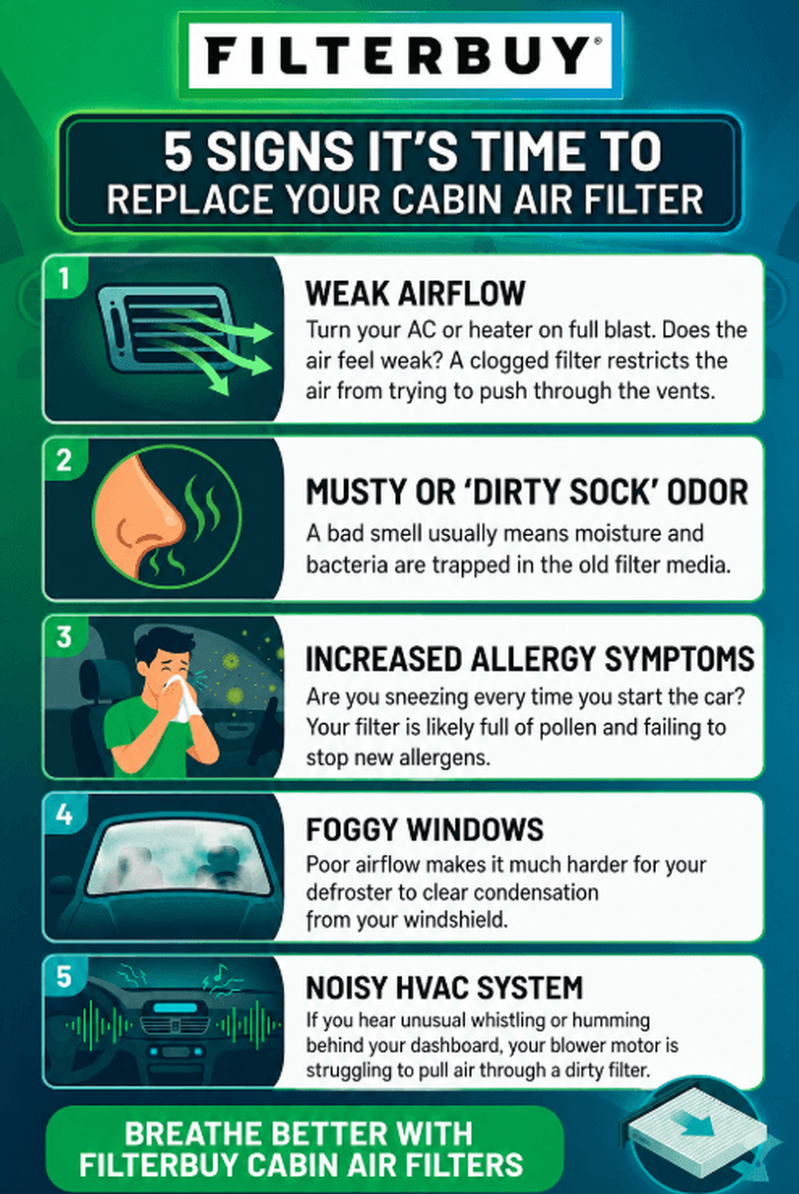
You do not always have to track your mileage perfectly. Your car will usually tell you when it needs a fresh filter. Watch out for these common cabin air filter symptoms:
Weak airflow: Turn your AC or heater on full blast. Does the air feel weak? A clogged filter restricts the air from trying to push through the vents.
Musty or “dirty sock” odor: A bad smell usually means moisture and bacteria are trapped in the old filter media.
Increased allergy symptoms: Are you sneezing every time you start the car? Your filter is likely full of pollen and failing to stop new allergens.
Foggy windows: Poor airflow makes it much harder for your defroster to clear condensation from your windshield.
Noisy HVAC system: If you hear unusual whistling or humming behind your dashboard, your blower motor is struggling to pull air through a dirty filter.
Ignoring a dirty filter does more than just make your car smell bad. It can actively harm your health and your wallet.
According to the EPA, the air inside your car can be two to five times more polluted than the air outside. A fresh filter is your only line of defense against exhaust fumes and road dust.
Beyond air quality, a clogged filter strains your car's HVAC system. Your blower motor has to work incredibly hard to push air through a wall of dirt.
Over time, this causes the motor to burn out. Replacing a blower motor can easily cost you between $300 and $600 at a repair shop.
Every driver has a different routine. Your daily environment dictates how often you should replace it.
If you drive on dusty gravel roads, your filter will clog up much faster than someone driving on clean highways. Regional weather events also matter. Drivers in the U.S. West often face heavy wildfire smoke, which wears out a standard filter in just a few months.
Spring pollen spikes and high humidity in southern states also shorten your filter's lifespan. If you suffer from asthma or severe allergies, you will want to replace your filter more frequently to protect your respiratory health.
Cabin air filter cost is surprisingly low, especially if you handle the installation yourself. This is one of the cheapest and easiest maintenance tasks for your vehicle.
DIY standard filter: $20–$50
Premium DIY filter (HEPA/carbon): $60–$100
Shop service: Add $30–$60 for labor costs
Yes, absolutely. You do not need to be a mechanic to do this.
In about 80% of modern cars, the filter is located right behind the passenger glovebox. You can usually swap it out in under five minutes. You rarely need any tools, making it a fast and satisfying DIY project.
If you want the best possible air quality, standard paper filters will not cut it. You need something designed to capture microscopic threats.
Filterbuy auto cabin air filters use HEPA-certified synthetic media to trap 99.97% of airborne particles as small as 0.3 microns. That includes bacteria, pollen, mold spores, smoke, and pet dander.
Every filter is manufactured 100% in the USA to exact OEM tolerances. This ensures an exact fit that prevents dirty bypass air from slipping around the edges.
Filterbuy also uses advanced hydrocharging technology that permanently magnetizes every fiber. This gives you maximum particle capture without restricting your precious airflow.
These filters are available for hundreds of vehicles across all major makes and models. You can easily use the vehicle selector at filterbuy.com to find the perfect fit for your car.
Let's keep things simple. Most drivers should replace their cabin air filter once per year. If you live in a heavily polluted area, on dusty roads, or with severe allergies, swap it out every 6 to 12 months.
A great habit is to check your cabin filter every time you get an oil change.
You spend a lot of time inside your car. You deserve to breathe clean, fresh air while you commute. Replacing your cabin filter is an easy, 5-minute maintenance win that protects your lungs and saves you from expensive AC repairs down the road.
Ready to experience a truly clean cabin? Find the right cabin air filter for your vehicle at Filterbuy.
Look for weak airflow from your vents, bad smells inside the cabin, or increased allergy symptoms while driving.
Yes, the car will still run. But it significantly reduces your air quality and forces your HVAC system to work much harder.
For most U.S. drivers, yes. The average annual mileage is high enough to completely fill a standard filter with dust and debris over 12 months.
Yes. A clean filter restores proper airflow, helping your air conditioning cool the cabin much faster.
Typically, a standard filter lasts between 12,000 and 15,000 miles. Your exact timeline varies based on your local environment and driving habits.