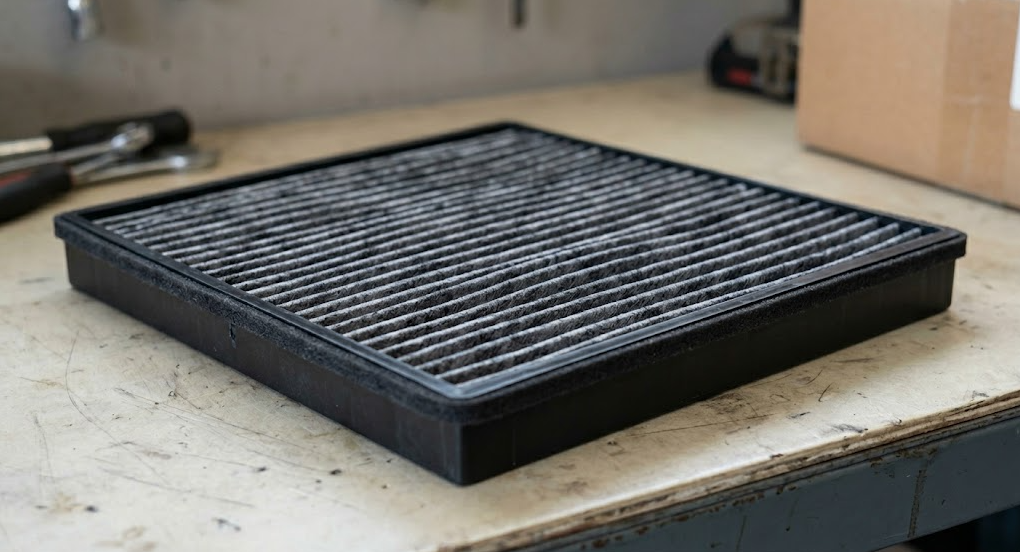
If your car smells like exhaust fumes, your cabin air filter might be the culprit. While standard filters trap dust and pollen, activated carbon filters are specifically designed to target odors and gaseous pollutants, such as smoke and VOCs.
So, do they actually work? Yes. Activated carbon cabin air filters reduce odors by adsorbing pollutants, but their effectiveness depends on factors such as the quality of the carbon and how often they are replaced.
Let's take a closer look at how they work and whether upgrading is worth the money.
Activated Carbon Filters Target More Pollutants: Unlike standard cabin air filters, activated carbon filters effectively capture odors and gaseous pollutants, such as VOCs and smoke.
Effectiveness Depends on Quality: The performance of these filters relies heavily on the quality of the activated carbon used in their construction.
Regular Replacement is Essential: To maintain their efficiency, activated carbon filters should be replaced as recommended by the manufacturer or when noticeable odors return.
Worth Considering for Sensitive Drivers: If you frequently encounter unpleasant odors or are sensitive to air pollutants, upgrading to an activated carbon cabin air filter can improve your driving experience.
An activated carbon cabin air filter traps airborne particles while also helping reduce odors and gaseous pollutants such as VOCs, smoke, and exhaust fumes, using a porous carbon layer.
Activated carbon works through a process called adsorption (not absorption). The carbon is treated to be extremely porous. This creates a massive surface area on a microscopic level.
When air passes through the filter, gas and odor molecules get trapped inside these tiny pores. The VOCs stick to the carbon surface, preventing them from blowing through your air vents.
A standard filter only catches physical dust and pollen. A carbon cabin air filter grabs the gases that standard filters leave behind. This includes:
Exhaust fumes from other vehicles
Smoke odors
Fuel smells
VOCs off-gassing from interior plastics
Certain industrial pollutants
Standard cabin filters focus strictly on particulate filtration. They catch physical debris, such as dust, pollen, and leaves.
Activated carbon air filters for cars combine standard particulate filtration with gas removal capabilities. They have a specific charcoal layer designed to trap odors. This makes them a dual-threat defense against both bad air and bad odors.
Yes, they do help reduce odors. But performance depends heavily on filter quality, carbon content, and replacement frequency.
Studies on activated carbon filtration show impressive numbers when the filter is fresh. High-quality carbon filters can achieve VOC reduction statistics of around 80% to 87%. Because odor reduction is directly tied to VOC capture, odor neutralization often reaches 90% to 94%. If you trap the gas, you stop the smell.
A good carbon filter handles everyday driving smells beautifully. You will notice a major difference with:
Cigarette smoke
Traffic exhaust
Food smells from outside
Pet odors
Mild mildew smells
Carbon filters are highly effective, but they are not magic. They cannot fix odors originating from inside your vehicle's systems. If you have mold inside your HVAC system, an activated carbon filter will not solve the problem.
They also cannot fix water leaks, interior spills, or a dirty evaporator core. If you spilled a milkshake under your seat, changing the cabin filter won't make your car smell fresh.
Choosing the right filter depends on what you encounter on your daily drive. Here is a quick breakdown of how standard and carbon filters compare.
Particle Filtration: Both standard and carbon filters effectively trap dust, pollen, and dirt.
VOC Removal: Standard filters offer zero gas removal. Carbon filters actively trap VOCs.
Odor Control: Standard filters cannot neutralize odors. Carbon filters are specifically designed for eliminating cabin air filter odor.
Cost: Standard filters are usually the cheapest option. Carbon filters cost slightly more due to the added materials.
Urban Driving Suitability: Standard filters are fine for clean, rural air. Carbon filters are highly recommended for city driving.
Carbon filters do not automatically offer "better" particulate capture than standard filters. They simply add a crucial layer of gas and odor filtration.
If you live in a rural area with clean air, a standard filter might be perfectly fine. But city drivers face a completely different environment.
Urban driving means sitting in stop-and-go traffic. You spend a lot of time driving through tunnels and idling on crowded highways. You are constantly surrounded by the exhaust pipes of other cars, buses, and diesel trucks.
When your car's climate control is set to "fresh air mode," it pulls outside air directly into the cabin. In heavy traffic, you are pulling in concentrated exhaust fumes. A cabin air filter for exhaust fumes is your only barrier against breathing in that pollution.
For city commuters, smokers, pet owners, and allergy-sensitive drivers, upgrading to a carbon filter is a strong "yes." The cabin air filter for smoke smell will make your commute significantly more comfortable.
If you are a rural driver with a low-mileage vehicle or mostly use recirculation mode, standard particulate filtration is likely sufficient.
You need to know the limitations before you buy. Understanding how carbon degrades will save you a lot of frustration.
Activated carbon acts like a sponge for gases. Eventually, that sponge fills up. Once the microscopic pores reach carbon saturation, the filter can no longer trap any more odors. When this happens, odor control declines rapidly. The filter will still catch physical dust, but the smells will come back.
Not all activated charcoal cabin filters are built the same. Cheap carbon filters often use incredibly thin carbon layers. Some are barely "carbon-coated" as a marketing gimmick. They have minimal carbon content and reach saturation almost immediately. You get what you pay for when it comes to odor control.
To maintain good air quality, replace your cabin air filter every 10,000 to 12,000 miles. You should swap it out once a year if you drive in high-pollution areas. A fresh filter is the only way to guarantee peak performance.
Activated carbon is great for gases, but what if your primary concern is microscopic particles? That is where HEPA cabin air filters come into play.
HEPA focuses entirely on particulate capture. Carbon focuses on gases and odors. HEPA filters do not eliminate odors on their own. For the absolute best air quality, you want a combination filtration strategy. You need a filter that traps dangerous microscopic particles while efficiently managing airflow.
Filterbuy auto cabin air filters use HEPA-certified synthetic media to trap 99.97% of airborne particles as small as 0.3 microns. This includes bacteria, pollen, mold spores, smoke particles, smog, pet dander, and fine particulate matter.
Every filter is manufactured 100% in the USA to exact OEM tolerances. We use advanced hydrocharging technology that permanently magnetizes every fiber. This guarantees maximum particle capture without restricting airflow.
[Upgrade your cabin air quality with Filterbuy HEPA cabin air filters — manufactured in the USA with exact OEM fitment and advanced hydrocharging technology.]
Even the best filter material is useless if dirty air can just slip around the edges. Exact OEM fitment reduces bypass air. It creates an airtight seal inside your filter housing. Fitment heavily dictates real-world filtration.
You do not need to pay a mechanic to change your cabin air filter. Filterbuy makes tool-free installation incredibly simple. We even include QR code instructions so you can swap it out in your driveway in under 5 minutes.
Filterbuy offers a handy subscription option so you never forget to change your filter. You also get free 2-day shipping and multi-pack availability to save money.
Still unsure which route to take? Here is a simple breakdown to help you decide.
Odors are your main concern
You face heavy traffic exposure daily
You have a high smoke sensitivity
You suffer from severe allergies
You want to trap physical smoke particles and ash
You face heavy dust and pollen exposure
You are concerned about PM2.5 (fine particulate matter)
The best cabin air filter for odors and overall health uses a layered protection approach. Keep your interior clean, use your recirculation setting when stuck behind diesel trucks, and invest in high-quality cabin filtration.
Yes, activated carbon cabin air filters are absolutely worth it, especially for odor-conscious urban drivers. But remember that filter quality heavily dictates the results. Cheap carbon filters lose their effectiveness very quickly.
Stick to proper replacement intervals to keep your vehicle smelling fresh. Most drivers notice the biggest improvement in heavy traffic, during wildfire season, or when dealing with smoke and exhaust odors.
[Find the right HEPA cabin air filter for your vehicle today]
Yes. Activated carbon cabin air filters help reduce odors, VOCs, smoke, and exhaust fumes by adsorbing gaseous pollutants that standard particulate filters cannot capture effectively.
Carbon cabin air filters add odor and gas filtration capabilities while still trapping dust and pollen. They are especially useful for urban drivers exposed to traffic exhaust and smoke.
Most should be replaced every 10,000–12,000 miles or about once per year, especially in high-pollution driving environments where the carbon layer can saturate faster.
Activated carbon cabin air filters may help reduce incoming cigarette smoke odors and smoke-related VOCs entering through the HVAC system.
HEPA cabin air filters are highly effective at trapping airborne particles like dust, pollen, smoke particles, and PM2.5. However, odor reduction typically requires activated carbon media designed for gas and VOC capture.
Persistent odors may come from mold in the HVAC system, dirty evaporator coils, water leaks, spills, or bacteria buildup elsewhere in the vehicle — not just the cabin air filter.
Higher-quality carbon filters often contain thicker activated carbon layers that last longer and provide better odor and VOC reduction than thin, low-carbon alternatives.
HEPA-certified cabin air filters may help trap fine smoke particles, including PM2.5, while activated carbon layers may help reduce smoke-related odors and gaseous pollutants.
