June 15, 2026
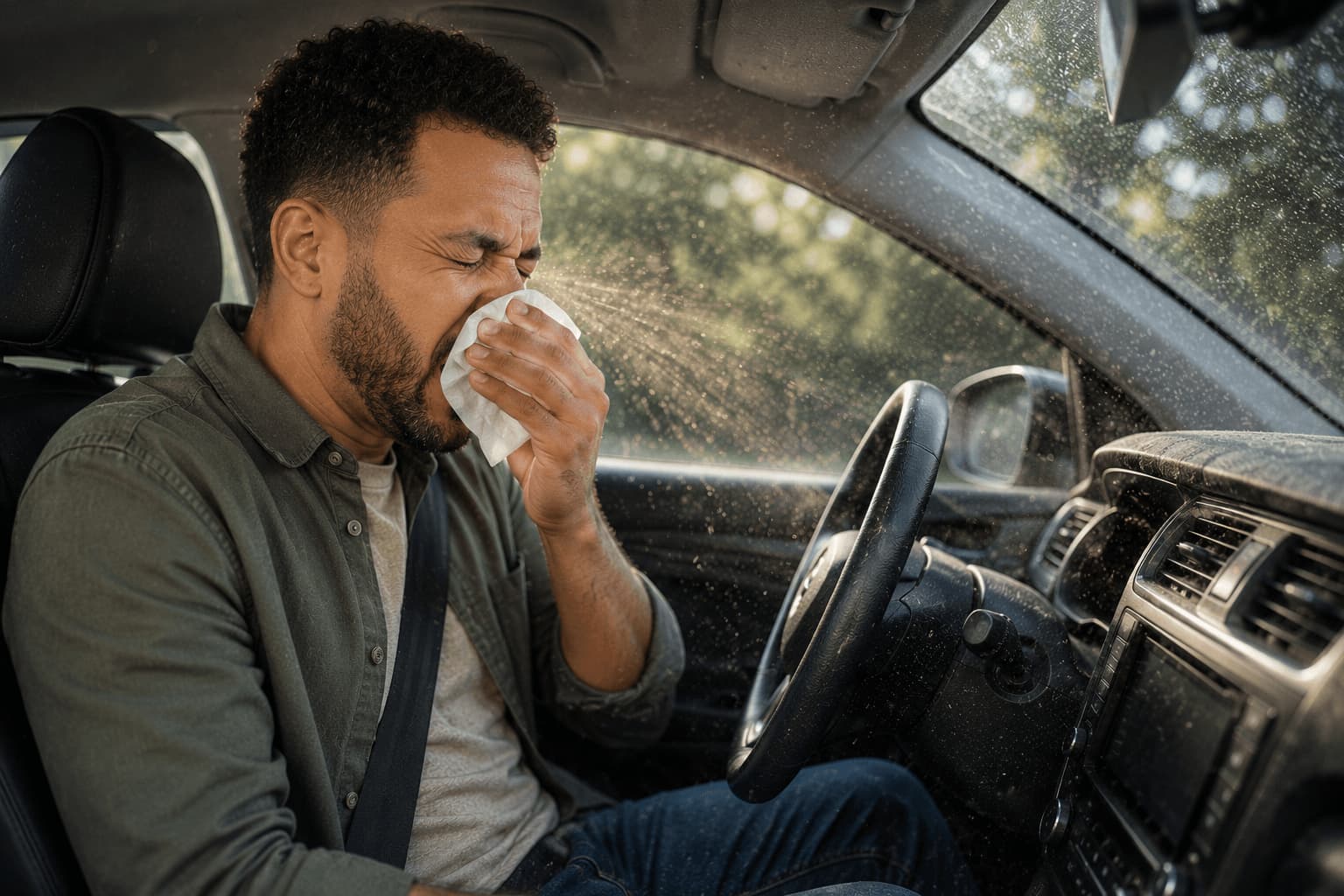
A clean HEPA-certified cabin air filter can help reduce airborne allergy triggers inside your vehicle. High-efficiency cabin filters trap pollen, dust, mold spores, and pet dander before those particles blow through your air vents.
HEPA-certified cabin air filters are effective at trapping allergens such as pollen, dust, mold spores, and pet dander.
Regularly replacing your cabin air filter ensures optimal performance and cleaner air inside your vehicle.
Using a high-quality cabin air filter can significantly improve air quality, especially for allergy sufferers.
Proper vehicle maintenance, including cleaning and filter replacement, can further reduce exposure to airborne triggers.
Yes. A clean cabin air filter can help reduce allergy triggers inside your car. The filter works by trapping pollen, dust, mold spores, pet dander, smoke particles, smog, and other airborne irritants before they blow through your vents.
HEPA-certified cabin air filters offer stronger filtration for sensitive drivers. HEPA media is specifically designed to capture 99.97% of airborne particles as small as 0.3 microns. That includes microscopic dust, pollen, mold, and bacteria.
Air filtration has been shown to reduce airborne allergens. According to the American College of Allergy, Asthma & Immunology, using high-efficiency filters may provide some relief for people with allergies.
Expert tip: If you have seasonal allergies, check your cabin air filter before peak pollen season. A fresh HEPA-certified cabin filter can help reduce the pollen, dust, mold spores, smoke, and pet dander that pass through your vents.
Your car pulls in outside air constantly. That air comes directly from busy roads, pollen-heavy environments, construction dust, and nearby vehicles.
The Environmental Protection Agency (EPA) provides clear guidance on vehicle air quality. The EPA notes that air quality inside vehicles is heavily affected by roadway emissions and surrounding vehicles. This is especially true when you follow heavy-duty trucks or vehicles with visible exhaust.
Here is what happens when unfiltered air enters your vehicle:
Pollen gets pulled directly through the HVAC system.
Dust and pet dander collect on your seats, floor mats, and vents.
Traffic pollution and fine particulate matter (PM2.5) irritate sensitive airways.
A dirty or clogged filter reduces airflow, lowering overall filtration performance.
Pollen particles are generally larger than many fine chemical pollutants. Scientific literature commonly describes intact pollen grains as roughly 10 to 100 microns in size. However, ruptured sub-pollen particles can be smaller than 2.5 microns.
Standard car air filters for allergies may catch those larger, intact pollen grains. But standard filters often miss the tiny, ruptured pollen fragments.
HEPA-certified filters are a much stronger choice for allergy-conscious drivers. HEPA cabin air filters capture those incredibly small airborne particles, providing reliable cabin air filter pollen relief.
Air filtration is a science. Several major studies and health organizations highlight the benefits of high-efficiency filtration in enclosed spaces.
The EPA states that HEPA filters can theoretically remove at least 99.97% of dust, pollen, mold, bacteria, and other airborne particles at a size of 0.3 microns.
The EPA also notes that filtration can be an effective supplement to source control and ventilation. However, filters do not remove all pollutants.
A study hosted by the Centers for Disease Control and Prevention (CDC) and the National Institute for Occupational Safety and Health (NIOSH) tested cabin filter efficiency. The CDC/NIOSH-hosted study found that HEPA cabin filters reduced in-cabin ultrafine particle concentration by 93% on average. Standard in-use OEM filters only reduced particles by 41% to 65%.
A separate passenger car cabin study looked at how filter age affects performance. Aged filters performed significantly worse than new filters. In one test location, the average PM2.5 inside-to-outside ratio was a highly effective 0.20 for a new filter. That ratio spiked to a poorly performing 0.60 for an aged filter.
When it is time for a cabin air filter replacement, you have three main options. Here is a quick breakdown to help you choose the right fit.
| Filter Type | Best For | Performance Overview |
|---|---|---|
| Standard particulate cabin filter | Basic pollen, dust, and debris | Good for trapping larger particles. However, standard filters may not capture the smallest fine particles as effectively. |
| Activated carbon cabin filter | Odors, exhaust smells, some gases/VOCs | Good for drivers bothered by traffic smells, smoke, and odors. Activated carbon filters are used to filter gases, though performance depends on the amount of carbon material. |
| HEPA-certified cabin filter | Allergy-conscious drivers, pet dander, fine particles, pollen, mold spores | The best fit for allergy sufferers. HEPA media captures 99.97% of particles as small as 0.3 microns. |
Filters need regular replacement because they load up with particles over time. The EPA states that all filters need regular replacement. Dirty, overloaded filters simply do not work well.
If your filter is packed with dirt and leaves, your HVAC system cannot push air through it properly. Watch for these common dirty cabin air filter symptoms:
A musty or dusty smell is coming from the vents.
Weak airflow when the heat or air conditioning is turned up.
More sneezing or throat irritation while driving.
Visible dirt or debris on the filter material.
It has been more than 12 months or 12,000 miles since your last replacement.
Filterbuy recommends that you replace your cabin air filter every 12 months or 12,000 miles.
However, you should adjust that schedule based on your driving habits. Drivers in high-pollen areas, dusty climates, or wildfire-prone regions will likely need to change their filters sooner. If you sit in heavy traffic daily or have a pet-friendly vehicle, you may want to check the filter more often.
Your car's recirculation button stops outdoor air from coming inside. Instead, the HVAC system recirculates the air that is already inside the cabin.
Recirculation mode can drastically reduce how much outdoor air enters the cabin. The EPA notes that, in vehicles with properly functioning cabin air filters, recirculation reduces PM concentrations from outdoors.
This is a great tool when driving past dusty construction zones or through heavy traffic. Just remember a practical note: do not use recirculation constantly for long drives with multiple passengers. Carbon dioxide (CO2) can build up in a sealed cabin, so bring in fresh air periodically.
Filterbuy auto cabin air filters use HEPA-certified synthetic Media to trap 99.97% of airborne particles as small as 0.3 microns, including bacteria, pollen, mold spores, smoke, and pet dander.
Every Filterbuy filter is manufactured 100% in the USA to exact OEM tolerances. We use advanced hydrocharging technology that permanently magnetizes every fiber. This guarantees maximum particle capture without restricting your vehicle's airflow.
Filterbuy cabin air filters are available for hundreds of vehicles across all major makes and models. You can use the vehicle selector at filterbuy.com to find the right fit for your car.
When you upgrade to a Filterbuy cabin air filter, you also get:
Quick, tool-free installation.
A QR code on every package that links directly to model-specific directions.
A sturdy, recyclable polypropylene frame.
Buying options in 1, 2, 3, and 4-packs.
A subscription option that saves you 15% and includes free 2-day shipping.
Filterbuy filters are compatible with many major makes, but you should always use the vehicle selector to confirm fitment for your specific model.
Cabin air filters are not a cure for allergies, but a clean, high-efficiency cabin filter can help reduce your exposure to common airborne triggers while driving. For allergy-conscious drivers, upgrading to a HEPA-certified cabin filter and replacing it on schedule is a smart, easy step.
Find the right HEPA cabin filter from Filterbuy for your vehicle today.
Yes. A clean cabin air filter can help reduce airborne allergy triggers like pollen, dust, mold spores, pet dander, and smoke particles before they enter your vehicle through the vents.
A HEPA-certified cabin air filter is the strongest choice for allergy-conscious drivers because HEPA media is designed to capture 99.97% of airborne particles as small as 0.3 microns.
A dirty filter may allow more particles to circulate, reduce airflow, and create musty or dusty air from the vents. Replacing it on schedule helps the HVAC system filter air more effectively.
Yes. Cabin air filters are designed to trap pollen before it enters the cabin. HEPA-certified filters can also capture much smaller airborne particles that standard filters may miss.
Filterbuy recommends replacing your cabin air filter every 12 months or 12,000 miles. Drivers in high-pollen, dusty, smoky, or high-traffic areas may want to check it more often.
Recirculation mode can help reduce how much outdoor air enters your car, especially during high-pollen drives or heavy traffic. Use it strategically, but avoid relying on it nonstop during long drives with passengers.
Yes. A high-efficiency cabin air filter can help trap airborne pet dander, especially if pets ride in the vehicle often or dander gets pulled into the HVAC system.
No. A cabin air filter does not cure allergies or replace medical care. It may help reduce exposure to airborne triggers while driving. People with asthma, severe allergies, or ongoing symptoms should talk with a healthcare provider.
