
Are Cheap Cabin Air Filters Worth It What You’re Actually Sacrificing
June 15, 2026
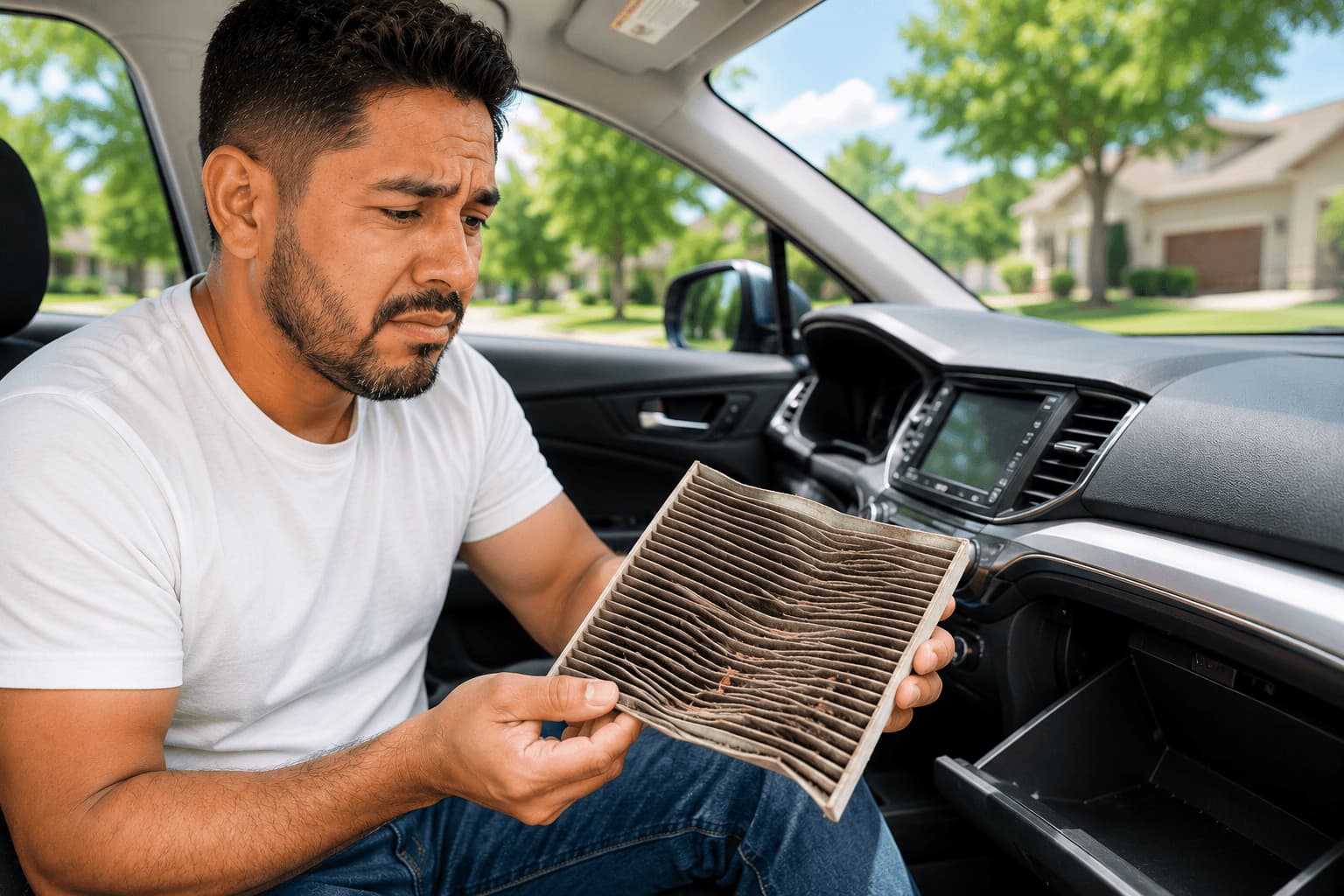
You are standing at the auto parts checkout or scrolling online. You see a cheap cabin air filter and think, "It’s just a filter. Why pay more?" That thought makes total sense. A cabin air filter is small, affordable, and easy to overlook.
However, this little part has a big job. A cabin filter directly affects the air you breathe inside your vehicle. It controls the smells that enter the cabin. It even dictates how effectively your HVAC system moves air.
Not all filters offer the same filtration level, fit, or airflow performance. Budget filters might catch large leaves and dust. But higher-quality filters capture much smaller airborne particles. They also often include odor-control layers like activated charcoal. Let's look at what you actually get, and what you give up, when you buy the cheapest option on the shelf.
Key Takeaways
Cheap cabin air filters may save money upfront, but often compromise on essential features like filtration efficiency and odor control.
Low-quality materials in inexpensive filters can lead to reduced durability and poor performance over time.
A high-quality cabin air filter ensures better air quality, reduces allergens, and protects your HVAC system from strain.
Investing in a durable, well-fitting filter offers long-term benefits, including consistent airflow and a healthier cabin environment.
The best choice balances cost with reliable performance to maintain comfort and safety in your vehicle.
What Does a Cabin Air Filter Actually Do for Your Car
Let's keep this simple. A cabin air filter cleans the air before it enters the vehicle interior. Outside air flows through your heating and air conditioning system. The filter helps capture dust, pollen, road debris, and other airborne particles before they blow out of your vents.
How does a cabin air filter protect the air inside your vehicle
Vehicle cabins easily collect outside pollutants. Traffic exhaust, dust, pollen, and road dirt constantly surround your car. In fact, the air inside your vehicle can be up to five times more polluted than the air outside. A good filter traps these pollutants so you do not breathe them in.
Why does your HVAC system need a clean air filter to breathe
A clean, properly fitting filter helps air move through the vents exactly as the manufacturer intended. A clogged or poorly fitted filter can reduce airflow. This makes your AC or heater feel much weaker and forces the fan motor to work harder.
Are Cheap Cabin Air Filters Bad for Your Car
Cheap cabin air filters are not always bad, but the cheapest options usually provide basic filtration only. They might capture larger dust and pollen particles. However, budget filters often lack stronger filter media, odor-control layers, precise fitment, and a long-lasting structure. For many drivers, the better choice is a cabin air filter that balances strong filtration, an airtight seal, and steady airflow.
You do not always need to buy the most expensive option on the market. The real goal is to avoid the filters that cut too many corners.
What Do You Sacrifice When Buying a Cheap Cabin Air Filter
When the price drops, manufacturers have to save money somewhere. Here is what usually gets left out of budget-friendly cabin filters.
Weaker filtration for fine particles
Many cheap filters focus exclusively on larger debris. They may not be built to capture smaller airborne particles like fine dust, smoke, smog, mold spores, or pet dander.
A low-cost basic filter stops visible dirt and leaves. A high-quality filter is designed to capture much smaller particles that you cannot even see. For example, a HEPA cabin air filter uses specialized media. HEPA-rated filtration is commonly associated with capturing 99.97% of particles as small as 0.3 microns.
Little or no odor control
Many cheaper filters do not include activated carbon or charcoal. Because of this, they do not help much with traffic fumes, diesel smells, smoke, musty air, or everyday road odors. An activated carbon cabin air filter is a smart upgrade. The carbon helps reduce and capture certain traffic-related gases and annoying odors.
Poor fitment and bypass air leaks
This is a massive issue with low-quality options. If a filter is too thin or too loose, you get bypass air. Bypass air is unfiltered air that leaks around the edges of a poorly fitting cabin air filter.
If air can move around the filter instead of through it, even good filter material will fail to protect you. A high-quality filter ensures exact OEM tolerances, an airtight fit, and no bypass gaps.
Flimsy and weak construction
Cheap filters often use thinner media, fewer pleats, or weaker frames. When your HVAC fan blows at full speed, poor construction can bend or gap. The filter might completely lose its shape, which instantly ruins its ability to clean the air.
Shorter useful life
A cheap filter might need to be replaced sooner if it clogs quickly, warps, or loses its structure. A filter that costs less upfront is not the best cabin air filter for the money if it requires constant replacement.
OEM vs Aftermarket Cabin Air Filter Quality: What Actually Matters
When comparing cheap vs expensive cabin air filter options, people often wonder about brand names. OEM (Original Equipment Manufacturer) filters are designed for exact fitment. However, a high-quality aftermarket cabin air filter can also be an excellent choice. The aftermarket filter just needs to be built to exact dimensions, use strong filtration media, and maintain airflow.
Exact fitment matters more than the label
A cabin filter should fit the vehicle’s housing tightly. You should never have to deal with trimming, bending, or loose edges. Cabin air filter fitment is the most critical factor for stopping bypass air.
Strong media quality matters
Filter media comes in several types. Standard media catches dust. Carbon media helps reduce odors. Electrostatic and HEPA-certified media capture microscopic allergens and smoke.
Consistent airflow matters
A filter should capture particles without choking the HVAC system. The best filters use advanced designs to trap dirt while letting air pass freely.
What Is the Best Value Cabin Air Filter for Your Money
The best value cabin air filter is not usually the cheapest one. It is the filter that gives you strong particle capture, proper airflow, exact fitment, and reliable replacement timing for the price. For most drivers, that means choosing a filter with high-efficiency media, a sturdy frame, and vehicle-specific fitment.
Look for exact fitment and tight seals
Always look for exact dimensions and a tight seal. There should be no gaps, and you should not have to force the filter into place. Always use a vehicle selector tool to confirm fitment.
Look for stronger filtration materials
Upgrading to HEPA-certified synthetic media is a premium choice. This ensures you block out the tiniest irritants and maintain excellent cabin air filter quality.
Look for an airflow-friendly design
Advanced hydrocharging technology permanently magnetizes every fiber to capture more contaminants throughout the filter’s full lifespan while reducing pressure drop.
Look for easy and simple installation
You should not need a mechanic. Look for brands that offer tool-free installation and QR-code directions right on the box.
Not sure which cabin air filter fits your car? Use the vehicle selector to find your filter and match the right fit to your make and model.
How Do Filterbuy Cabin Air Filters Solve These Problems
Every Filterbuy cabin air filter is made with HEPA-certified synthetic media, capturing 99.97% of airborne particles as small as 0.3 microns, such as bacteria, pollen, mold spores, smoke, and pet dander.
This advanced hydrocharging technology permanently magnetizes each fiber, ensuring maximum particle capture without impeding airflow.
Manufactured entirely in the USA to precise OEM specifications, Filterbuy filters are available for hundreds of vehicles from all major brands.
To find the correct filter for your car, simply use the vehicle selector on our website.
Why this matters for cheap-filter shoppers
Filterbuy is a value-focused upgrade for drivers who do not want to gamble on poor fitment, weak filtration, or bypass air. When you choose Filterbuy, you get:
HEPA-certified synthetic media.
Advanced hydrocharging technology that reduces pressure drop.
Exact OEM tolerances for an airtight fit with no bypass gaps.
100% manufactured in the USA.
Recyclable frame.
Tool-free installation.
QR code on every package links to model-specific directions.
Available in 1, 2, 3, and 4-pack options.
Subscription available, saves 15%.
Fast and free 2-day shipping on all orders.
When Is It Okay to Use a Cheap Cabin Air Filter
A budget filter might be perfectly acceptable in a few specific situations. Choose a cheap option if the vehicle is rarely driven, or if you only need to block large dust and debris. It works well if the filter fits perfectly and you replace it strictly on schedule. It is also fine if odor control and fine-particle capture are not priorities for you.
But for daily commuters, allergy-sensitive passengers, pet owners, and city drivers, a higher-quality filter is usually the smarter value.
When Should You Avoid the Cheapest Cabin Air Filter
You should skip the bargain bin and buy a better filter if:
You drive in heavy traffic frequently.
You live near construction, wildfire smoke, high pollen, or dusty roads.
You notice musty smells coming from your vents.
You ride with pets in the vehicle.
You or your passengers are sensitive to pollen, smoke, or fine particles.
The cheap filter feels loose, flimsy, or undersized during installation.
The budget brand does not clearly confirm fitment for your specific vehicle.
So, Are Cheap Cabin Air Filters Actually Worth the Savings
A cheap cabin air filter can be worth it if all you need is basic dust protection and the filter fits your vehicle correctly. However, the cheapest option usually comes with annoying trade-offs. You often suffer from weaker filtration, less odor control, poorer fitment, more bypass air risk, and a shorter useful life.
For most drivers, the best value cabin air filter fits tightly, captures fine particles, supports steady airflow, and lasts through the recommended replacement interval.
Ready to upgrade from a cheap cabin air filter? Shop Filterbuy HEPA cabin air filters and get an airtight fit, HEPA-certified synthetic media, and free 2-day shipping.
Frequently Asked Questions
Are cheap cabin air filters worth it?
Cheap cabin air filters can be worth it for basic dust and debris protection, but they often sacrifice filtration quality, odor control, fitment, and durability. For daily drivers, a better-value filter usually offers stronger particle capture and a tighter seal.
What is the difference between a cheap and an expensive cabin air filter?
The biggest differences are usually filter media, fitment, odor control, frame strength, and particle capture. Higher-quality filters may use HEPA-certified, carbon, or electrostatic media to capture smaller particles and help reduce odors.
Is an aftermarket cabin air filter as good as OEM?
An aftermarket cabin air filter can be a good choice if it is built to exact OEM tolerances, fits tightly, and uses high-quality filtration media. The important thing is not just whether it is OEM or aftermarket — it is whether it fits correctly and filters effectively.
Can a cheap cabin air filter reduce airflow?
A poorly made or clogged cabin air filter can reduce airflow. A good cabin air filter should capture particles without restricting airflow to your HVAC system.
Do cabin air filters help with smells?
Some cabin air filters help reduce smells, especially filters with activated carbon or charcoal layers. Basic, cheap filters usually focus on dust and debris, not odor control.
How often should I replace my cabin air filter?
For Filterbuy auto cabin air filters, the recommended replacement interval is every 12 months or 12,000 miles. Drivers in dusty, smoky, high-pollen, or heavy-traffic areas may want to check their filter more often.
What should i look for in the best value cabin air filter?
Look for exact fitment, high-efficiency media, strong construction, steady airflow, and easy installation. A good value filter should seal tightly in the housing and capture fine airborne particles without making your HVAC system work harder.