
Lakeland Real-Time AQI Tracker


Get Alerts For Unhealthy AQI In Your Area
When air quality in your area reaches unhealthy levels, we'll send you a quick alert, along with expert tips on how to reduce your exposure.
What's Actually In Lakeland Air Today?
What High AQI Means for Your Lungs in Lakeland
How to Read AQI
The Air Quality Index (AQI) measures how polluted the air is and how it may affect your health.
0–50 (Good): Air quality is satisfactory.
51–100 (Moderate): Acceptable, but some pollutants may pose minor concerns.
101–150 (Unhealthy for Sensitive Groups)
151–200 (Unhealthy)
201–300 (Very Unhealthy)
301+ (Hazardous)
Moderate
Still okay for most, but if you have asthma or allergies, take it easy and avoid long outdoor workouts.
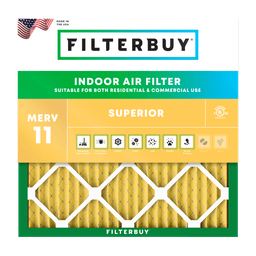
Shop MERV 11 filters→What's the Right Filter for Your AQI Level?


Check Today's Live Real Time Air Quality Index AQI Map in Lakeland, FL Now
TL;DR
Filterbuy's live AQI map on this page shows Lakeland's real-time air quality, using data from EPA AirNow and the Florida Department of Environmental Protection (DEP). At 50 or below, air is Good; above 100, people with asthma, COPD or heart disease should spend less time outdoors. Most of Lakeland's readings are set by ground-level ozone or fine particles (PM2.5), and the spikes tend to arrive with spring ozone, dry-season brush fires and summer Saharan dust.
Reading Lakeland's Live AQI Map Right Now
Should today change your plans? Start with the color on the Lakeland air quality map, then check the driving pollutant, because ozone and fine particles call for different steps at home.
Key Takeaways
Ozone and PM2.5 drive most of Lakeland's AQI readings, according to the Florida DEP.
Lakeland's ozone monitor logged a 2023–2025 design value of 63 ppb, under the 70 ppb federal standard.
Filterbuy's Florida replacement data shows filters need changing 20–30% more often during high-AQI seasons, per our Florida AQI page.
What Each AQI Color Means for a Lakeland Day
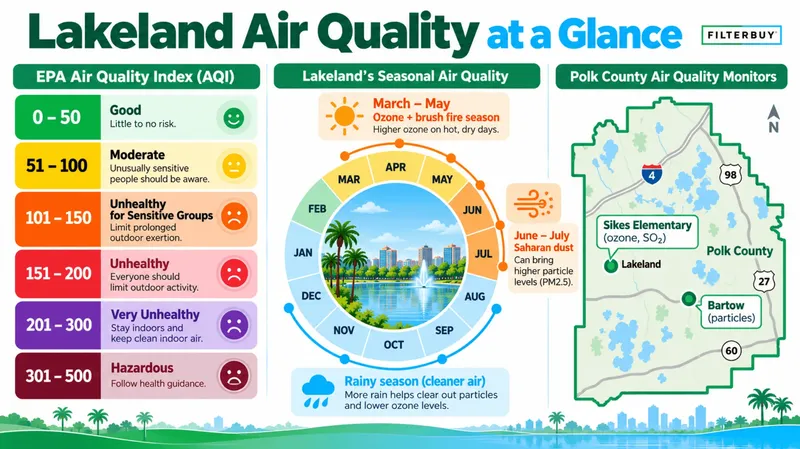
The U.S. AQI runs from 0 to 500 across six color categories, the same ones on the map above.
Categories and precautions per EPA AirNow guidance.
Why Lakeland's AQI Can Lag What You See or Smell
The number on the map is a NowCast. It averages up to 12 hours of readings, so you may smell a passing smoke plume before the map shows it.
There is a local reason, too. For this page, we read DEP's network plans and found a gap most Lakeland AQI sites miss: since August 2024, no regulatory particle monitor has operated inside Lakeland, per DEP's 2026 network plan.
Source: Florida DEP network plans.
If the sky looks hazy but the map shows yellow, trust your eyes and check the AirNow Fire and Smoke Map.
Is the Air in Lakeland Safe to Breathe Today?
At 100 or below on the live map, the air is acceptable for most people. Above 100, people with asthma, COPD or heart disease, along with children and adults over 65, should limit time outside. Above 150, everyone should cut back. These precautions come from AirNow; check it and Polk County alerts first, and follow your doctor's plan if you have a diagnosed condition.
Filterbuy's action line is AQI 100. That reading is still the top of the Moderate range, but it is where we tell customers to move. At 100 and above:
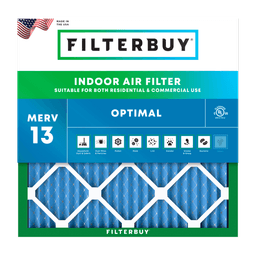
Switch the HVAC to MERV 13.
Set the thermostat fan to On, so the system filters all the time, not only while heating or cooling.
Run a portable HEPA air cleaner in each occupied room, bedrooms first.
Close windows and doors, and skip candles, frying, smoking and unsealed vacuums while smoke is in.
Above 150, inspect the filter more often and keep replacements on hand. From 201 up, follow AirNow and local officials first, keep one clean room, and treat filtration as one layer of help.
EPA recommends a filter rated MERV 13 or higher in central HVAC during smoke and notes that most systems can take one without equipment problems, provided it is replaced often. EPA also says to replace it when it looks dark brown or black, which can be well before the usual interval. For portable cleaners, EPA's sizing rule is a smoke CADR of at least two-thirds of the room's square footage, so a 300 sq ft bedroom needs about 200. Avoid any cleaner that produces ozone. Source: EPA, Preparing for Smoke and Heat.
Lakeland Air Quality Forecasts and Alerts: Where to Check
The Florida DEP forecasts tomorrow's ozone and PM2.5 for Lakeland and posts it to AirNow, usually after 4 p.m. Eastern. Polk County has no local air agency, so DEP also runs Lakeland's monitors and updates its Air Quality Today map every hour. Compare Filterbuy's Florida live AQI map or the Tampa AQI map.
DEP notes that May has historically brought peak ozone and fine particles. Filterbuy mapped the rest of Lakeland's year:
On orange days, move runs and yard work to early morning, before ozone builds.
What's in Lakeland's Air: Ozone, PM2.5 and a Sulfur Dioxide Backstory
On most days, Lakeland's AQI is set by ground-level ozone or PM2.5, particles roughly a thirtieth the width of a human hair.
Lakeland's Sikes Elementary monitor recorded a 2023–2025 ozone design value of 63 ppb, against the federal ozone standard of 70 ppb. That puts Lakeland below Tampa's Gandy monitor (67 ppb) and Winter Park near Orlando (66 ppb), per the same network plan. Still, with only a 7 ppb cushion, a hot, still spring afternoon can tip the city into a sensitive-groups day.
Sulfur dioxide (SO2) has a local history, too. The area around Mosaic's New Wales phosphate plant near Mulberry once violated EPA's 2010 one-hour SO2 standard, and after plant upgrades, EPA redesignated it to attainment effective March 23, 2020. Today SO2 rarely sets the AQI, and pleated filters cannot catch it.
Indoors, ozone breaks down quickly, but PM2.5 slips in around doors and lingers for hours, which is why filtration and the right MERV rating matter.
How Lakeland's Air Compares With Other Florida Metros
The American Lung Association groups Lakeland with Orlando (see Filterbuy's Orlando AQI map); higher rankings mean cleaner air.
Source: American Lung Association, State of the Air 2026 Florida release, data years 2022–2024.
Brush Fire Smoke and Saharan Dust: Lakeland's Two Particle Spikes
Our manufacturing team tracks NOAA's Saharan dust imagery to anticipate Florida filter demand.
Dry-season smoke comes first. On February 15, 2026, Polk County Fire Rescue answered more than 30 brush fires in a single day. The burn ban that began November 25, 2025, became the longest in Polk County history, and a second ban covering Lakeland ran from May 6 to June 17, 2026.
Dust follows; Tampa-area officials say Saharan dust usually reaches the region in summer and lingers until mid to late July.
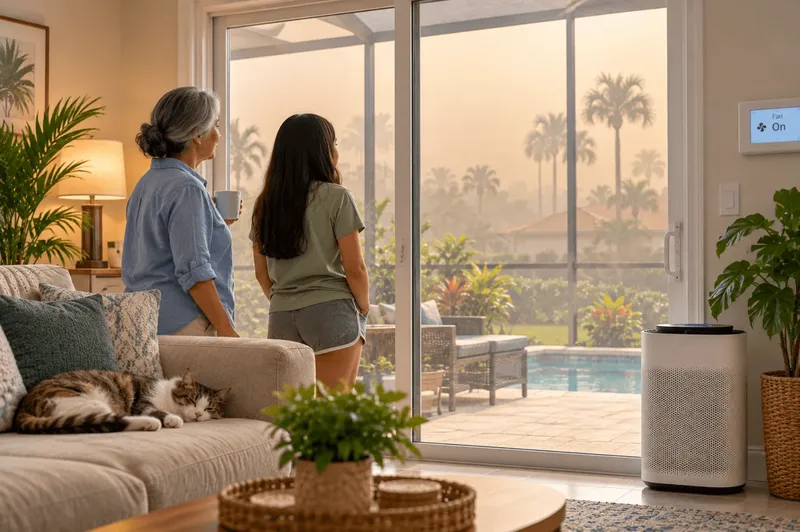
When smoke pushes the map toward 100, use the four steps above. Follow active fires on Filterbuy's Florida wildfire and smoke map or the nearby Tampa wildfire and smoke map.
What If Your Lakeland Home Has No Ducted HVAC?
Most do: the U.S. Energy Information Administration reports that 90 percent of Florida households use central air. Window units and ductless mini-splits have no filter slot, and Filterbuy would rather say so than sell you a filter that won't fit.
For these homes, portable HEPA air cleaners are the main defense, not an add-on. Size one to each room you use, keep windows shut on hazy days, and never seal yourself into a hot room. See Filterbuy's MERV 13 vs. HEPA guide for why HEPA stays out of furnaces.
Our Take: What a Filter Manufacturer Sees in Lakeland's Numbers
Filterbuy has made filters in the U.S. for more than a decade, and we watch how Florida filters age between changes. In Lakeland, three things stand out:
Lakeland's bad-air season is spring, not summer. Ozone and fire season peak together.
Lakeland's particle readings are borrowed from monitors outside the city.
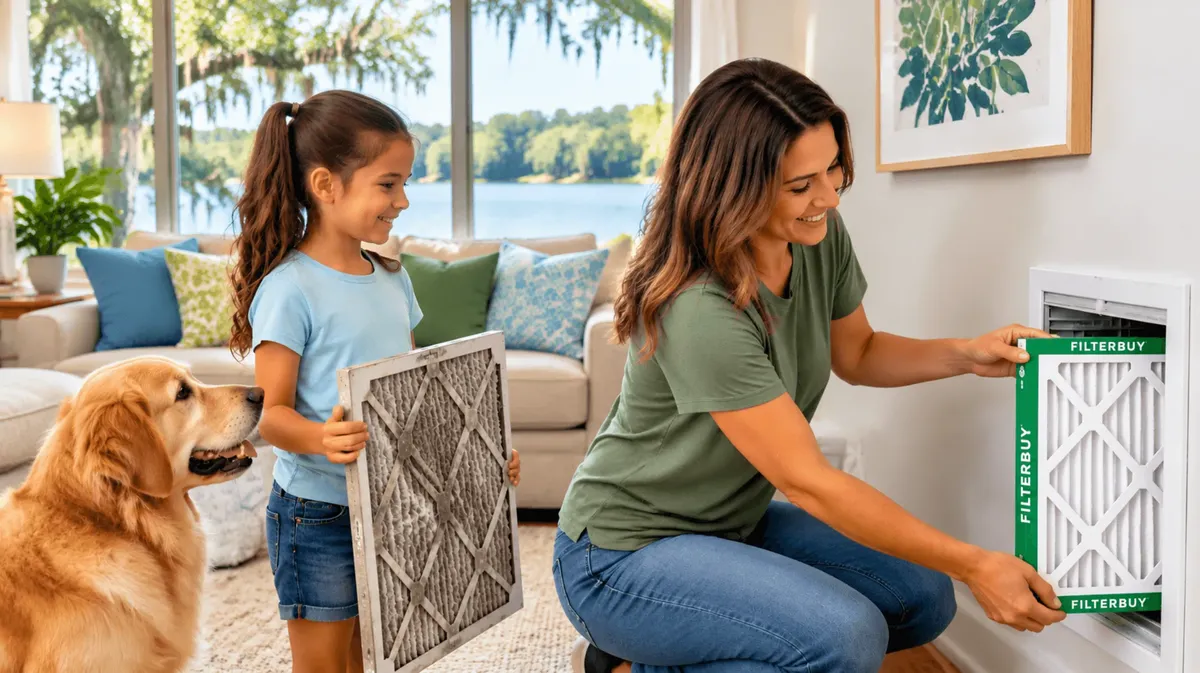
In Lakeland, the air conditioner does most of the filtering. Central AC runs most of the year, so the filter fills up faster than the calendar suggests. Filterbuy's filter replacement guide helps you set a schedule.
…we’ve discovered that homes here face 20-30% higher particulate loads during peak AQI seasons than the national average.
Filterbuy Air Quality Team, Florida AQI page
Which Filter Lakeland's AQI Level Calls For
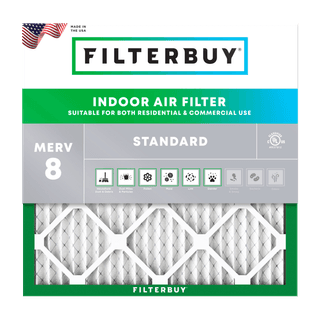
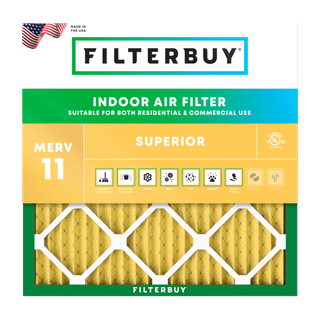
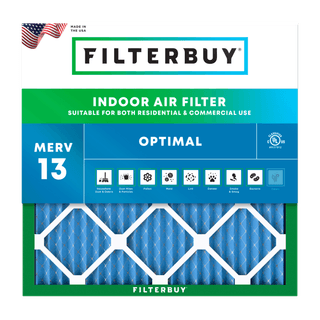
MERV 13 is the tier Filterbuy recommends for smoke. For everyday Florida air, we recommend MERV 11 or 13; the table shows where each fits.
EPA notes most furnaces and HVAC systems can run MERV 13 when the filter is changed often, so just confirm the fit. Pleated filters capture particles, not odors; for smoke smell, see the Odor Eliminator line. Filter auto-delivery keeps spares on hand.
Shop MERV 8, MERV 11 or MERV 13 filters in your size.
Supporting Statistics
90% of time is spent indoors.
Indoor pollutants often run 2–5x higher than outdoors.
Why it matters: Lakeland's AC runs most of the year, so the filter does the work.
61.8% of Florida adults with asthma are uncontrolled.
Only 23.7% were advised to change their home environment.
Why it matters: Ask your doctor whether changes at home fit your care plan.
Source: Florida Department of Health, FLHealthCHARTS (2021)
Frequently Asked Questions
What Is the Air Quality in Lakeland Today?
Filterbuy's live Lakeland AQI map at the top of this page shows the current AQI, color category and driving pollutant.
Is the Air Quality Bad in Lakeland Today?
Above 100 on the map, Lakeland air pollution is unhealthy for sensitive groups; above 150, for everyone. Filterbuy's filter steps start at 100.
Where Is Lakeland's Air Quality Measured?
The Florida DEP runs an ozone and sulfur dioxide monitor at Sikes Elementary School in southwest Lakeland. Particle readings come from regional monitors and lower-cost sensors.
What MERV Rating Do I Need for Smoke in Lakeland?
MERV 13. Filterbuy recommends it for smoke, and EPA recommends MERV 13 or higher in central HVAC during smoke.
When Is Air Quality Worst in Lakeland?
Usually spring, when brush fires and the ozone peak overlap, with Saharan dust following in early summer.
Glossary
AQI (Air Quality Index): The EPA's air pollution scale. It runs from Good (0–50) to Hazardous (301+).
PM2.5: Fine particulate matter 2.5 micrometers or smaller.
Ground-level ozone (O3): A lung irritant formed when sunlight reacts with emissions.
Sulfur dioxide (SO2): A gas from fuel burning and sulfuric acid production.
MERV: Minimum Efficiency Reporting Value, a filter's particle-capture rating.
HEPA: High-Efficiency Particulate Air, a filter standard used in portable air cleaners, not home HVAC systems.