The moment a wildfire starts near you, you'll get an instant alert and simple tips to reduce your smoke exposure.
30xSmaller than a human hair
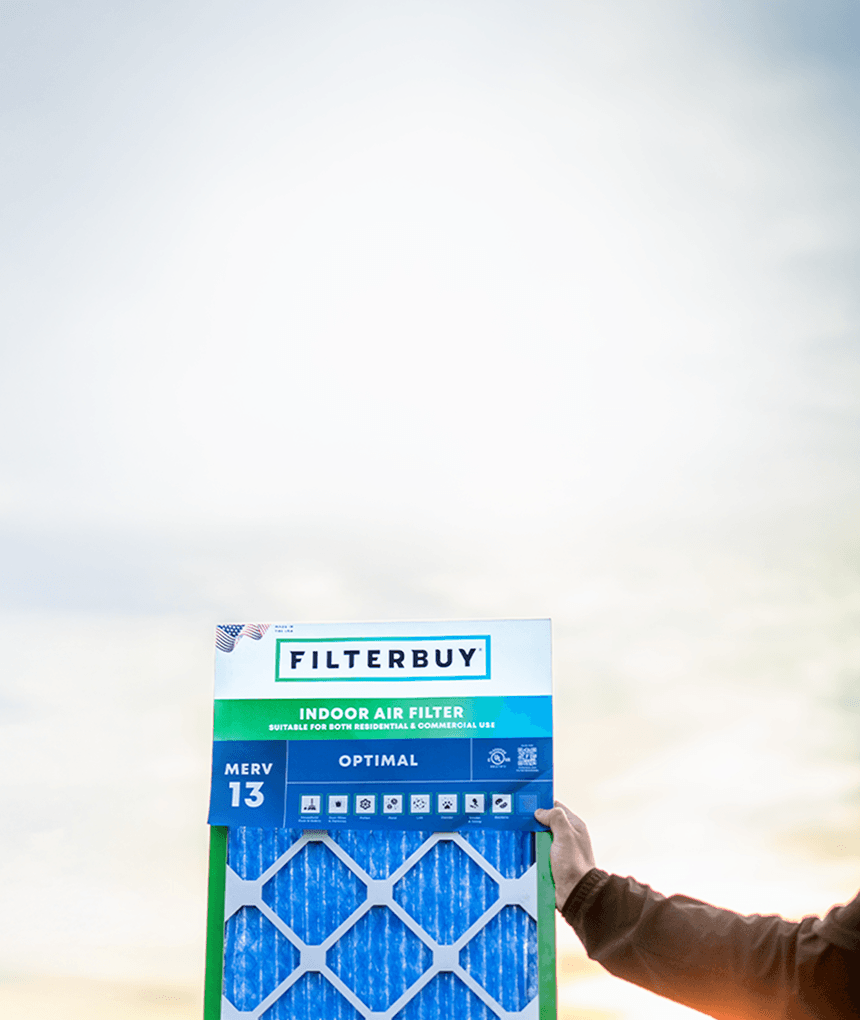
Fine enough to reach deep into the lungs. A MERV 13 is built to capture it.
It Doesn't Stay Local
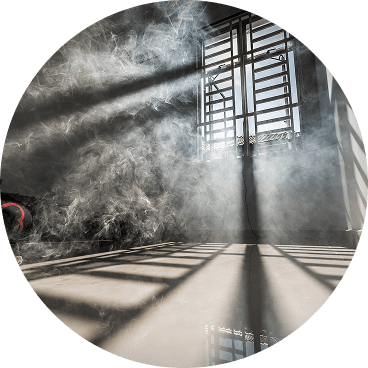
Smoke rides the wind far downwind — you can get smoky air with no fire nearby.
Simple steps to reduce indoor exposure.
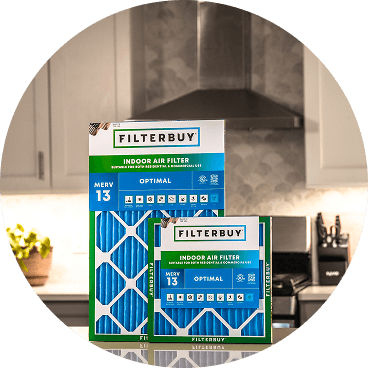
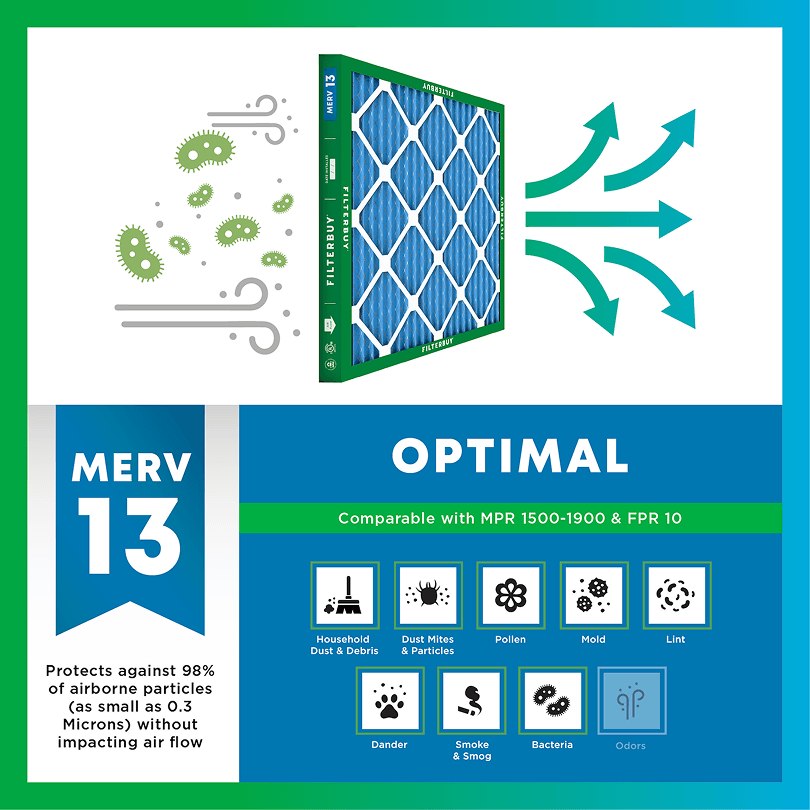
During smoke events, the EPA recommends upgrading to a MERV 13 filter — or the highest-rated filter your system can handle — to help reduce the fine particles smoke brings indoors. MERV 13 is the level most home HVAC systems can run while still capturing PM2.5, the fine particulate that makes up the bulk of wildfire smoke.
Over 70,000 wildfires burn in the U.S. every year.
Wildfire smoke can travel 1,000+ miles, affecting states that aren't even near the blaze.
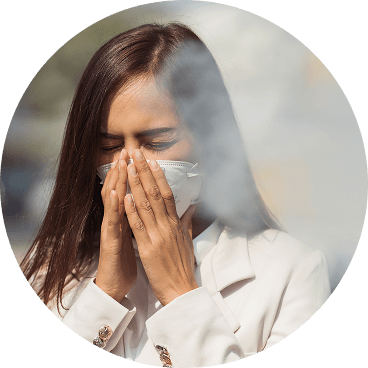
Exposure to wildfire smoke can worsen asthma, trigger heart issues, and lead to ER visits.
Indoor air can hold more fine particles during wildfire events unless it's properly filtered.
The EPA advises using MERV 13 filters or portable HEPA air cleaners during wildfire smoke events.
Use the live wildfire smoke tracker and upgrade your air filters today to protect your lungs and your home.
Shop Filters For Smoke Protection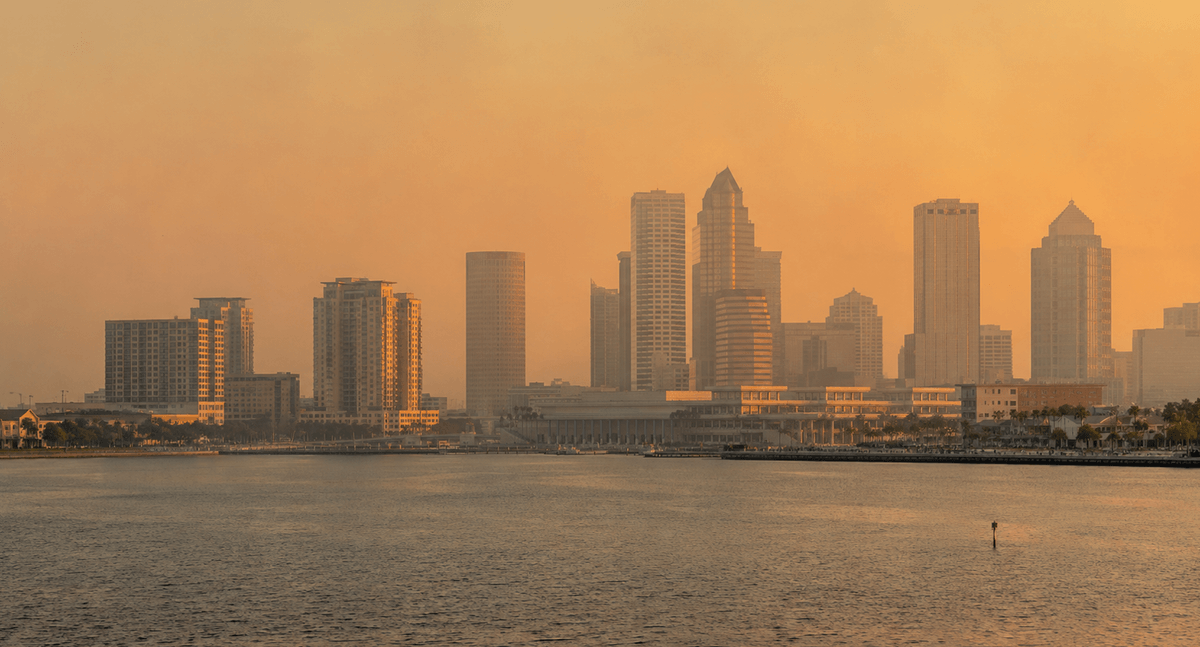
Author: Michelle Wan — filterbuy.com/author/michelle-wan/
Reviewer: David Clark, Licensed HVAC Technician [FLAG: credential listed inconsistently across live surfaces as "Certified HVAC Professional and President of Filterbuy HVAC Solutions" — reconcile before publish]
Publish Date: 7/13/2026
Updated Date: 7/13/2026
It is not fog. Florida is deep into one of its most extended wildfire seasons in years, and the drought driving it stretches from the Myakka River District south of Tampa Bay up through Central Florida's pine flatwoods. We ship Filterbuy filters out of our own distribution center in Florida, and the pattern our Tampa Bay orders are tracing this year- smoke and reorders both arriving weeks earlier than usual- is not one we have seen before. This page gives you a current live wildfire and smoke map for Tampa, FL alongside the local AQI reading, so you can see exactly what is burning nearby, where the smoke is headed, and how it is likely to affect the air inside your home today. Everything below the map is built to help you act on what you see. That means knowing when to keep windows closed, when a MERV 13 filter earns its keep, and when outdoor activity should wait.
Tampa, FL is currently affected by widespread wildfire smoke tied to an extreme drought across West Central and Southwest Florida, with the Florida Forest Service reporting over 120,000 acres burned statewide in 2026 and burn bans active in 37 counties. The live map above shows current fire activity and PM2.5 concentrations for the Tampa Bay area. Outdoor AQI readings do not equal indoor air quality, and the fastest way to protect your household is a sealed indoor clean room, an HVAC system set to recirculate, and an MERV 13 or higher air filter already in place.
Check the live map above for current conditions. Tampa Bay is inside an active regional wildfire and drought pattern in 2026, so smoke impact can change within hours depending on wind direction and new fire starts to the south and east.
Anyone in a higher-risk group should limit outdoor time once AQI reaches orange (Unhealthy for Sensitive Groups). All residents should reduce outdoor exertion once AQI reaches red (Unhealthy).
Yes. A MERV 13 or higher HVAC filter, like the ones Filterbuy makes in the USA, captures a meaningfully higher share of wildfire-sized PM2.5 than a standard MERV 8 filter when the system is set to recirculate indoor air.
Primarily from wildfires burning in the Myakka River District and surrounding drought-affected areas of West Central and Southwest Florida, with additional contribution from fires elsewhere in the state depending on wind direction.
Check once in the morning and again between 2 and 6 p.m. Tampa Bay's Gulf-side and Atlantic-side sea breezes typically collide over the interior in the afternoon, which can shift smoke and AQI readings even without a new fire starting nearby.
Drought is the driver: Extreme to exceptional drought across West Central and Southwest Florida, not a single large fire, is producing most of the smoke reaching Tampa this season.
Statewide scale: More than 120,000 acres have burned in Florida in 2026, with burn bans enforced in 37 counties including Sarasota and Manatee.
Local AQI varies block to block: Monitor placement and coastal wind patterns mean AQI can differ noticeably between Tampa Bay neighborhoods on the same day.
Afternoon is a second checkpoint, not just morning: Tampa Bay's two coastal sea breezes typically collide over the interior in the afternoon, which can shift smoke and AQI readings without a new fire starting.
Outdoor air quality is not indoor air quality: PM2.5 infiltrates homes before residents notice haze indoors, making HVAC settings and filtration a proactive, not reactive, decision.
MERV 13 is the practical filtration threshold: Standard MERV 8 filters pass through a meaningful share of wildfire-sized particulate that a MERV 13 filter captures.
Higher-risk groups need a lower action threshold: Children, older adults, pregnant individuals, and anyone with asthma, COPD, or heart disease should act at orange AQI, not wait for red.
Outdoor protection requires a real respirator: A tightly sealed N95 or P100 offers protection that cloth and surgical masks do not.
The map layers current fire detections against real-time PM2.5 and AQI readings for the Tampa Bay area. Orange and red markers show active fire activity within Florida and neighboring states. The shaded overlay shows where smoke particulate is currently concentrated, which does not always track the wind direction you would expect from a fire's location alone. Zoom in on Hillsborough, Pinellas, Manatee, and Sarasota counties for the readings most relevant to Tampa proper. For a full walkthrough of the dots, plumes, and trend line, see our guide on how to read the AirNow Fire and Smoke Map.
Most of the smoke reaching Tampa Bay this season is not coming from a single dramatic blaze. It is coming from dozens of smaller wildfires breaking out across the drought-stressed coastline south and east of the city, concentrated in the Myakka River District that the Florida Forest Service manages for this region. Extreme to exceptional drought conditions have left brush and pine litter dry enough that a downed power line, an escaped debris burn, or a dropped cigarette can start a fire within minutes. Statewide, more than 120,000 acres have burned in 2026, and burn bans are active in 37 counties, including Sarasota and Manatee just south of Tampa. Lightning from returning summer thunderstorms adds a second ignition source on top of the human-caused fires that account for the majority of this year's total. We hear the same pattern every summer from Tampa Bay customers. The smoke smell reaches their block before the AQI number on their phone moves, because the nearest official monitor can sit miles from where they actually live.
The Air Quality Index converts pollutant readings, most importantly fine particulate matter known as PM2.5, into a single 0 to 500 scale with color bands: green for good, yellow for moderate, orange for unhealthy for sensitive groups, red for unhealthy, and purple or maroon for very unhealthy to hazardous. A single citywide AQI reading can be misleading in a metro as spread out as Tampa Bay. Wind direction, monitor placement, and local terrain mean Ybor City can read yellow while a neighborhood closer to the coastline reads orange on the same afternoon. For statewide context beyond Tampa Bay, Florida's live AQI map breaks down the Saharan dust, ozone, and humidity factors that compound wildfire smoke across the state. Outdoor AQI is not indoor air quality. PM2.5 from wildfire smoke works its way into homes through door gaps, HVAC intake, and normal air exchange well before most households notice a haze indoors, which is why the map above should guide indoor decisions, not just outdoor ones. Customers calling our support line from Ybor City and St. Petersburg on the same afternoon have described noticeably different air outside their windows, which tracks with how much monitor placement alone can shift a neighborhood's reading.
AQI ranges and categories follow the EPA's national Air Quality Index scale.
Tampa sits between two coastlines, and each one generates its own sea breeze. A Gulf-side breeze pushes in from the west while a second breeze moves in off the Atlantic side of the peninsula. On most summer days, both breezes drift inland through the morning and run into each other over the interior in the mid-to-late afternoon, a collision the National Weather Service Tampa Bay office tracks daily through its own sea breeze flow regime forecasting. That same collision zone can trap or redirect smoke that would otherwise drift steadily in one direction, which is one reason a reading that looks clear at 9 a.m. can shift by 3 p.m. without a new fire starting anywhere nearby. Checking the map above once in the morning and again in the mid-afternoon catches most of the swings this local pattern causes, and it is one of the few things a Tampa Bay household can act on that a generic national AQI map will not tell you.
Children, adults over 65, and anyone pregnant face higher risk from wildfire PM2.5 because their bodies are less able to compensate for the added respiratory load. People with asthma, COPD, or existing heart disease are especially vulnerable since smoke particulate can trigger flare-ups and, in some cases, cardiovascular events. Outdoor workers in landscaping, construction, and utility roles face longer cumulative exposure simply because of the hours spent outside during an active smoke event. If anyone in your household falls into one of these groups, treat an orange or red AQI reading on the map above as a signal to move planned outdoor activity indoors, not just a number to note. During weeks like this one, we hear from Tampa Bay parents and coaches most often. They usually ask one of two things. Either whether practice should still go on, or whether a filter change is overdue.
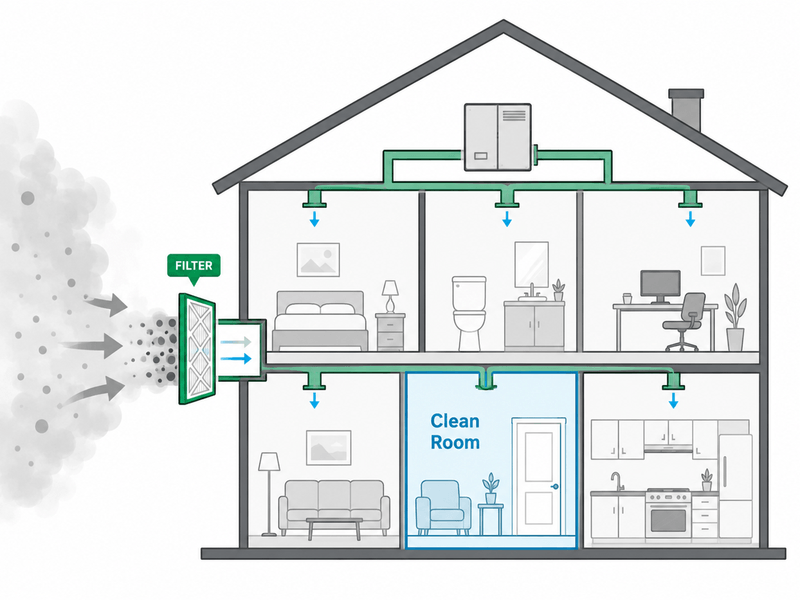
Set your HVAC system to recirculate rather than pulling in outside air, and confirm your intake filter is rated MERV 13 or higher, since standard MERV 8 filters pass through a meaningful share of wildfire-sized PM2.5. Not sure which MERV rating fits your HVAC system? Most systems built after 2010 handle MERV 13 without issue, but older units may need a step down. Choose one interior room, ideally without windows facing the smoke source, and treat it as your clean room with the door closed and a portable air cleaner running if you have one. If you must go outside while smoke is visible, an N95 or P100 respirator that seals tightly against the face offers real protection, unlike a cloth or surgical mask. Skip anything that adds indoor particulate on smoke days, including candles, wood-burning fireplaces, frying, and vacuuming without a HEPA-rated vacuum, since these compound whatever is already working its way in from outside. Our full breakdown of the best MERV filter for wildfire smoke covers replacement timing and airflow tradeoffs in more depth.
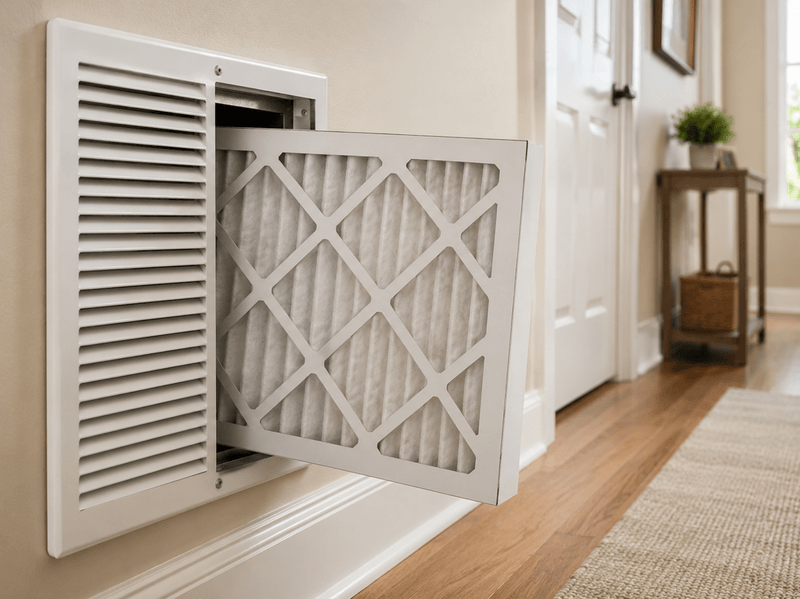
Tampa's air quality problem during a wildfire event is not the number on the map. It's the gap between when smoke starts drifting into a neighborhood and when a household actually changes what their HVAC system is doing about it. What's different about Tampa Bay is the humidity. Coastal moisture holds fine particulate closer to the ground longer than it would inland, so a smoke event here can feel worse at street level than the same AQI reading looks on a map. After manufacturing filters for over a decade and serving more than two million households, we've found that the homes that come through a smoke event the most comfortably are the ones that already had a MERV 13 filter in place before the AQI turned orange, not the ones scrambling to buy one once it did.
David Heacock, Founder and CEO of Filterbuy
The AirNow Fire and Smoke Map overlays real-time PM2.5 readings with active fire detections across the country, developed jointly by the EPA and the U.S. Forest Service.
Source: AirNow Fire and Smoke Map
The Tampa Bay Area Fire Weather Page carries the current Drought Information Statement along with red flag warnings and fire danger indices specific to this forecast area.
Source: NWS Tampa Bay Area Fire Weather Page
The Florida Forest Service publishes current wildfire points, county burn ban status, and statewide statistics for the 2026 season.
Source: Florida Forest Service Current Wildfire Information
The CDC's wildfire safety guidelines cover evacuation prep, at-risk groups, and how to set up a clean room at home.
Source: CDC Safety Guidelines: Wildfires and Wildfire Smoke
The National Interagency Fire Center maintains incident maps and situation reports covering large fires across the country, useful context for smoke transported into Florida from elsewhere.
Source: National Interagency Fire Center Fire Maps
The Florida Division of Emergency Management publishes statewide alerts, evacuation guidance, and disaster preparedness resources relevant to active wildfire periods.
Source: Florida Division of Emergency Management
The EPA's Air Quality page explains how the 0 to 500 AQI scale is calculated, what each color band means for health guidance, and how the AirNow Fire and Smoke Map factors into current reporting.
Source: EPA Air Quality
60–80% of Florida wildfires are started by people, not lightning.
Based on analysis of 1.6 million U.S. wildfire records.
Human-ignited fires roughly triple the length of fire season versus lightning alone.
Source: NASA Earth Observatory: People Cause Most U.S. Wildfires
Tampa Bay region: currently classified as Moderate to Extreme Drought.
Source is the U.S. Drought Monitor, a federal partnership tracking drought nationwide.
Source: Drought.gov U.S. Drought Monitor
Respiratory hospitalizations rise 1.3–10% per 10 µg/m³ increase in wildfire-specific PM2.5.
Non-wildfire PM2.5 shows a smaller 0.67–1.3% increase for the same exposure.
Source: Aguilera et al., 2021, Nature Communications (PMC7935892)
Florida's 2026 wildfire season has already stretched past what most Tampa Bay households expect from a normal summer, and the Florida Forest Service is not projecting relief before August. That makes the live map above worth checking regularly rather than once. Filterbuy has watched this pattern before across a decade of Florida wildfire and hurricane seasons. The households that ride out a smoke event most comfortably are rarely the ones with the newest map bookmarked. They are the ones who set their HVAC system to recirculate and upgraded to a MERV 13 filter before the AQI turned orange, not after. For the fuller room-by-room playbook, see our guide on how to keep wildfire smoke out of your house.
Check the live map now. AQI varies block to block. Check your neighborhood, not just the citywide number.
Set your HVAC to recirculate. This blocks outside PM2.5 from entering your home.
Confirm your filter is MERV 13 or higher. Swap it now, not after conditions worsen.
Pick one clean room if AQI hits orange or higher. Close the door. Run a portable air cleaner if you have one.
Check the map again between 2 and 6 p.m. Tampa Bay's afternoon sea breeze can shift AQI even without a new fire.
Act early if you're higher-risk. Kids, adults 65+, pregnant, or anyone with asthma, COPD, or heart disease should move indoors at orange, not red.
Check the AQI on the live map first. Below 100 is generally fine for most people. Between 101 and 150, sensitive groups should reduce intensity. Above 150, most residents should move exercise indoors.
The underlying fire detection and PM2.5 data typically refresh hourly, though satellite-detected fire points can lag actual conditions by up to several hours during rapidly changing events.
Yes. Smoke plumes can travel hundreds of miles depending on wind patterns, so Tampa's AQI can be affected by fires burning well outside Florida just as much as by local ignitions.
Treat an orange AQI reading as the signal to move activity indoors, keep rescue medication accessible, and confirm your HVAC filter is rated MERV 13 or higher.
No. Cloth and surgical masks do not seal tightly enough to filter PM2.5. An N95 or P100 respirator that fits snugly against the face is required for meaningful protection outdoors.
Yes, and set your HVAC system to recirculate rather than pulling in outside air, since open windows and fresh-air intake settings both let PM2.5 into your home directly.
Duration varies with wind direction and containment progress on nearby fires. Given the current statewide drought, the Florida Forest Service expects elevated wildfire activity and recurring smoke impacts through August 2026.
Generally yes for particulate capture, though very high MERV ratings can restrict airflow in systems not designed for them. MERV 13 is a commonly recommended balance for residential HVAC systems during smoke events.
Subscribe to wildfire smoke alerts for Tampa, FL, to get a heads-up before the next event reaches your area.