
Tampa Real-Time AQI Tracker


Get Alerts For Unhealthy AQI In Your Area
When air quality in your area reaches unhealthy levels, we'll send you a quick alert, along with expert tips on how to reduce your exposure.
What's Actually In Tampa Air Today?
What High AQI Means for Your Lungs in Tampa
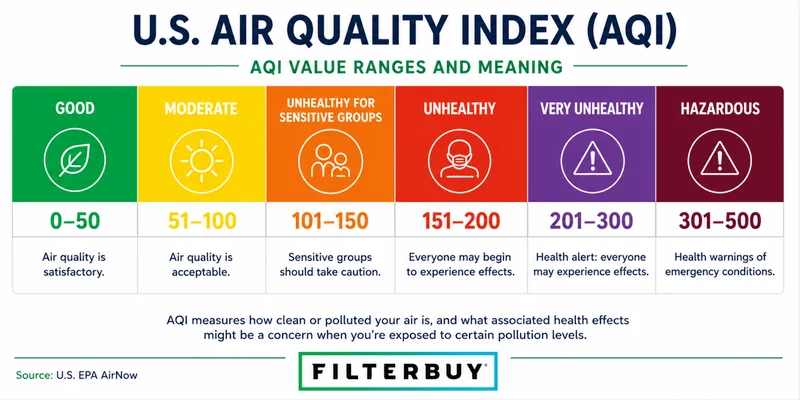
How to Read AQI
The Air Quality Index (AQI) measures how polluted the air is and how it may affect your health.
0–50 (Good): Air quality is satisfactory.
51–100 (Moderate): Acceptable, but some pollutants may pose minor concerns.
101–150 (Unhealthy for Sensitive Groups)
151–200 (Unhealthy)
201–300 (Very Unhealthy)
301+ (Hazardous)
Moderate
Still okay for most, but if you have asthma or allergies, take it easy and avoid long outdoor workouts.
Shop MERV 11 filters→What's the Right Filter for Your AQI Level?
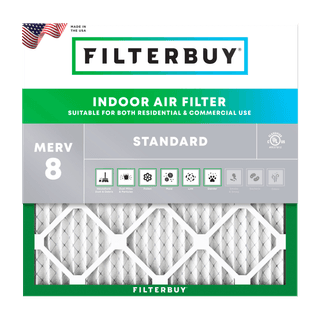
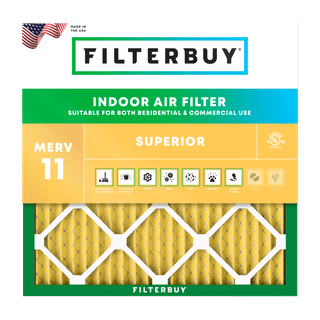
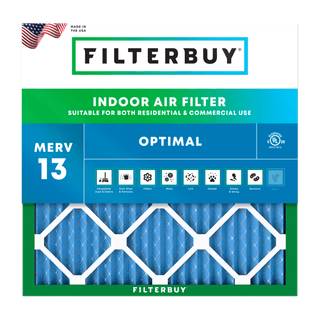
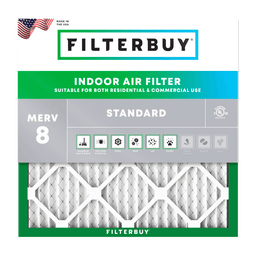
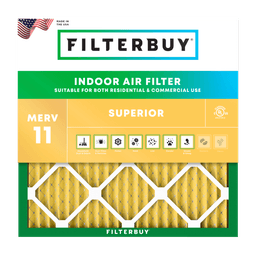
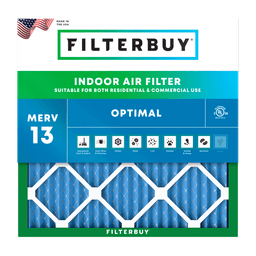

Check Today's Live Real Time Air Quality Index AQI Map In Tampa, FL Now
By Michelle Wan, Brand Manager & Air Quality Writer | Reviewed by David Clark, Licensed HVAC Technician | Published July 5, 2026 | Updated July 5, 2026
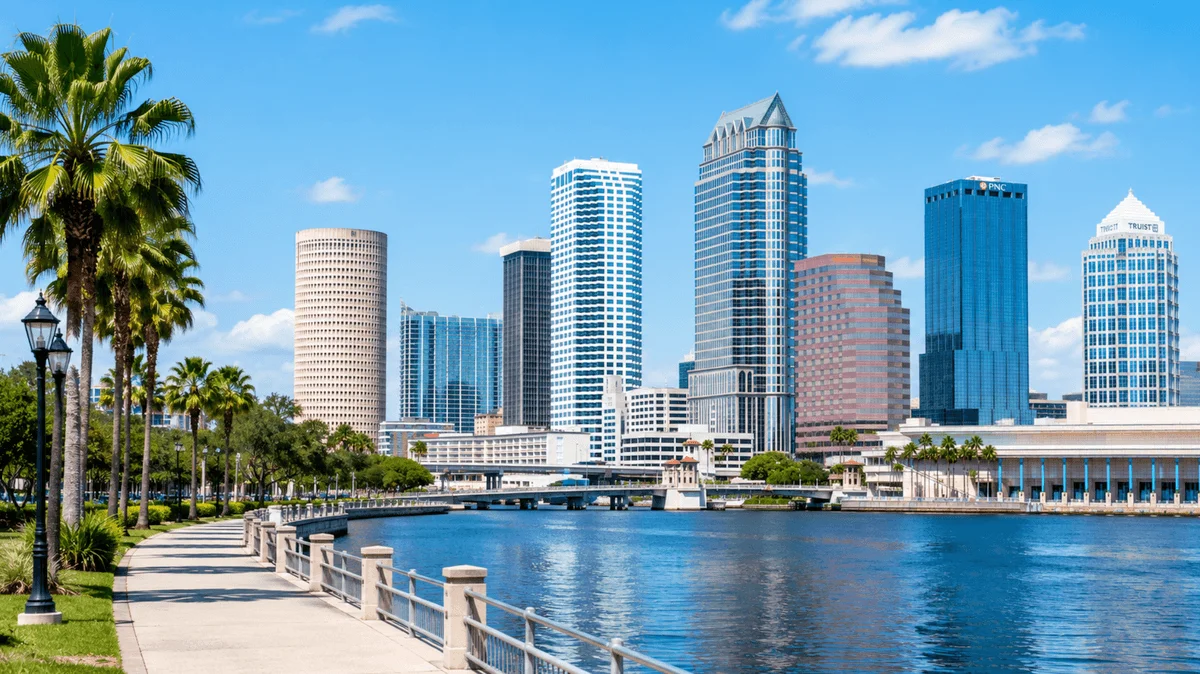
You step outside in Tampa on a July morning, the sky looks a little milky, the air feels heavier than the day before, and you catch yourself wondering whether it's safe to let the kids play in the yard. The live air quality index map on this page answers that question in real time, pulling current readings for Tampa and the surrounding Hillsborough County area so you can decide what to do before you head out the door.
Air quality in Tampa shifts through the day. Ground-level ozone climbs on hot, sunny afternoons, fine particle pollution drifts in with traffic and summer dust, and a calm, humid morning can read very differently by three in the afternoon. Checking the current number takes a few seconds and tells you whether today is a good day for a run along Bayshore Boulevard or a better day to keep the windows shut and your system running.
At Filterbuy, we build and test air filters for a living, so we think constantly about what that outdoor number really means once you close the door and start breathing your indoor air.
Quick Answers About Air Quality In Tampa Today
What Is The Air Quality In Tampa Today?
Tampa's air quality usually falls in the Good to Moderate range on the AQI scale, which means most days carry little risk for healthy people. Ground-level ozone and fine particle pollution (PM2.5) are the two pollutants that push local readings highest, especially on hot afternoons and during summer Saharan dust events. Check the live map above for the current reading.
Top Takeaways
Ground-level ozone and fine particle pollution (PM2.5) drive most of Tampa's day-to-day AQI changes.
Ozone peaks on hot, sunny afternoons, and PM2.5 can spike during the Saharan dust plumes that reach Florida each summer.
An AQI at or below 50 is Good (green), 51 to 100 is Moderate (yellow), and 101 to 150 is Unhealthy for Sensitive Groups (orange).
Children, older adults, and people with asthma, COPD, or heart disease feel the effects of orange days first.
When outdoor AQI climbs, closing the windows and running your HVAC with a high-efficiency filter keeps your indoor air noticeably cleaner.
How To Read Tampa's Live Air Quality Map
The map at the top of this page uses the U.S. Air Quality Index, the same color-coded scale that the EPA, the Florida Department of Environmental Protection, and the Environmental Protection Commission of Hillsborough County all report against. Each monitor shows a number and a color for the pollutant that's highest at that moment, so a green dot near downtown and an orange dot inland can both be accurate on the same afternoon.
What The AQI Colors Mean
Green (0 to 50) means the air is clean and you can do anything outdoors. Yellow (51 to 100) is acceptable for most people, though the unusually sensitive may notice mild symptoms. Orange (101 to 150) flags trouble for sensitive groups. Red (151 to 200) reaches everyone, and purple and maroon above that signal very unhealthy to hazardous conditions that Tampa rarely sees outside major smoke or dust episodes.
What Drives Tampa's Air Quality
Tampa's warmth and strong sunshine cook vehicle and industrial emissions into ground-level ozone, which is why the worst readings usually land on hot, still afternoons. Fine particles come from traffic, coastal industry, and, in summer, dust from the Sahara that crosses the Atlantic and settles over Florida as a pale haze. Those dust events can raise PM2.5 for several days and turn the sky a milky gray that Tampa residents have learned to recognize. Here's something we notice from the filter side. During those dust weeks, filters in Florida homes load up faster than usual, a quiet sign of how much extra fine particulate is riding in on the air.
When Tampa's Air Quality Changes Through The Year
Here's what most air quality pages leave out. Florida sits on a peninsula, and the daily sea breeze keeps air moving in a way inland cities never get, which is the real reason Tampa's air is usually good. When a reading does climb, it's almost always a passing event rather than lingering smog, and two of those events run on a calendar you can plan around.
Late winter through spring is smoke season. Prescribed burns across the Southeast run heavily through late winter and spring, and Florida's own wildfire season peaks from April through June. On the wrong wind, that smoke drifts toward Tampa and lifts PM2.5 for a day or two.
Summer is dust season. Saharan dust crosses the Atlantic and settles over Florida from late June into mid-August, hazing the sky and raising fine-particle readings while hot, still afternoons keep ozone in the mix.
Neither one shows up on a thermometer, so the live map tells you more than the daily forecast does. We point Florida customers toward a fresh filter heading into spring and again before dust season, so the house is ready before the air turns.
Who Should Pay Closest Attention
If you or someone in your home has asthma, COPD, or heart disease, or if you're caring for young children or older parents, orange days deserve a plan. These groups can feel chest tightness, coughing, or shortness of breath at AQI levels that healthy adults barely notice. On those days, morning tends to be cleaner than late afternoon, so shifting a walk or a workout earlier often helps.
What To Do When Tampa's Air Quality Drops
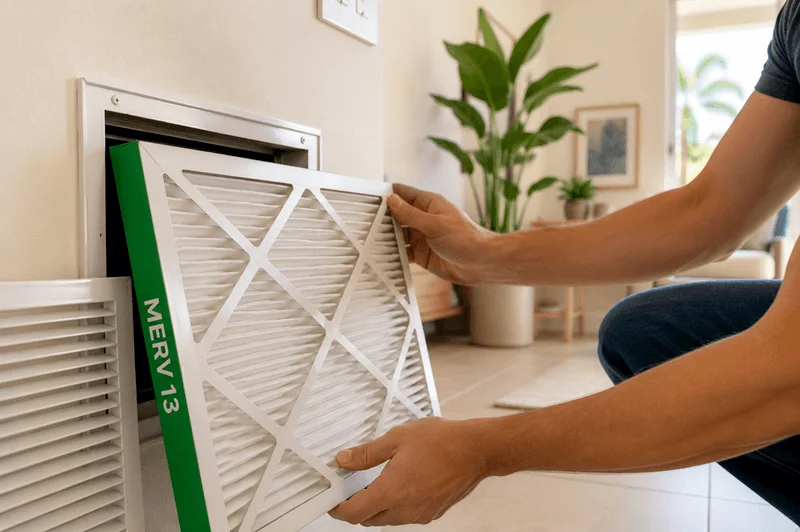
When the map turns yellow or orange, the practical move is to protect the air you breathe most, which is the air inside your home. Close the windows, run your HVAC on the fan setting to keep air circulating through the filter, and make sure that filter can actually catch fine particles. A Filterbuy MERV 13 filter traps a large share of the PM2.5 that ozone and dust days send your way, and it keeps working quietly in the background while you go about your day. We've tested our own filters against the fine particles that dust and smoke days throw off, and that's exactly why we steer people toward higher-efficiency media when the map turns orange.
A Technician's Take On High-AQI Weeks
On a hazy, high-dust week, the filter is the first thing I check. A clogged filter makes the whole system strain right when your home needs clean air the most, so I tell homeowners to keep a fresh one ready before the season starts.
David Clark, Licensed HVAC Technician and Technical Reviewer for Filterbuy
Expert Insight From Filterbuy
After manufacturing filters for over a decade and serving more than two million households, we've seen the same pattern over and over. People watch the outdoor air, but the air they actually breathe most is inside their homes. When Tampa's AQI climbs, the smartest move is to protect your indoor air with a filter built to catch fine particles, keep it fresh, and let your system do the work.
David Heacock, Founder and CEO, Filterbuy
7 Trusted Resources To Check Tampa's Air Quality And Protect Your Home
You can't see the ozone or fine particles drifting over Tampa, but these trusted authorities can, and they put the numbers right in your hands. We've gathered the sources we lean on so you can check conditions with confidence and protect the people under your roof.
See Tampa's Live AQI Straight From The EPA
The EPA's AirNow refreshes every hour, so you're never left guessing. One glance tells you whether it's a green-light morning for the kids outside or a day to keep them in. Source: AirNow Florida Real-Time Air Quality Map (https://www.airnow.gov/state/?name=florida)
Compare Ozone And PM2.5 Across Florida Monitors
Florida DEP maps every monitor in the state, so you can spot exactly which pollutant is climbing near you. That's how you turn an invisible haze into a number you can act on. Source: Florida's Air Quality Spatial System (https://floridadep.gov/air/air-monitoring/content/floridas-air-quality)
Track The Monitors That Watch Tampa's Own Air
This is the local team measuring the air in your own backyard, and they post advisories the moment conditions turn. When you want the reading closest to home, start with the people who watch it every day. Source: EPC Of Hillsborough County Air Monitoring (https://www.epchc.org/divisions/air/air-monitoring)
Learn What Every AQI Color Really Means
Every color on the scale is a signal, and the EPA explains exactly what each one is telling you. Once you know the code, you'll read any AQI map like a pro. Source: EPA Air Quality And The AQI Explained (https://www.epa.gov/air-quality)
Know When To Stay Inside By Health Group
If someone in your home has asthma, a heart condition, or young lungs still developing, the CDC shows who feels bad air first and how to respond. Protecting your family starts with knowing your family's limits. Source: CDC Guidance On Air Quality And Your Health (https://www.cdc.gov/air-quality/about/index.html)
Plan Ahead With The Daily Air Quality Forecast
The National Weather Service forecasts air quality the same way it forecasts rain, so you can plan tomorrow before it arrives. Book the morning run or push the yard work with the numbers on your side. Source: National Weather Service Air Quality Index Guide (https://www.weather.gov/safety/airquality-aqindex)
Watch Saharan Dust Before It Reaches Tampa
Every summer, dust rolls off the Sahara and hazes up Florida skies, and NOAA tracks it days ahead of time. A little warning is all you need to close the windows and let your filter do its job before PM2.5 climbs. Source: NOAA Saharan Air Layer Tracker (https://www.aoml.noaa.gov/saharan-air-layer/)
3 Research-Backed Statistics On Tampa's Air Quality
Every figure below comes from a U.S. government agency or an American nonprofit.
Asthma is common across Florida. About 1 in 11 adults and 1 in 14 children in the state currently have asthma. High-AQI days affect them first.
Source: Florida Department Of Health Asthma Data (https://www.floridahealth.gov/diseases-and-conditions/disease/asthma/)
Tampa ranks high for ozone. In the 2026 State of the Air report, Hillsborough County earned a “C” for ozone, and the metro placed 100th out of 226 U.S. metro areas.
Source: American Lung Association State Of The Air, Tampa Metro (https://www.lung.org/media/press-releases/fy26-sota-tampa)
Fine particles strain the heart. In an NIH study of 517,000+ U.S. adults, each 10 µg/m³ of long-term PM2.5 raised cardiovascular death risk by about 10%. That's the same PM2.5 Tampa's dust and traffic produce.
Source: NIH-AARP Study On PM2.5 And Cardiovascular Mortality (https://www.ncbi.nlm.nih.gov/pmc/articles/PMC4829984/)
Final Thoughts And Opinion
Tampa gets a bad rap it doesn't fully deserve. For most of the year the air here is genuinely good, and the live map will show you a lot of green. What we care about at Filterbuy are the handful of days that break that pattern, the stagnant ozone afternoons in late summer and the dust weeks that roll in from across the Atlantic. Those are the days the AQI number stops being trivia and becomes a cue to act. After years of shipping filters into Florida homes, the pattern we trust most is that households treating a rising AQI as a prompt to refresh their filter breathe easier through dust season than the ones who only watch the number. Our honest take is that the outdoor reading earns its value only when it changes what you do indoors, because that's where you spend most of your hours and where a good filter earns its keep.
Next Steps
Bookmark this page and glance at the live map each morning through the summer ozone and dust season.
Sign up for advisory alerts from the Environmental Protection Commission of Hillsborough County so orange days reach you before you head out.
On yellow and orange days, move outdoor exercise to the morning and keep it lighter if you're in a sensitive group.
Close the windows and run your HVAC system with a fresh high-efficiency filter when the map climbs, and make sure you're choosing the right MERV rating for your system.
Check your filter monthly and swap it on schedule so it can keep pulling fine particles out of your indoor air.
Frequently Asked Questions
Protect Your Indoor Air With Filterbuy
The outdoor number is only half the story. When Tampa's AQI climbs, the fastest way to breathe easier is to upgrade the filter that's already running in your home. Find your Filterbuy filter size and MERV options and get a fresh high-efficiency filter delivered, so your system is ready the next time the map turns orange.